
Health
JUST IN: FG confirms first anthrax case in Niger

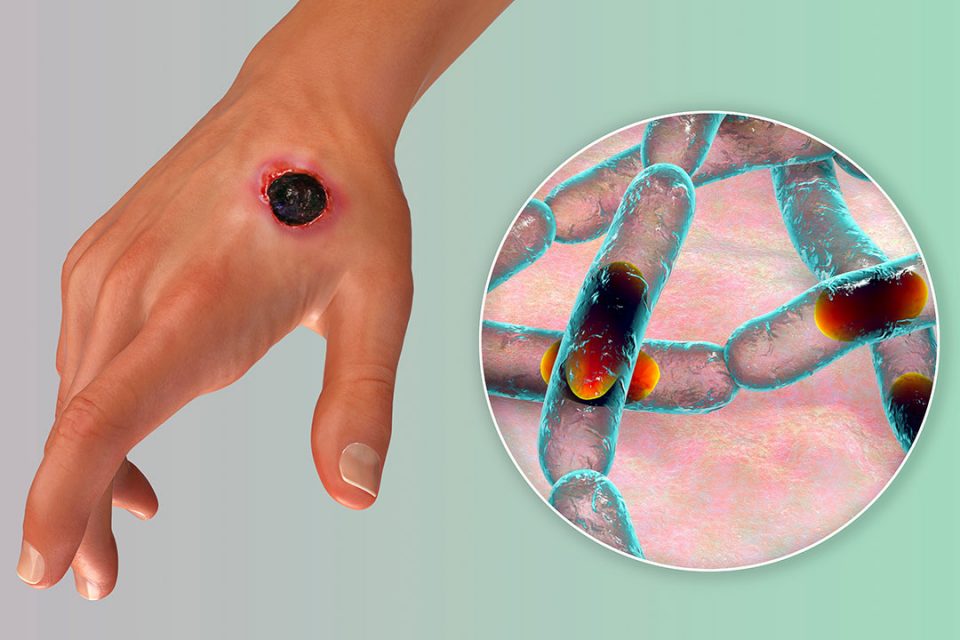
The Federal Government, on Monday, confirmed the first case of anthrax in Nigeria, stating that the disease was detected in a farm in Niger State.
The Federal Government had earlier alerted the general public to the outbreak of anthrax disease in some neighbouring countries within the West African sub-region and advised Nigerians to desist from the consumption of hides, otherwise known as ponmo, at the moment.
The FG had specifically stated that the disease was widespread in northern Ghana, bordering Burkina Faso and Togo, as it also promised to keep the Nigerians updated on developments about the disease.
In a statement issued in Abuja on Monday, the Federal Ministry of Agriculture and Rural Development stated that it was “deeply concerned to announce the confirmation of an anthrax case in Niger State, Nigeria.”
It added, “On July 14, 2023, the Office of the Chief Veterinary Officer of Nigeria was notified of animals manifesting symptoms of a suspected case of anthrax in a farm in Suleja, Niger State.
“The case was in a multi-specie animal farm comprising of cattle, sheep and goats located at Gajiri, along Abuja-Kaduna expressway Suleja Local Government Area, Niger State, where some of the animals had symptoms including oozing of blood from their body openings – anus, nose, eyes, and ears.”
The FMARD stated that a rapid response team comprising of federal and states’ One Health Professional Team visited the farm to conduct preliminary investigations and collected samples from the sick animals.
“Subsequent laboratory tests by the National Veterinary Research Institute laboratory confirmed the diagnosis, marking the first recorded case of anthrax in Nigeria in recent years and after the report of an outbreak of anthrax in Northern Ghana a few weeks ago. All animals affected have died,” the ministry stated.
Anthrax is caused by the spore-forming bacterium – Bacillus anthracis, which primarily affects animals such as cattle, sheep, and goats.
It can also infect humans who come into direct contact with infected animals or contaminated animal products, such as meat, wool or hides.
Inhalation of anthrax may occur through the inhalation of spores, while cutaneous anthrax can result from contact with contaminated materials or through open wounds.
The statement, however, stated that the Federal Government, through the FMARD, in collaboration with the Niger State Government, had taken proactive measures to ensure the outbreak was controlled and contained quickly in Nigeria.
“This includes quarantine of the affected farm, deployment of anthrax spore vaccines to the affected and adjoining farms to vaccinate in-contact animals, and educating the farm workers of the affected farms on symptoms, preventive measures, and what to do when they encounter suspected cases.
“Plans are also underway to conduct nationwide vaccination of cattle, sheep, and goats against anthrax. Surveillance of anthrax will be heightened in livestock farms, markets and abattoirs. Public awareness campaigns on anthrax will be intensified,” the FMARD stated.
The ministry encouraged all livestock owners to remain vigilant and promptly report any suspicious illness or deaths in their animals, to avoid contact with sick or dead animals and their products.
It urged livestock owners to exercise caution when buying animals such as cows, camels, sheep, goats, and other livestock from Nigerian states bordering Benin, Chad and Niger, as well as from Ghana and Togo via waterways.












Health
National Data Repository Index Numbers of patients currently on treatment for HIV in Nigeria as at May 13, 2026
Benue: 195,305
- Akwa Ibom: 158,201
- Lagos: 135,918
- Rivers: 90,055
- Nasarawa: 65,996
- FCT: 62,627
- Kaduna: 58,576
- Cross River: 57,765
- Enugu: 55,478
- Delta: 52,475
- Taraba: 51,840
- Abia: 50,038
- Imo: 47,863
- Plateau: 46,618
- Anambra: 46,602
- Adamawa: 42,074
- Kano: 41,093
- Kogi: 37,301
- Oyo: 33,133
- Niger: 33,057
- Ogun: 31,822
- Bauchi: 29,745
- Edo: 29,256
- Gombe: 28,037
- Osun: 25,018
- Borno: 24,527
- Ondo: 22,455
- Kebbi: 20,803
- Bayelsa: 19,549
- Katsina: 18,682
- Ebonyi: 15,474
- Kwara: 14,997
- Jigawa: 14,302
- Zamfara: 13,813
- Ekiti: 12,356
- Yobe: 10,716
- Sokoto: 10,511 Total: 1.70m

The Federal Government has reaffirmed its commitment to the establishment of an Agro-Industrial Business Hub and Mega Livestock Processing Facility in the Federal Capital Territory, Abuja.
The Minister of Livestock Development, Idi Mukhtar Maiha, gave the assurance during a high-level strategic meeting involving the Federal Ministry of Livestock Development, ABIS Group and the Livestock Productivity and Resilience Support Project (LPRES) in Abuja.
The Minister stated that the Ministry would work closely with ABIS Group, LPRES and other stakeholders to ensure the smooth take-off and successful implementation of the project. He explained that the engagement followed Nigeria’s participation in an international training programme on pastoral market access and inclusive contracting models held in Addis Ababa, Ethiopia.
According to the Minister, the training, organised under the auspices of the African Union Interafrican Bureau for Animal Resources and the African Pastoral Market Development Platform, provided valuable insights into strengthening livestock value chains, improving market systems and promoting quality assurance mechanisms across Africa.
Leader of the ABIS delegation, Ambassador Emmanuel Usman, commended the Ministry for facilitating the group’s participation in the training programme, which brought together delegates from Somalia, Botswana, Ethiopia and Kenya.
Also speaking, LPRES National Coordinator, Sanusi Abubakar, appreciated the Minister for supporting collaboration and inclusiveness in the livestock sector.
The General Manager of ABIS Group, Mr. Kujo Reigans, highlighted key lessons from the training, including the need for a unified quality assurance system, structured outgrower schemes and improved access to funding opportunities through the Development Bank of Nigeria.
He stated that these measures would enhance efficiency, traceability and competitiveness within Nigeria’s livestock industry.
The ABIS team also raised concerns over visa bottlenecks affecting expatriates working on the Abuja Mega Livestock Processing Facility project, calling for streamlined visa processes to ease project implementation and support the timely delivery of the agro-industrial hub in the FCT.
Health
Pharmacists body urges FG to establish presidential committee for sector
The association noted that local drug production currently accounts for just over 38 percent of national demand, far below the 70 percent target set in the National Drug Policy 2021.

The Association of Community Pharmacists of Nigeria (ACPN) urges the Federal Government to establish a presidential committee dedicated to the pharmaceutical sector, implementing the National Drug Distribution Guidelines, and strengthening existing laws against fake drugs.
ACPN made the call while reacting to the government’s recent ban on imported drugs, describing the move as a strategic step toward strengthening local pharmaceutical manufacturing and conserving foreign exchange.
In a statement jointly signed by its National Chairman, Ambrose Ezeh and National Secretary, Omokhafe Ashore, the association said the updated prohibition schedule covering drugs under HS Codes 3003.10.00.00 through 3004.90.00 signals renewed commitment to protecting domestic industry players.
The ACPN specifically highlighted the ban on the importation of commonly used medicines such as paracetamol tablets and syrups, metronidazole, clotrimazole, chloroquine, multivitamins, aspirin and folic acid, as well as topical preparations like penicillin and gentamycin ointments.
It described the development as a “step in the right direction” that would boost investor confidence in Nigeria’s pharmaceutical sector.
The association noted that local drug production currently accounts for just over 38 percent of national demand, far below the 70 percent target set in the National Drug Policy 2021.
It attributed this gap partly to continued dependence on imports, especially from China and India, which it said accounts for about 65 per cent of drug supply in the country.
It also urged reforms in pharmaceutical education and training to expand the pool of skilled professionals across industry, clinical, hospital and community practice.


Senate Rule Amendment: Debate Should Focus on Institutional Stability, Not Personalities – Eyiboh

President Tinubu Cheers US, Nigerian troops elimination of ISIS top leaders, Lauds Trump (Video)

Many Trapped in Abuja Collapsed Building , 3 Dead (Video)

Tech Expert, Zuckerberg trains with UFC champions, Adesanya, Alexander

Organ Trafficking: Ekweremadu bags 10 years in UK prison

SAINT OBI: Between his marriage and his death
-
 News2 days ago
Anxiety as chemical pollution affects 6 Ogun schools, 90 students
-

 Crime2 days ago
Woman Jailed 20 Years for Transporting 302 AK-47 Rounds to Bandits
-

 Business2 days ago
BUA Chairman Rabiu shares South Africa visa entry denial experience at Africa CEO Forum
-

 News2 days ago
NJC Recommends Elevation of 12 Judges to Court of Appeal, Includes Omotosho and Nwite
-

 News2 days ago
NJC Suspends Two Judges for One Year Without Pay
-

 Sports2 days ago
Bayern pledges support for injured Alphonso Davies ahead of World Cup
-

 Entertainment3 days ago
NFVCB Approves 304 Nollywood’s New Films
-

 Business3 days ago
At Africa CEO Forum, President Tinubu Highlights “Partnerships That Moves Africa Forward”