
International
JUST IN: Canadians snub Trump annexation call, elect Mark Carney as prime minister

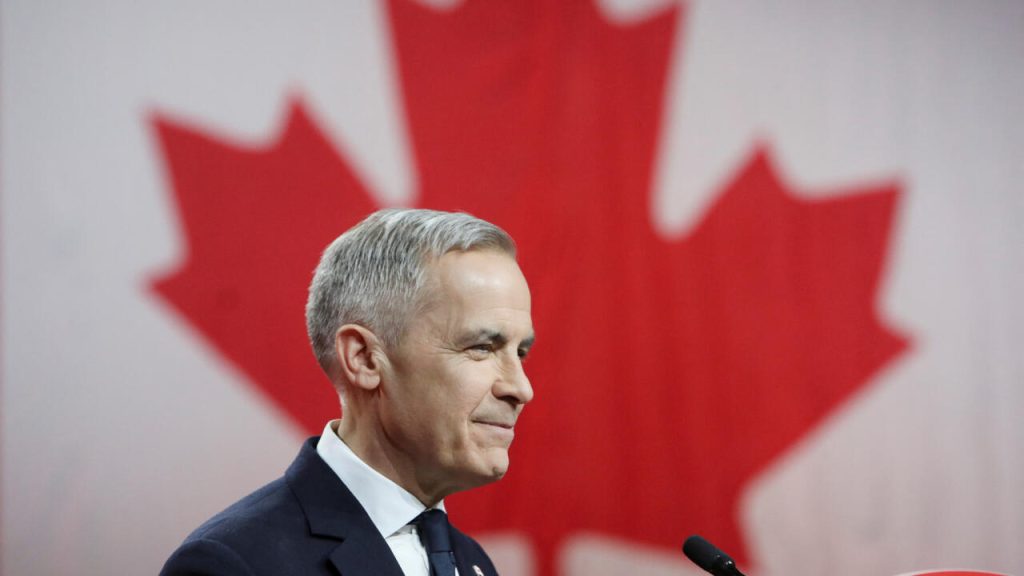
Canadians have ignored the President of the United States of America’s annexation call, as Mark Carney, a Liberal, has been elected as prime minister of the country, according to the projections of the national broadcaster CBC/Radio Canada.
Carney beat his opposite, Pierre Poilievre of the Conservative Party, to emerge the winner in one of the country’s most consequential elections in decades.
However, it’s still not clear if his Liberal party will win the 172 seats needed for an outright majority in parliament.
The full results will not be available until late Monday evening or early Tuesday morning.
The vote was widely seen as a decision about which candidate could best handle President Trump, who helped spark a wave of nationalism across Canada by threatening to annexe Canada and placing stiff tariffs on the country.
The 60-year-old Carney had a career in investment banking before becoming the governor of the Bank of England during the Brexit turmoil and the head of the Bank of Canada during the 2008 economic downturn.
Carney had never held political office before being named leader of the Liberal Party in March.
His background in finance and his seemingly unflappable demeanour helped convince voters he was the candidate that could best tackle Trump and his sometimes erratic policies.
Carney’s victory comes amid President Trump’s call for the annexation of Canada by the US.On Monday, Trump repeated his call for Canada to be the 51st US state.



International
Burnham becomes PM, vows 10-year plan to stabilise UK
The 56-year-old is the sixth prime minister to enter Downing Street in the last 10 years.

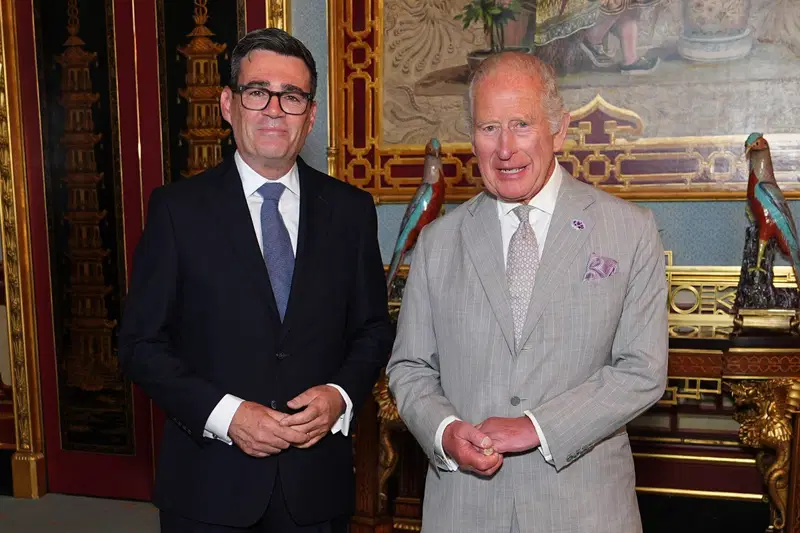
•Incoming Prime Minister Andy Burnham poses with Britain’s King Charles III on July 20, 2026 (Photo by Aaron Chown / POOL / AFP).
Andy Burnham became British prime minister Monday after meeting King Charles III at Buckingham Palace and was set to set out his vision for the country after taking over from Keir Starmer.
In his first speech, Burnham vowed to put forward a 10-year plan for Britain, saying the country needed to make politics work.
“Britain needs to show the world that we can regain our stability once again,” Burnham said just after being appointed by King Charles III to take over from Keir Starmer.
He pledged to “issue my first instruction to end rough sleeping in our country” once he starts work.
Starmer departed Downing Street on Monday morning, insisting in a farewell speech his two years in office had made Britain a better place.
The monarch met Starmer to accept his resignation and Burnham arrived next for the formal procedure in which the king asked him to form the next government and he accepted.
The 56-year-old is the sixth prime minister to enter Downing Street in the last 10 years.
International
US Vice President Vance announces birth of baby boy
The birth marks the latest addition to the Vance family. Vance and Usha got married in 2014 and previously had three children before welcoming their new son.
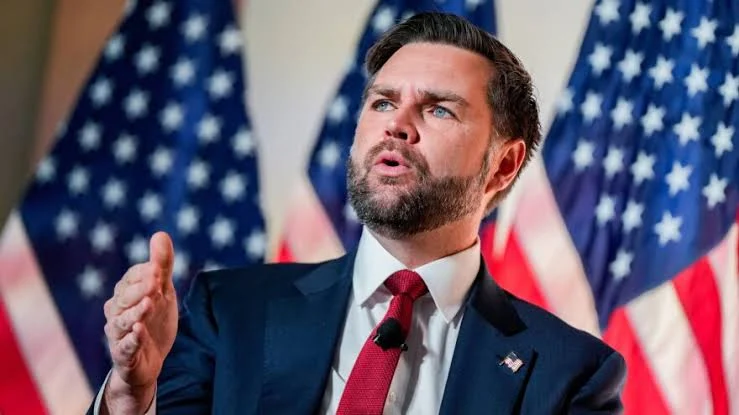
United States Vice President JD Vance has announced the birth of his son, saying both the newborn and his wife, Usha Vance, are healthy.
The birth marks the latest addition to the Vance family. Vance and Usha got married in 2014 and previously had three children before welcoming their new son.
Vance made the announcement in a statement shared on Sunday, expressing gratitude to the medical personnel who assisted during the delivery.
Vance also paid tribute to the medical teams at Walter Reed Medical Centre and the White House Medical Unit for their care and support.
“We are excited to announce that our baby boy, Alec Neel Vance, was born this morning.
“Usha and the baby are happy and healthy, and our kids are overjoyed to meet their little brother,“ he said.
International
Andy Burnham set to become Labour leader before taking over as UK PM
Burnham, who has since become known as the “king of the North,” returned to Westminster in June after securing a huge majority in the Makerfield by-election, comfortably beating out challengers from Nigel Farage’s Reform UK party and Rupert Lowe’s hard-right Restore Britain.
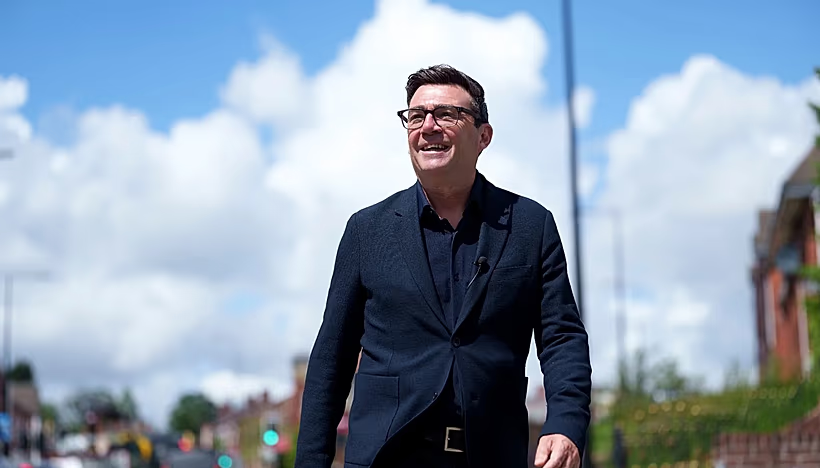
• Andy Burnham / Euro News
Andy Burnham is set to be announced as the Labour Party’s new leader on Friday.
Euro News reports that the Makerfield MP is scheduled to be unveiled at a special press conference before taking over as the UK’s seventh prime minister in a decade on Monday.
Burnham is expected to deliver a speech during the conference where he will reportedly pledge to be “unashamedly Labour” and vow that his government will have the “courage to fix the big things that politics has neglected.”
Burnham was left with a clear path to Downing Street after his last potential leadership rival ruled out challenging last week.
He received 379 nominations from Labour MPs for the party leadership out of a possible 403.
His uncontested run has sparked concern from some analysts and government insiders, however, and opposition leader Kemi Badenoch has accused Labour of “running scared” of scrutiny.
It comes after Keir Starmer announced he was stepping down as PM last month, as pressure continued to build in the wake of Labour’s disastrous local election results in May.
Who is Andy Burnham?
Born on Merseyside in the northwest of England and raised in the village of Culcheth in Cheshire, Burnham has said he was first inspired to enter politics after watching “Boys From The Blackstuff,” an acclaimed 1982 TV show about five unemployed men in Liverpool navigating life in Margaret Thatcher’s Britain.
He went on to study English at the University of Cambridge before starting out in journalism, working for a number of trade publications.
He soon made the jump into politics, taking a job as a researcher for the late Tessa Jowell, a former MP for Dulwich, while in his early 20s.
He eventually became MP for Leigh in 2001, a position he held until 2017, and served in a number of senior ministerial positions, including as secretary of state for health and chief secretary to the Treasury. He unsuccessfully ran for the Labour leadership in 2010 and 2015, losing to Ed Miliband and Jeremy Corbyn, respectively.
In 2017, he took over as mayor of Greater Manchester, overseeing a period of huge growth and development and gaining a reputation for his loyal defence of the region during the Covid-19 pandemic lockdown.
Burnham, who has since become known as the “king of the North,” returned to Westminster in June after securing a huge majority in the Makerfield by-election, comfortably beating out challengers from Nigel Farage’s Reform UK party and Rupert Lowe’s hard-right Restore Britain.


Katsina Flood Sweeps Away Siblings Returning From Islamiyya School

An alleged fake university discover in Lagos

Cardoso Urges Banks To Lend Out Idle Funds With CBN * Retains MPR at 26.5%

Tech Expert, Zuckerberg trains with UFC champions, Adesanya, Alexander

Organ Trafficking: Ekweremadu bags 10 years in UK prison

SAINT OBI: Between his marriage and his death
-
 News1 day ago
BIJAMIC College Charges Class of 2026 Graduates to Embrace Resilience, Learn from Thomas Edison
-
 Sports3 days ago
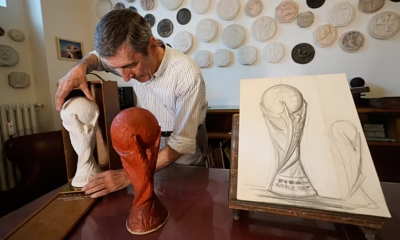
Who made the FIFA World Cup trophy?
-
 News2 days ago
Senegal President, Faye elected new ECOWAS chairman
-
 Crime2 days ago
Students Killed as Troops Foil ISWAP Abduction Bid in Borno
-
 News2 days ago
Badejo-Okusanya Emerges NBA National President (2026-2028)
-
 Sports2 days ago
FIFA To Review Hydration Breaks After World Cup Final – Wenger
-
 News1 day ago
Abbas inaugurating today committee to investigate illegal PFIPC agency
-
 International1 day ago
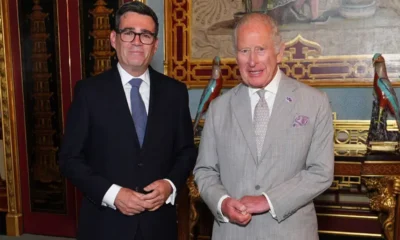
Burnham becomes PM, vows 10-year plan to stabilise UK