
News
JUST IN: 119 Inmates Escape As Rainstorm Destroys Suleja Correctional Centre Fence

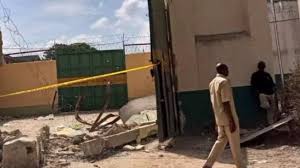
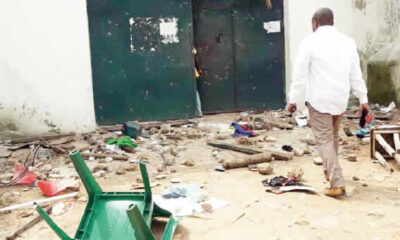
It’s unfortunate that 119 inmates have escaped from the Medium Security Custodial Centre in Suleja, Niger State, due to the havoc caused by a rainstorm. The damage to a part of the facility enabled their escape. This situation highlights the vulnerability of prison facilities during natural disasters and the importance of robust infrastructure to prevent such incidents. Authorities will undoubtedly be working to apprehend the escaped inmates and ensure the safety of the public.
The Deputy Superintendent of Corrections Command Public Relations Officer, AS Duza, stated on Thursday morning that a heavy downpour on the night of Wednesday, April 24, 2024, wreaked havoc on the Medium Security Custodial Centre in Suleja, Niger State. This resulted in the destruction of a part of the custodial facility, including its perimeter fence, allowing 119 inmates to escape. Efforts have been intensified to recapture the escaped inmates, with 10 of them already retaken into custody. Duza also mentioned ongoing efforts to modernize and upgrade custodial facilities across Nigeria, with the construction of new centers and renovation of existing ones.
The heavy rain damaged parts of the building, particularly the perimeter fence protecting one of the cells where inmates were housed. Babangida Turaki, a resident of Suleja, reported that a part of the fence, which was undergoing repairs, was brought down by the rain. Security reinforcements managed to return some of the escaping prisoners, and efforts were underway to locate and arrest the remaining escapees.
Despite the incident, normalcy has returned to Suleja town, with a continued search operation to recover the remaining prisoners.
This escape incident occurred as the Federal Government is stepping up efforts to decongest correctional centers across the country. Plans were announced in November to release 4,068 inmates nationwide, particularly focusing on indigent inmates who cannot afford to pay their fines. The Minister of Interior, Olubunmi Tunji-Ojo, stated that the government has allocated N585 million for the payment of fines to secure the release of these inmates.


News
Police must pay transport fares, says AIG
” No police officer has the right to enter your vehicle without paying. We should assist one another willingly, not by force,” he said.

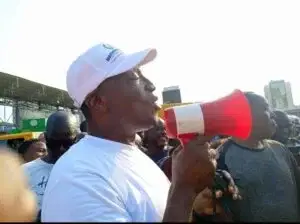
• The Assistant Inspector-General of Police(AIG) in charge of Zone 2 Command, Mr Olohundare Jimoh, speaking with transporters at Obalende garage, Lagos State, on Wednesday.
The Assistant Inspector-General of Police, Zone 2 Command, Mr Olohundare Jimoh, has declared that officers must pay fares before boarding commercial vehicles, warning against abuse of authority.
Jimoh spoke on Wednesday at Obalende garage during a sensitisation meeting with drivers and transport workers marking National Police Day 2026.
He stressed that relations between police and the public must be based on partnership, not coercion, urging both sides to support each other voluntarily.
“No police officer has the right to enter your vehicle without paying. We should assist one another willingly, not by force,” he said.
Jimoh called for stronger cooperation to maintain safety and order on roads, insisting there was no conflict between officers and transport unions.
“I don’t collect money from officers. We don’t arrest people arbitrarily. If you have issues with any officer, report directly to me,” he said.
(Vanguard)
President Bola Ahmed Tinubu will leave for Jos tomorrow to commiserate with the state government and residents over recent deadly gun attacks that lefts dozens dead.
This was following Governor Caleb Mutfwang’s security briefing to the President on the recent violent attack in Angwan Rukuba, Plateau State.
During the meeting on Wednesday at the presidential villa in Abuja, Governor Caleb Mutfwang told Mr President that although security forces have restored calm after fresh disturbances involving looters on Wednesday morning, following the deadly Palm Sunday attack that left more than a dozen dead and many others injured.
He said that investigations are continuing to determine the identities or motives of the attackers who are yet to be apprehended .
Presidency source said that President Tinubu was initially scheduled for a planned trip to Ogun State to flag off operations at the Gateway International Cargo Airport on Thursday.
From Jos, the President will travel to Lagos to observe Good Friday.
On Saturday, April 4, he will visit Ogun State to commission projects including the cargo airport.
He will then return to Lagos during the Easter holiday to commission several state infrastructure projects, including the Ojota/Opebi Link Bridge.
Before heading back to Abuja, the president will visit Bayelsa State on April 10 to commission projects completed under Governor Duoye Diri.
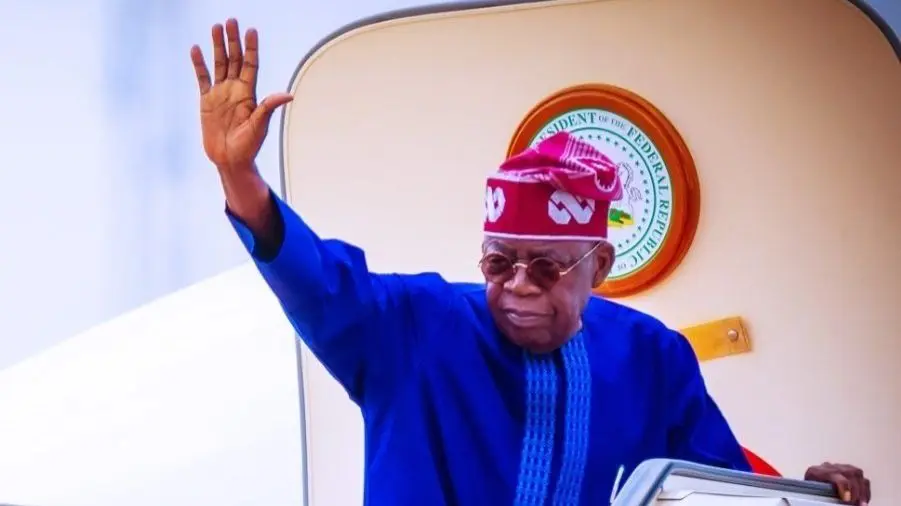
President Bola Ahmed Tinubu will tomorrow embark on a visit to Jos, Plateau State, as the first leg of a five-state tour across the country.
The Presidency announced that the President has postponed his scheduled trip to Ogun State to enable him to commence the series of official visits.
Details of the remaining four states in the tour are expected to be released by the Presidency in due course.
The development comes as President Tinubu continues nationwide engagements aimed at assessing development projects, interacting with stakeholders, and addressing key national issues in the respective states.
Further updates on the itinerary will be communicated as the visits progress.


INEC Dismisses Calls for Chairman’s Removal

Ebonyi: Gunmen Assasinate Another Traditional Ruler

From South Africa to US, ‘Cicada’ COVID-19 variant spreading

Tech Expert, Zuckerberg trains with UFC champions, Adesanya, Alexander

Organ Trafficking: Ekweremadu bags 10 years in UK prison

SAINT OBI: Between his marriage and his death
-

 Business3 days ago
BUA Foods Plc Reports Strong 2025 Performance with ₦1.77 Trillion Revenue, Proposes Record ₦28 Dividend per Share
-

 News3 days ago
NELFUND Debunks Claims of ₦25,000 Student Upkeep Allowance
-
 Business2 days ago
33 Nigerian Banks Beat CBN’s Recapialisation with ₦4.65trn Combined Capital Base
-
 News3 days ago
Tinubu Appoints CAC, NPC, Officials, Names Adviser on Political Economy
-
 Sports3 days ago
Sportsville Awards: Olopade Leads NSC Delegation to Honour Dikko with Transformative Impact Award
-
 News3 days ago
Nigeria Welcomes African Games Bid Evaluation Committee
-
 Politics2 days ago
BREAKING: INEC Withdraws Recognition of David Mark’s ADC
-
 News3 days ago
El-Rufai Appear in State High Court, after Mother’s death, as Trial Continues