
Business
How to Market and Sell Real Estate in Nigeria as a New Agent
Marketing is the heart of every real estate business. Without marketing, no one knows who you are or what you sell.


By Dennis Isong
When Tunde got his real estate license, he thought the deals would start rolling in immediately.
He imagined himself closing sales, posing for Instagram photos with happy clients, and earning commissions that would make his friends jealous. But three months later, he hadn’t sold a single plot of land.
He was frustrated, tired of hearing “I’ll get back to you,” and wondering if real estate was even for him.
If this story sounds familiar, don’t worry—you’re not alone. Many new agents in Nigeria experience the same reality.
The truth is that learning how to market and sell real estate in Nigeria as a new agent takes patience, strategy, and the right kind of exposure.
Nigeria’s property market is dynamic, competitive, and full of opportunities, but only those who understand how to position themselves can thrive.
This article will show you practical steps to not only survive but also grow as a new real estate agent in Nigeria.
1. Understanding the Nigerian Real Estate Market
Before diving into sales and marketing strategies, every new agent must first understand the market they are operating in.
Nigeria’s real estate market is not a one-size-fits-all environment.
Lagos, Abuja, Port Harcourt, and other cities all have their own rhythm and buyer behavior.
Lagos, for instance, is known for its fast-paced property transactions and high demand for both residential and commercial properties. Abuja, on the other hand, attracts more high-end and government-influenced deals.
As a new agent, your first task is to understand your local market thoroughly. Who are the people buying and selling? What kind of properties move faster? What are the trending areas?
For example, in Lagos, areas like Ibeju-Lekki, Ajah, and Epe are currently in high demand due to ongoing infrastructure development and the influx of investors.
Knowing this helps you target the right clients instead of marketing blindly.Also, familiarize yourself with property documentation, government policies, and titles like Certificate of Occupancy, Deed of Assignment, and Survey Plan.
Many new agents lose clients simply because they can’t confidently explain the meaning of these documents.
Knowledge gives you authority, and authority builds trust—a key ingredient for every real estate sale.
Understanding the Nigerian real estate market is like learning the traffic pattern of Lagos.
Once you know where the shortcuts and hold-ups are, you move faster and smarter.
2. Building Your Brand and Credibility
In real estate, people don’t just buy properties—they buy trust. And as a new agent, trust doesn’t come automatically. You have to earn it through consistency, authenticity, and visible professionalism.
Start by creating a strong personal brand.
This doesn’t mean expensive marketing campaigns or flashy suits; it means positioning yourself as reliable and knowledgeable.
Use your social media pages to educate, not just advertise.
Share tips on property buying, warn people about scams, and celebrate your clients’ successes.
Over time, your audience begins to see you as a genuine guide, not just a salesman.
Many new agents make the mistake of posting only “land for sale” flyers without building any real connection.
The Nigerian audience is more likely to buy from people they know, like, and trust.
So, while others are shouting “Buy now before the price increases,” you should focus on telling stories—stories about people who invested early, stories about community development, or even your personal journey as a realtor.
Additionally, ensure you have a clean online presence.
Create a professional WhatsApp display, have a neat profile picture, and use a consistent business name across platforms.
When someone Googles you or your business, they should see something credible.
Offline branding matters too. Attend networking events, property exhibitions, and seminars.
Hand out your business cards professionally.
Dress neatly and speak confidently. Every impression counts because in this business, one good connection can lead to multiple referrals.
Building credibility also means associating yourself with reputable real estate companies or developers.
When clients know you represent a trusted brand, it strengthens your position.
Remember, in Nigeria’s competitive market, people may forget your name, but they will never forget how you made them feel.
Your professionalism, honesty, and humility are the real marketing tools that attract clients again and again.
3. Mastering Marketing: Online and Offline
Marketing is the heart of every real estate business. Without marketing, no one knows who you are or what you sell.
As a new agent, mastering both online and offline marketing strategies is what will set you apart from others.
Let’s start with online marketing. The internet has become the biggest real estate marketplace in Nigeria.
Platforms like Instagram, Facebook, TikTok, and YouTube are no longer just for entertainment—they are where deals happen.
If you understand how to market and sell real estate in Nigeria as a new agent, you must learn to use these platforms effectively.
Create engaging content. Instead of simply posting “Land for sale at Ibeju-Lekki,” show the location in a short video.
Talk about nearby developments, show access roads, and explain why the land is a good investment.
Nigerians love visuals; when they see what you are talking about, they connect better.
Consistency is key. Post regularly, respond to messages quickly, and build conversations.
Attend local community events, visit estates under development, and meet with landowners or developers. Sometimes, the best deals come from word-of-mouth or face-to-face meetings
Don’t be afraid to go live on Instagram or Facebook to answer people’s property questions.
It might feel awkward at first, but every live session builds visibility.
You can also run paid ads on social media to reach a wider audience, especially Nigerians in the diaspora who are constantly searching for reliable property agents in Lagos, Abuja, and other cities.
Ensure your ads are well-targeted and have clear calls to action.However, online marketing alone is not enough.
The Nigerian real estate market still thrives on personal connections and trust built offline.
Attend local community events, visit estates under development, and meet with landowners or developers. Sometimes, the best deals come from word-of-mouth or face-to-face meetings.
Offline marketing could also mean printing flyers, putting up banners in strategic locations, or collaborating with local businesses.
For example, you can partner with surveyors, lawyers, or building contractors who can refer clients to you.
The more people you connect with, the wider your sales network becomes.
Ultimately, effective marketing is about visibility and communication. You must always be in front of people’s minds, both online and offline.
The day they decide to buy, you should be the first person they remember.
4. Learning the Art of Selling
Selling real estate is not just about showing land or houses—it’s about understanding human psychology.
Every buyer has a reason behind their decision, whether it’s security, investment, comfort, or prestige.
Your job as a new agent is to identify that reason and help them achieve it.When meeting a potential buyer, don’t rush to talk about price.
Start by asking questions: “What exactly are you looking for?” “Are you buying to build or for investment?” “What’s your preferred location?” These questions make clients feel understood, and when they trust that you have their interest at heart, they’re more likely to buy from you.
Follow-up is another powerful sales skill many agents ignore.
In Nigeria, clients rarely buy immediately. They often need time to think, confirm from others, or compare prices.
That’s where follow-up messages come in. Send polite reminders, share updates, or send them new listings. But avoid being pushy; people hate being pressured.Your presentation also matters.
When showing a property, be enthusiastic but realistic. Avoid overpromising. If there are challenges like poor roads or pending government approval, mention them and provide solutions.
Clients appreciate honesty, and it often leads to referrals even if they don’t buy immediately.
Negotiation is another critical part of learning how to market and sell real estate in Nigeria as a new agent. Nigerians love to negotiate, so don’t take it personally when a client offers a ridiculously low price.
Stay calm, know your facts, and explain the value behind the price. For instance, you can say, “Yes, this property costs a bit more, but it’s already fenced and close to the expressway, which increases its resale value.”
Facts always win arguments.You should also learn to close deals effectively. Many agents lose clients at the point of decision because they hesitate to ask for commitment.
Once you sense serious interest, move the conversation toward payment or documentation. Confidence and clarity are signs of professionalism.
Every successful sale, no matter how small, is a big win. Celebrate it. Share your success stories (with permission), and use them as testimonials for your next clients.
In real estate, one sale done right can open doors to ten more.
5. Growing Beyond the First Sale
Selling your first property is an exciting milestone, but it’s only the beginning.
To truly succeed in Nigerian real estate, you must learn how to grow and sustain your business.
Start by building relationships, not just making sales. Stay in touch with your clients even after they’ve bought property.
Call them occasionally, send greetings during festive seasons, and keep them updated about new opportunities.
A happy client will always refer new buyers to you.
In fact, most top realtors in Nigeria get more than half of their business from referrals.
Invest in continuous learning. Attend real estate training, webinars, and workshops.
Read books on sales, marketing, and personal development.
The more you know, the more confident you become.
Nigeria’s property market keeps evolving—new laws, new technologies, new trends—so staying updated keeps you ahead.Technology is another tool for growth.
Use CRM (Customer Relationship Management) tools to organize your contacts and follow up systematically.
Use Google Maps to understand property locations, and use WhatsApp broadcast lists to share new listings.
These small efforts make a big difference.
Another aspect of growth is specialization.
Over time, identify your niche. You can focus on residential sales, luxury homes, commercial property, or land banking.
Specializing helps you build expertise and attract the right clients.
Finally, maintain integrity. In an industry full of scams and half-truths, honesty will set you apart.
Always verify your information before marketing a property.
If you don’t know something, say so and promise to find out.
Never compromise your name for quick profit.
As your reputation grows, so will your income. You’ll start getting calls from Nigerians in the diaspora, referrals from satisfied clients, and invitations from developers who want you on their team.
That’s when you’ll realize you’ve moved from being a new agent to a trusted professional.
Conclusion
Learning how to market and sell real estate in Nigeria as a new agent is not about luck or magic. It’s about consistency, knowledge, and the willingness to grow.
Every call you make, every post you share, every deal you close—no matter how small—takes you one step closer to becoming a top realtor.
Like Tunde in our story, every beginner faces challenges, but those who keep learning, adapting, and building relationships eventually find their place in the industry.
Real estate is not just about selling land or houses; it’s about connecting people to their dreams.
And when you do that with integrity and passion, success naturally follows.
So, whether you’re just starting out or trying to revive your career, remember to stay visible, stay credible, and never stop learning.
The market is big enough for everyone—but only those who play smart and stay consistent truly thrive.
• Dennis Isong is a Top Realtor in Lagos. He helps Nigerians in the diaspora own property in Lagos, Nigeria, stress-free. For inquiries, WhatsApp/Call +2348164741041.
Business
33 Nigerian Banks Beat CBN’s Recapialisation with ₦4.65trn Combined Capital Base
The recapitalisation programme has strengthened the capital base of Nigerian banks, reinforcing the resilience of the financial system and ensuring it is wellpositioned to support economic growth and withstand domestic and external shocks.”

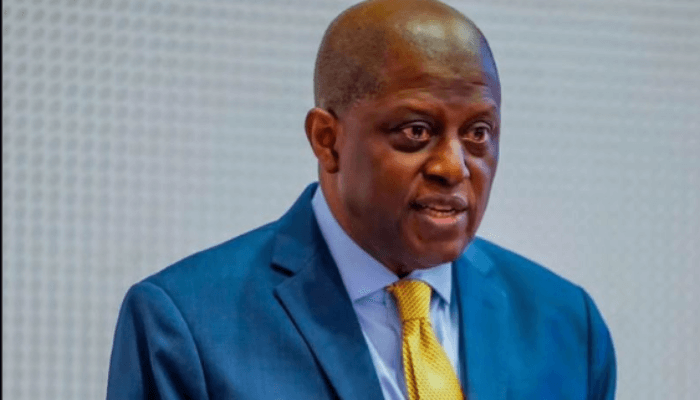
•Governor of CBN, Olayemi Cardoso
The Central Bank of Nigeria (CBN) has wrapped up the banking sector recapitalisation programme it introduced two years ago (March 2024-March 31, 2026) with 33 banks successfully met the requirements deadline.
The banks raised a total of ₦4.65 trillion in new capital, according to a statement signed by Olubukola A. Akinwunmi, the Director, Banking Supervision and Hakama Sidi Ali (Mrs.), the Ag. Director, Corporate Communications.
It said that the recapialisation exercises recorded strong participation from both domestic and international investors, with 72.55% of capital sourced locally and 27.45% from international markets, reflecting sustained confidence in the Nigerian banking sector.
The statement noted that the Governor of CBN, Olayemi Cardoso said “the recapitalisation programme has strengthened the capital base of Nigerian banks, reinforcing the resilience of the financial system and ensuring it is wellpositioned to support economic growth and withstand domestic and external shocks.”
“The CBN confirms that 33 banks have met the revised minimum capital requirements established under the programme.
A limited number of institutions remain subject to ongoing regulatory and judicial processes, which are being addressed through established supervisory and legal frameworks.
“All banks remain fully operational, ensuring continued access to banking services for customers.

African Export-Import Bank has underwritten $2.5 billion in a $4 billion senior syndicated term loan for Dangote Petroleum Refinery and Petrochemicals, in a move aimed at strengthening the refinery’s financial position and supporting its long-term growth and expansion strategy.
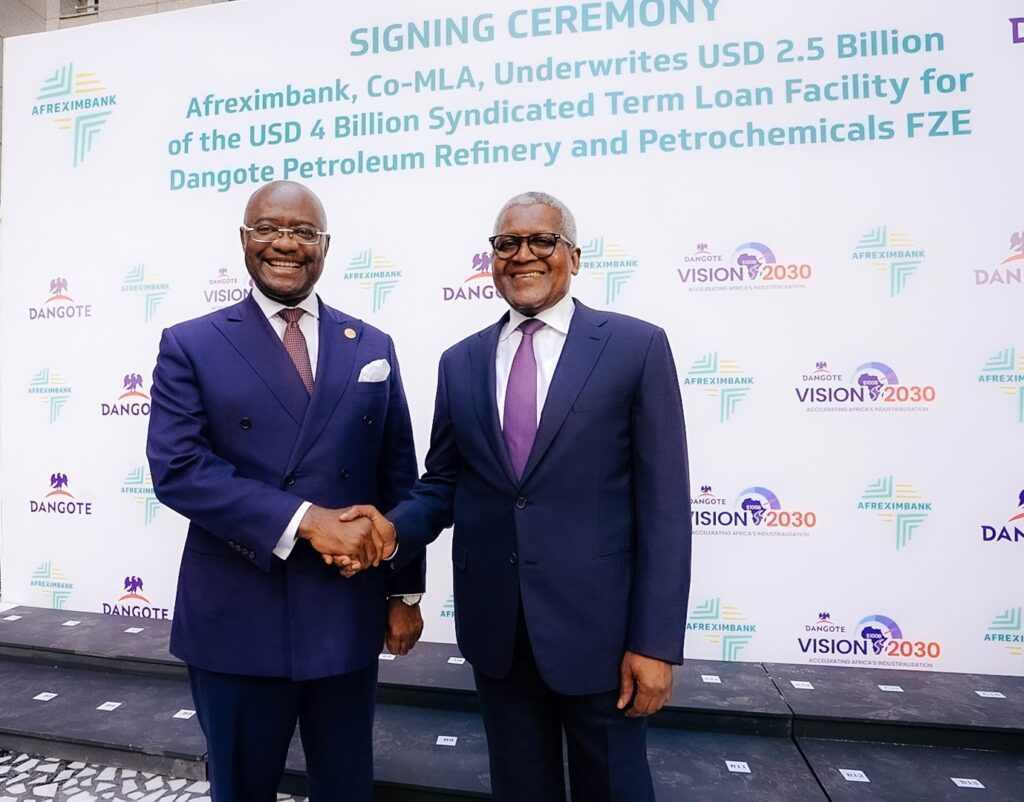
The five-year facility, arranged alongside Access Bank as co-Mandated Lead Arrangers, is designed to consolidate existing debt, optimise the refinery’s capital structure and align its financing with current operational realities.
The transaction marks a significant milestone for the Dangote Refinery, Africa’s largest refining and petrochemical complex with a capacity of 650,000 barrels per day.

Afreximbank’s $2.5 billion participation represents the largest share of the syndicate, underscoring its strategic role in mobilising capital for industrial projects across the continent.
The bank said the financing aligns with its mandate to promote industrialisation, reduce reliance on imported petroleum products and deepen intra-African trade.
Since refining operations commenced in February 2024, Afreximbank has played a key role in supporting the project, including providing a $1 billion working capital facility and acting as financial adviser on the Naira-for-Crude initiative, which facilitates crude procurement and product sales in local currency.
Speaking during a strategy session in Cairo, Egypt, President and Chairman of the Board of Directors of Afreximbank, George Elombi, said the bank’s continued backing reflects confidence in indigenous African enterprises.
“We take immense pride in being the single largest provider of financing to the Dangote Group. We do so primarily because Dangote is African,” he said.
“When we invest in ourselves, we do more than create jobs and wealth or expand government revenues; we build a secure and resilient future for our continent”
Elombi disclosed that Afreximbank has committed about $15 billion to Dangote Group since 2015, highlighting the scale of its long-term partnership with the conglomerate.
President and Chief Executive of Dangote Industries Limited, Aliko Dangote, described the financing as a critical step in positioning the refinery for its next phase of expansion.
“This financing marks an important step in strengthening the financial foundation of Dangote Petroleum Refinery & Petrochemicals and positions the business for the next phase of its growth,” he said.
“We appreciate Afreximbank’s continued support and confidence in our vision to build world-class industrial capacity that serves Nigeria, Africa and global markets.”
The syndicated loan attracted strong participation from a mix of African and international financial institutions, reflecting sustained investor confidence in the refinery as a transformative industrial asset in advancing Africa’s energy security, reducing import dependence and supporting the continent’s broader industrialisation agenda.
Business
BUA Foods Plc Reports Strong 2025 Performance with ₦1.77 Trillion Revenue, Proposes Record ₦28 Dividend per Share

Leading Nigerian food manufacturer BUA Foods Plc has announced robust full-year 2025 audited results, with revenue climbing 16% to ₦1.77 trillion from ₦1.53 trillion in 2024.
The growth was driven by sustained consumer demand for the company’s core staples sugar, flour, pasta, and rice alongside higher sales volumes and strategic pricing amid a challenging economic environment marked by inflationary pressures on households.
Profit after tax nearly doubled, rising 95% to ₦518.4 billion, while gross profit surged to ₦737.3 billion from ₦540.8 billion the previous year.
Operating profit also increased significantly to ₦656.6 billion.In a strong signal of confidence in its outlook and commitment to shareholder value, the Board of Directors has proposed a final dividend of ₦28 per ordinary share of 50 kobo.
This represents a 115% increase from the ₦13 per share paid in 2024, translating to a total payout of approximately ₦504 billion, subject to approval by shareholders at the company’s 2026 Annual General Meeting.
Chairman Abdul Samad Rabiu highlighted the results, stating that the substantial dividend hike underscores the company’s dedication to rewarding investors while continuing to invest in business expansion and operational efficiency.
BUA Foods, a major player in Nigeria’s food processing sector controlled by billionaire Abdul Samad Rabiu, has continued to benefit from scale advantages, market expansion, and resilient demand for essential food products despite broader economic headwinds.
The company’s shares have reacted positively in recent trading, reflecting investor optimism over the strong earnings and generous dividend proposal.
Full details of the financial statements were filed with the Nigerian Exchange (NGX) on Monday.
Analysts view the performance as a testament to BUA Foods’ robust business model and ability to navigate Nigeria’s macroeconomic challenges through volume growth and cost discipline.


INEC Dismisses Calls for Chairman’s Removal

Ebonyi: Gunmen Assasinate Another Traditional Ruler

From South Africa to US, ‘Cicada’ COVID-19 variant spreading

Tech Expert, Zuckerberg trains with UFC champions, Adesanya, Alexander

Organ Trafficking: Ekweremadu bags 10 years in UK prison

SAINT OBI: Between his marriage and his death
-

 Business2 days ago
33 Nigerian Banks Beat CBN’s Recapialisation with ₦4.65trn Combined Capital Base
-
 Politics2 days ago
BREAKING: INEC Withdraws Recognition of David Mark’s ADC
-

 News3 days ago
El-Rufai Appear in State High Court, after Mother’s death, as Trial Continues
-

 Sports2 days ago
FirstBank Sponsors Samuel Okwaraji U-16 Football Championship 2026
-

 News2 days ago
JUST IN: Tinubu Heads to Jos Tomorrow, Postpones Ogun Trip for 5-State Visits
-

 News3 days ago
JUST IN: El-Rufai Leaves State High Court for Federal High Court in Kaduna
-

 Business3 days ago
Afreximbank Leads $4bn Financing for Dangote Refinery with $2.5bn Commitment
-

 Entertainment2 days ago
Super Eagles Iwobi to launch music album ‘More To Life’