
Business
How to Buy Land in Lagos While Living Abroad (Step-by-Step Guide) by Dennis Isong
When transferring money internationally, be aware of the regulations in both your country of residence and Nigeria.

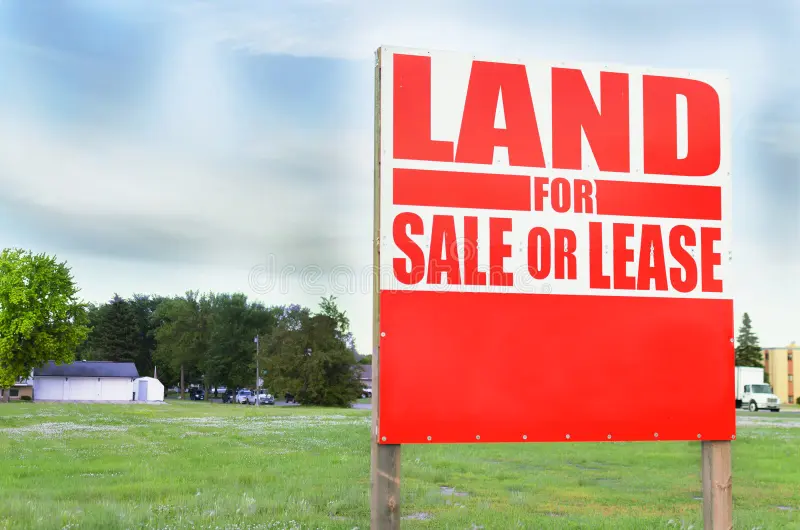
ADAEZE stared at her laptop screen in her Toronto apartment, scrolling through yet another property listing in Lagos.
She had been living in Canada for eight years, working as a nurse, and the dream of owning land back home had grown from a whisper to a roar.
Her younger sister was getting married soon, her parents were ageing, and the idea of having a solid asset in Lagos felt like planting roots even while living thousands of miles away.
But every time she got close to making a decision, fear crept in.
What if the land didn’t exist? What if the documents were fake? What if she sent her hard-earned money into a black hole?
These questions kept her awake at night, and she knew she wasn’t alone.
Thousands of Nigerians living abroad share this dream and this fear.If you’re reading this, you’re probably like Adaeze. You want to invest in Lagos real estate, but the distance makes everything feel complicated and risky.
The good news is that buying land in Lagos while living abroad is entirely possible, and with the right approach, you can do it safely and successfully.
This guide will walk you through the entire process, from research to ownership, so you can make informed decisions and avoid costly mistakes.
Understanding the Lagos Land Market from Abroad
The Lagos property market is one of the most dynamic in Africa, and it attracts investors from all over the world.
As someone living abroad, you need to understand what makes this market tick before you dive in. Lagos is not a monolithic city. It’s a sprawling metropolis with different areas offering different opportunities and challenges.
Areas like Lekki, Ikoyi, and Victoria Island are well-developed and come with premium price tags. These locations offer good infrastructure, clear documentation, and lower risk of land disputes.
On the other hand, emerging areas like Epe, Ibeju-Lekki, and Badagry offer more affordable prices but may come with infrastructure challenges and longer development timelines.
Your choice depends on your budget, investment goals, and risk tolerance.
One thing you must understand is that the Lagos land market operates differently from what you might be used to in Europe, North America, or other parts of the world.
Land ownership in Lagos involves multiple layers of verification, from traditional rulers to state government agencies.
The process can feel overwhelming, especially when you’re managing it from a different time zone, but understanding these layers is your first line of defence against fraud.
Many Nigerians abroad make the mistake of rushing into purchases because they see a “good deal” or because family members pressure them. Patience is your greatest asset here.
The land will still be there after you’ve done your homework.
Take time to understand market prices in different areas, learn about title documents, and familiarize yourself with the legal framework governing land transactions in Lagos.
This knowledge will save you money and heartache in the long run.Another critical aspect is understanding the difference between freehold and leasehold properties.
In Lagos, most land falls under the Lagos State Government’s control, and what you’re often buying is a leasehold interest, typically for 99 years.
This is perfectly fine and legally sound, but you need to know what you’re getting.
Finding Reliable Real Estate Professionals
This is where your entire journey either becomes smooth or turns into a nightmare.
The quality of the real estate professional you work with will determine your experience.
When you’re abroad, you need someone on the ground who acts as your eyes, ears, and protector of your interests.
This cannot be just anyone.Start by looking for licensed and registered realtors.
In Nigeria, the Estate Surveyors and Valuers Registration Board of Nigeria oversees real estate professionals.
A registered realtor has something to lose if they engage in fraudulent activities, which gives you a layer of protection.
Don’t just take someone’s word that they’re registered. Ask for their registration number and verify it independently.
Personal referrals are gold in this process. If you know other Nigerians abroad who have successfully bought land in Lagos, ask them who they worked with.
Online reviews can help, but they’re easier to fake than personal testimonials from people you trust.
Join diaspora groups on social media platforms where property investment is discussed.
These communities often share experiences about realtors, both good and bad.
Dennis Isong is a top realtor in Lagos who specializes in helping Nigerians in the diaspora own property stress-free. Working with professionals who understand the unique challenges of remote buying makes a significant difference.
They know that you can’t just hop on a plane for every inspection or meeting, so they structure their services accordingly.
They provide detailed photo and video documentation, arrange virtual meetings, and handle bureaucratic processes on your behalf.
When you’re vetting a realtor, pay attention to how they communicate.
Are they patient with your questions? Do they provide clear, detailed answers? Do they pressure you to make quick decisions?
A good realtor educates you through the process rather than pushing you toward a quick sale.
They should be willing to show you multiple properties, explain the pros and cons of each location, and give you honest assessments even if it means talking you out of a bad deal.
Also, consider working with a real estate lawyer from the very beginning. While your realtor handles the property search and negotiation, a lawyer protects your legal interests.
They review documents, conduct searches at the Land Registry, verify the seller’s ownership, and ensure that the transaction follows proper legal procedures.
This might seem like an extra expense, but it’s actually an investment in security. The cost of a lawyer is tiny compared to losing your entire investment to fraud.
Conducting Thorough Due Diligence Remotely
This is the most critical phase of buying land in Lagos while living abroad. Due diligence is where you separate real opportunities from disasters waiting to happen.
The good news is that even from abroad, you can conduct comprehensive due diligence if you know what to look for and who to work with.Start with document verification. Every piece of land in Lagos should have a chain of ownership that you can trace.
The key documents you need to verify include the Certificate of Occupancy, which is the primary evidence of title in Lagos State, the Survey Plan, which shows the exact measurements and location of the land, the Deed of Assignment or Contract of Sale, which proves the transfer of ownership, and in some cases, a Governor’s Consent, which is required for certain transactions.
Your lawyer should conduct searches at the Lagos State Land Registry to confirm that the documents are genuine and that there are no encumbrances on the land.
This search reveals whether the land is subject to any disputes, whether it has been sold to multiple people (a common scam), and whether the seller actually has the right to sell it.
Never skip this step, regardless of how trustworthy the seller seems.
Physical verification is equally important.
Your realtor should visit the site multiple times, at different times of day if possible, and provide you with comprehensive photo and video documentation.
They should also talk to neighbors and local residents to confirm that there are no disputes or community issues.
Some areas in Lagos have traditional ownership complications that don’t show up in official documents but are known to locals.
Check the land’s status with the Lagos State Government. Some lands are earmarked for government acquisition for public projects like roads, drainage, or public facilities.
Buying such land means you could lose it without adequate compensation.
Your lawyer can help you verify this through inquiries at relevant government agencies.
Beware of lands in environmentally sensitive areas. Lagos has designated some areas as wetlands, flood plains, or areas unsuitable for development.
Building on such land could result in your property being demolished, or you might face astronomical costs trying to make the land build able.
A good surveyor can assess the land’s suitability for your intended purpose.
Another aspect of due diligence involves verifying the seller’s identity. Impersonation is a real problem in Lagos real estate.
People have lost millions because they bought from someone who wasn’t the actual owner of the land.
Insist on meeting the seller (virtually if necessary) and seeing valid identification.
Your lawyer should verify that the name on the ID matches the name on all property documents.
Completing the Transaction Safely
After you’ve found the right property and completed your due diligence, it’s time to handle the transaction itself.
This phase requires careful attention to detail and proper documentation to ensure that your ownership is secure and legally recognized.
The transaction typically begins with negotiation and agreement on price.
Once you and the seller agree on terms, your lawyer should prepare or review a Contract of Sale.
This document outlines all the terms of the transaction, including the purchase price, payment schedule, date of completion, and what happens if either party breaches the agreement.
Never proceed without a written contract, no matter how much you trust the other party.Payment is where many diaspora buyers get nervous, and rightfully so.
You’re about to transfer a significant amount of money to Nigeria from abroad, and you want assurance that the transaction is secure.
The safest approach is to use an escrow account managed by your lawyer. In this arrangement, you transfer the funds to your lawyer’s client account, and the lawyer only releases the money to the seller after all conditions are met and documents are properly executed.
Many banks in Nigeria now offer escrow services specifically for real estate transactions.
This provides an additional layer of security because the bank acts as a neutral third party.
The funds remain in the escrow account until both parties fulfill their obligations. If something goes wrong and the transaction can’t be completed, you get your money back.
When transferring money internationally, be aware of the regulations in both your country of residence and Nigeria.
Large transfers may trigger reporting requirements or questions from financial institutions. Keep all receipts and documentation of the transfer.
This paper trail is important not just for your records but also for tax purposes in both countries.
Once payment is made, the seller should execute a Deed of Assignment in your favor.
This document legally transfers ownership from the seller to you.
It must be properly stamped at the Lagos State Internal Revenue Service, which involves paying stamp duties.
The current stamp duty rate is determined by the value of the transaction.
Your lawyer handles this process, but you should be aware of the cost.After stamping, the Deed of Assignment should be registered at the Land Registry.
Registration provides public notice of your ownership and protects you against subsequent claims.
In Lagos, this process can take time due to bureaucratic delays, but your lawyer should follow up persistently until it’s completed.
The final and crucial step is obtaining the Governor’s Consent.
Under Lagos State law, any transfer of land requires the governor’s consent to be legally valid.
Without this consent, your ownership is technically incomplete.
The process involves submitting an application to the Ministry of Physical Planning and Urban Development along with various documents and fees.
This can take several months, so patience is necessary. Your lawyer should manage this application and keep you updated on progress.
Throughout this entire transaction phase, maintain regular communication with your lawyer and realtor.
Ask for updates, request copies of documents as they’re prepared or received, and don’t be shy about asking questions when something isn’t clear.
You’re making a major investment from thousands of miles away, so thorough communication isn’t being difficult; it’s being smart.
After months of research, consultations with Dennis Isong, thorough due diligence with a property lawyer, and careful transaction management, she became a proud landowner in a developing part of Lekki.
Protecting Your Investment After Purchase
Many diaspora buyers think their work is done once they complete the purchase, but protecting your investment requires ongoing attention.
Land in Lagos, especially undeveloped land, needs active management to prevent encroachment, illegal occupation, or fraudulent resale by criminals.
The first step in protection is securing the land physically. If the land is in a developing area and you’re not ready to build immediately, consider fencing it.
A simple fence with signage indicating ownership can deter squatters and land grabbers.
Some property owners also arrange for a local caretaker who lives nearby to keep an eye on the property. This person can alert you to any suspicious activity.
Documentation is your shield. Keep multiple copies of all your property documents in different secure locations.
Have digital copies stored in cloud services and physical copies in a safe place in Nigeria and with you abroad.
Your lawyer should also maintain a complete set. If documents are ever lost or disputed, having multiple copies protects you.
Stay connected with the local community. If possible, visit the property whenever you’re in Nigeria.
If you can’t visit, have your realtor or lawyer do periodic checks.
Talk to neighbours and local leaders. Being known in the area as the owner reduces the chances of encroachment.
Some successful diaspora property owners join or form landowners’ associations in their areas, which provide collective security and advocacy.
Keep up with property taxes and other government obligations.
In Lagos, land use charges are annual taxes on property ownership.
Paying these on time keeps your ownership current in government records and provides additional proof of ownership. Failure to pay can result in penalties and, in extreme cases, government acquisition.
If you plan to develop the property eventually, stay informed about changes in planning regulations and area development plans.
Lagos State periodically updates its master plans, and these can affect what you’re allowed to build on your land.
Your lawyer or a planning consultant can help you stay updated on regulations affecting your property.
Consider getting property insurance once you’ve secured the land, especially if you’ve done any development like fencing or building.
While this might seem like an extra expense for undeveloped land, it protects against certain risks and disputes.
Finally, maintain your relationship with the professionals who helped you purchase the property.
Your realtor and lawyer are valuable resources for ongoing questions and future transactions.
If you’re happy with their service, they can also help you with additional investments or even selling the property later if your plans change.
Adaeze eventually found her piece of Lagos.
After months of research, consultations with Dennis Isong, thorough due diligence with a property lawyer, and careful transaction management, she became a proud landowner in a developing part of Lekki.
She visits the land every time she returns to Nigeria, and she’s planning to start construction next year.
More importantly, she did it all while maintaining her nursing career in Toronto, proving that distance doesn’t have to be a barrier to smart property investment.
Buying land in Lagos while living abroad is not without challenges, but with the right knowledge, professionals, and approach, it’s entirely achievable.
The key is patience, thoroughness, and working with people who have your best interests at heart.
Your dream of owning property in Lagos is valid, and with this step-by-step guide, you’re now equipped to turn that dream into reality.
For questions or professional assistance with buying land in Lagos while living abroad, contact Dennis Isong, a top realtor in Lagos who helps Nigerians in the diaspora own property stress-free.
WhatsApp/Call +2348164741041



Business
Oil price jumps to $106, stocks drop on uncertainty over US-Iran talks
Crude prices rallied more than three percent on Thursday, with Brent crude above $106 per barrel and WTI around $93.


Oil prices jumped and equities slid Thursday as hopes for a peace deal between the US and Iran wavered after Tehran rejected Washington’s bid to wind down the nearly four-week war.
Markets had been buoyed this week by US President Donald Trump’s announcement that strikes targeting Iran’s energy infrastructure would be postponed, adding that the two sides were in peace talks.
But uncertainty over the talks and the virtual closure of the Strait of Hormuz — through which around 20 percent of oil and liquefied natural gas passes — have cast a shadow over market sentiment.
“The market rollercoaster continues,” said Joshua Mahony, chief market analyst at Scope Markets.
Crude prices rallied more than three percent on Thursday, with Brent crude above $106 per barrel and WTI around $93.
( VANGUARD)
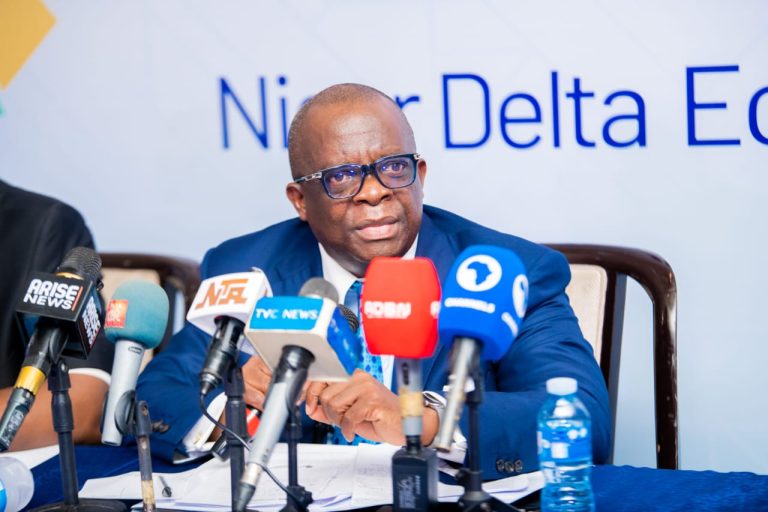
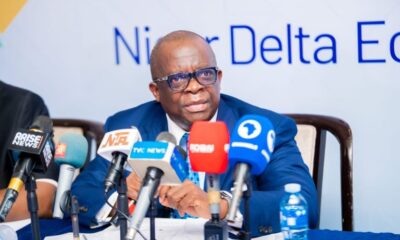
Photo: Ambassador Idaere Gogo Ogan
The Niger Delta Chamber of Commerce, Industry, Trade, Mines and Agriculture (NDCCITMA) has unveiled plans to attract up to five billion dollars structured investments to the oil-producing region in five years.
The Chairman of NDCCITMA, Ambassador Idaere Gogo Ogan, made the disclosure at a pre-summit conference ahead of the Niger Delta Economic and Investment Summit in Port Harcourt, Rivers State.
He said that the initiative would catalyse no fewer than 500,000 direct and indirect jobs as well as spur investments and create wealth.
He said the summit with the theme, “Driving Investment, Innovation, and Industrial Growth in the Niger Delta”, slated for Port Harcourt, would deliberate on investment mobilisation, enterprise growth, industrial expansion, and regional coordination.
Business
Dangote: Middle East crisis might take us back to ‘Work from home’ COVID era
In some countries today, what they’ve done is ask everybody to work from home because they cannot afford it.“I think in Indonesia, they only go to work four days a week.

The President of the Dangote Group, Aliko Dangote, has expressed concerns about the ongoing Middle East crisis taking many countries back to the COVID19 era’s work from home.
Dangote stated this on Monday, after a meeting with President Bola Ahmed Tinubu at his residence in Lagos.
While expressing concern about the economic impact of oil price uncertainty, Africa’s Richest man noted that Nigeria and other African countries might be forced to start working from home, just like the COVID19 era.
Dangote called for prayers and international intervention to end the conflict which has affected the price of fuel and other energy sources in the country.
He said, “In some countries today, what they’ve done is ask everybody to work from home because they cannot afford it.“I think in Indonesia, they only go to work four days a week. And they will look at the situation. If it doesn’t improve, they will ask everybody not to go to work anymore. We will do like that time of COVID, where people will now go and work from home,” Dangote said.
It’s not only energy. Some people will try to take a chance and say, ‘Ah, this is an opportunity. So, let me make money. So, if this thing doesn’t de-escalate, it is going to keep going up and governments cannot really now go and add salaries also. So, people will really feel the pinch,” he said.
Dangote explained that the crisis would hit hardest at ordinary Africans operating small businesses, “People who are barbers, people who are doing bread, people who have industries who have to pay their own generator, I mean, you can see what is happening,” he said.


El-Rufai’ loses mother, Hajiya Umma

Kano Deputy Governor Resigns

Abia State Holds State Burial for Renowned Evangelist Rev. Dr. Uma Ukpai

Tech Expert, Zuckerberg trains with UFC champions, Adesanya, Alexander

Organ Trafficking: Ekweremadu bags 10 years in UK prison

SAINT OBI: Between his marriage and his death
-

 Sports3 days ago
Int’l friendlies: 15 players open Eagles camp in Turkey
-
 Sports3 days ago
Tributes To NRA President Sanni Zubairu
-

 Sports3 days ago
NBF Kida’s board to remain in office until October , says FIBA
-
 Business3 days ago
Dangote: Middle East crisis might take us back to ‘Work from home’ COVID era
-

 Sports3 days ago
Mohamed Salah quitting Liverpool after nine historic years
-
 News3 days ago
Nigeria partner Japan to redevelop Abuja Master Plan
-
 Business3 days ago
Niger Delta Chamber Investment Summit Targets $5bn, 500,000 Jobs
-
 Politics3 days ago
2027: Labour Party says Presidential flag bearer must be a southerner