
News
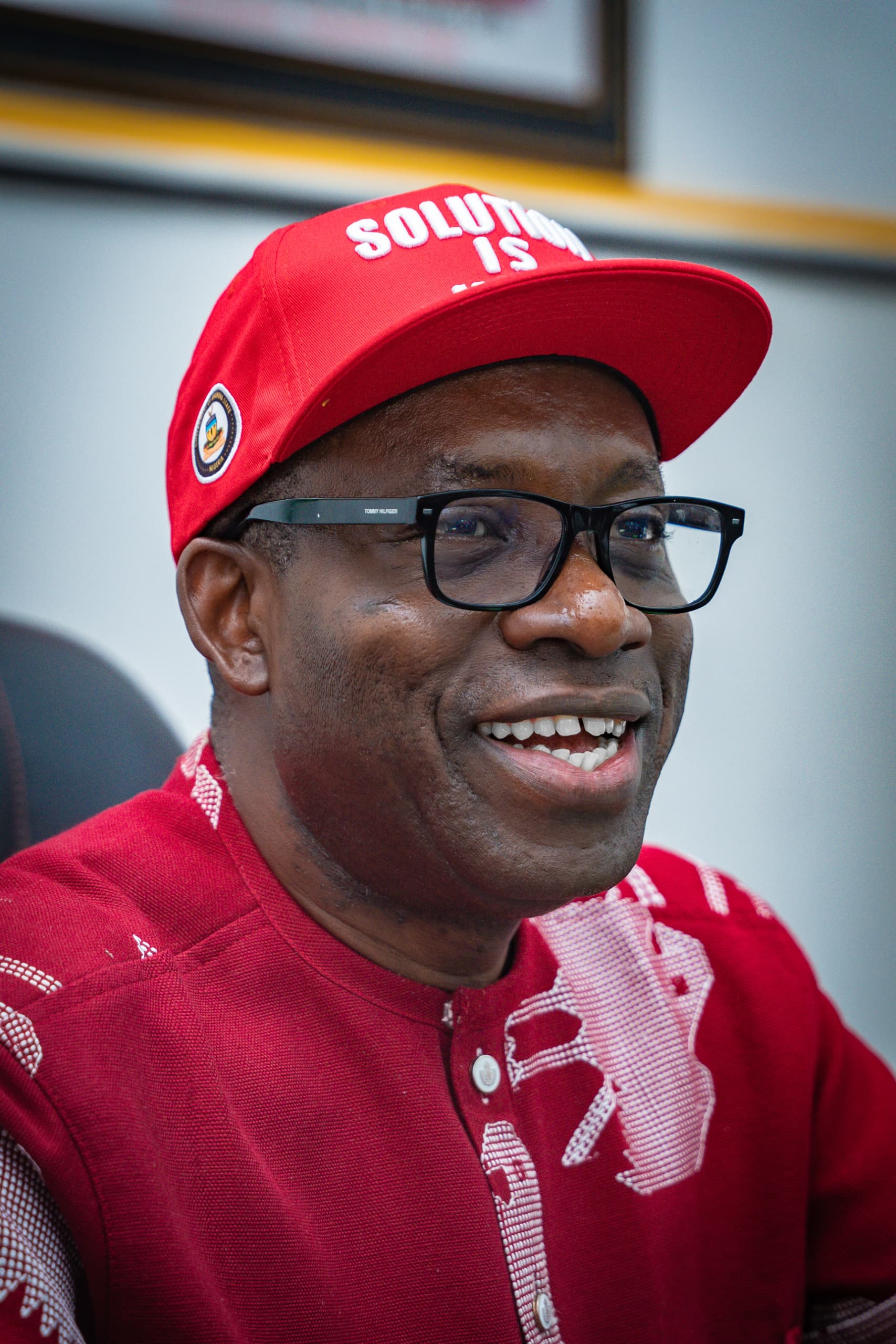
Governor Soludo as a PAN-NIGERIAN Exemplar, continues to Set New Standard in Governance

By Christian ABURIME
When the all-time world-renowned physicist, Albert Einstein, said “The leader is one who, out of the clutter, brings simplicity…out of discord, harmony… and out of difficulty, opportunity,” he might as well be talking about contemporary urbane leaders like the Governor of Anambra State, Professor Chukwuma Charles Soludo, CFR.
Proudly a product of a country that has gifted the world some of the most cerebral, enterprising people, Governor Soludo continues to be a shining example of a pan-Nigerian, detribalised leader whose ecumenical commitment to inclusivity, excellence, and fiscal prudence sets a new standard in governance.
Right from when he became a public leader after a stellar career in the academia, to the pivotal moment he assumed office as a state governor, Governor Soludo made it clear that the boundaries of his administration’s opportunities extend far beyond Anambra’s geographical limits.
His ethos and worldviews are uniquely egalitarian, urbane and progressive. He does not act like a typical politician; he behaves as a statesman, thinking not only about his own immediate environment but also about the larger humanity; pondering not the next election but the next transformation of society.
Little wonder that one veritable reflection of his magnanimous leadership is his recruitment policies, which are a proof of his belief in the strength of diversity.
By appointing individuals from various states across Nigeria into the Anambra State civil service, either as permanent secretaries, teachers, healthcare practitioners or close aides, he demonstrates that meritocracy and competence are the cornerstones of his administration.
This non-discriminatory approach goes a long way to enrich the state’s workforce with a kaleidoscope of perspectives while fostering a spirit of unity and national integration.
A refined and internationally renowned economist, Professor Soludo brings a wealth of experience and a global outlook to his role as a leader.
His illustrious career, marked by tenures at prestigious institutions and global economic bodies, infuses his leadership with a profound understanding of both local and international economic landscapes.
This expertise is evident in his policy decisions and developmental initiatives that consistently prioritise sustainable growth and fiscal responsibility.
Yes, Governor Soludo’s commitment to excellence is uncompromising. He believes, unequivocally, that only the best is good enough for Anambra.
This ethos permeates his administration, from the selection of public officials, hiring of teachers for state public schools, to the implementation of state projects. His insistence on high standards has transformed Anambra State into a hub of innovation and excellence, attracting investments and nurturing an environment where talent thrives.
A hybrid leader infinitely inspired by the combined qualities of Nigeria’s illustrious statesmen, Chief Obafemi Awolowo and Dr. Nnamdi Azikiwe, Governor Soludo embodies the visionary pragmatism of Awolowo and the unifying nationalism of Azikiwe. His policies reflect a deep understanding of the socio-economic needs of the people, coupled with a fervent dedication to national unity and progress.
It is evident why Governor Soludo was recently elected the Vice Chairman of the Southern Nigeria Governors Forum. His reputation for exemplary prudence, doing more with less, is becoming legendary.
Under Governor Soludo’s stewardship in over two years, Anambra State has earned notable ratings for its fiscal sustainability and transparency, particularly from BudgIT, an organisation that evaluates the financial health of Nigerian states.
His prudent management of state resources ensures that every naira is judiciously spent, driving development and improving the quality of life for the people of Anambra.As an ardent believer in one, united Nigeria, Governor Soludo’s vision transcends regionalism.
He champions the full integration of Ndigbo within the Nigerian nation, advocating for a united and progressive Nigeria over separatist ambitions.
His position is an unambiguous call for unity, emphasizing that the strength of Nigeria lies in its diversity and the collective effort of all its peoples.
Thus, by and large, in Governor Chukwuma Charles Soludo, Anambra State and Nigeria have found not just a leader, but an innovative architect of progress, a steward of excellence, and a model of unity.
His continuing impact is a tribute to the power of inclusive leadership, fiscal responsibility, and a relentless pursuit of excellence.
As he continues to guide Anambra towards a prosperous future, his example offers an inspiration to leaders across Nigeria, embodying the true spirit of a pan-Nigerian, detribalised, and forward-thinking leadership.
News
Police must pay transport fares, says AIG
” No police officer has the right to enter your vehicle without paying. We should assist one another willingly, not by force,” he said.

• The Assistant Inspector-General of Police(AIG) in charge of Zone 2 Command, Mr Olohundare Jimoh, speaking with transporters at Obalende garage, Lagos State, on Wednesday.
The Assistant Inspector-General of Police, Zone 2 Command, Mr Olohundare Jimoh, has declared that officers must pay fares before boarding commercial vehicles, warning against abuse of authority.
Jimoh spoke on Wednesday at Obalende garage during a sensitisation meeting with drivers and transport workers marking National Police Day 2026.
He stressed that relations between police and the public must be based on partnership, not coercion, urging both sides to support each other voluntarily.
“No police officer has the right to enter your vehicle without paying. We should assist one another willingly, not by force,” he said.
Jimoh called for stronger cooperation to maintain safety and order on roads, insisting there was no conflict between officers and transport unions.
“I don’t collect money from officers. We don’t arrest people arbitrarily. If you have issues with any officer, report directly to me,” he said.
(Vanguard)
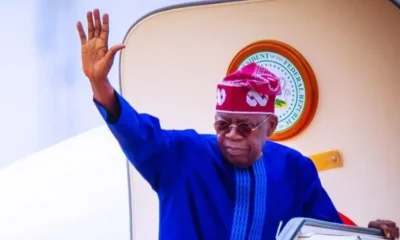
President Bola Ahmed Tinubu will leave for Jos tomorrow to commiserate with the state government and residents over recent deadly gun attacks that lefts dozens dead.
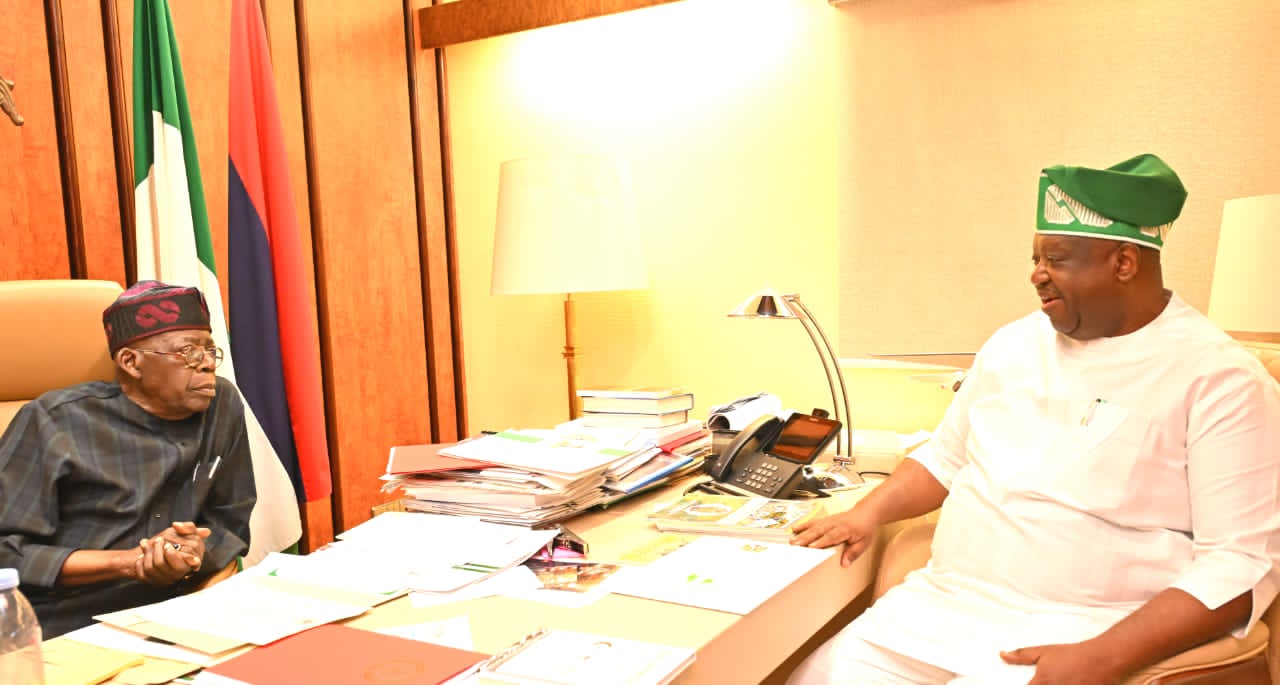
This was following Governor Caleb Mutfwang’s security briefing to the President on the recent violent attack in Angwan Rukuba, Plateau State.
During the meeting on Wednesday at the presidential villa in Abuja, Governor Caleb Mutfwang told Mr President that although security forces have restored calm after fresh disturbances involving looters on Wednesday morning, following the deadly Palm Sunday attack that left more than a dozen dead and many others injured.
He said that investigations are continuing to determine the identities or motives of the attackers who are yet to be apprehended .
Presidency source said that President Tinubu was initially scheduled for a planned trip to Ogun State to flag off operations at the Gateway International Cargo Airport on Thursday.
From Jos, the President will travel to Lagos to observe Good Friday.
On Saturday, April 4, he will visit Ogun State to commission projects including the cargo airport.
He will then return to Lagos during the Easter holiday to commission several state infrastructure projects, including the Ojota/Opebi Link Bridge.
Before heading back to Abuja, the president will visit Bayelsa State on April 10 to commission projects completed under Governor Duoye Diri.
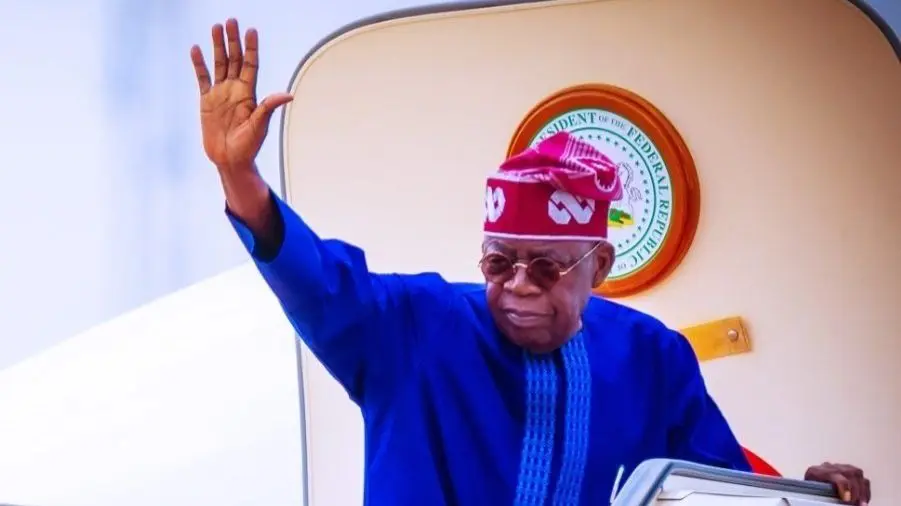
President Bola Ahmed Tinubu will tomorrow embark on a visit to Jos, Plateau State, as the first leg of a five-state tour across the country.
The Presidency announced that the President has postponed his scheduled trip to Ogun State to enable him to commence the series of official visits.
Details of the remaining four states in the tour are expected to be released by the Presidency in due course.
The development comes as President Tinubu continues nationwide engagements aimed at assessing development projects, interacting with stakeholders, and addressing key national issues in the respective states.
Further updates on the itinerary will be communicated as the visits progress.


INEC Dismisses Calls for Chairman’s Removal

Ebonyi: Gunmen Assasinate Another Traditional Ruler

From South Africa to US, ‘Cicada’ COVID-19 variant spreading

Tech Expert, Zuckerberg trains with UFC champions, Adesanya, Alexander

Organ Trafficking: Ekweremadu bags 10 years in UK prison

SAINT OBI: Between his marriage and his death
-
 Business2 days ago
33 Nigerian Banks Beat CBN’s Recapialisation with ₦4.65trn Combined Capital Base
-
 Politics2 days ago
BREAKING: INEC Withdraws Recognition of David Mark’s ADC
-
 News3 days ago
El-Rufai Appear in State High Court, after Mother’s death, as Trial Continues
-

 Sports2 days ago
FirstBank Sponsors Samuel Okwaraji U-16 Football Championship 2026
-
 News2 days ago
JUST IN: Tinubu Heads to Jos Tomorrow, Postpones Ogun Trip for 5-State Visits
-

 Entertainment2 days ago
Super Eagles Iwobi to launch music album ‘More To Life’
-
 News2 days ago
Easter: FG declares Friday, Monday public holidays
-

 News3 days ago
JUST IN: El-Rufai Leaves State High Court for Federal High Court in Kaduna