
Business
FOBTOB seeks fresh dialogue over ban on alcohol in sachets and PET bottles
Therefore, while NAFDAC states that factories will not be shut down, the policy will result in economic shutdown, particularly for indigenous manufacturers and informal-sector participants.

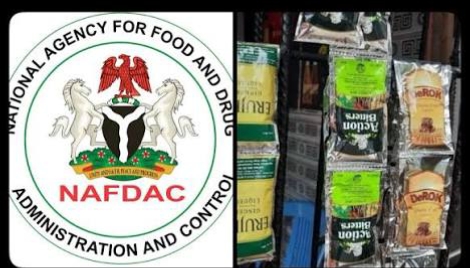
Food, Beverages and Tobacco Senior Staff Association (FOBTOB) said on Thursday that the NAFDAC’s blanket ban on satchets alcohol is economically destructive.
FOBTOB, there call out for a fresh dialogue comprising the stakeholders in the industry, the National Assembly, the Federal Ministry of Health, NAFDAC and Civil society organizations to engage in open, transparent, and evidence-based dialogue aimed at crafting policies that protect public health without destroying livelihoods or creating regulatory contradictions.
Reacting to a press release issued by the Director-General of the National Agency for Food and Drug Administration and Control (NAFDAC) today regarding the enforcement of a ban on alcoholic beverages packaged in sachets and small containers below 200ml, FOBTOB President, Jimoh Oyibo, disclosed that while the association acknowledge and fully supports the shared objective of protecting children, adolescents, and vulnerable populations from the harmful use of alcohol
“We must express deep concern that the approach adopted by NAFDAC is disproportionate, economically disruptive, and inconsistent with broader regulatory and public health realities in Nigeria,” he said.
PUBLIC HEALTH IS IMPORTANT — BUT POLICY MUST BE BALANCED AND EVIDENCE-BASED
No reasonable stakeholder disputes that excessive alcohol consumption is harmful.
However, public health challenges require holistic, data-driven, and enforceable solutions, not blanket prohibitions that fail to address root causes.
Alcohol abuse among minors is primarily a challenge of effective enforcement, parental responsibility, public education, and social regulation, rather than one of packaging format.
The size of an alcohol container does not in itself, confer safety, nor does increasing pack sizes prevent access by minors.
The global public health evidence consistently demonstrates that behavioural regulation, age-restriction enforcement, education-driven interventions, and appropriate sanctions are more effective in addressing underage alcohol consumption than blanket product bans.
NAFDAC’S CLAIM ON UNINTERRUPTED COMPANY OPERATIONS – CONTRADICTED BY EVIDENCE
Notwithstanding representations made by affected stakeholders, access to these depots has not been restored by NAFDAC, and this is affecting normal business operations negatively.
As a labour union, the livelihoods of our members will be adversely affected by the closure of manufacturers’ depots.
We have compiled records of these enforcement actions for reference and ongoing engagement, which are presented alongside this article.
ECONOMIC AND SOCIAL CONSEQUENCES CANNOT BE IGNORED
For many indigenous distillers, blenders, and distributors, sachet and sub-200ml packaging does not constitute a marginal segment of their operations but rather is the foundation of the core business model.
These packaging formats were intentionally developed to serve low-income consumers, informal retail channels, and rural markets where considerations such as affordability, portability, and unit pricing determine demand.
Also, the claim that the policy only affects “two packages” does not fully convey the magnitude of the impact.
In operational terms:
Production lines are configured specifically for sachet and small-format bottling.
Distribution networks are optimized for high-volume, low-unit sales
Retail reach is largely dependent on maintaining affordability at the lowest price points.
For many small and medium-scale operators, this transition will not be financially attainable.
Therefore, while NAFDAC states that factories will not be shut down, the policy will result in economic shutdown, particularly for indigenous manufacturers and informal-sector participants.
The ban on sachets and small containers below 200ml also risks tilting the market in favour of larger, better-capitalized multinational players who can absorb retooling costs and pivot to premium pack sizes.
Smaller local producers, who rely overwhelmingly on sachet sales, are disproportionately harmed, raising concerns about market concentration and unfair competitive outcomes.
Public health and economic survival are not mutually exclusive.
Nigeria deserves policies that are balanced, humane, enforceable, and fair.
The solution lies in moderation, education, and enforcement, not in policies that punish many while failing to address the real drivers of abuse.
SIGNED BYJIMOH OYIBONATIONAL PRESIDENT FOOD, BEVERAGE AND TOBACCO SENIOR STAFF ASSOCIATION (FOBTOB

African Export-Import Bank has underwritten $2.5 billion in a $4 billion senior syndicated term loan for Dangote Petroleum Refinery and Petrochemicals, in a move aimed at strengthening the refinery’s financial position and supporting its long-term growth and expansion strategy.
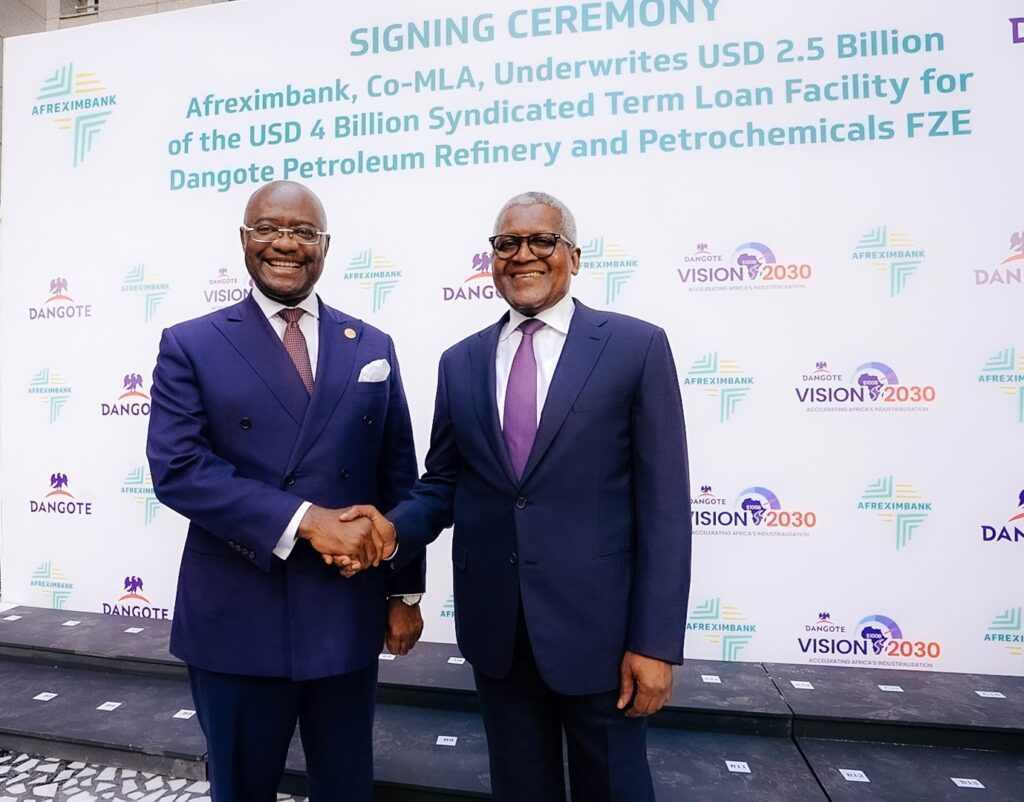
The five-year facility, arranged alongside Access Bank as co-Mandated Lead Arrangers, is designed to consolidate existing debt, optimise the refinery’s capital structure and align its financing with current operational realities.
The transaction marks a significant milestone for the Dangote Refinery, Africa’s largest refining and petrochemical complex with a capacity of 650,000 barrels per day.

Afreximbank’s $2.5 billion participation represents the largest share of the syndicate, underscoring its strategic role in mobilising capital for industrial projects across the continent.
The bank said the financing aligns with its mandate to promote industrialisation, reduce reliance on imported petroleum products and deepen intra-African trade.
Since refining operations commenced in February 2024, Afreximbank has played a key role in supporting the project, including providing a $1 billion working capital facility and acting as financial adviser on the Naira-for-Crude initiative, which facilitates crude procurement and product sales in local currency.
Speaking during a strategy session in Cairo, Egypt, President and Chairman of the Board of Directors of Afreximbank, George Elombi, said the bank’s continued backing reflects confidence in indigenous African enterprises.
“We take immense pride in being the single largest provider of financing to the Dangote Group. We do so primarily because Dangote is African,” he said.
“When we invest in ourselves, we do more than create jobs and wealth or expand government revenues; we build a secure and resilient future for our continent”
Elombi disclosed that Afreximbank has committed about $15 billion to Dangote Group since 2015, highlighting the scale of its long-term partnership with the conglomerate.
President and Chief Executive of Dangote Industries Limited, Aliko Dangote, described the financing as a critical step in positioning the refinery for its next phase of expansion.
“This financing marks an important step in strengthening the financial foundation of Dangote Petroleum Refinery & Petrochemicals and positions the business for the next phase of its growth,” he said.
“We appreciate Afreximbank’s continued support and confidence in our vision to build world-class industrial capacity that serves Nigeria, Africa and global markets.”
The syndicated loan attracted strong participation from a mix of African and international financial institutions, reflecting sustained investor confidence in the refinery as a transformative industrial asset in advancing Africa’s energy security, reducing import dependence and supporting the continent’s broader industrialisation agenda.
Business
BUA Foods Plc Reports Strong 2025 Performance with ₦1.77 Trillion Revenue, Proposes Record ₦28 Dividend per Share

Leading Nigerian food manufacturer BUA Foods Plc has announced robust full-year 2025 audited results, with revenue climbing 16% to ₦1.77 trillion from ₦1.53 trillion in 2024.
The growth was driven by sustained consumer demand for the company’s core staples sugar, flour, pasta, and rice alongside higher sales volumes and strategic pricing amid a challenging economic environment marked by inflationary pressures on households.
Profit after tax nearly doubled, rising 95% to ₦518.4 billion, while gross profit surged to ₦737.3 billion from ₦540.8 billion the previous year.
Operating profit also increased significantly to ₦656.6 billion.In a strong signal of confidence in its outlook and commitment to shareholder value, the Board of Directors has proposed a final dividend of ₦28 per ordinary share of 50 kobo.
This represents a 115% increase from the ₦13 per share paid in 2024, translating to a total payout of approximately ₦504 billion, subject to approval by shareholders at the company’s 2026 Annual General Meeting.
Chairman Abdul Samad Rabiu highlighted the results, stating that the substantial dividend hike underscores the company’s dedication to rewarding investors while continuing to invest in business expansion and operational efficiency.
BUA Foods, a major player in Nigeria’s food processing sector controlled by billionaire Abdul Samad Rabiu, has continued to benefit from scale advantages, market expansion, and resilient demand for essential food products despite broader economic headwinds.
The company’s shares have reacted positively in recent trading, reflecting investor optimism over the strong earnings and generous dividend proposal.
Full details of the financial statements were filed with the Nigerian Exchange (NGX) on Monday.
Analysts view the performance as a testament to BUA Foods’ robust business model and ability to navigate Nigeria’s macroeconomic challenges through volume growth and cost discipline.
Business
OPay launches new office in Jos
” Opening this office in Jos allows us to stay closer to the people we serve, better understand their needs, and continue to provide fast, secure, and reliable financial services that improve everyday life.”

OPay has officially launched its new office in Jos, Plateau State.
Speaking at the event, OPay’s Chief Operations and Technology Officer, Dotun Adekunle, said that the new Jos office reflects OPay’s continued commitment to putting customers first and advancing financial inclusion across Nigeria.
He said :” Our customers are at the center of everything we do.
Opening this office in Jos allows us to stay closer to the people we serve, better understand their needs, and continue to provide fast, secure, and reliable financial services that improve everyday life.”


Afreximbank Leads $4bn Financing for Dangote Refinery with $2.5bn Commitment

JUST IN: El-Rufai Leaves State High Court for Federal High Court in Kaduna

El-Rufai Appear in State High Court, after Mother’s death, as Trial Continues

Tech Expert, Zuckerberg trains with UFC champions, Adesanya, Alexander

Organ Trafficking: Ekweremadu bags 10 years in UK prison

SAINT OBI: Between his marriage and his death
-

 Sports3 days ago
CAF appoints Nigeria’s Samson Adamu as acting secretary general
-

 Business3 days ago
Governor Otti Commissions Ultimum Manufacturing Plant in Aba
-

 News2 days ago
President Tinubu at 74, Donates Salaries to Armed Forces Welfare Fund
-

 Politics2 days ago
PDP will contest 2027 polls, says Wike
-
 Business21 hours ago
BUA Foods Plc Reports Strong 2025 Performance with ₦1.77 Trillion Revenue, Proposes Record ₦28 Dividend per Share
-

 Business2 days ago
OPay launches new office in Jos
-

 Politics2 days ago
PDP Leadership Crisis: Faction Heads to Supreme Court as Tussle Deepens
-

 News21 hours ago
NELFUND Debunks Claims of ₦25,000 Student Upkeep Allowance