
Business
Femi Otedola emerges chairman of First Bank Holdings


Billionaire businessman and chairman of Geregu Power Plc, Femi Otedola, today emerged as the chairperson of the board of FBN Holdings Plc, whose flagship arm is First Bank.
The change of guard took place at a meeting of the Board of Directors of the Group in Lagos on Wednesday.
Mr Otedola succeeds Ahmad Abdullahi, a seasoned economist who was appointed chair of the Holdco on 17 December 2021.
Mr Otedola became a non-executive director of FBN Holdings on 14 August 2023, months after he acquired a substantial stake in First Bank.
Mr Otedola is the financial institution’s biggest and only substantial shareholder, holding a 5.6 per cent stake.
He has had investments in port agency, shipping, storage and insurance brokerage. In 2007, he acquired a controlling interest in African Petroleum, which later metamorphosed into Forte Oil. Forte Oil itself would later be sold and renamed Ardova.
Geregu Power, which he took public in October 2022, accounts for about nine per cent of Nigeria’s grid electricity.
He has held several board memberships, including President of the Nigerian Chamber of Shipping and as past Chairman of Transcorp Hilton Hotel, Abuja.
He was part of the National Economic Management Team, chaired by former President Goodluck Jonathan from 2011 to 2015. At the moment, he is a member of the National Peace Committee.
A botched move to become the chief shareholder of Transnational Corporation, Nigeria’s biggest conglomerate by market value, in April 2023 saw him sell his stake of 6.3 per cent to rival Tony Elumelu.
This January, Mr Otedola acquired a significant stake in Dangote Cement, a company largely owned by his friend, Aliko Dangote. The exact value of his shares remained unknown, but those close to him say his holdings are worth more than N6 billion.

Business
OPay launches new office in Jos
” Opening this office in Jos allows us to stay closer to the people we serve, better understand their needs, and continue to provide fast, secure, and reliable financial services that improve everyday life.”

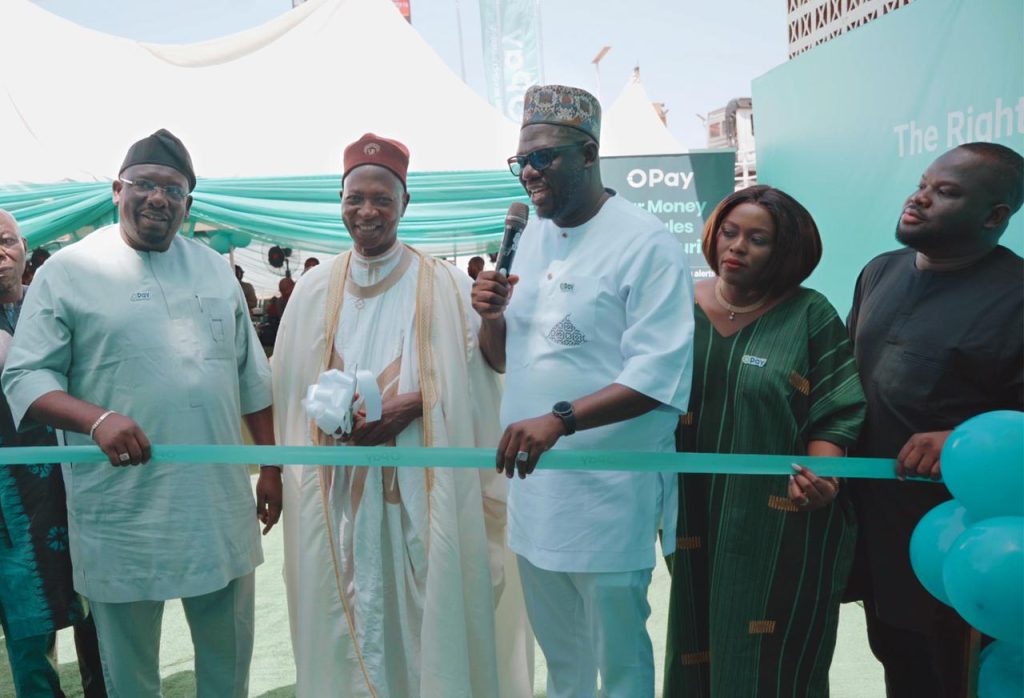
OPay has officially launched its new office in Jos, Plateau State.
Speaking at the event, OPay’s Chief Operations and Technology Officer, Dotun Adekunle, said that the new Jos office reflects OPay’s continued commitment to putting customers first and advancing financial inclusion across Nigeria.
He said :” Our customers are at the center of everything we do.
Opening this office in Jos allows us to stay closer to the people we serve, better understand their needs, and continue to provide fast, secure, and reliable financial services that improve everyday life.”
Business
Governor Otti Commissions Ultimum Manufacturing Plant in Aba
Razzle beverages include Razzl Pamplemousse (a unique and special grapefruit flavour), Razzl Cola, Razzl Orange, and Razzl Lemon.

Ultimum Limited, the manufacturers of Razzl brand of carbonated soft drinks has commissioned its state-of-the-art beverage manufacturing plant in Aba, Abia State.
Razzle beverages include Razzl Pamplemousse (a unique and special grapefruit flavour), Razzl Cola, Razzl Orange, and Razzl Lemon.
Located in the Osisioma Industrial Layout, the new plant was commissioned by the Governor of Abia State, Dr. Alex Chioma Otti.
Otti described the investment as a clear signal of economic revival and growing investor confidence in Abia State.
“This investment confirms that we are creating the right conditions for businesses to grow, thrive, and succeed. Investors will always go where there is clarity, stability, and opportunity.
Our focus has been to build that environment, and today’s commissioning shows that the strategy is working,” he said.
The Chairman of Ultimum Limited and representative of the investor group, Mr. Whalen Kadji, emphasized the company’s long-term commitment to Aba and Nigeria.
“We did not come here by chance. We came because of the energy and entrepreneurial spirit of Aba. This city has always been a center of enterprise, and we believe strongly in its future.
This plant is more than an investment in beverages; it is an investment in people, in jobs, and in the growth of local industry. We are here for the long term, and this is just the beginning of what we intend to build here.”
The Managing Director of Ultimum Limited, Mr. Austin Ufomba, described the plant as a bold step in the company’s journey.
“Ultimum Limited started with a simple idea, to build world-class products right here in Africa,”he said.
Business
Oil price jumps to $106, stocks drop on uncertainty over US-Iran talks
Crude prices rallied more than three percent on Thursday, with Brent crude above $106 per barrel and WTI around $93.

Oil prices jumped and equities slid Thursday as hopes for a peace deal between the US and Iran wavered after Tehran rejected Washington’s bid to wind down the nearly four-week war.
Markets had been buoyed this week by US President Donald Trump’s announcement that strikes targeting Iran’s energy infrastructure would be postponed, adding that the two sides were in peace talks.
But uncertainty over the talks and the virtual closure of the Strait of Hormuz — through which around 20 percent of oil and liquefied natural gas passes — have cast a shadow over market sentiment.
“The market rollercoaster continues,” said Joshua Mahony, chief market analyst at Scope Markets.
Crude prices rallied more than three percent on Thursday, with Brent crude above $106 per barrel and WTI around $93.
( VANGUARD)


Lagos PDP Governorship Aspirant Adeoye Rejects One-Party Dominance

Kwankwaso officially joins ADC in Kano

Just in: Tuggar resigns as Foreign Minister

Tech Expert, Zuckerberg trains with UFC champions, Adesanya, Alexander

Organ Trafficking: Ekweremadu bags 10 years in UK prison

SAINT OBI: Between his marriage and his death
-

 Sports1 day ago
CAF appoints Nigeria’s Samson Adamu as acting secretary general
-

 Business1 day ago
Governor Otti Commissions Ultimum Manufacturing Plant in Aba
-
 Politics2 days ago
JUST IN: Kwankwaso Set to Join ADC on Monday
-
 News21 hours ago
President Tinubu at 74, Donates Salaries to Armed Forces Welfare Fund
-

 Politics21 hours ago
PDP will contest 2027 polls, says Wike
-

 Business20 hours ago
OPay launches new office in Jos
-

 News12 hours ago
Lagos High Court Embraces Full Digital Transformation with Mandatory E-Filing
-

 Crime12 hours ago
12 killed in Plateau attack