Business
E- Commerce: bitMARTe Launches in Nigeria with Same-Day Delivery, Buyer Protection and Merchant Financing
With its official launch, bitMARTe is now live and open to users across Nigeria, positioning itself as a technology-enabled commerce platform focused on speed, trust, local content and economic empowerment.

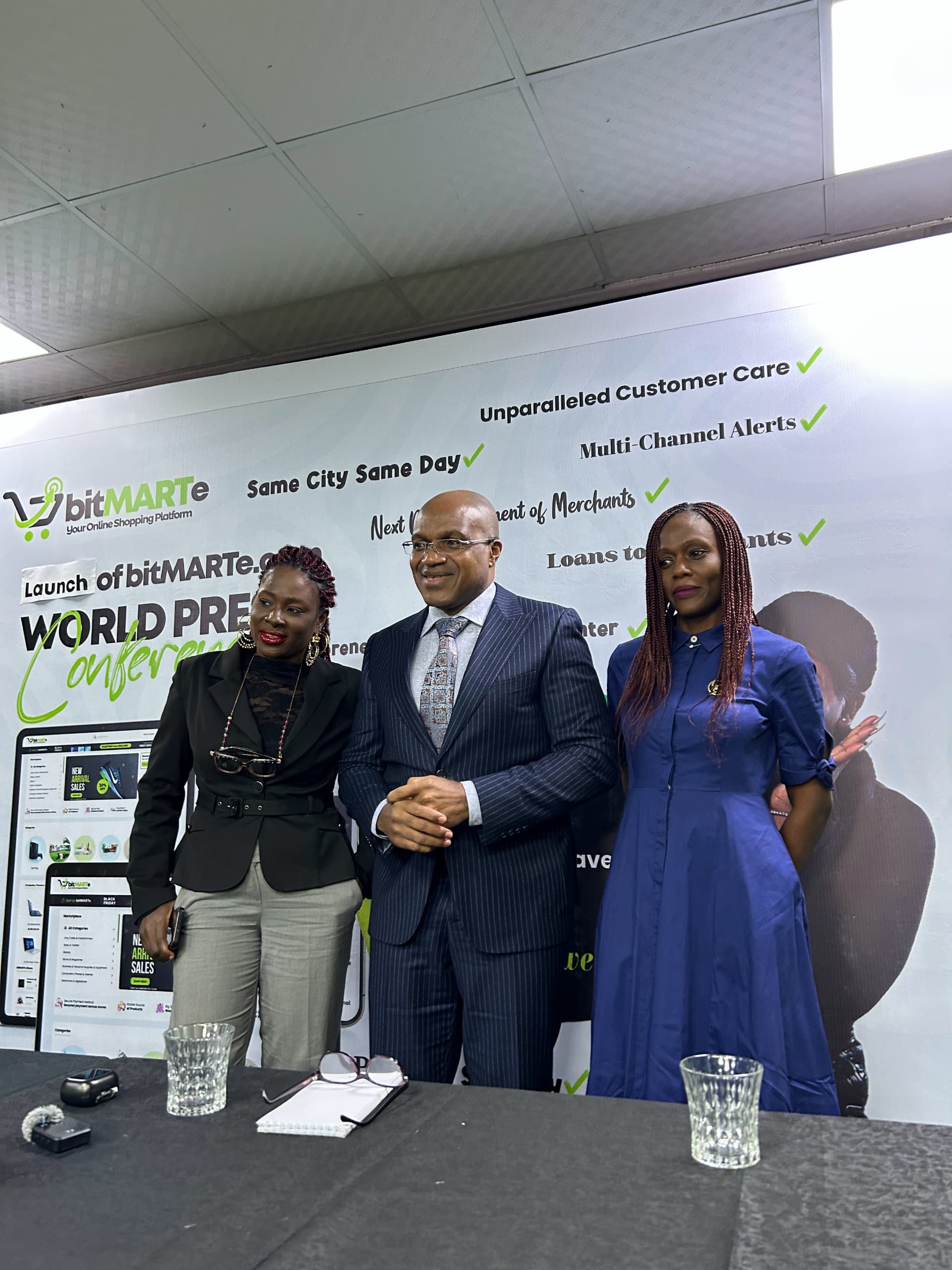
Photo: Left to Right: Amaka Onaibre – Legal Counsel, Dr Eke Eke – Chief Executive Officer, Tolulope Ogungbade – Business Manager & Chief Operating Officer.
bitMARTe, a new Nigerian-focused e-commerce platform, has officially launched operations, unveiling a suite of innovative features designed to address long-standing challenges facing online shopping and digital commerce across Nigeria and Africa.
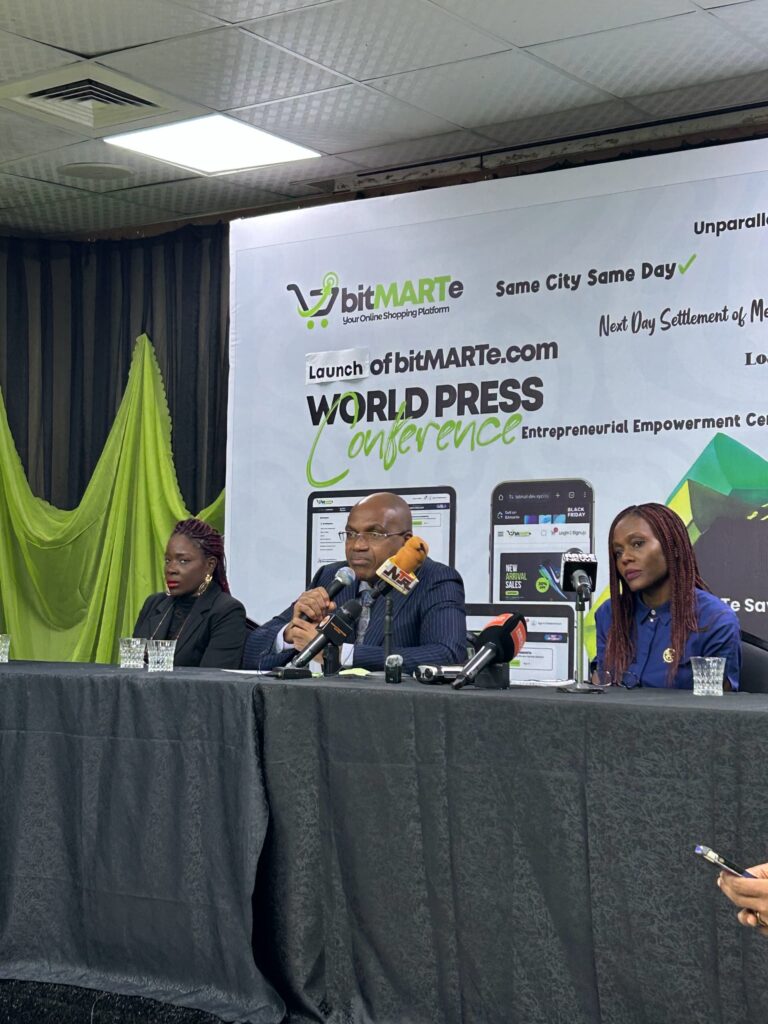
Speaking at the launch, Chief Executive Officer of SpringRock Group and founder of bitMARTe, Dr. Eke Eke, said that the platform was built with a deep understanding of the peculiar realities of the African market, particularly issues around delivery delays, payment security, product quality and access to business capital.
Beyond online marketplace
Dr. Eke emphasised that bitMARTe is not merely an online marketplace but a technology-driven operating system tailored to manage the infrastructural and logistical challenges unique to the region, while delivering services comparable to global e-commerce standards.
One of the platform’s standout innovations is its same-city, same-day delivery service, aimed at restoring consumer confidence in online shopping.
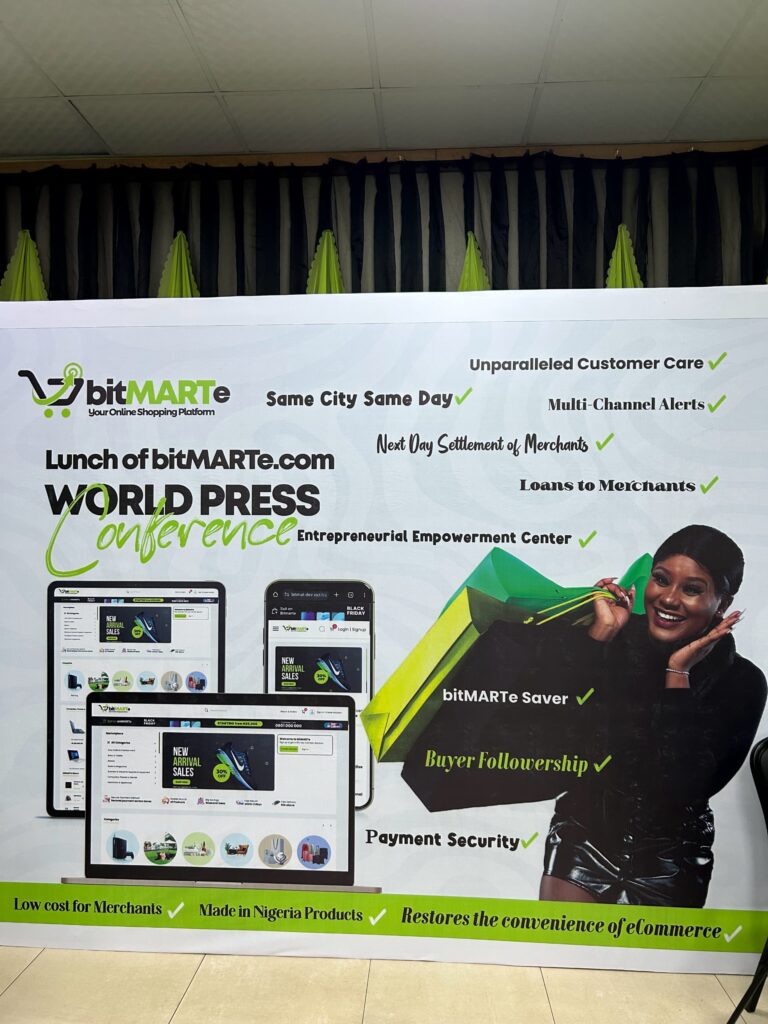
A gap bitMARTe intends to close.
Dr. Eke noted that delivery delays have historically discouraged Nigerians from relying on e-commerce for urgent purchases, a gap bitMARTe intends to close.
The platform also places strong emphasis on promoting Made-in-Nigeria products, offering buyers access to a wide range of locally produced goods without the restrictions commonly seen on other platforms.
This, according to the founders, will enhance affordability while supporting local manufacturers and merchants
To attract early adopters, bitMARTe has rolled out multiple promotional incentives. The first 5,000 users to register on the platform will receive a ₦1,000 gift card, while users who successfully refer others who make purchases will earn ₦1,000 per referral, with no cap on earnings.
First-time buyers will also enjoy additional rewards, creating multiple earning opportunities for active users.
Payment Safety
Addressing concerns around payment safety, Dr. Eke explained that bitMARTe operates a secure escrow-style payment system, ensuring that funds are only released to merchants after buyers confirm receipt and satisfaction using a unique verification code.
This mechanism, he said, provides strong protection against fraud and misrepresentation.
In addition, bitMARTe has established a robust quality assurance framework to ensure product accuracy and integrity. Items that fail to meet stated standards will be removed from the platform, while goods damaged in transit will be replaced at no cost to the buyer.
The company also pledged to investigate and address the root causes of such incidents to maintain high service standards.
bitMARTe’s customer service architecture
Dr. Eke emphasized that bitMARTe’s customer service architecture is deliberately buyer-centric, with centralized handling of interactions to ensure consistency, professionalism and fairness across the platform.
Beyond buyers, bitMARTe is also positioning itself as a growth partner for merchants.
In response to a question on its merchant financing model, Dr Eke disclosed that the platform plans to offer loans to active merchants after six months of operation, based on transaction history, cash flow and conduct on the platform.
He noted that access to affordable credit remains a major obstacle for Nigerian businesses, adding that bitMARTe’s financing model is designed to provide practical and sustainable loan terms, in contrast to the high interest rates typically charged by commercial banks.
Present at the launch
Also present at the launch were Mrs Tolu Ogungbade, Business Manager and Chief Operating Officer of bitMARTe, and Mrs Amaka Onaibre, Legal Adviser, who both reaffirmed the company’s commitment to transparency, compliance and long-term value creation for users and partners.
With its official launch, bitMARTe is now live and open to users across Nigeria, positioning itself as a technology-enabled commerce platform focused on speed, trust, local content and economic empowerment.
Business
Dangote Petroleum announces N1,245 new price template for marketers
The new pricing, making it the fourth time since the Middle East war began, is set to take effect from midnight on March 21, 2026.

The Dangote Petroleum Refinery has announced a fresh hike in the ex-depot price of its petrol to N1,245 per litre from N1,175 per litre while the coastal price increased from N1,512,648 to N1,606,518 per metric tonne.
The new pricing, making it the fourth time since the Middle East war began, is set to take effect from midnight on March 21, 2026.
In a notice sent to marketers on Friday night the company explained that the revision reflects global market realities, including fluctuations in crude oil prices and increased shipping costs, which are beyond the refinery’s control..
” Please note that the revised price will apply to all unloaded gantry and coastal volumes and is effective from 12am on the 21st of March 2026,” it stated.
The latest adjustment is expected to ripple across the downstream sector, with pump prices likely to rise in the coming days as marketers pass on the increased cost to consumers.
Business
Global energy costs take its toll on Nigerian Manufacturers
The recent surge in global fuel prices, driven by geopolitical tensions, is compounding the challenge. While some manufacturers have temporarily absorbed the increases, Onafowakan warned that the full impact could materialise within the next three to four months.

The Managing Director/CEO of Coleman Technical Industries Ltd, Mr George Onafowakan, said that the global higher energy costs occasioned by Iran -US Israeli war has started impacting on manufacturers in Nigeria.
Onafowokan said that findings across major industrial zones reveal a sector heavily dependent on diesel-powered generators, with factories running at high energy costs to sustain operations. Engineers and technical teams now work around the clock to monitor fuel consumption and prevent disruptions that could halt production lines.
Onafowakan stressed that power outages routinely stall factory operations, placing manufacturers under intense pressure to meet delivery timelines.
“When the lights go off, everything stops. We rely on generators, but the costs are rising, and there is constant uncertainty about meeting production targets,” he added.
The recent surge in global fuel prices, driven by geopolitical tensions, is compounding the challenge. While some manufacturers have temporarily absorbed the increases, Onafowakan warned that the full impact could materialise within the next three to four months.
“By the second quarter, businesses may be forced to make difficult decisions around production planning and pricing,” he said.
Beyond individual firms, the impact is already rippling across supply chains. Production delays are affecting dependent businesses and, ultimately, consumers, who are likely to face higher prices for goods.
Despite the growing pressure, Onafowakan said widespread layoffs or major operational restructuring may not occur immediately but cautioned that the situation could deteriorate without timely intervention.
Business
CBN orders banks to reverse failed ATM transactions immediately
The requirement will be implemented gradually over three years, with banks expected to meet 30 percent of the threshold in 2026, 60 percent in 2027 and full compliance by 2028.
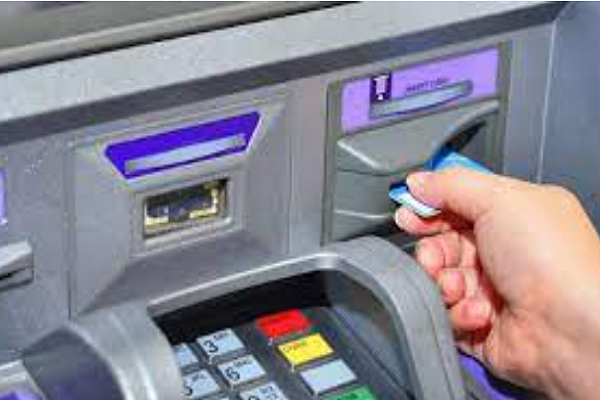
The Central Bank of Nigeria (CBN) has directed banks to immediately reverse failed automated teller machine (ATM) transactions.
The apex bank said that the revised framework is designed to strengthen ATM service reliability, improve fraud monitoring, enhance security and ensure stronger consumer protection across Nigeria’s fast-growing digital payments ecosystem., tightening rules aimed at improving consumer protection and reliability across the country’s payment infrastructure.
Beyond refund timelines, the regulator introduced new requirements for ATM deployment nationwide.
All card issuers are required to deploy at least one ATM for every 7,500 payment cards issued.
The requirement will be implemented gradually over three years, with banks expected to meet 30 percent of the threshold in 2026, 60 percent in 2027 and full compliance by 2028.
Under new Guidelines on the Operations of Automated Teller Machines in Nigeria, the apex bank said failed “on-us” ATM transactions, where a customer uses the ATM of their own bank, must be reversed instantly. Where an instant reversal fails due to technical issues or system glitches, banks are required to complete a manual reversal within 24 hours.
For failed “not-on-us” transactions, where a customer uses another bank’s ATM, the refund timeline must not exceed 48 hours.
The guidelines also state that automated reversals for on-us transactions should occur in less than five minutes, while not-on-us transactions should be resolved in less than 15 minutes where automated systems function properly.
The CBN added that in cases where transaction failures arise from biometric mismatch or device errors, ATM operators must provide an immediate fallback to non-biometric verification where it is considered safe.
Such events must also be logged for diagnostics while the stipulated refund timelines are maintained.
The Central Bank also directed that ATMs must be located within reasonable proximity to one another across both urban and rural areas, while deployment, relocation or decommissioning of machines must receive prior written approval from the regulator.
The guidelines also set operational and service benchmarks for ATM operators.


Dangote Petroleum announces N1,245 new price template for marketers

JUST IN: Movie Star Chuck Norris Dies at 86

Tinubu Returns to Lagos After Historic UK State Visit, to Spend Sallah Break

Tech Expert, Zuckerberg trains with UFC champions, Adesanya, Alexander

Organ Trafficking: Ekweremadu bags 10 years in UK prison