
News
Democracy Day: Tension rises as protesters mobilise for mass action nationwide

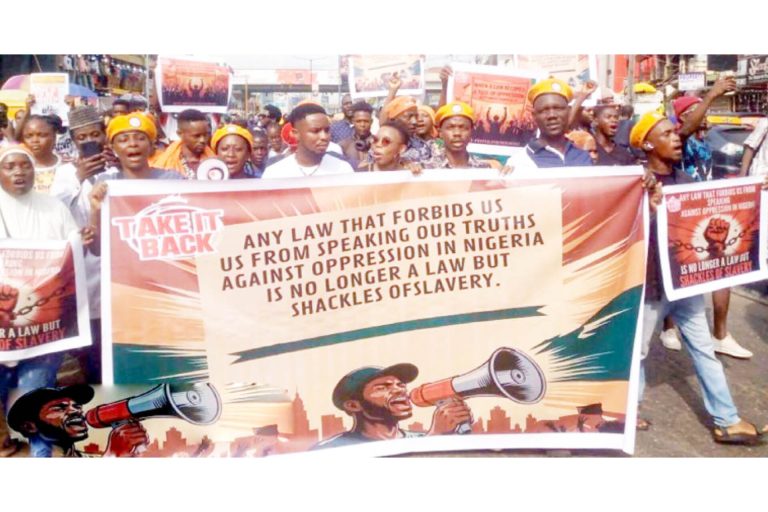
….As Take It Back Protesters gather.
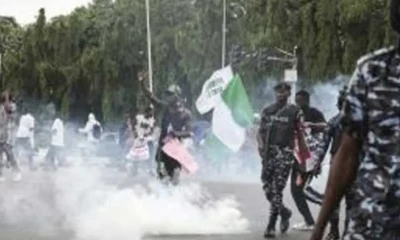
A clash between protesters and security operatives looms today, Thursday, June 12, as the Take It Back Movement, the rally organisers, has resolved to carry out a demonstration at the National Assembly, Abuja and 19 other locations across the country during the June 12 celebrations.
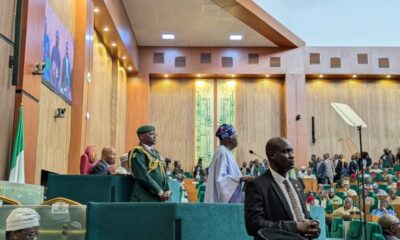
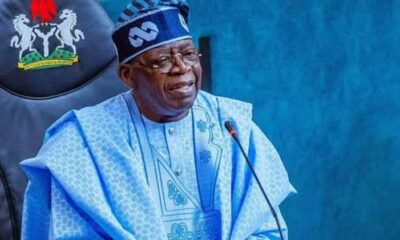
President Bola Tinubu addresses a joint session of the Senate and House of Representatives today as part of Democracy Day activities, setting the stage for a combustible situation, reports The PUNCH.
Tinubu had cancelled the previously scheduled nationwide broadcast in commemoration of Nigeria’s 26th Democracy Day anniversary.
The Director of Information and Public Relations, Office of the Secretary to the Government of the Federation, Segun Imohiosen, in a statement on Wednesday, attributed the change to the President’s scheduled attendance at a joint session of the National Assembly today.
He added that the president would instead deliver his Democracy Day address directly from the National Assembly chambers.
“Due to President Bola Tinubu’s scheduled attendance at the National Assembly Joint Session, the Presidential National Broadcast on June 12 has been cancelled.
President Tinubu will deliver his address from the National Assembly,” Imohiosen said.
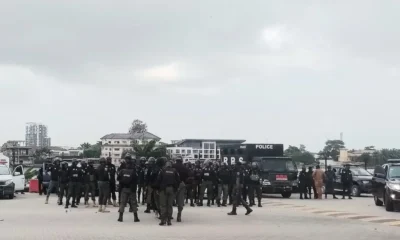
On the heels of the planned nationwide rallies, the police and other security agencies have beefed up security across the country.
The protest organisers confirmed to our correspondent their intention to take their campaign against economic hardship to the political leaders.
The group earlier planned to rally against the tough reforms implemented by the Tinubu administration at Eagle Square, but later announced a change of venue.
The protest, which is expected to draw participants from various civil society groups, is aimed at dragging attention to what the organisers described as “two years of misrule, hardship, and insecurity” under Tinubu’s government.
Speaking yesterday, National Coordinator, Take It Back Movement, Juwon Sanyaolu, said the shift in protest location did not alter the objective of the demonstration.
“That we earlier said the protest would hold at the Eagle Square doesn’t foreclose the fact that Nigerians cannot organise themselves at the National Assembly to protest the two years of misrule under Tinubu,” Sanyaolu said.“
The unprecedented hardship and insecurity we have experienced under his government are alarming. So, Nigerians will be turning out nationwide to protest against this, and the National Assembly is one of those spaces where Nigerians can exercise their constitutional rights.
We are encouraging Nigerians to move there in their numbers tomorrow (today).”
Sanyaolu cited rising poverty, rampant insecurity, and lack of democratic accountability as key grievances.
“All Nigerians from different walks of life have been mobilised, Nigerians are coming to the streets tomorrow (today) to demand an end to bad governance.“
Nigerians have nothing to lose. Nigerians have been beaten and battered. We are like people who are on the ground; we should have no fear of falling. It is also their constitutional right to protest.
“They have no reason to fear. The worst has happened, and the only way to stop the escalating level of our sorrow, tears and blood they are witnessing is to actually do something by protesting tomorrow. We have nothing to fear and we have nothing to lose but our chains.”
The activist said despite the attacks on some coordinators in Lagos, Gombe, Bauchi and Edo, among others, the protest would go on as scheduled.
“Presently, there has been a nationwide attack on organisers, but we are not deterred. The Bauchi state executives of TIB are being hounded by the police.
“In Gombe, Cross-River, Edo and Lagos, our coordinators are being hounded. We are convinced the only way to end the era of worse governance is defiance; that is what we are going to be doing fearlessly,” he noted.
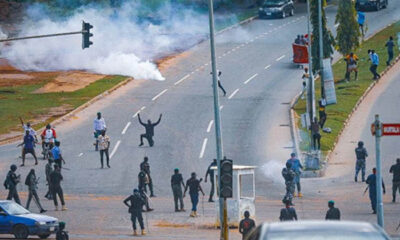
Sanyaolu, however, cautioned security agencies, particularly police, against arresting or violating the rights of citizens to protest.
The Director of Mobilisation for the protest in the Federal Capital Territory, Michael Adenola, said the movement had gained momentum among young Nigerians who are angered by the worsening economic conditions and government neglect.“
Preparations are in order. Many Nigerian youths, who have expressed frustration over the spate of killings in the country, mass unemployment, and underfunded education, have shown commitment to participate in the protest.“
Other civil society organisations have also committed to mobilising their members. Expect thousands on the streets of Abuja.”
Adenola also cautioned the security agencies to respect the constitutional rights of protesters and refrain from using force.
“Again and again, men of our security agencies have shown themselves to be uncivilised by attacking protesters unprovoked. Our call to them is to at least pretend they are civilised.
“There is no reason to bring lethal weapons to the protest grounds. Take them to Sambisa or Plateau State to combat the real insecurity, not against protesters who are civilly demanding their rights,” he added.
When asked about the police plan to manage the protest, the Force Public Relations Officer, Muyiwa Adejobi, referred our correspondent to the FCT Police Command, Josephine Adeh.
However, Adeh did not respond to calls or messages as of the time of filing this report but he FCT Commissioner of Police, Adewale Ajao, assured law-abiding citizens of protection during the protest.
He said, “We are still on engagement and discussion, until then, we won’t know. We want to advise all law-abiding citizens that they should go about their lawful businesses without harassment from anybody. We urge Nigerians to be orderly. Everybody’s right must be respected.”
Meanwhile, Sanyaolu said the protest would take place in at least 20 locations nationwide.
“In Abuja, we will converge at Eagle Square by 8.00 am. In Lagos, we have four locations: Badagry, Maryland, Agbara, and Toll Gate, all starting by 7am.
“In Akure, Ondo State, we will gather at Cathedral Junction by 8am, and in Benin City, Edo State, at the Museum Ground by 9am. In Niger State, the venue is Gida Matasa at 8am.“
In Yobe, we will meet at the Maiduguri Bypass Roundabout in Damaturu by 7:30am, while in Oyo State, it is Mokola Roundabout in Ibadan by 8am.
“In Bauchi, the protest will be held opposite the Bauchi School of ACR, Yelewam Makaranta, by 8 am.
In Osun State, it will be at Olaiya Junction in Osogbo,” Sanyaolu explained.






News
Police must pay transport fares, says AIG
” No police officer has the right to enter your vehicle without paying. We should assist one another willingly, not by force,” he said.


• The Assistant Inspector-General of Police(AIG) in charge of Zone 2 Command, Mr Olohundare Jimoh, speaking with transporters at Obalende garage, Lagos State, on Wednesday.
The Assistant Inspector-General of Police, Zone 2 Command, Mr Olohundare Jimoh, has declared that officers must pay fares before boarding commercial vehicles, warning against abuse of authority.
Jimoh spoke on Wednesday at Obalende garage during a sensitisation meeting with drivers and transport workers marking National Police Day 2026.
He stressed that relations between police and the public must be based on partnership, not coercion, urging both sides to support each other voluntarily.
“No police officer has the right to enter your vehicle without paying. We should assist one another willingly, not by force,” he said.
Jimoh called for stronger cooperation to maintain safety and order on roads, insisting there was no conflict between officers and transport unions.
“I don’t collect money from officers. We don’t arrest people arbitrarily. If you have issues with any officer, report directly to me,” he said.
(Vanguard)
President Bola Ahmed Tinubu will leave for Jos tomorrow to commiserate with the state government and residents over recent deadly gun attacks that lefts dozens dead.
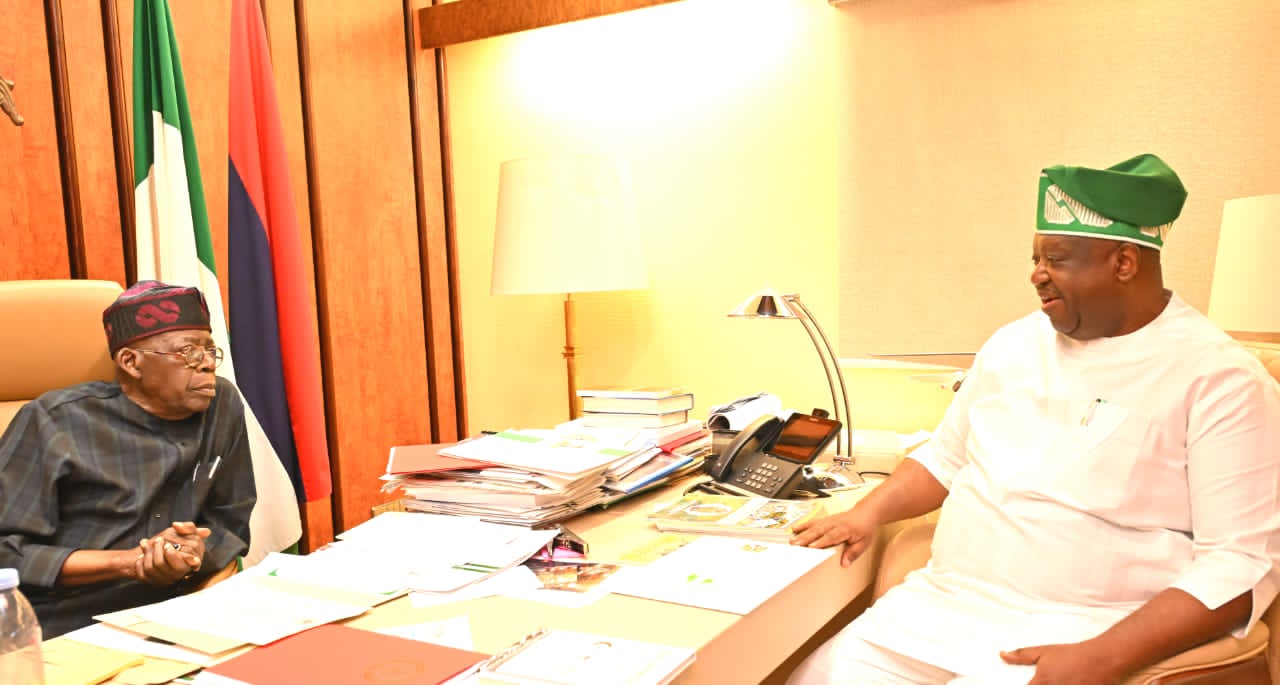
This was following Governor Caleb Mutfwang’s security briefing to the President on the recent violent attack in Angwan Rukuba, Plateau State.
During the meeting on Wednesday at the presidential villa in Abuja, Governor Caleb Mutfwang told Mr President that although security forces have restored calm after fresh disturbances involving looters on Wednesday morning, following the deadly Palm Sunday attack that left more than a dozen dead and many others injured.
He said that investigations are continuing to determine the identities or motives of the attackers who are yet to be apprehended .
Presidency source said that President Tinubu was initially scheduled for a planned trip to Ogun State to flag off operations at the Gateway International Cargo Airport on Thursday.
From Jos, the President will travel to Lagos to observe Good Friday.
On Saturday, April 4, he will visit Ogun State to commission projects including the cargo airport.
He will then return to Lagos during the Easter holiday to commission several state infrastructure projects, including the Ojota/Opebi Link Bridge.
Before heading back to Abuja, the president will visit Bayelsa State on April 10 to commission projects completed under Governor Duoye Diri.
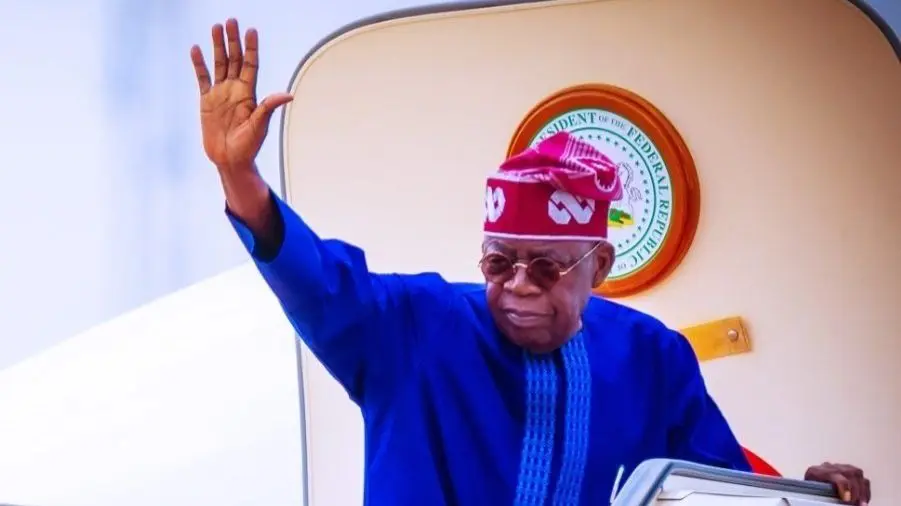
President Bola Ahmed Tinubu will tomorrow embark on a visit to Jos, Plateau State, as the first leg of a five-state tour across the country.
The Presidency announced that the President has postponed his scheduled trip to Ogun State to enable him to commence the series of official visits.
Details of the remaining four states in the tour are expected to be released by the Presidency in due course.
The development comes as President Tinubu continues nationwide engagements aimed at assessing development projects, interacting with stakeholders, and addressing key national issues in the respective states.
Further updates on the itinerary will be communicated as the visits progress.


INEC Dismisses Calls for Chairman’s Removal

Ebonyi: Gunmen Assasinate Another Traditional Ruler

From South Africa to US, ‘Cicada’ COVID-19 variant spreading

Tech Expert, Zuckerberg trains with UFC champions, Adesanya, Alexander

Organ Trafficking: Ekweremadu bags 10 years in UK prison

SAINT OBI: Between his marriage and his death
-

 Business3 days ago
BUA Foods Plc Reports Strong 2025 Performance with ₦1.77 Trillion Revenue, Proposes Record ₦28 Dividend per Share
-

 News3 days ago
NELFUND Debunks Claims of ₦25,000 Student Upkeep Allowance
-
 Business2 days ago
33 Nigerian Banks Beat CBN’s Recapialisation with ₦4.65trn Combined Capital Base
-
 News3 days ago
Tinubu Appoints CAC, NPC, Officials, Names Adviser on Political Economy
-
 Sports3 days ago
Sportsville Awards: Olopade Leads NSC Delegation to Honour Dikko with Transformative Impact Award
-
 News3 days ago
Nigeria Welcomes African Games Bid Evaluation Committee
-

 Sports2 days ago
FirstBank Sponsors Samuel Okwaraji U-16 Football Championship 2026
-
 Politics2 days ago
BREAKING: INEC Withdraws Recognition of David Mark’s ADC