
Business
CBN to restructure NIRSAL, Sacks all EDs


The Central Bank of Nigeria (CBN) has cancelled the appointments of all executive directors at the Nigeria Incentive-Based Risk Sharing System for Agriculture Lending (NIRSAL).
NIRSAL is a non-bank financial institution that is wholly owned by the CBN.
A NIRSAL official, who confirmed the development to The Nation, said that the decision was approved by CBN Governor, Olayemi Cardoso.
In the termination letters, the CBN cited an ongoing major organisational and human capital restructuring process as the reason for the dismissals.
The sacked NIRSAL executive directors are the Managing Director and Chief Executive Officer Abbas Umar Masanawa; Executive Director, Operations Kennedy Nwaruh and Executive Director, Technical Olatunde Akande.
It was established in 2013 to stimulate agricultural finance and investments.




BLACK (PARALLEL) MARKET RATES
₦1370 DOLLAR (USD
₦1800 POUND (GBP)
₦1500 EURO (EUR)
₦970 CANADIAN DOLLAR (CAD)
₦65 SOUTH AFRICAN RAND (ZAR)
₦350 UAE DIRHAM (AED)
₦190YUAN (CNY)
₦2300CFA F.(XOF)
₦2200CFA F.(XAF)
₦850AUSSIE (AUD)SELL₦1000
Official CBN Exchange Rates
DOLLAR (USD)₦1332.59
POUND (GBP)₦1765.55
EURO (EUR)₦1491.57
SWISS FRANC (CHF)₦1590.77
JAPANESE YEN (JPN)₦8.39
CFA FRANC (XOF)₦2.27
WEST AFRICAN UNIT OF ACCOUNT (WAUA)₦1802.33
CHINESE YUAN (CNY)₦199.10
SAUDI RIYAL (SAR)₦354.92
SOUTH AFRICAN RAND (ZAR)₦80.37
Business
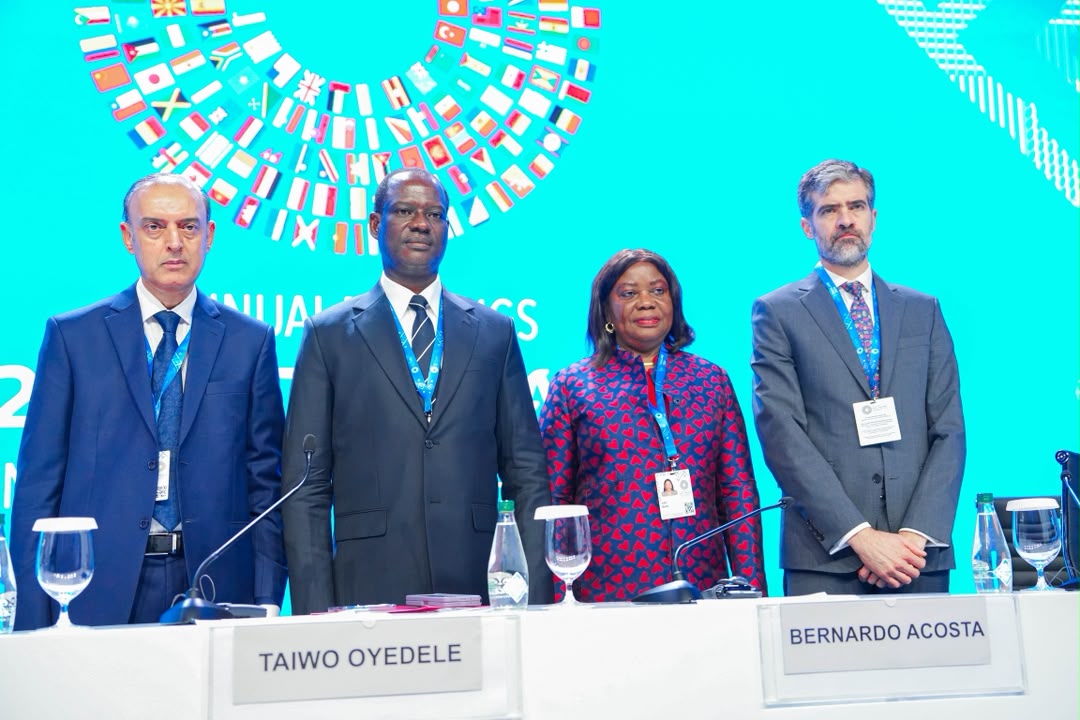
Oyedele Chairs G-24 Call for Fairer Global Financial System, Affordable Development Financing
The meeting concluded that domestic reform alone will not shield developing economies from external shocks — affordable finance, effective debt resolution, fairer representation in international institutions, and sustained cooperation are equally necessary.

Business
NAFDAC scolds fake manufacturers: “You are killing Nigerians in order to make money”
He warned that the circulation of counterfeit drinks posed a serious public health concern, urging suspected manufacturers to abandon the illegal trade.

“You are killing Nigerians in order to make money,which is not good.”
That’s the National Agency for Food and Drug Administration and Control (NAFDAC) scolding Nigerians caught in the act of counterfeiting drinks.
The occasion was at Zamfara Plaza, BBA Trade Fair Complex, along the Badagry Expressway, Ojo, Lagos State.
The Assistant Director of the Investigation and Enforcement Directorate of NAFDAC, Mr Kunle Ojo, who led the enforcement said the agency caught some of the suspects in the act and recovered drums, filters, packaging materials, a heating device and other equipment allegedly used in the illicit production process.
The suspects, identified as Okafor and John, were arrested during an enforcement operation in a two-storey building where equipment and materials allegedly used to repackage and produce counterfeit alcoholic and energy drinks where discovered.
The raid, according to NAFDAC, followed credible intelligence and surveillance on suspected counterfeiters operating within the Trade Fair International Market.
He warned that the circulation of counterfeit drinks posed a serious public health concern, urging suspected manufacturers to abandon the illegal trade.


CAF Increases Annual Funding for Member Federations to $700,000

Naira Exchange Rates For Thursday, October 15

Sanwo-Olu Appoints Olatunbosun Ogunbanwo, 5 Others as Perm Secs

Tech Expert, Zuckerberg trains with UFC champions, Adesanya, Alexander

BREAKING: Lagos Govt Declares Today, Thursday Work-Free to Mark 2026 Ìṣẹ̀ṣe Day

Organ Trafficking: Ekweremadu bags 10 years in UK prison
-
 Politics3 days ago
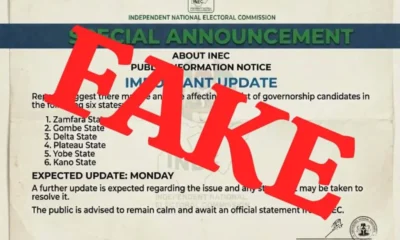
BEWARE: Fake 2027 Gov’ Candidates List Circulating Online — INEC Raises Alarm
-
 Business2 days ago
Dangote Refinery IPO Attracts N8.61trn in Subscriptions, Four Times Offer
-
 News3 days ago
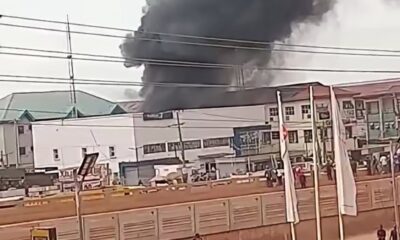
BREAKING: Fire Engulfs First Bank Branch Along Abuja-Keffi Road
-
Business2 days ago
Top 10 Highest-Paid CEOs in Nigeria
-

 News3 days ago
Governor Seyi Makinde’s Chief of Staff Resigns
-

 News3 days ago
CJN Kekere-Ekun swears in 68 new SANs
-
 Business2 days ago
Naira Exchange Rates To Dollar , Pound ,Euro, … Tuesday, October 13
-

 Business3 days ago
AI to eliminate 40% of global jobs – IMF boss