
Health
BREAKING: Twenty kidnapped Medical Students Rescued – Security Agencies


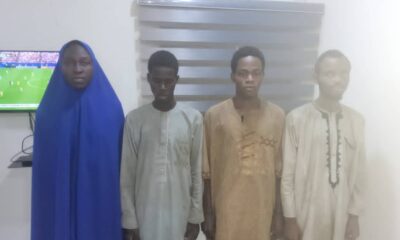
Twenty medical students that were kidnapped in Benue State have just been rescued.
The operation was coordinated by the office of the National Security Adviser.
Security agencies – the police, DSS and military personnel and equipment were involved in the operation, with the support of the Benue state government.
The Nigeria Police had deployed helicopters in an effort to rescue the medical students from the University of Maiduguri and the University of Jos who were abducted by kidnappers along the Otukpo-Enugu Highway about a week ago.
A police helicopter was sighted in Otukpo and Makurdi on Friday, signaling intensified efforts by the Police Tactical Team from Force Headquarters to rescue the victims, though no breakthrough has been reported yet.
Spokesperson of the Benue State Police Command, SP Catherine Anene, had told newsmen on Friday in Makurdi that there was no update yet, adding that the police team was still working on the case.
She noted that the tactical squad, deployed to the state by the Inspector General of Police (IGP), Kayode Egbetokun, in collaboration with other officers on the ground, has intensified and doubled their efforts to rescue all the students held captive. Apparently, the efforts had yielded positive result.
The armed bandits had last Saturday, demanded a N50 million ransom for the release of the 20 medical students. But it could not be ascertained whether ransom was paid for their release.



The Nigeria Centre for Disease Control and Prevention (NCDC) has confirmed that Lassa fever has claimed 259 lives and infected 1,086 people across 24 states and 118 local government areas so far in 2026.
In its latest Lassa Fever Situation Report for epidemiological week 36 (August 31 to September 6), the agency said the figures represent a case fatality rate of 23.9 percent — significantly higher than the 18.6 percent recorded during the same period in 2025.
Twelve new confirmed cases were recorded in week 36, a decline from the 18 cases reported the previous week. The fresh infections were detected in Ondo, Edo and Kogi states.
Five states continue to bear the heaviest burden, accounting for 87 percent of all confirmed cases this year: Bauchi, Ondo, Taraba, Benue and Edo. People aged 21 to 30 remain the most affected age group.
The NCDC noted that no new infections among healthcare workers were recorded during the latest reporting week. The agency continues to urge the public to maintain hygiene, avoid contact with rodents and their droppings, and seek early medical care if symptoms appear.
Health
Nigerian hospital successfully performs kidney cancer surgery via tele-robotic
The development could reduce the need for Nigerians to travel abroad for specialised medical treatment, thereby reducing expenditure on international travel, accommodation and medical services.

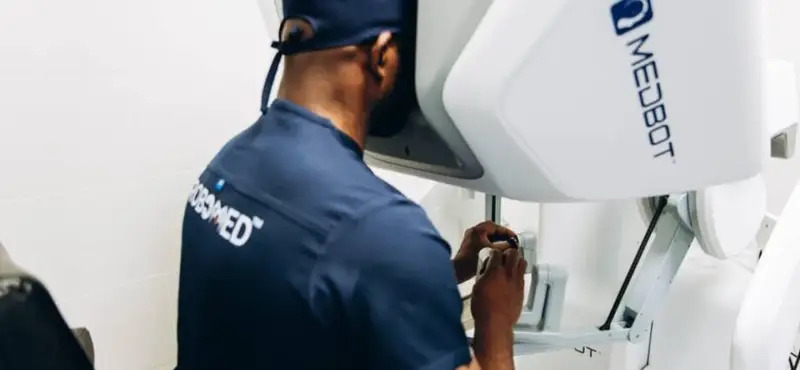
• A surgeon performing tele-robotic surgery.
Nisa Premier Hospital, Abuja, has partnered with RoboMed Global and The Redeemer’s Health Village (RHV) to successfully perform what the hospital described as the first tele-robotic surgery in Nigeria and West Africa.
The landmark kidney cancer surgery was performed on a patient at Nisa Premier Hospital, Abuja, while the surgeon, Professor Obi Ekwenna-Davis, remotely controlled the robotic surgical platform from Redeemer’s Health Village in Lagos.
The procedure, which lasted approximately three hours, was performed to remove a kidney affected by a cancerous tumour.
The hospital said the patient had been discharged following the successful procedure, although details about the patient’s identity and condition were withheld for privacy reasons.
Speaking during an event to mark the milestone, the Chief Executive Officer of Nisa Premier Hospital, Dr Ibrahim Wada, said the development demonstrated the potential of tele-robotic surgery to connect specialist surgical expertise with patients across Nigeria.
Wada said the procedure was carried out using the MicroPort robotic surgical platform installed at Nisa Premier Hospital, with the remote surgeon controlling the system from Lagos.
He said the development could reduce the need for Nigerians to travel abroad for specialised medical treatment, thereby reducing expenditure on international travel, accommodation and medical services.
According to him, the technology also creates an opportunity for Nigerians to access specialised expertise from doctors located in other parts of the world without requiring the doctors to travel physically to Nigeria.
Source: Daily Trust
Health
Ondo ‘Monkey Tail’ herbal drink kills 49
The Commissioner for Health in the State, Dr Banji Ajaka, who disclosed this on Wednesday night, said the number of affected persons has now climbed to 170.

A locally produced herbal concoctions known as ‘Monkey Tail’ in Ondo State has killed 49 people .
The Commissioner for Health in the State, Dr Banji Ajaka, who disclosed this on Wednesday night, said the number of affected persons has now climbed to 170.
He explained that the latest deaths were recorded in Irele Local Government Area of the state, where eight persons have died from suspected poisoning.
Ajaka disclosed that health authorities had deployed response teams to Irele LGA and other affected communities to conduct surveillance, manage cases and trace the source of the suspected toxic substance.


Congo military plane crash kills 13, including three officers

Manchester City Faces Expulsion For Breaching 114 EPL Financial Rules

TIME Names Moniepoint CTO Felix Ike Among 50 Global Executives of the Year

Tech Expert, Zuckerberg trains with UFC champions, Adesanya, Alexander

Organ Trafficking: Ekweremadu bags 10 years in UK prison

SAINT OBI: Between his marriage and his death
-
 Business2 days ago
MAN Urges CBN To Consider CRR Cut Next Phase of Monetary Easing
-
 Crime2 days ago
JUST IN: Zamfara LG Chairman Freed After 61 Days in Captivity
-

 Sports2 days ago
FIFA names Nigerian referee among 81 officials for U-17 World Cup
-

 News2 days ago
VP Shettima, Gov Mbah to address Over 500 editors on 2027 election issues
-

 Entertainment2 days ago
MultiChoice launches Wethu+ as DStv overhauls packages
-
 Business2 days ago
Naira To Dollar , Pound, Euro Rate, Thursday September 24
-
 Business2 days ago
Otedola bypasses seven African billionaires as fortune hits $2 billion
-
 News2 days ago
Works Minister Orders Tinubu’s Pictures On First Niger Bridge