
News
Atiku Says Military Honours Given Seyi Tinubu Tarnishes Armed Forces Integrity

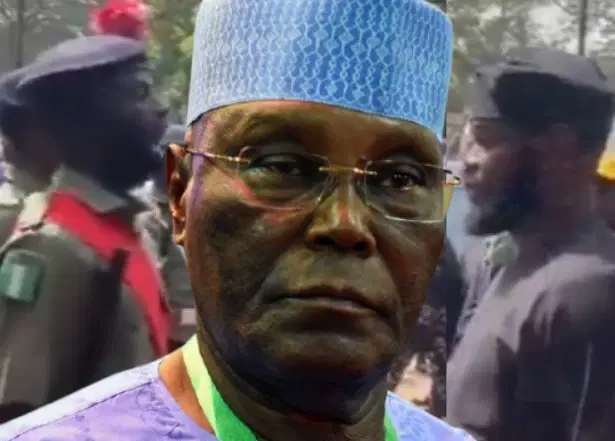
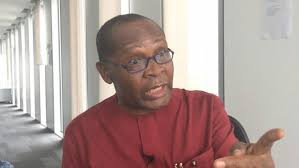
Atiku Abubakar has strongly condemned the military honours accorded to Seyi Tinubu, the son of President Bola Tinubu, by the Nigeria Cadet Network.
Atiku Abubakar was Vice President of Nigeria (1999-2007) and Presidential Candidate of the Peoples Democratic Party (2023).
In a statement released by his media office on Sunday, signed by his media adviser, Paul Ibe, Atiku expressed outrage over the event, calling it an aberration for any branch of the Armed Forces to organize a formal parade for a non-designated public figure.
“It is with utter dismay and concern that Nigerians were subjected to a nauseating video circulating online, where a group of young men, armed and in full military procession, bestowed upon the President’s son unwarranted military honours,” said Atiku.
Atiku further questioned the legitimacy of the military-like outfit involved, stating that the so-called group, the “Nigeria Cadet Network,” is not a recognized entity within the Nigerian Armed Forces.
He emphasized the disturbing fact that the name “Cadet,” associated with young, formally trained military personnel, was exploited by civilians to tarnish the esteemed traditions of the military.
“To uncover the truth behind this shameless procession, we instructed our legal team and military experts to investigate the so-called ‘Nigeria Cadet Network.’ To no one’s surprise, it was revealed that the group is not a legally registered entity,”
Atiku noted. “What is even more alarming Was the brazen use of firearms by civilians in this so-called parade — at a time when illegal arms proliferation is at a dangerous high in our country.”
Atiku has now called for an urgent investigation by all relevant security agencies to address the following critical concerns:
1. The legitimacy of the “Nigeria Cadet Network” and its use of the title “Cadet” when it is not a registered entity.
2. The origin and legality of the firearms displayed by members of the “Nigeria Cadet Network.”
3. The propriety of the military honours granted to the President’s son by non-commissioned civilians under the protection of security personnel. The former Vice President stressed that preserving the integrity of the Nigerian Armed Forces is paramount.
“If it is determined that any legal violations were committed by the President’s son or members of the so-called ‘Nigeria Cadet Network,’ it is the constitutional duty of Nigerian security agencies to ensure that the law takes its course and those responsible are held accountable,” Atiku said.





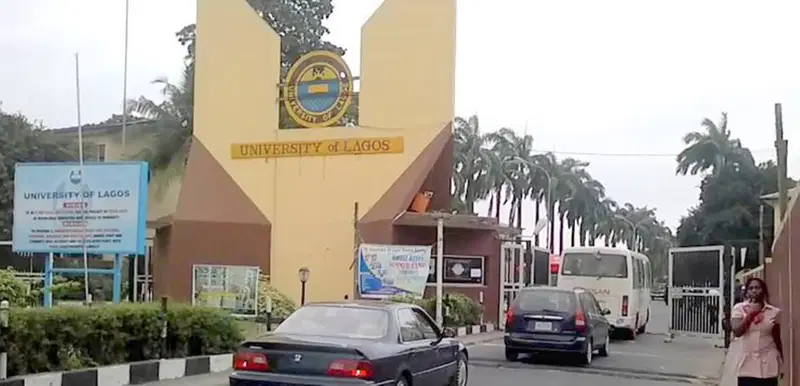
Teachers at the International School, University of Lagos (ISL), on Wednesday commenced a work-to-rule action over unpaid salary arrears, their removal from the university’s payroll, and delays in implementing a National Industrial Court judgment.
The staff are demanding the payment of outstanding Consolidated Tertiary Institutions Teaching Allowance (CONTTA) arrears, as well as arrears from the 25 per cent and 35 per cent salary adjustments approved in 2024. They also want full restoration to the university’s payroll.
Comrade Razak Yusuf, Chairman of the Senior Staff Association of Nigerian Universities (SSANU), University of Lagos branch, said the industrial action followed prolonged delays in resolving the teachers’ employment status and financial entitlements.
The teachers had approached the National Industrial Court of Nigeria, which ruled in their favour on May 11, 2026. Despite the judgment, they claim the university has yet to fully restore their names to the payroll or settle outstanding benefits.
Protesters carried placards with messages such as “Equal Work, Equal Rights,” “ISL tutors deserve their due,” and “Other UNILAG staff paid, ISL tutors still owed.” The action disrupted teaching and a scheduled mid-term examination at the school.
The teachers called on the university management to restore the affected staff to the payroll, settle all outstanding financial obligations, and provide a clear payment plan with timelines.
They rejected suggestions that any interim arrangement under the university’s Council protocol amounted to goodwill, insisting they were only seeking recognition of their employment rights.
The development continues a pattern of industrial disputes at the University of Lagos over salary and allowance issues.
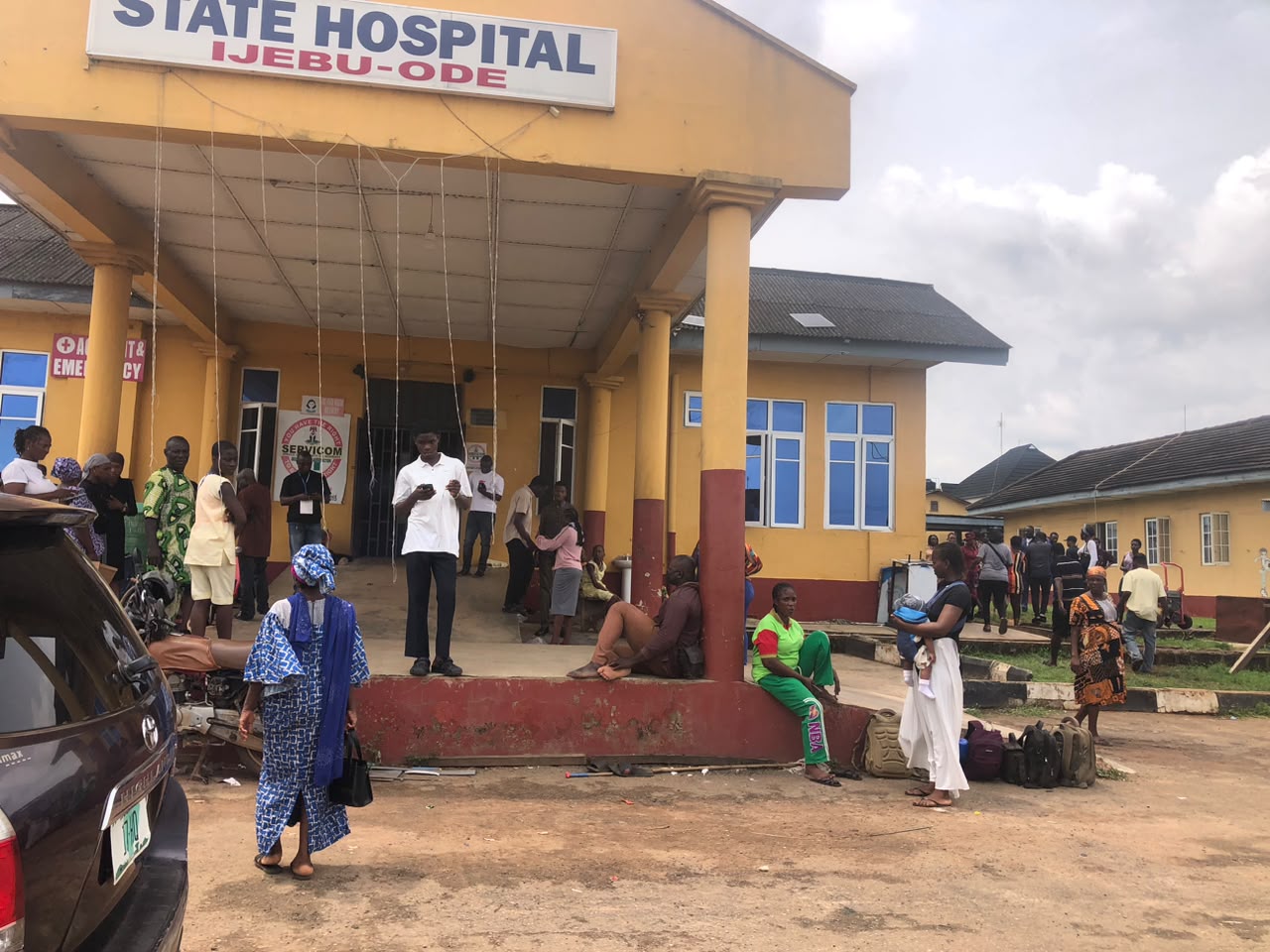
Hundreds of students were hospitalised on Wednesday morning after fresh gaseous emissions hit parts of Ogun State, including Ijebu-Ode, Ijebu-Igbo and Ago-Iwoye.
The incident affected pupils at Anglican Girls Grammar School, Obalende, Ijebu-Ode, and Ijebu-Igbo Girls Grammar School. Several schools in Ago-Iwoye suspended academic activities and sent students home as a precaution.
Kehinde Bello, General Manager of the Ogun State Environmental Protection Agency (OGEPA), visited the affected areas and linked the emissions to underground gas previously recorded in Ijebu-Ode since April 2026. He said the situation was under control and attributed the releases to natural geological and tectonic fault lines, ruling out sabotage or a gas pipeline leak.
Bello assured residents that the state government was working on a lasting solution. He advised anyone exposed to the odour to cover their noses and mouths with wet handkerchiefs.
The recurring emissions have renewed concerns about the safety of students and residents in the affected communities.

Former Delta State Governor Dr. Emmanuel Eweta Uduaghan is dead. He passed away on the morning of Monday, October 19, 2026, at the age of 71, after a period of illness.
A family statement announced his death, describing it as a devastating loss. Uduaghan, a medical doctor, served as Delta State Commissioner for Health (1999–2003) and Secretary to the State Government (2003–2007) before becoming governor from 2007 to 2015. He was known for contributions to infrastructure and human capital development in the state.
Delta State Governor Sheriff Oborevwori has expressed deep sadness over the passing. In a condolence message, he described Uduaghan as a detribalised leader whose service left a lasting mark on Delta State.
Oborevwori extended heartfelt condolences to Uduaghan’s wife, Roli, his children, the Uduaghan family, the Itsekiri nation, and the people of Delta State, praying for the peaceful repose of his soul.


UPDATE: Identity of Woman Who Flew into Nigeria with Ebola Virus Revealed

UNILAG School Teachers Begin Work-to-Rule Over Unpaid Arrears

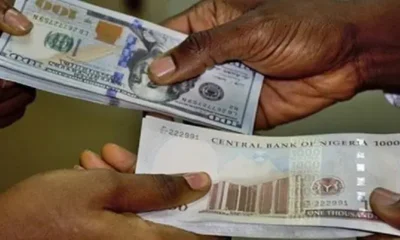
Dollar to Naira Exchange Rate – Thursday, October 22, 2026

BREAKING: Lagos Govt Declares Today, Thursday Work-Free to Mark 2026 Ìṣẹ̀ṣe Day

Tech Expert, Zuckerberg trains with UFC champions, Adesanya, Alexander

Organ Trafficking: Ekweremadu bags 10 years in UK prison
-
 Business2 days ago
Naira Exchange Rates Wednesday, October 21, 2026
-
 Business2 days ago
Currency Words You Should Know
-

 Business2 days ago
NCC, CBN To Warn Companies By Flagging Fraudulent Phone Numbers
-
 Business2 days ago
JPMorgan Eyeing Entry Into Nigeria’s Banking Industry
-

 Business2 days ago
RMRDC Taking 2027 Africa Raw Materials Summit To Kenya
-
 Health2 days ago
BREAKING: Nigeria Confirms First Ebola Case
-

 Business2 days ago
How I steal ATM users’ PINs, defraud them
-
 Health2 days ago
Ebola In Nigeria: Symptoms, Spread and How To Protect Yourself