
News
Atiku Backs Suspension of new tax framework , following unconstitutional forgery
This constitutional violation exposes a troubling reality: a government obsessed with imposing ever-increasing tax burdens on impoverished Nigerians rather than creating conditions for prosperity.


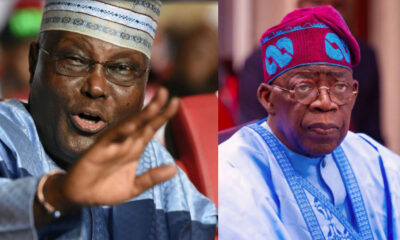
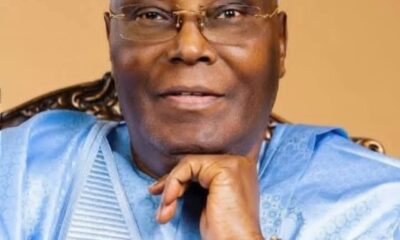
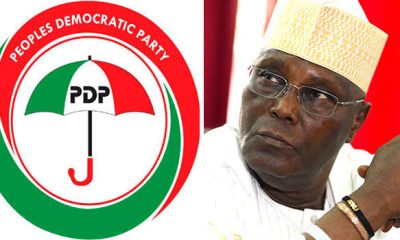
Atiku Abubakar, ex- Vice President of Nigeria (1999-2007) has strengthened the public calls for the suspension of the Federal Government’s new tax laws following the discovery of illegal and unauthorized alterations made to document after passage by the National Assembly.
Atiku, in a statement he signed personally on Tuesday, asserted “What the National Assembly did not pass cannot become law.”
Atiku described the forgery of the tax law as “a brazen act of treason against the Nigerian people and a direct assault on our constitutional democracy.”
The statement reads: “This draconian overreach by the executive branch undermines the foundational principle of legislative supremacy in the making of laws.
It reveals a government more interested in extracting wealth from struggling citizens than empowering them to prosper.
The Unconstitutional Alterations
The following substantive changes were allegedly illegally inserted into the tax bills after parliamentary approval, in clear violation of Sections 4 and 58 of the 1999 Constitution:
1. New Coercive Powers Without Legislative Consent
*Arrest powers granted to tax authorities
*Property seizure and garnishment without court orders
*Enforcement sales conducted without judicial oversightThese provisions transform tax collectors into quasi-law enforcement agencies, stripping Nigerians of due process protections that the National Assembly deliberately included.
2. Increased Financial Burdens on Citizens*Mandatory 20% security deposit before appealing tax assessments*Compound interest on tax debts*Quart
erly reporting requirements with lowered thresholds
*Forced USD computation for petroleum operations
These changes erect barriers that prevent ordinary Nigerians from challenging unjust assessments while increasing compliance costs for businesses already struggling in a difficult economy.
3. Removal of Accountability Mechanisms
*Deletion of quarterly and annual reporting obligations to the National Assembly
*Elimination of strategic planning submission requirements
*Removal of ministerial supervisory provisions
By stripping away oversight mechanisms, the government has insulated itself from accountability while expanding its powers—a hallmark of authoritarian governance.
A Government Against Its People
This constitutional violation exposes a troubling reality: a government obsessed with imposing ever-increasing tax burdens on impoverished Nigerians rather than creating conditions for prosperity.
Instead of investing in infrastructure, education, healthcare, and economic empowerment that would expand the tax base organically, this administration chooses the path of aggressive extraction from an already struggling populace.
Nigeria’s poverty rate remains alarmingly high, unemployment continues to devastate families, and inflation erodes purchasing power daily.
Yet rather than supporting citizens to become more productive, thereby generating sustainable tax revenues, the government employs draconian measures to squeeze resources from people who have little left to survive.
True economic growth comes from empowering citizens, not impoverishing them further through punitive taxation and erosion of legal protections.
A thriving economy with prosperous citizens naturally generates robust tax revenues. But this requires vision, investment, and patience, qualities evidently lacking in an administration that resorts to constitutional manipulation to achieve short-term fiscal goals.
I hereby call upon:1. The Executive to immediately suspend the implementation of the tax law effective January 1, 2026 to give room for a proper investigation.
2. The National Assembly to immediately rectify these illegal alterations through proper legislative processes and hold accountable those responsible for this constitutional breach.
3. The Judiciary to strike down these unconstitutional provisions and reaffirm the sanctity of the legislative process.
4. Civil Society and all Nigerians to reject this assault on democratic principles and demand governance that serves the people rather than exploiting them.
5. The Government to abandon this path of extraction and oppression, and instead focus on policies that enable Nigerian citizens and businesses to thrive.
6. The EFCC to immediately investigate and prosecute those found culpable in the illegal alteration of our laws to extort and defraud the Nigerian people.
What the National Assembly did not pass cannot become law.
This fundamental principle must be defended, or we risk descending into arbitrary rule where constitutional safeguards mean nothing.
The Nigerian people deserve better than a government that circumvents democracy to impose hardship.
We demand accountability, constitutional compliance, and economic policies that build prosperity rather than deepen poverty.”






News
Police must pay transport fares, says AIG
” No police officer has the right to enter your vehicle without paying. We should assist one another willingly, not by force,” he said.
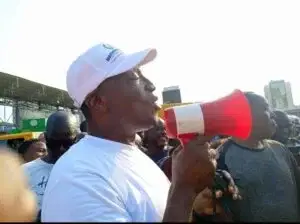
• The Assistant Inspector-General of Police(AIG) in charge of Zone 2 Command, Mr Olohundare Jimoh, speaking with transporters at Obalende garage, Lagos State, on Wednesday.
The Assistant Inspector-General of Police, Zone 2 Command, Mr Olohundare Jimoh, has declared that officers must pay fares before boarding commercial vehicles, warning against abuse of authority.
Jimoh spoke on Wednesday at Obalende garage during a sensitisation meeting with drivers and transport workers marking National Police Day 2026.
He stressed that relations between police and the public must be based on partnership, not coercion, urging both sides to support each other voluntarily.
“No police officer has the right to enter your vehicle without paying. We should assist one another willingly, not by force,” he said.
Jimoh called for stronger cooperation to maintain safety and order on roads, insisting there was no conflict between officers and transport unions.
“I don’t collect money from officers. We don’t arrest people arbitrarily. If you have issues with any officer, report directly to me,” he said.
(Vanguard)

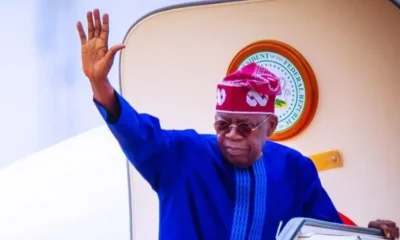
President Bola Ahmed Tinubu will leave for Jos tomorrow to commiserate with the state government and residents over recent deadly gun attacks that lefts dozens dead.
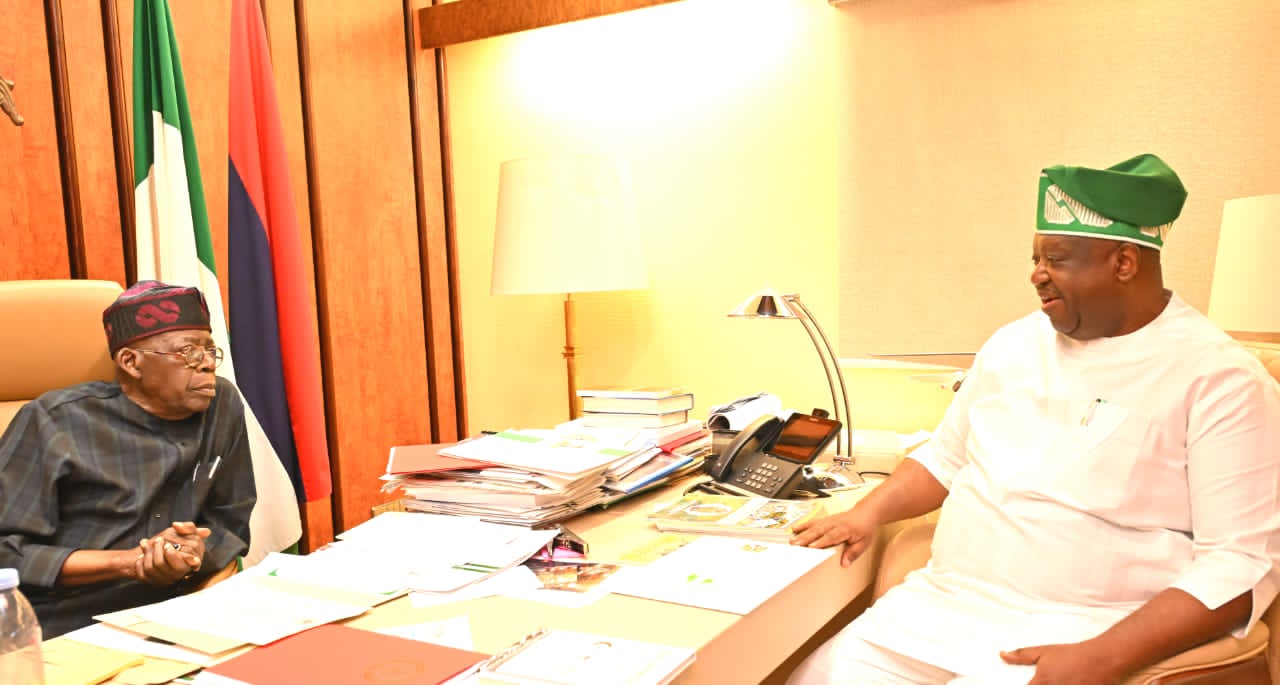
This was following Governor Caleb Mutfwang’s security briefing to the President on the recent violent attack in Angwan Rukuba, Plateau State.
During the meeting on Wednesday at the presidential villa in Abuja, Governor Caleb Mutfwang told Mr President that although security forces have restored calm after fresh disturbances involving looters on Wednesday morning, following the deadly Palm Sunday attack that left more than a dozen dead and many others injured.
He said that investigations are continuing to determine the identities or motives of the attackers who are yet to be apprehended .
Presidency source said that President Tinubu was initially scheduled for a planned trip to Ogun State to flag off operations at the Gateway International Cargo Airport on Thursday.
From Jos, the President will travel to Lagos to observe Good Friday.
On Saturday, April 4, he will visit Ogun State to commission projects including the cargo airport.
He will then return to Lagos during the Easter holiday to commission several state infrastructure projects, including the Ojota/Opebi Link Bridge.
Before heading back to Abuja, the president will visit Bayelsa State on April 10 to commission projects completed under Governor Duoye Diri.
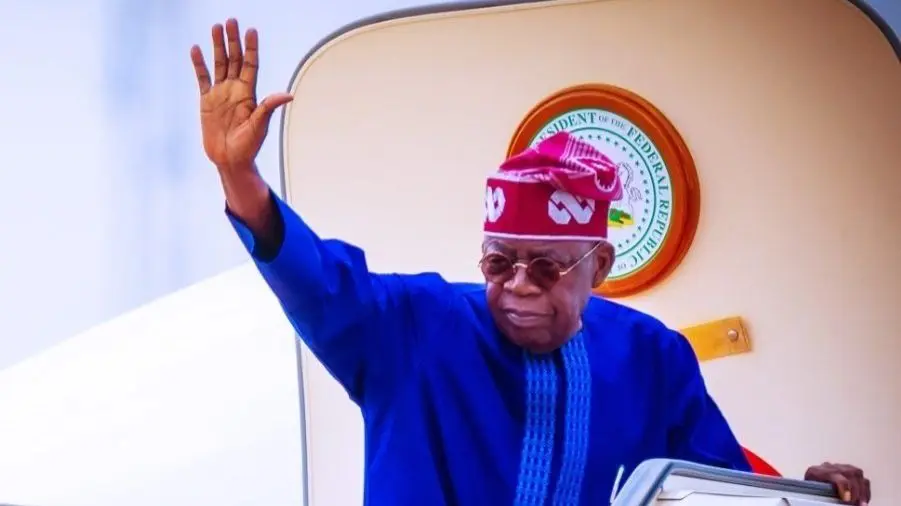
President Bola Ahmed Tinubu will tomorrow embark on a visit to Jos, Plateau State, as the first leg of a five-state tour across the country.
The Presidency announced that the President has postponed his scheduled trip to Ogun State to enable him to commence the series of official visits.
Details of the remaining four states in the tour are expected to be released by the Presidency in due course.
The development comes as President Tinubu continues nationwide engagements aimed at assessing development projects, interacting with stakeholders, and addressing key national issues in the respective states.
Further updates on the itinerary will be communicated as the visits progress.


INEC Dismisses Calls for Chairman’s Removal

Ebonyi: Gunmen Assasinate Another Traditional Ruler

From South Africa to US, ‘Cicada’ COVID-19 variant spreading

Tech Expert, Zuckerberg trains with UFC champions, Adesanya, Alexander

Organ Trafficking: Ekweremadu bags 10 years in UK prison

SAINT OBI: Between his marriage and his death
-
 Business2 days ago
33 Nigerian Banks Beat CBN’s Recapialisation with ₦4.65trn Combined Capital Base
-
 Politics2 days ago
BREAKING: INEC Withdraws Recognition of David Mark’s ADC
-

 Sports2 days ago
FirstBank Sponsors Samuel Okwaraji U-16 Football Championship 2026
-
 News2 days ago
JUST IN: Tinubu Heads to Jos Tomorrow, Postpones Ogun Trip for 5-State Visits
-
 News2 days ago
Easter: FG declares Friday, Monday public holidays
-

 Entertainment2 days ago
Super Eagles Iwobi to launch music album ‘More To Life’
-
 News2 days ago
Gas Leak in Ogun School: 30 Students, Teacher Hospitalised
-

 Politics2 days ago
Arise News Anchor Ikokwu in Political Race for Reps Seat