
News
AI in the Newsroom: Tool, Not Talent

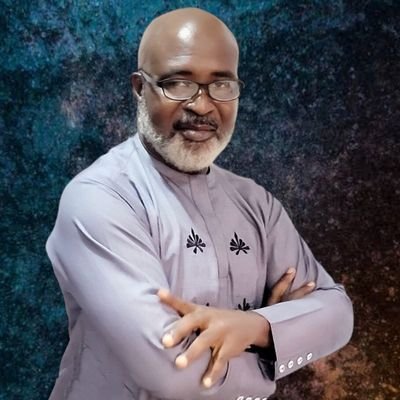
By: BABS DARAMOLA
I watched in disbelief today as one of Nigeria’s top national TV stations used AI to voice a news report. Let me be clear: AI has its place in journalism. It can help gather data, fact-check, and streamline production. But reading the news? Delivering it to the public? That’s a strp too far. Presentation must remain human work.
Broadcast journalism is more than a recitation of facts; it is a craft built on experience, judgment, and empathy. Great stations pride themselves on the caliber of their reporters; their pedigree, their training, and their ability to probe beyond the script. These are professionals who have spent years in the field, enduring challenges, asking the hard questions, and ensuring that the public receives information that is accurate, contextualized, and ethically presented. AI can never replicate this.
The danger of using AI to replace human reporters is not hypothetical; it is immediate and tangible. Machines lack intuition, moral judgment, and the ability to read between the lines. They cannot adjust tone to convey urgency, nuance, or empathy. They cannot interview sources in ways that build trust, challenge authority, or uncover truths hidden beneath layers of bureaucracy. They cannot, in short, report with the credibility and humanity that audiences deserve.
Globally, respected outlets -BBC, CNN, Al Jazeera, Reuters- have integrated AI as a supporting tool, never as a replacement for journalists. These organizations recognize that technology can enhance reporting but cannot supplant it. Audiences respond to human storytellers because humans bring context, understanding, and accountability. Replacing journalists with algorithms risks turning news into sterile, impersonal content, and diminishes public trust at a time when credible information is most needed.
There is also a deeper concern for the next generation of journalists. Broadcast journalism curricula are carefully designed to teach ethics, storytelling, and professional judgment. By sidelining practitioners in favor of AI, media organizations risk creating a generation of journalists for whom the craft is theoretical rather than practical; a generation unprepared to navigate the moral and practical complexities of reporting.
Beyond education, this trend threatens the very ethos of journalism. Reporting is not merely about speed or efficiency; it is about truth, accountability, and service to the public. Lazy shortcuts erode these principles. The allure of AI must not blind us to the foundational role that human reporters play in democracy and civil society.
Using AI responsibly is innovation. Using it to replace reporters is laziness disguised as progress. The stations involved in this cheap practice must ask itself: are we committed to serving the public with integrity, or are we willing to cheapen our journalism for convenience?
Reporting is human. Let us ensure it remains so.
Babs Daramola is a Lagos-based broadcast journalist with over 35 years of experience on radio and TV.




News
Sanwo-Olu prepares the way for Tinubu’s official visit to Lagos state
President Tinubu is expected to inaugurate several key projects executed by the Babajide Sanwo-Olu administration, including the Ojota–Opebi Link Bridge, designed to ease traffic congestion across the metropolis.

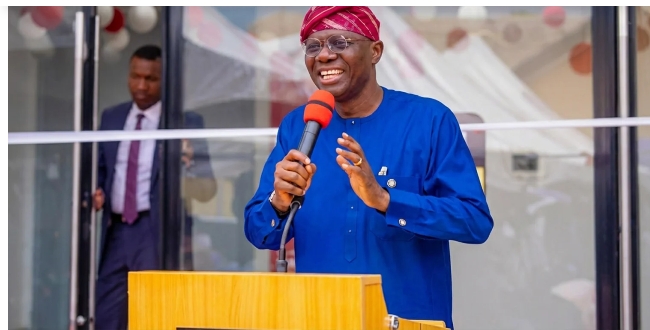
President Bola Tinubu will officially visit Lagos state on April 8 and 9, during which he will commission several completed projects by the administration of governor Babajide Sanwo-Olu.
The Commissioner for Information and Strategy, Gbenga Omotoso, said during a press briefing outlining activities for the President’s visit.
Omotoso said that Lagos remains Nigeria’s commercial hub and that the projects slated for commissioning reflect the administration’s investments in transportation, infrastructure, education, and public sector development.
According to him, President Tinubu is expected to inaugurate several key projects executed by the Babajide Sanwo-Olu administration, including the Ojota–Opebi Link Bridge, designed to ease traffic congestion across the metropolis.
Other projects include the Lagos State Geographic Information Service building, a multi-agency complex named after the President, a newly completed school complex, and the Mid-Level Agro Produce Hub in Abijo, Ibeju-Lekki.
He added that the Tolu Schools Complex in Ajegunle comprises 36 public schools—31 secondary and five primary schools—situated on 11.73 hectares of land in the Ajeromi-Ifelodun Local Government Area.
Omotoso said the redevelopment of the complex demonstrates the government’s people-oriented approach, noting that it serves about 20,000 pupils.
” These projects have been carefully conceived and executed to address the needs of our growing population, ease mobility, stimulate economic activity, and enhance social welfare,” he said.
News
Jega loses wife, Hajiya Hadiza
Hajia Hadiza passed on yesterday and was buried according to Islamic rites.
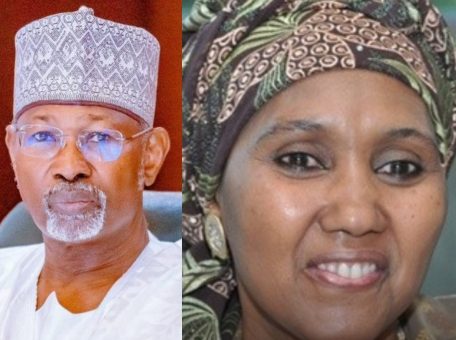
The Special Adviser to the President on Livestock Development, Prof. Attahiru Jega, has lost his wife, Hajiya Hadiza Jega.
Hajia Hadiza passed on yesterday and was buried according to Islamic rites.
Vice President Kashim Shettima, who represented the President at the janazah (Islamic funeral rites) yesterday at the National Mosque in Abuja, conveyed the President’s heartfelt sympathy to the bereaved family.
President Tinubu described the late Hajiya Hadiza as a woman of uncommon grace and strength, noting that she played a pivotal role as a steady support system to her husband throughout his years of public service, including his tenure as chairman of the Independent National Electoral Commission.
A statement in Abuja by his Special Adviser on Information and Strategy, Bayo Onanuga, said that the President also applauded her contributions to education and community development, highlighting her quiet but impactful influence in advancing social causes.
News
Atiku hires US lobbying firm for $1.2m to boost image – Report
One of the objectives of the engagement is to “counterbalance” the Nigerian government’s “lobbying narratives” in the United States, while also working to “advance understanding” of Atiku’s “leadership posture and policy vision” among policymakers.

Ex-Vice-President Atiku Abubakar has hired a Washington-based lobbying firm, Von Batten-Montague-York, L.C., to strengthen his reputational standing in the United States.
The PUNCH reported that the details of the deal are contained in documents filed with the U.S. Department of Justice, which show that the agreement was signed on March 9 and 10, 2026, by the firm’s managing partner, Karl Von Batten, and Nigerian politician Fabiyi Oladimeji on behalf of the former vice president.
According to the filing sighted on the Department of Justice ’s website on Sunday, the contract is aimed at shaping perceptions of Atiku within U.S. policy circles and countering narratives linked to the Nigerian government.
One of the objectives of the engagement is to “counterbalance” the Nigerian government’s “lobbying narratives” in the United States, while also working to “advance understanding” of Atiku’s “leadership posture and policy vision” among policymakers.
Under the arrangement, the firm is expected to facilitate meetings between the former vice-president and U.S. government officials, including members of Congress, as well as provide advisory services on policy positioning and engagement strategy.
“These activities include lobbying and government affairs engagement with Members of Congress, congressional staff, and executive branch officials concerning issues related to democratic governance, regional stability, economic development, and U.S. engagement with Nigeria and the broader West African region,” part of the contract reads.
The firm will also undertake “promotion, perception management, and public relations activities designed to enhance understanding among U.S. policymakers and relevant stakeholders” of Atiku’s positions.


Sanwo-Olu prepares the way for Tinubu’s official visit to Lagos state

ADC youths give INEC 72-hour ultimatum to restore David Mark -led leadership

Seven Eritrean players fail to return home after AFCON qualifier

Tech Expert, Zuckerberg trains with UFC champions, Adesanya, Alexander

Organ Trafficking: Ekweremadu bags 10 years in UK prison

SAINT OBI: Between his marriage and his death
-
 Crime3 days ago
Three Killed, One Injured in Fresh Jos Attack (Video)
-
 Politics3 days ago
No force can defeat Tinubu in 2027 –Umahi
-

 Politics3 days ago
Onyejeocha resigns as Minister of State for Labour
-

 News1 day ago
Kaduna Mando Garage Explosion Not Bomb- Police
-
 Politics3 days ago
Labour Party to hold presidential primary April 28
-
 News2 days ago
Nigerian Army Debunks Claims of Attack on Bishop Matthew Kukah’s Residence and Sokoto Catholic Cathedral
-
 News1 day ago
Atiku hires US lobbying firm for $1.2m to boost image – Report
-

 News2 days ago
JUST IN: Lagos Fire Service Successfully Contains Two Overnight Fire Incidents iin Lagos