
News
Abuja UN House Bombing : Court Fix December 5 for Continuation of Trials
The DSS accuse the five terror suspects led Al-Barnawi, of being the masterminds of the August 26, 2011, bombing of the United Nations Complex in Abuja.

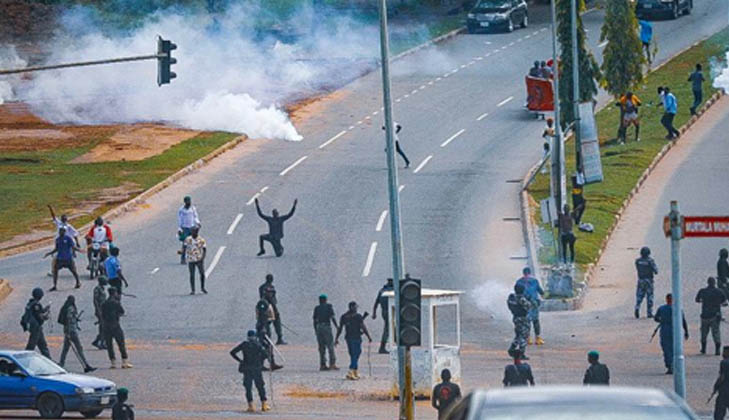
UN Complex Bombing: Court Admits Evidence in DSS Case Against Al-Barnawi, Other Terror Suspects
A Federal High Court sitting in Abuja on Friday admitted in evidence three video clips supplied by the Department of State Services (DSS) to puncture claims of duress by five suspected masterminds of the 2011 bombing of the United Nations complex in Abuja facing trial.
The presiding judge, Justice Emeka Nwite, fixed December 5 for continuation of the trial-within-trial of five defendants, including Khalid Al‑Barnawi.
The trial -within – trial, will involve the playback of video clips in the courtroom to determine the veracity of claims by the defendants that they made their extra-judicial statements before the DSS under duress.
The DSS accuse the five terror suspects led Al-Barnawi, of being the masterminds of the August 26, 2011, bombing of the United Nations Complex in Abuja.
At least 20 people were killed and more than 70 others injured in the attack.Captured in 2016, Al-Barnawi is facing trial alongside four other terror suspects – Mohammed Bashir Saleh, Umar Mohammed Bello aka Datti, Mohammed Salisu, and Yakubu Nuhu aka Bello Maishayi.
The trial suffered several delays due to legal and procedural challenges thrown up by the defendants, including the absence of legal representation on several occasions the suspects were brought to court.
However, all that changed after Mr. Oluwatosin Ajayi’s appointment as Director – General, with him insisting on speedy trial for suspects he inherited as well as for those arrested under his watch.
The DSS recently requested the court to grant accelerated hearing in the case, a request Justice Nwite granted, same way judges trying DSS cases against terror suspects Mahmud Muhammad Usman aka Mahmuda, Muhammed Usman aka Abu Bara’a, as well as those standing trial in the Yelwata and Benue massacres, have obliged the DSS DG’s request for speedy trial.
Following the conclusion of playing back the video clip of the first defendant, Justice Nwite fixed December 5 for the commencement of playing back the video clips of the on other defendants.
Earlier on Friday, Justice Nwite had admitted the extra-judicial statements made by three other persons charged by the DSS for alleged terrorism.
The trio are being tried for allegedly spying on the US, and Israel s interests for certain individuals in Iran.
Haruna Ali Abbas, Ibrahim Hussaini Musa and Adam Sulaiman were accused of spying on the US, and Israel ‘s interests for individuals in Iran.
The case, which had been ongoing since 2014 and re-assigned multiple times, reached a point in August 2025 during a trial-within-trial to determine if the defendants’ alleged extra-judicial statements were made voluntarily or under duress.
While the defendants claimed that they were coerced, harassed and intimidated to make their statement, the prosecution held that the statements were made voluntarily.
The prosecution claimed that the accused persons read through the statements, through the cautionary words and signed, hence, should be admitted in evidence. Justice Nwite who ordered a trial within trial allowed both parties to call witnesses who gave evidence.
The prosecution who called three witnesses said they conducted their operations within the best standard procedure, as they paid attention to the welfare of suspects in their custody in terms of food and medication while also allowing them access to their families.
The defendants on the other hand recounted their alleged torture in the DSS facility, alleging that they were beaten and given inhuman treatment.
After hearing arguments from both the prosecution and defense counsel, Justice Nwite ruled that the defendants statements be admitted in evidence.
The Judge held that the prosecution through the witnesses proved to the court that they were not forced to make their statements.Justice Nwite after admitting the statements as exhibits adjourned the matter to January 22, 2026 for substantive hearing.
News
Police must pay transport fares, says AIG
” No police officer has the right to enter your vehicle without paying. We should assist one another willingly, not by force,” he said.
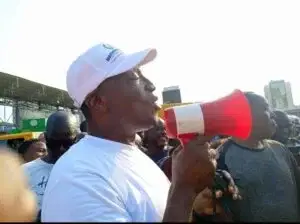
• The Assistant Inspector-General of Police(AIG) in charge of Zone 2 Command, Mr Olohundare Jimoh, speaking with transporters at Obalende garage, Lagos State, on Wednesday.
The Assistant Inspector-General of Police, Zone 2 Command, Mr Olohundare Jimoh, has declared that officers must pay fares before boarding commercial vehicles, warning against abuse of authority.
Jimoh spoke on Wednesday at Obalende garage during a sensitisation meeting with drivers and transport workers marking National Police Day 2026.
He stressed that relations between police and the public must be based on partnership, not coercion, urging both sides to support each other voluntarily.
“No police officer has the right to enter your vehicle without paying. We should assist one another willingly, not by force,” he said.
Jimoh called for stronger cooperation to maintain safety and order on roads, insisting there was no conflict between officers and transport unions.
“I don’t collect money from officers. We don’t arrest people arbitrarily. If you have issues with any officer, report directly to me,” he said.
(Vanguard)

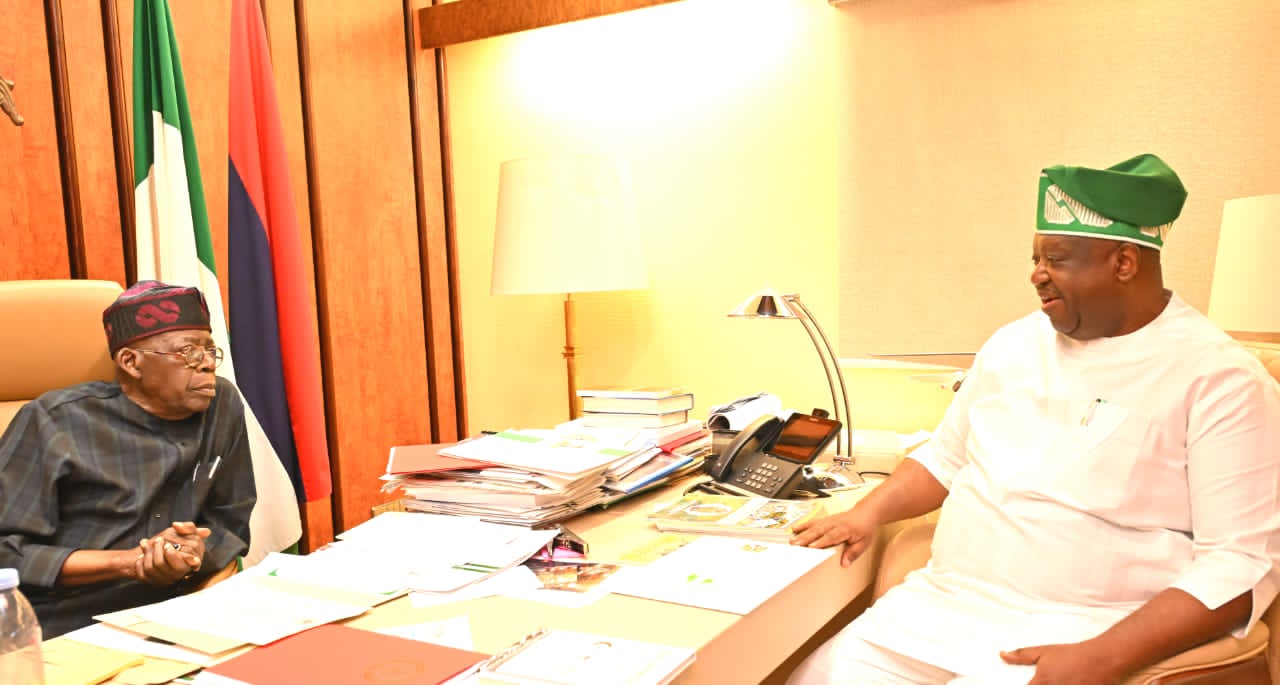
President Bola Ahmed Tinubu will leave for Jos tomorrow to commiserate with the state government and residents over recent deadly gun attacks that lefts dozens dead.
This was following Governor Caleb Mutfwang’s security briefing to the President on the recent violent attack in Angwan Rukuba, Plateau State.
During the meeting on Wednesday at the presidential villa in Abuja, Governor Caleb Mutfwang told Mr President that although security forces have restored calm after fresh disturbances involving looters on Wednesday morning, following the deadly Palm Sunday attack that left more than a dozen dead and many others injured.
He said that investigations are continuing to determine the identities or motives of the attackers who are yet to be apprehended .
Presidency source said that President Tinubu was initially scheduled for a planned trip to Ogun State to flag off operations at the Gateway International Cargo Airport on Thursday.
From Jos, the President will travel to Lagos to observe Good Friday.
On Saturday, April 4, he will visit Ogun State to commission projects including the cargo airport.
He will then return to Lagos during the Easter holiday to commission several state infrastructure projects, including the Ojota/Opebi Link Bridge.
Before heading back to Abuja, the president will visit Bayelsa State on April 10 to commission projects completed under Governor Duoye Diri.
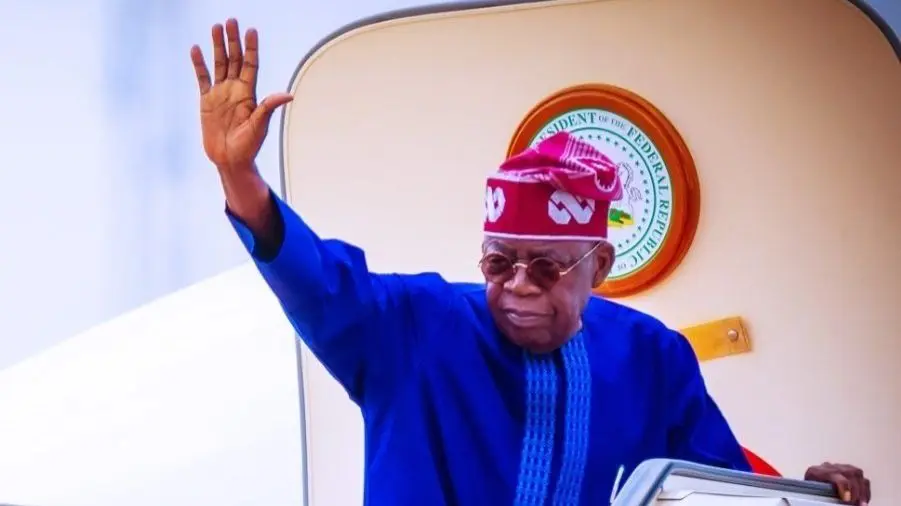
President Bola Ahmed Tinubu will tomorrow embark on a visit to Jos, Plateau State, as the first leg of a five-state tour across the country.
The Presidency announced that the President has postponed his scheduled trip to Ogun State to enable him to commence the series of official visits.
Details of the remaining four states in the tour are expected to be released by the Presidency in due course.
The development comes as President Tinubu continues nationwide engagements aimed at assessing development projects, interacting with stakeholders, and addressing key national issues in the respective states.
Further updates on the itinerary will be communicated as the visits progress.


FIFA ranks Super Eagles third in Africa, 26th globally

Police must pay transport fares, says AIG

Tinubu scurries to Jos after Mutfwang’s security brief

Tech Expert, Zuckerberg trains with UFC champions, Adesanya, Alexander

Organ Trafficking: Ekweremadu bags 10 years in UK prison

SAINT OBI: Between his marriage and his death
-

 Business2 days ago
BUA Foods Plc Reports Strong 2025 Performance with ₦1.77 Trillion Revenue, Proposes Record ₦28 Dividend per Share
-

 News2 days ago
NELFUND Debunks Claims of ₦25,000 Student Upkeep Allowance
-
 News3 days ago
President Tinubu at 74, Donates Salaries to Armed Forces Welfare Fund
-
 Politics3 days ago
PDP will contest 2027 polls, says Wike
-

 Crime2 days ago
JUST IN: Terrorists Invade Kaduna Wedding Ceremony, Kill 13 Guests In Late-Night Attack
-

 Business3 days ago
OPay launches new office in Jos
-

 Politics2 days ago
PDP Leadership Crisis: Faction Heads to Supreme Court as Tussle Deepens
-

 News2 days ago
Lagos High Court Embraces Full Digital Transformation with Mandatory E-Filing