
News
Media Owners Requesting Tax Relief for Sustainability of The Industry


The 20th All Nigeria Editors Conference (ANEC) in Yenagoa, the Bayelsa State Capital, rounded off with a shared commitment from Nigerian media proprietors, media executives and editors to promote responsible journalism, support economic growth, and defend press freedom and democracy.
The media industry leaders also called on the federal government to urgently mitigate the negative impact of fuel subsidy removal and the exchange rate volatility on the economy.
Noting the economic constraints and rising operational costs, the Guild also urged the federal government to consider subsidies or tax relief to help media houses cope with the current challenges.
In a communique signed by the NGE President, Eze Anaba and the General Secretary, Dr Iyobosa Uwugiaren, the professional body of editors and media executives, said that while it recognizes the potential long-term benefits of the federal government’s reforms, the immediate economic strain on all sectors, especially the media, is becoming unbearable and unhelpful to the economic growth as well as media sustainability and viability.
The Guild therefore called for targeted relief measures to ease the burden on citizens and businesses alike. On the sustainability of media revenue models, the Guild advocated for innovation in revenue generation beyond traditional advertising.
‘’Media owners are encouraged to invest in quality journalism, embrace digital platforms, and offer premium content to ensure financial sustainability.
In a communique signed by the NGE President, Eze Anaba and the General Secretary, Dr Iyobosa Uwugiaren, the professional body of editors and media executives, said that while it recognizes the potential long-term benefits of the federal government’s reforms, the immediate economic strain on all sectors, especially the media, is becoming unbearable and unhelpful to the economic growth as well as media sustainability and viability
‘’Concern over the rise in harassment and violence against journalists was also prominent at the conference. And we called for stricter enforcement of journalist protection laws and urged media houses to provide safety training for their staff, especially those covering sensitive issues’’, the editors added.
Reaffirming the importance of ethical journalism, media proprietors were urged to maintain high standards of professionalism, saying adhering to these standards is essential for building public trust and countering pressures that threaten press freedom.
The Guild also urged the federal government to create a media-friendly environment by reviewing policies that affect operational costs, and consider tariff reductions on essential media equipment.
According to the NGE, ‘’There was a strong recommendation at the conference that the media proprietors should invest in digital transformation, enhance content delivery, and train staff in digital skills, like data journalism and multimedia production to adapt to Nigeria’s increasingly digital audience.
‘’There was also call for the Guild to encourage greater collaboration among the media organizations, NGOs, and civil society to advocate for press freedom, and emphasized that unity is essential in confronting restrictive laws and policies.’’
The ANEC also discussed the outcome of a conference titled “The Big Tech and Journalism – Building a Sustainable Future for the Global South, which was held last year in Johannesburg.
The conference, which brought together over 70 journalists, news publishers, media organisations, including Nigerian Guild of Editors, scholars, activists, lawyers, and economists from 24 countries discussed solutions to the crisis of the sustainability of journalism and its intersection with the role of major tech platforms .
According to the Guild, ‘’The conference culminated in the adoption of Big Tech and Journalism: Principles for Fair Compensation (the Principles).
The Principles are intended to be universal, serving as a framework for any country seeking to address media sustainability through competition or regulatory approaches, while enabling adaptation to the unique context.’’
The ANEC, therefore, resolved to use the Principles and hoped that the Principles will represent an important step forward in addressing Nigerian media sustainability in ‘’the tumultuous era of Big Tech.”
The ANEC also expressed concern over the gagging of Nigerian press, especially online platforms, with obnoxious laws and resolved to compile all the anti-media laws and forward it to the National Assembly to begin the process for repeal or amendment.
The Guild expressed its gratitude to Governor Douye Diri of Bayelsa State, members of the Bayelsa State Executive Council, and traditional rulers for their hospitality and support.
Their contributions, according to the Guild, were instrumental in facilitating a successful conference and demonstrated Bayelsa’s commitment to fostering national dialogue and media development.








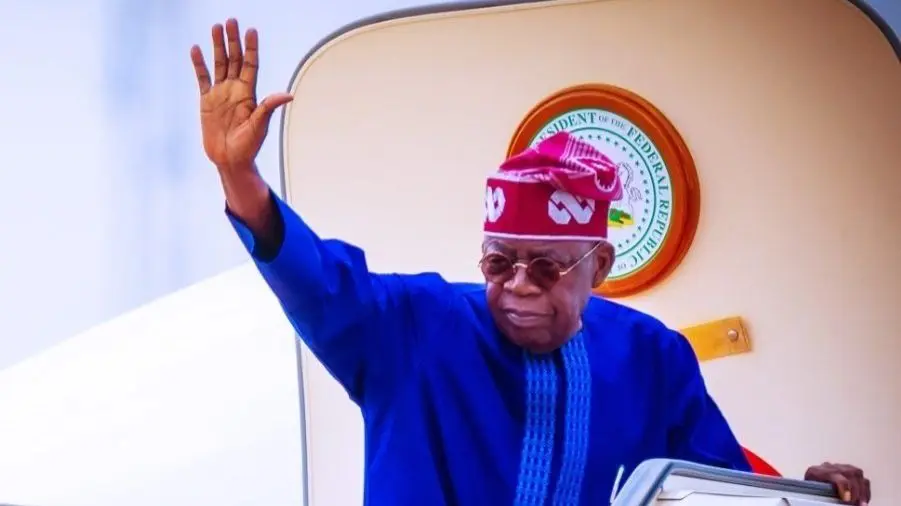
President Bola Tinubu has ended his working vacation in Europe and departed Paris for Nigeria on Tuesday, with his aircraft expected to land at Murtala Muhammed Airport in Lagos later in the evening.
The announcement was made by his Special Adviser on Information and Strategy, Bayo Onanuga. Tinubu left Abuja on August 30 for what was initially billed as a three-week working vacation.
He spent one week in London before proceeding to Paris. The trip was later extended, bringing his total time abroad to about 30 days.
The President chose to return through Lagos rather than Abuja to honour the memory of the late Chief MKO Abiola, the presumed winner of the June 12, 1993 presidential election.
On Independence Day, October 1, he is scheduled to attend the premiere of a movie celebrating Abiola at the Wole Soyinka National Theatre in Iganmu, Lagos.
While in Lagos, Tinubu will hold strategic meetings with political leaders and associates over several days as preparations for the 2027 general elections intensify. He is expected to return to Abuja after those engagements.
During his stay in Paris, the President attended a private dinner with French President Emmanuel Macron and held meetings with business leaders, including Vincent Bolloré of the Bolloré Group.
He also met with First Holdings Chairman Femi Otedola and witnessed the signing of a Memorandum of Understanding between the Ogun State Government and DP World for a deep seaport and Blue Marine Economic Zone.

The National Assembly plans to translate Nigerian laws into Igbo, Hausa, Yoruba and other indigenous languages as part of a broader effort to digitise parliamentary records and make legislation more accessible to citizens.
Henry Nwawuba, Executive Secretary of the National Assembly Library Trust Fund, announced the initiative on Monday in Abuja while declaring open the 2026 National Assembly Library Week. The event was themed “Parliamentary Memory: Connecting Records, Legislation and the People.”
Nwawuba said the translation would help more Nigerians, especially those not proficient in English, understand the laws that affect their daily lives. He described the library as the knowledge infrastructure of the legislature and a repository of its institutional memory.
The move forms part of a digital overhaul that includes upgrading the e-library, creating electronic repositories, developing a National Assembly Library mobile application, and introducing a Bills Tracker to allow the public to monitor the progress of proposed laws in real time.
The library will also produce infographics, audiovisual materials and short video explainers to simplify bills, Acts and legislative procedures. Officials said the upgrades would help curb the spread of fake or unverified legislative documents online.
Senate President Godswill Akpabio, represented by Senator Osita Ngwu, and Speaker of the House of Representatives Abbas Tajudeen, represented by Professor Julius Ihonvbere, both stressed the need for lawmakers to use the digital tools while prioritising cybersecurity.
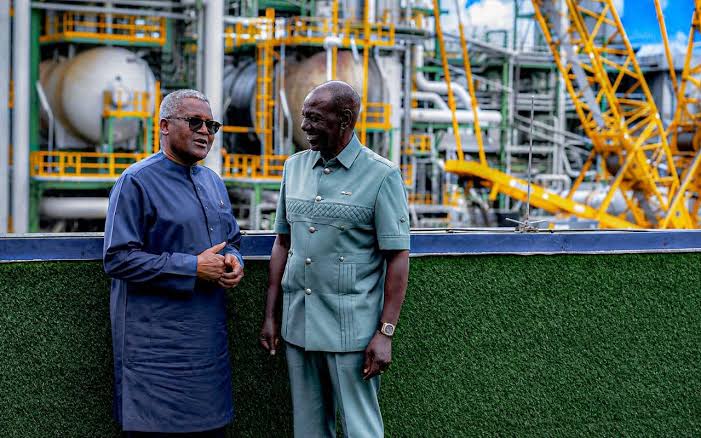
A Kenyan court order requiring parties to maintain the status quo on disputed land has cast uncertainty over the planned groundbreaking of Aliko Dangote’s multi-billion-dollar oil refinery in Lamu, scheduled for Wednesday, September 30.
The Malindi Environment and Land Court, in an order dated September 25 and made public this week, directed that the existing situation on Land Reference No. 13061 in the Hindi/Manda Magogoni area be preserved until a hearing on October 14. The order followed a petition by 133 residents of Chandavai in Lamu County, who claim the land is ancestral property their families have occupied, farmed and developed for generations. They allege inadequate recognition, compensation and resettlement in the acquisition process.
Judge Jane Onyango declined to certify the application as fully urgent in a way that would explicitly cancel the ceremony and refused a separate request to restrain the Office of the President, Dangote Industries, the Lamu County Government and other respondents from proceeding with the groundbreaking. However, the status quo directive bars clearing, excavation, fencing, demolition, construction or other interference with occupied portions of the land in the interim.
Dangote Group said the ruling has not halted the groundbreaking ceremony itself. “The court has not halted the groundbreaking ceremony of the refinery at this stage. However, activities at the site may be affected by the ruling as both parties are required not to carry activities until the case is heard on 14th October,” the company stated.
Energy and Petroleum Cabinet Secretary Opiyo Wandayi confirmed the ceremony would proceed as planned. Africa’s richest man, Aliko Dangote, downplayed the development while speaking to investors in Nairobi, describing such legal challenges as “normal for us in Africa” and comparing it to past disputes elsewhere on the continent. He insisted the project would continue.
The proposed facility is a 700,000-barrel-per-day greenfield oil refinery and petrochemical complex estimated to cost $15–16 billion (roughly Ksh2 trillion). It is intended to process crude from Kenya’s Lokichar fields and other East African sources, reduce the region’s heavy reliance on imported fuels, create jobs and support industrialisation. President William Ruto is expected to attend the ceremony alongside Dangote. Heavy equipment has already begun arriving at the Port of Lamu.
The case returns to court on October 14, when respondents will have the opportunity to file responses and the matter will be heard inter partes. Until then, the legal constraint on site activities remains in force even as organisers press ahead with the ceremonial launch.


UPDATE: Malindi Court Declines to Halt Dangote Refinery Launch in Lamu

JUST IN: Tinubu Departs Paris for Nigeria After Extended Vacation

National Assembly Plans to Translate Laws into Igbo, Hausa, Yoruba

Tech Expert, Zuckerberg trains with UFC champions, Adesanya, Alexander

Organ Trafficking: Ekweremadu bags 10 years in UK prison

SAINT OBI: Between his marriage and his death
-
 Business2 days ago
SEC Highlights Focus of National Capital Market Conference 2026
-
 Business2 days ago
NGX Debuts Invest WhatsApp Channel
-
 Sports2 days ago
Flamingos win WAFU B U-17 women’s tournament
-

 Business2 days ago
Naira To Dollar, Pound, Euro …Today, September 28
-

 News2 days ago
Nigeria is 66, Thursday October 1
-

 Entertainment2 days ago
Madonna and Taylor Swift win big at the MTV VMAs
-

 News2 days ago
JUST IN: Fire Engulfs Lagos Customs Command Office
-

 Business2 days ago
Ghana Moves to Cut Domestic Airfares as Ticket Prices Stay High