
News
Botswana, Nigeria Explore Deeper Collaboration in Livestock Development (Photos)

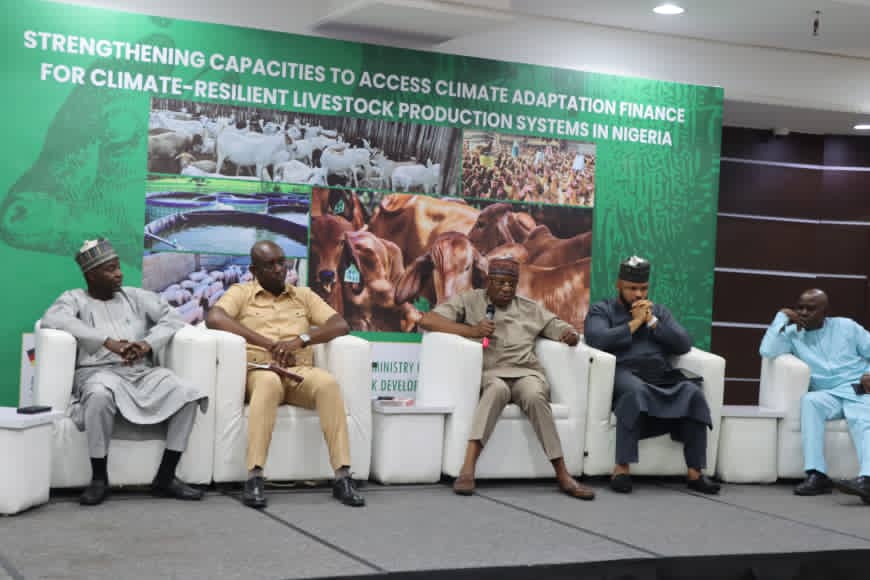
The Federal Government has reaffirmed its commitment to implementing evidence-based policies that will modernise Nigeria’s livestock sector and position it as a key driver of national economic growth.
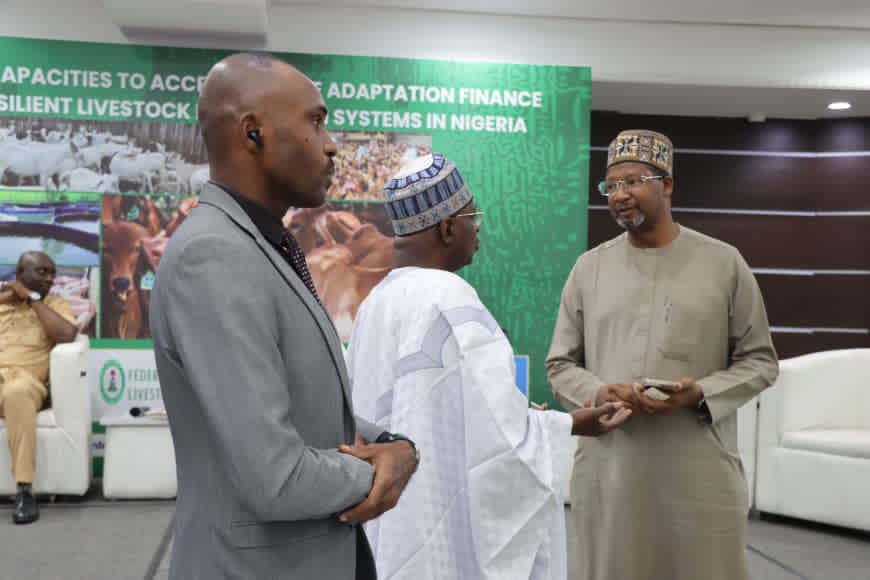
The Honourable Minister of Livestock Development, Idi Mukhtar Maiha, reiterated this position on Friday, 12th December 2025, when he received Her Excellency, Philda Nani Kereng, High Commissioner of the Republic of Botswana to Nigeria, during a courtesy visit to the Ministry in Abuja.
He emphasised that the nation can no longer rely on outdated systems but must embrace structured reforms that support productivity, enhance value addition, and create sustainable livelihoods for farmers and livestock value-chain actors.
“The Botswana experience is a major inspiration. Your nation has achieved in 50 years what the world continues to study, and we are interested in domesticating many of those lessons,” the Minister said.
“Nigeria, as the largest market in Africa, is ready to expand its livestock sector to compete globally, while also partnering with Botswana to accelerate the journey,” he added, noting the country’s unique success in exporting beef to Europe, managing transboundary diseases, and integrating technology in livestock traceability.
He stressed Nigeria’s readiness to learn from Botswana’s model, especially as the Ministry moves to rehabilitate and modernise 417 grazing reserves across the country into structured ranching ecosystems.
In her remarks, the High Commissioner highlighted Botswana’s five-decade success story in beef production and export to the European market, describing it as a product of deliberate policies, strong governance structures, and extensive farmer support systems.
She explained that Botswana’s livestock sector grew from a rural development model that prioritised agriculture, backed by policies and laws enabling farmers to produce high-quality cattle for livelihood improvement and national economic growth.
Her Excellency noted that Botswana’s beef sector, second only to diamonds in national revenue, thrives on strict disease-control systems, communal land management, targeted veterinary interventions, and highly subsidised farmer support programmes.
She outlined several areas where Botswana is prepared to collaborate with Nigeria, including beef quality improvement through enhanced genetics, modern abattoir practices, disease management, veterinary protocols, vaccine production, livestock traceability and grazing management.
News
FG Withdraw Charges Against PFIPC DG Adeyemi
When the matter was called on Monday, the DPPF notified the court that the AGF, after a proper review of the case file, had found some loopholes that informed his decision to withdraw the charge.

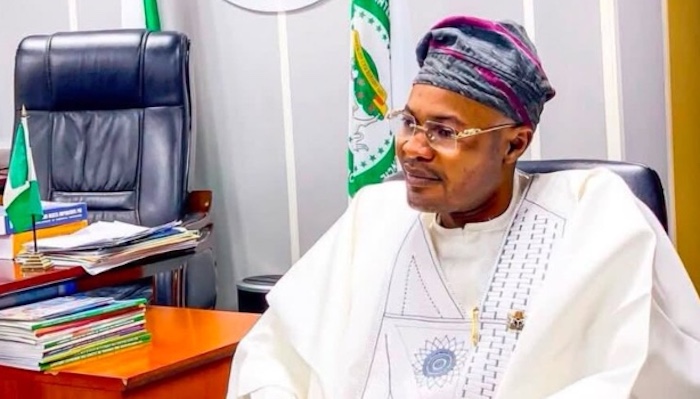
The Federal High Court in Abuja on Monday struck out the eight-count forgery charge brought against the self-styled Director-General (DG) of the alleged “non-existent” Presidential Foreign Investment Promotion Council (PFIPC), Prince Adeniyi Adeyemi.
Justice Mohammed Umar terminated further proceedings in the case following an application by the Federal Government, which was represented by the Director of Public Prosecutions of the Federation (DPPF), Mr. Rotimi Oyedepo, SAN.
It will be recalled that although the charge was originally brought before the court by the police, the office of the Attorney-General of the Federation (AGF) took over the prosecution at the last adjourned date.
When the matter was called on Monday, the DPPF notified the court that the AGF, after a proper review of the case file, had found some loopholes that informed his decision to withdraw the charge.
He told the court that the government had concluded plans to move the case to the High Court of the Federal Capital Territory (FCT) for a fresh arraignment of the defendant.
News
CJN Kekere-Ekun swears in 68 new SANs
During her address at the Supreme Court Complex in Abuja, Kekere-Ekun urged judicial officers to embrace reforms aimed at accelerating the administration of justice, citing the increasing number of cases before the courts.

Chief Justice of Nigeria, Justice Kudirat Kekere-Ekun, has sworn in 68 new Senior Advocates of Nigeria (SANs) at the ceremony marking the 2026/2027 legal year.
The Nigerian Television Authority (NTA) reported the development accompanied by a video and photographs shared on its official X handle, on Monday.
During her address at the Supreme Court Complex in Abuja, Kekere-Ekun urged judicial officers to embrace reforms aimed at accelerating the administration of justice, citing the increasing number of cases before the courts.
She also encouraged judges to leverage technology to improve the adjudication of cases.
Reviewing the judiciary’s performance in the year under review, the CJN disclosed that more than 2,000 cases were filed at the Supreme Court, with civil matters accounting for the majority.
Kekere-Ekun also cautioned legal practitioners against discrediting court judgments in the media.

A fire has broken out at a First Bank of Nigeria branch along the busy Abuja-Keffi Road, with thick black smoke billowing from the building this afternoon.
Videos circulating on social media show flames and heavy smoke rising from the structure, identified by multiple eyewitnesses as the First Bank location in the Mararaba/Karu area of the expressway. Bystanders can be seen attempting to douse the blaze with buckets of water amid reports that fire service response was delayed or absent in the initial moments.
The exact cause of the fire remains unconfirmed at this time. There are no immediate reports of casualties, though the full extent of damage to the bank building and any impact on surrounding properties or traffic along the heavily congested Abuja-Keffi corridor is still being assessed.
Emergency responders, including fire service personnel, are expected on the scene. Commuters and residents in the Nyanya-Mararaba-Karu axis are advised to exercise caution as the incident may cause further traffic disruptions on the already busy route.
Further updates will follow as more details emerge from official sources.


AI to eliminate 40% of global jobs – IMF boss

JUST IN: Pope Leo XIV to Undergo Surgery for Early-Stage Lung Nodule

FG Withdraw Charges Against PFIPC DG Adeyemi

Tech Expert, Zuckerberg trains with UFC champions, Adesanya, Alexander

Organ Trafficking: Ekweremadu bags 10 years in UK prison

SAINT OBI: Between his marriage and his death
-

 Business24 hours ago
Nigeria’s ₦33bn Fruit Import Bill Exposes Missed Opportunities in Jos
-

 Business1 day ago
Naira To Dollar, Pound ,Euro …Rates For Monday, October 12
-

 International2 days ago
‘Up to our people’ to pick leader, Zelenskyy responds to Trump’s pledge for new elections in Ukraine
-

 Politics18 hours ago
BEWARE: Fake 2027 Gov’ Candidates List Circulating Online — INEC Raises Alarm
-

 Opinions1 day ago
Human Capital Africa Statement For International Day of the Girl Child 2026
-

 News1 day ago
Forbes Scores GTBank Best Employers 2026
-

 Politics23 hours ago
2027: 119 Women Jostle For State’s Governors
-

 International2 days ago
Time for Ukraine to get a new president’, says Trump