
Health
Life After Abuse Foundation Appoints New Advisory Council to Advance Men’s Mental Health Initiative


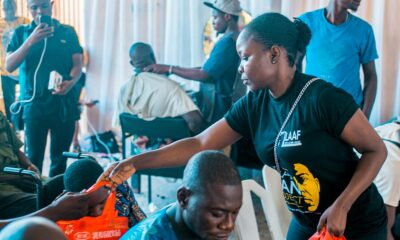
A leading non-profit organization dedicated to providing mental health support to men in need and advocating for the advancement of men’s mental health support, Life After Abuse Foundation (LAAF), proudly announces the appointment of highly skilled professionals to its Advisory Council.
The new council members bring a wealth of experience and expertise, underscoring LAAF’s commitment to enhancing mental health support, particularly for men.
Afoma Chiegboka, an award-winning experienced storyteller with over 13 years of experience in the design industry, excels in Product Management, Operations, Business Writing, Editing, and Public Speaking. Additionally, she holds a Bachelor of Laws (LL.B.) degree, further enriching her skill set as a communications specialist.
Afoma’s adept storytelling abilities and comprehensive understanding of communication strategies will play a pivotal role in shaping LAAF’s narrative and effectively reaching out to men in need.
Femi Boboye, Managing Partner at Pelse Consulting, brings expertise in organizational development and strategic planning. His insights will optimize LAAF’s operations and maximize impact, ensuring efficient resource allocation to support men’s mental health initiatives.
Ikeoluwa Olatoke, a legal practitioner with experience at Damod Law Practice, specializes in legal research, negotiation, and drafting contracts.
Ikeoluwa’s memberships in the Chartered Institute of Arbitrators UK (ACIarb) and the Africa Young Arbitrators enrich LAAF’s legal framework, ensuring robust legal structures to support men’s mental health advocacy and services.
Immaculate Odekina, a Legal Practitioner with over 12 years of post-call experience, specializes in commercial/corporate law, regulatory compliance, mergers and acquisitions, energy law, and alternative dispute resolution (ADR).
Her expertise will ensure LAAF’s compliance with legal regulations and facilitate the development of partnerships to expand mental health support for men.
Jeremiah Okpako, a business professional with over 15 years of experience in business development and sales across various industries, will strengthen LAAF’s outreach efforts with his strategic insights and extensive network. His connections will help amplify LAAF’s message and increase access to mental health resources for men.
Jide Ogunleye, an IT professional with over 16 years of experience, founded Ritemate Technologies, catering to clients like MTN, Stanbic, Mouka, Amber Energy, UBA plc, Fidelity Bank, Arik Air, and Nigerian Communication Commission.
Jide’s expertise in technology and innovation will be invaluable in advancing LAAF’s initiatives, particularly in developing digital platforms for mental health support and awareness.
Munirat Layeni, a Mental Health Professional with over 5 years of experience with the NHS and LAAF, served as a Partnership Strategist at LAAF for 3 years. With a Master’s in Business Administration from the University of Hertfordshire, Munirat’s expertise in strategic partnership complements LAAF’s mission, fostering collaborations to expand mental health services for men.
Rotimi Aroge, the MD/CEO of Global Foremost Impressions Ltd, aligns his advocacy for drug-induced road accident prevention with the SDG. Rotimi’s commitment to road accident prevention earned him a finalist position in the University of Sussex qualifying 2024 Big Idea Contest (BIC). His dedication to public health and safety aligns with LAAF’s mission to provide comprehensive mental health support for men.
Temidayo Musa brings over 7 years of expertise in program management and communications, championing open data and citizen participation for enhanced community development.
His experience will contribute to LAAF’s efforts to develop and implement effective programs for men’s mental health support, ensuring that services are tailored to meet the needs of diverse communities.
Yinka Olonode, with over a decade of experience in finance and investment, runs a SEC licensed Investment management company and a retail credit firm called Penny Lender. Yinka is a leading voice in investment management and humanitarian advocacy.
His financial acumen will support LAAF’s sustainability and growth, ensuring continued access to mental health resources for men.
The appointment of these professionals underscores LAAF’s commitment to advancing men’s mental health support and fostering a society free from stigma. With their collective expertise and passion, the Advisory Council is poised to drive meaningful change and empower men on their journey to healing.
For media inquiries or further information, please contact info@laafng.org.
About Life After Abuse Foundation (LAAF): Life After Abuse Foundation (LAAF), a non-profit organization founded by Halima Layeni is dedicated to providing education, mentorship, and mental health support to boys and men globally. Through various initiatives such as policy engagement, school outreaches, media activism, and psychotherapy, we aim to advance health equity, gender equality, combat gender-based violence, and foster a community of healing and support.
You can Connect with them on:
Facebook: https://web.facebook.com/lifeafterabusefoundation
Twitter: https://twitter.com/LifeAfterAbuseF
Instagram: https://www.instagram.com/lifeafterabusefoundation/









The Nigeria Centre for Disease Control and Prevention (NCDC) has confirmed that Lassa fever has claimed 259 lives and infected 1,086 people across 24 states and 118 local government areas so far in 2026.
In its latest Lassa Fever Situation Report for epidemiological week 36 (August 31 to September 6), the agency said the figures represent a case fatality rate of 23.9 percent — significantly higher than the 18.6 percent recorded during the same period in 2025.
Twelve new confirmed cases were recorded in week 36, a decline from the 18 cases reported the previous week. The fresh infections were detected in Ondo, Edo and Kogi states.
Five states continue to bear the heaviest burden, accounting for 87 percent of all confirmed cases this year: Bauchi, Ondo, Taraba, Benue and Edo. People aged 21 to 30 remain the most affected age group.
The NCDC noted that no new infections among healthcare workers were recorded during the latest reporting week. The agency continues to urge the public to maintain hygiene, avoid contact with rodents and their droppings, and seek early medical care if symptoms appear.
Health
Nigerian hospital successfully performs kidney cancer surgery via tele-robotic
The development could reduce the need for Nigerians to travel abroad for specialised medical treatment, thereby reducing expenditure on international travel, accommodation and medical services.

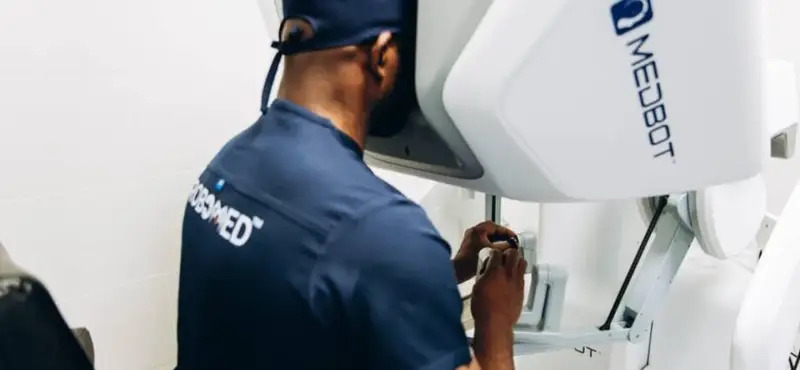
• A surgeon performing tele-robotic surgery.
Nisa Premier Hospital, Abuja, has partnered with RoboMed Global and The Redeemer’s Health Village (RHV) to successfully perform what the hospital described as the first tele-robotic surgery in Nigeria and West Africa.
The landmark kidney cancer surgery was performed on a patient at Nisa Premier Hospital, Abuja, while the surgeon, Professor Obi Ekwenna-Davis, remotely controlled the robotic surgical platform from Redeemer’s Health Village in Lagos.
The procedure, which lasted approximately three hours, was performed to remove a kidney affected by a cancerous tumour.
The hospital said the patient had been discharged following the successful procedure, although details about the patient’s identity and condition were withheld for privacy reasons.
Speaking during an event to mark the milestone, the Chief Executive Officer of Nisa Premier Hospital, Dr Ibrahim Wada, said the development demonstrated the potential of tele-robotic surgery to connect specialist surgical expertise with patients across Nigeria.
Wada said the procedure was carried out using the MicroPort robotic surgical platform installed at Nisa Premier Hospital, with the remote surgeon controlling the system from Lagos.
He said the development could reduce the need for Nigerians to travel abroad for specialised medical treatment, thereby reducing expenditure on international travel, accommodation and medical services.
According to him, the technology also creates an opportunity for Nigerians to access specialised expertise from doctors located in other parts of the world without requiring the doctors to travel physically to Nigeria.
Source: Daily Trust
Health
Ondo ‘Monkey Tail’ herbal drink kills 49
The Commissioner for Health in the State, Dr Banji Ajaka, who disclosed this on Wednesday night, said the number of affected persons has now climbed to 170.

A locally produced herbal concoctions known as ‘Monkey Tail’ in Ondo State has killed 49 people .
The Commissioner for Health in the State, Dr Banji Ajaka, who disclosed this on Wednesday night, said the number of affected persons has now climbed to 170.
He explained that the latest deaths were recorded in Irele Local Government Area of the state, where eight persons have died from suspected poisoning.
Ajaka disclosed that health authorities had deployed response teams to Irele LGA and other affected communities to conduct surveillance, manage cases and trace the source of the suspected toxic substance.


Congo military plane crash kills 13, including three officers

Manchester City Faces Expulsion For Breaching 114 EPL Financial Rules

TIME Names Moniepoint CTO Felix Ike Among 50 Global Executives of the Year

Tech Expert, Zuckerberg trains with UFC champions, Adesanya, Alexander

Organ Trafficking: Ekweremadu bags 10 years in UK prison

SAINT OBI: Between his marriage and his death
-

 News3 days ago
South African kills Nigerian bar worker
-

 International3 days ago
At UN, 80 countries demand reopening of Hormuz, condemn Iran, Houthi attacks
-

 Business3 days ago
Naira Exchange Rates, Friday September 25
-
 Business3 days ago
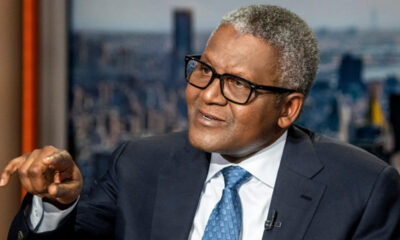
Djibouti, Ethiopia and Dangote to build $660 million petroleum pipeline
-
 Business3 days ago
TIME Names Moniepoint CTO Felix Ike Among 50 Global Executives of the Year
-
 Sports2 days ago
Manchester City Faces Expulsion For Breaching 114 EPL Financial Rules
-
 International2 days ago
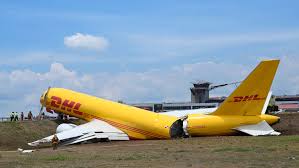
Congo military plane crash kills 13, including three officers