Connect with us

Business

FG Engages Stakeholders On Nigeria’s Rice Value Chain

Discussions covered domestic rice production, cultivated area and yields, farmer economics, paddy and milled-rice prices, processing and milling activity, public and private stocks, trade flows, financing and investment.

Published

on

128 Views

The Federal Government on Tuesday convened Federal and State institutions and key industry stakeholders for a technical consultation on Nigerias rice value chain.

This is in furtherance of President Bola Ahmed Tinubu‘s commitment to strengthening food security, domestic production, farmer livelihoods, private-sector investment and consumer affordability.

The consultation was coordinated by the Presidential Food Systems Coordinating Unit (PFSCU), pursuant to direction from its Steering Committee at its 7th Meeting, chaired by the Vice President.

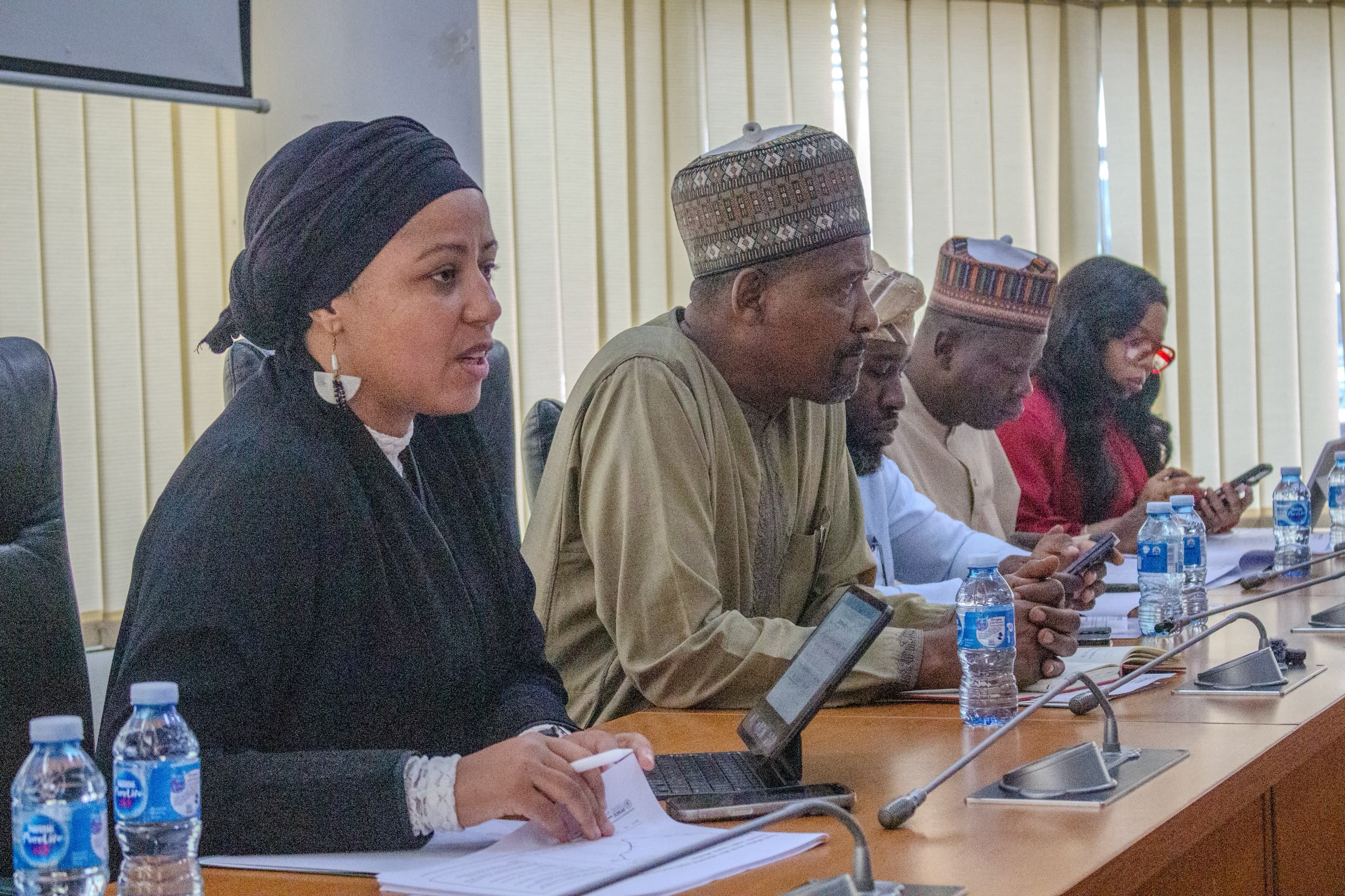
The Honourable Minister of Finance was represented at the meeting by the Director, Technical Services, Bashir Abdukadir, who chaired the technical session, with Marion Moon assisting. Participants included the Federal Ministries responsible for Finance, Agriculture and Food Security, and Industry, Trade and Investment; major rice-producing States; relevant Federal institutions; farmers; processors; millers; and industry associations.

The engagement provided an opportunity for Government and industry to take a comprehensive view of the rice value chain and strengthen coordination around Nigerias food balance -domestic production, strategic reserves, imports and exports – while taking account of market conditions, investment and consumer needs.

Discussions covered domestic rice production, cultivated area and yields, farmer economics, paddy and milled-rice prices, processing and milling activity, public and private stocks, trade flows, financing and investment.

Stakeholders highlighted the high cost of production as a major constraint to competitiveness, with rice production costs reported at about ₦2.2 – ₦2.3 million per hectare and fertiliser accounting for approximately 35 percent of production costs.
The meeting also identified high energy and irrigation costs, limited access to appropriately priced long-term financing, post-harvest losses and inadequate distributed storage as key pressures across the value chain.

Stakeholders called for greater investment in irrigation, including solar-powered water systems, to support year-round production; stronger financing and refinancing options for viable mills and processors; improved storage and aggregation infrastructure; and measures to reduce production and logistics costs.

Stakeholders highlighted the high cost of production as a major constraint to competitiveness, with rice production costs reported at about ₦2.2 – ₦2.3 million per hectare and fertiliser accounting for approximately 35 percent of production costs.
Participants also stressed the importance of predictable trade and import decisions that reflect domestic production cycles, noting that persistent price differentials can create incentives for smuggling.

The engagement further underscored the need for an integrated food-market data framework covering production, stocks, imports, consumption and prices, as well as stronger food-safety, traceability, certification and testing systems.

These measures are aimed at enabling timely policy decisions, protecting farmer and processor investment, improving consumer affordability and strengthening the competitiveness of Nigerias rice value chain.

Speaking on behalf of the rice industry, Mohammed Auwalu, Vice President, Rice Farmers Association of Nigeria (RIFAN), said: ” We welcome Governments continued engagement with stakeholders across the rice value chain. Bringing farmers, processors, States and Government together around the full food balance is important for strengthening coordination across the sector and supporting continued production and investment.

The consultation will inform a consolidated technical report on the current dynamics and status of the rice value chain, including the food balance, market conditions, production economics, financing and investment environment, and priority actions for strengthening the sector.

The exercise also forms part of a broader approach to periodically review key staple food value chains, recognizing that production, markets and consumer conditions evolve over time.

These reviews will support timely coordination across the food-balance levers and help the Government sustain food availability and affordability, protect farmer livelihoods, strengthen investor confidence and build a more resilient and competitive food economy
.

Continue Reading
Click to comment

Leave a Reply

Your email address will not be published. Required fields are marked *

Business

Oyedele Chairs G-24 Call for Fairer Global Financial System, Affordable Development Financing

The meeting concluded that domestic reform alone will not shield developing economies from external shocks — affordable finance, effective debt resolution, fairer representation in international institutions, and sustained cooperation are equally necessary.
Published

on

By

22 Views

BANGKOK, Thailand — 14 October 2026

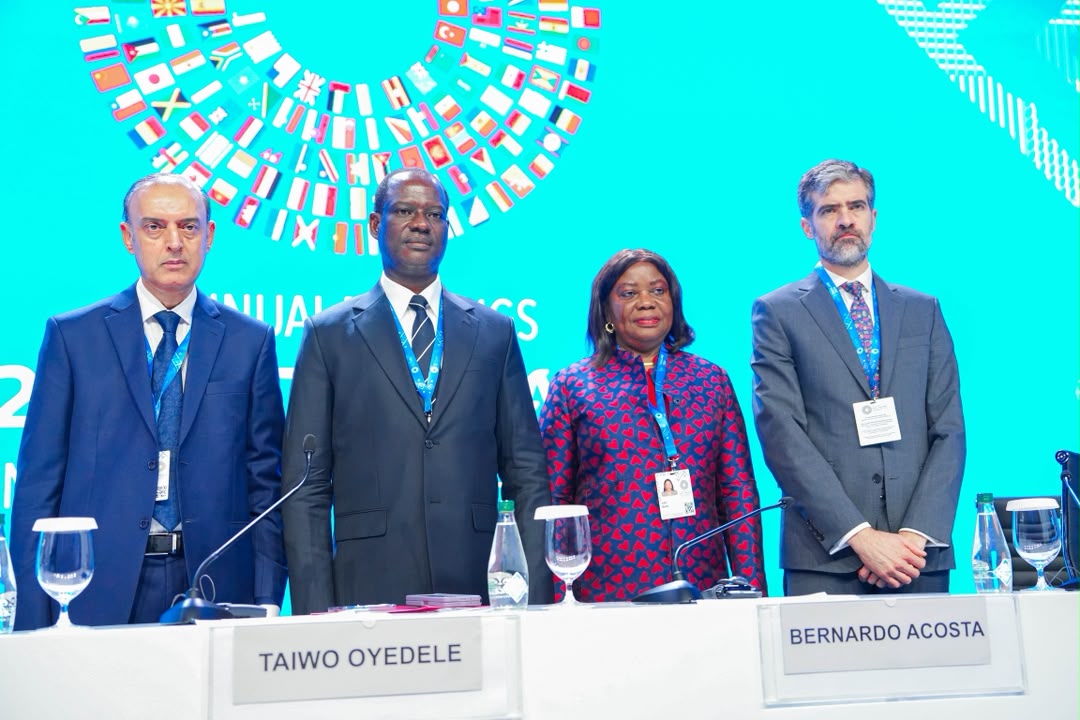
Nigeria’s Minister of Finance and Coordinating Minister of the Economy, Taiwo Oyedele, chaired the G-24 Board of Governors meeting on the sidelines of the IMF and World Bank Annual Meetings, leading calls for reform of the global financial architecture to deliver more affordable financing, fairer representation and faster sovereign debt resolution for developing economies.

IMF Managing Director Kristalina Georgieva and World Bank Senior Managing Director Axel van Trotsenburg, representing President Ajay Banga, joined other G-24 Governors in commending Oyedele’s leadership of discussions that addressed mounting financing pressures on emerging and developing economies amid geopolitical tension, volatile commodity prices, climate shocks and tighter global financial conditions.

Oyedele said rising interest rates, widening fiscal deficits in advanced economies and growing financing demand for artificial intelligence and energy infrastructure had made borrowing more expensive for developing countries.

He called for progress on IMF quota and governance reform, stronger representation for developing countries at the World Bank, improved access to development finance, and more predictable, coordinated debt restructuring involving all creditors.

He also urged expanded climate financing, stronger international tax cooperation against avoidance and illicit flows, and a greater voice for developing countries in global decision-making, including the G-20.

In his closing remarks, Oyedele drew three lessons from the discussions: that resilience must be built before a crisis, through proactive policy preparation; that artificial intelligence must be adopted and regulated responsibly to support inclusive job-rich growth; and that international cooperation remains essential to managing shared risks such as energy insecurity, food price volatility, supply-chain disruption, debt vulnerability and climate change.

Georgieva described the global economy as resilient, with growth projected at about 3.1 percent through 2026, but cautioned that the figure masked a widening gap between economies benefiting from digital transformation, AI investment and critical-mineral supply chains, and those constrained by high energy costs, conflict or limited access to technology.

She warned that persistent energy and food price pressures were keeping interest rates and debt-servicing costs elevated, and urged governments to rebuild fiscal buffers, preserve central bank independence, invest in digital infrastructure and skills, and push for faster debt treatment under the G-20 Common Framework alongside further IMF quota reform.

Van Trotsenburg reported that the World Bank had mobilised about US$27.4 billion in crisis-related financing, with ten countries activating dedicated crisis-response instruments and nineteen others redirecting existing resources to urgent needs.

He flagged El Niño-related risks to food security and grain prices, and said the Bank remained focused on electricity access, healthcare, digital connectivity and job creation — in tourism, healthcare, food systems and manufacturing — alongside mobilising private capital and climate finance.

Member interventions reinforced the reform agenda: Brazil, China and Pakistan backed stronger Global South representation and Bretton Woods reform.

The Philippines called for deeper regional financial integration; Kenya urged building policy buffers and expanding local-currency financing; Egypt cited supply-chain disruption and capital outflows.

Lebanon and Syria raised the financing challenges facing conflict-affected economies.

Incoming G-24 Chair Pakistan pledged to keep development at the centre of the agenda.

The meeting concluded that domestic reform alone will not shield developing economies from external shocks — affordable finance, effective debt resolution, fairer representation in international institutions, and sustained cooperation are equally necessary.

Continue Reading

Business

NAFDAC scolds fake manufacturers: “You are killing Nigerians in order to make money”

He warned that the circulation of counterfeit drinks posed a serious public health concern, urging suspected manufacturers to abandon the illegal trade.

Published

on

By

24 Views

“You are killing Nigerians in order to make money,which is not good.”

That’s the National Agency for Food and Drug Administration and Control (NAFDAC) scolding Nigerians caught in the act of counterfeiting drinks.

The occasion was at Zamfara Plaza, BBA Trade Fair Complex, along the Badagry Expressway, Ojo, Lagos State.

The Assistant Director of the Investigation and Enforcement Directorate of NAFDAC, Mr Kunle Ojo, who led the enforcement said the agency caught some of the suspects in the act and recovered drums, filters, packaging materials, a heating device and other equipment allegedly used in the illicit production process.

The suspects, identified as Okafor and John, were arrested during an enforcement operation in a two-storey building where equipment and materials allegedly used to repackage and produce counterfeit alcoholic and energy drinks where discovered.

The raid, according to NAFDAC, followed credible intelligence and surveillance on suspected counterfeiters operating within the Trade Fair International Market.

He warned that the circulation of counterfeit drinks posed a serious public health concern, urging suspected manufacturers to abandon the illegal trade.

Continue Reading

Business

BREAKING: Shell to Exit Nigeria’s Domestic Gas Distribution Business

Published

on

15 Views

Shell has agreed to sell its entire interest in the Shell Nigeria Gas Group, which runs a domestic natural gas distribution network, to Nigerian energy firm Vaaris Energy Limited.

The deal, announced on Tuesday, October 13, 2026, covers Shell Petroleum B.V.’s full stake in the business. Shell Nigeria Gas, established in 1998, operates about 170 kilometres of pipelines across Ogun, Abia and Rivers states and supplies more than 130 industrial and commercial customers. Financial terms were not disclosed. Completion remains subject to regulatory approvals and other conditions.

Shell said the business will continue operating as normal and serving customers until the transaction closes. The company does not participate in upstream production, LNG or international gas trading through this unit.

Elohor Aiboni, Shell’s Country Chair in Nigeria, said: “Shell Nigeria Gas has served industrial and commercial customers in Nigeria for more than 25 years, supported by the commitment and expertise of its people. We believe this agreement provides a much stronger platform for the business’ next chapter under new ownership. Shell continues to focus on strategic Deepwater and Integrated Gas positions in Nigeria.”

The sale forms part of Shell’s broader strategy under CEO Wael Sawan to simplify its portfolio and concentrate on higher-return assets. It follows the company’s completed exit from onshore oil production in Nigeria, when it sold the Shell Petroleum Development Company to the Renaissance consortium in 2025.

Vaaris Energy is a privately held Nigerian company with interests across the oil and gas value chain and an existing operational presence in the country.

Continue Reading

Trending