
Business
Afreximbank Hails Africa Credit Rating Agency
” We must all use it, and in return expect a complete assessment of where we (Africa) stand: the strengths the market has ignored, and the weaknesses we still need to fix.”

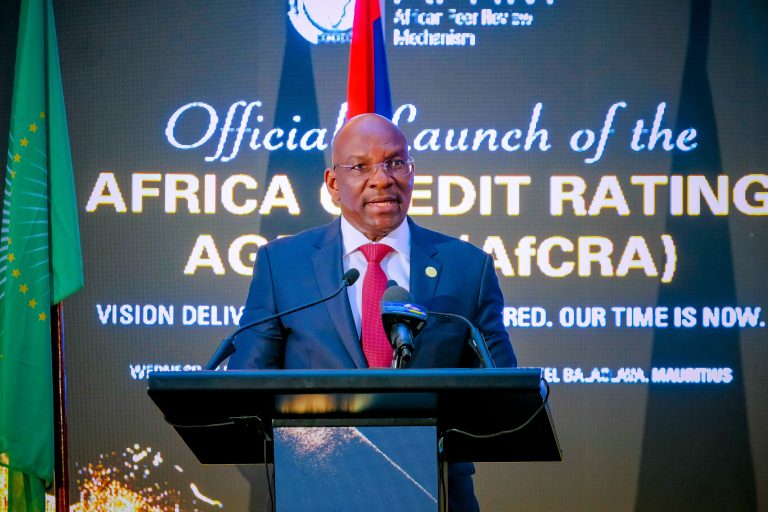
Photo: Mr Denys Denya, Senior Executive Vice President of Afreximbank addresses guests during the launch of the Africa Credit Rating Agency in Port Louis, Mauritius on October 7, 2026
African Export-Import Bank (Afreximbank) has declared it’s strong backing for the recently launched Africa Credit Rating Agency (AfCRA) by the African Union.
“AfCRA is an important milestone in strengthening Africa’s financial architecture and expanding the continent’s capacity to generate credible, independent analysis of African credit risk,” said Mr Denys Denya, Senior Executive Vice President of Afreximbank.
Mr Denya emphasised that credit ratings play an important role in determining access to capital, influencing investor perceptions and shaping the cost at which governments, institutions and businesses can finance development.
It is therefore essential that assessments of African credit risk are independent, rigorous and evidence-based, while reflecting a complete understanding of the structures, institutions and economic realities being assessed.
The establishment of AfCRA adds an important African-led source of credit opinion to the market.
Its value will not be measured by whether it produces more favourable ratings, but by the credibility of its analysis, the quality of its data and transparency of its methodology, and its ability to deepen understanding of African sovereigns, sub-sovereigns and corporate credit.
This is particularly important given that many African issuers remain unrated, while local-currency and sub-sovereign markets continue to have limited rating coverage.
Expanding credible rating coverage can improve the information available to investors and support the development of deeper domestic and regional capital markets.
Alongside fellow members of the Alliance of African Multilateral Financial Institutions (AAMFI), Afreximbank has consistently maintained that African Multilateral Financial Institutions should be assessed on the basis of their fundamentals, performance, legal frameworks, mandates and operating models.
Ensuring that these institutional characteristics are properly understood is essential to achieving informed, balanced and credible assessments of African risk.
Commenting on the uniqueness of the African market, and need for AfCRA’s rating methodology to reflect this, Mr Denya, said: “The rating methodology AfCRA develops must recognise the uniqueness of our environment and its institutional structures.
The Agency must set its own standards and not follow those set elsewhere — it must build a unique identity that conforms to an ‘African best practice.
”Highlighting the need for the autonomy of the Africa Credit Rating agency as it takes off, Mr Denya added: “Most importantly, AfCRA must set a new benchmark for the continent, maintain its independence, and remain wholly owned and controlled by Africans.
“We must all use it, and in return expect a complete assessment of where we (Africa) stand: the strengths the market has ignored, and the weaknesses we still need to fix.”
AfCRA should therefore be seen as complementary to existing international and regional rating agencies, broadening the range of credible analysis available to investors and issuers while strengthening competition, transparency and analytical capacity within Africa’s credit markets.
As Africa seeks to mobilise the scale of capital required for industrialisation, trade, infrastructure and economic transformation, credible African institutions that improve information, strengthen market confidence and deepen the continent’s financial markets will become increasingly important.
Afreximbank congratulates the African Union, the African Peer Review Mechanism (APRM) and all those involved in bringing AfCRA from concept to launch, and looks forward to the contribution the Agency will make to deeper, more transparent and more efficient African capital markets.










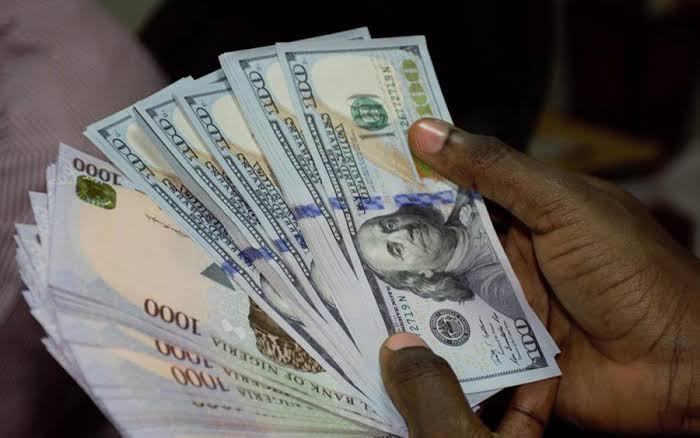
Olayemi Cardoso, Governor of the Central Bank of Nigeria has said that the country’s $54.87 billion foreign exchange reserves is strong enough to withstand pressures on the naira.
Cardoso gave the assurance during the 308th meeting of the Monetary Policy Committee, held yesterday,in Abja.
Responding to concerns about the reserves decline and pressure on the naira, Cardoso said that the movement is a normal and temporary market adjustment.
Cardoso said Nigeria’s reserves, between $54 billion and $55 billion, provide about 10 months of import cover.
That, he said, gives the country a substantial buffer against external shocks.“Buffers remain strong. $54 billion reserves is very substantial,” he said.
He acknowledged that reserves had fallen and the exchange rate had seen volatility.
He argued that the movements were not large enough to undermine Nigeria’s external position.
He assured that the apex bank would keep taking measures to preserve stability.
Cardoso linked part of the pressure to seasonal factors. Portfolio investors are adjusting positions towards the end of the year. Domestic businesses are hedging against possible foreign exchange movements ahead of the new year.
Business
Naira Exchange Rates, Wednesday, 25 Nov 2026
The black market (parallel market) dollar to naira rate is the most searched forex query in Nigeria.
BLACK MARKET RATES
US Dollar =₦1,445
British Pound= ₦1,870
EURO = ₦1,580
Canadian Dollar (CAD) = ₦950
Chinese Yuan (CNY) = ₦190
Ghanaian Cedi =₦100
South African Rand (ZAR)=₦ 70
UAE Dirham =₦ 350
West African CFA franc (XOF) = ₦ 2, 240
Central African CFA franc (XAF)=₦ 2,180
Australian Dollar (AUD)=₦ 820
Business
Naira falls 2.57% despite $1.30bn CBN intervention
The latest decline has raised questions about the effectiveness and sustainability of CBN interventions.
The naira weakened to N1,389.73 per dollar in the official foreign exchange market after a 2.57% weekly depreciation, despite an estimated $1.30 billion intervention by the Central Bank of Nigeria.
The currency had been moving towards N1,400 per dollar, renewing concerns about how long the CBN can defend it.
The decline comes as businesses and households prepare for higher dollar demand during Christmas.
Analysts warn that festive demand and spending ahead of the 2027 general elections could deepen pressure on the naira and push up prices for Nigerians.
CBN data showed the naira depreciated by 2.57% during the week, closing at N1,389.73 per dollar in the official market.
In the parallel market, the currency traded around N1,458 per dollar, with some market reports quoting rates as high as N1,468.
The latest decline has raised questions about the effectiveness and sustainability of CBN interventions.
Despite an estimated $1.30 billion injection into the foreign exchange market, demand from importers, investors and other participants continued to weigh on the currency.


El-Rufai makes u-turn on wiretapping

Katsina Suspends Emir of Daura Over Sexual Allegations By Polish Tourist

Mother, daughter crushed to death by truck in Abuja

BREAKING: Lagos Govt Declares Today, Thursday Work-Free to Mark 2026 Ìṣẹ̀ṣe Day

Tech Expert, Zuckerberg trains with UFC champions, Adesanya, Alexander

Why we Increase the 2025 Budget by ₦700bn – Bichi
-

 News2 days ago
Emir, 92, Under Probe For Alleged Palace Romance
-

 Sports2 days ago
Zenith Bank/Delta Principals’ Cup kicks off November 26
-
 News2 days ago
Tinubu Tasks APC on Winning Lagos in 2027 general elections
-

 Business2 days ago
Naira Exchange Rates, Monday 23 Nov 2026
-

 Sports3 days ago
CAF Chooses Six Venues For Africa Cup of Nations Finals
-
 News2 days ago
Omo-Agege survives assassination attempts at campaign rally in Delta, four dead
-

 Politics2 days ago
Atiku: I’m in 2027 presidential race to win
-

 Health2 days ago
Medical Academy Warms Nigerians New COVID-19 Variant Spreading