
Politics
Atiku Holds the Key to Obi’s Presidential Ambition, By Emeka Monye
For Peter Obi, the path to Aso Rock is open, but the door is controlled by one man. The next 18 months will show whether that key turns.

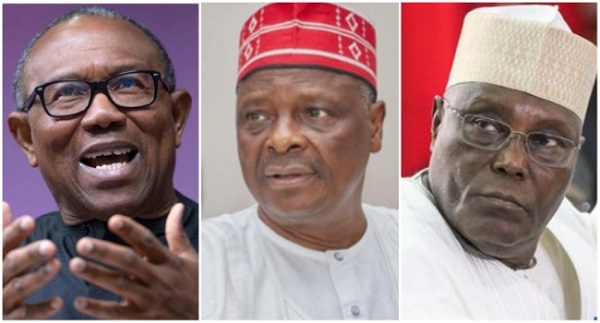
Image: Atiku , Kwankwaso, and Obi
IN Nigerian politics, timing and coalition are often more decisive than individual popularity.
As the 2027 presidential race begins to take shape, one calculation keeps recurring in political circles: the path for Peter Obi to unseat President Bola Tinubu runs through Atiku Abubakar.
2023 election
The 2023 election proved that Nigeria’s electorate is no longer locked into the old two-party rhythm.
For the first time in the Fourth Republic, three candidates ran competitive, nationwide campaigns, forcing analysts and party strategists to rethink long-held assumptions about voter behavior, regional loyalty, and the power of structure.
Heading into February 2023, most observers expected a straight contest between the All Progressives Congress and the Peoples Democratic Party.
Tinubu, Atiku and Obi
Bola Tinubu, former Lagos governor and APC national leader, carried the weight of the ruling party.
Atiku Abubakar, former Vice President and perennial contender, led the PDP. Then came Peter Obi.
The former Anambra governor’s defection from the PDP to the Labour Party galvanized a youth-driven movement that defied the traditional logic of ethnic and party strongholds.
What was supposed to be a two-horse race became a three-way contest, and the results reflected it.Tinubu was declared winner with 8,794,726 votes.
Atiku followed with 6,984,640 votes, winning 12 states and the Federal Capital Territory: Adamawa, Akwa Ibom, Bauchi, Bayelsa, Gombe, Kaduna, Katsina, Kebbi, Osun, Sokoto, Taraba, and Yobe.
Obi came third with 6,101,533 votes, but his spread was striking. He carried 11 states plus the FCT: Abia, Anambra, Cross River, Delta, Ebonyi, Edo, Enugu, Imo, Lagos, Nasarawa, and Plateau.The numbers told a clear story.
No candidate won a majority
The combined votes of the two main opposition candidates—over 13 million—exceeded Tinubu’s total by more than 4 million.
The election was split along regional, generational, and class lines, but it also revealed a fragmented opposition that could not convert its numerical advantage into victory.
Beneath the campaign rhetoric was a deeper debate about power rotation. After eight years of Muhammadu Buhari, a northerner, many within the PDP argued that the presidency should return to the South in 2023.
It was not a constitutional requirement, but a political convention that had guided candidate selection since 1999. Senior PDP figures lobbied Atiku to step aside in the interest of equity.
The argument was straightforward: if the PDP was serious about national balance, it could not field another northerner immediately after Buhari.
Decision had consequences
Atiku, who had spent decades building a national network, disagreed. He won the party’s primary in May 2022, defeating 12 aspirants including Nyesom Wike and Bukola Saraki.His decision had consequences.
It pushed key southern PDP governors and stakeholders toward neutrality or outright defection.
It also created the opening for Obi to exit the PDP and build a movement outside the traditional party structure.
In hindsight, Atiku’s insistence preserved his base in the North but split the opposition vote in the South and Middle Belt.
Obi consolidated the South-East and South-South, broke into Lagos, and made inroads in the Christian belt of the North-Central.
Fast forward to 2027
Atiku held the core North and parts of the North-West and North-East. Tinubu took the South-West and split the North-Central. Fast forward to 2027, and the arithmetic hasn’t changed.
Tinubu will run as an incumbent with the full weight of the federal government and party machinery.
Obi has retained his support base and remains the face of the urban youth and middle-class vote. Rabiu Kwankwaso, who won Kano for the NNPP in 2023, remains a factor in the North-West.
Political analysts agree that any serious challenge to Tinubu requires the opposition to close ranks.
The most discussed scenario is a Obi-Kwankwaso ticket. Combined, their 2023 votes would exceed 7.6 million, and their regional reach covers the South-East, South-South, North-West, and pockets of the North-Central. On paper, it looks like a winning coalition.But the missing piece is Atiku’s 6.9 million votes.
Atiku’s base is concentrated in the North-East, North-West, and parts of the North-Central—regions where Obi and Kwankwaso underperformed in 2023.
Two-thirds of states and the FCT
Without that bloc, an Obi-Kwankwaso ticket would struggle to cross the constitutional requirement of 25% in two-thirds of states and the FCT.
With it, the opposition could flip enough states to make the race unwinnable for the incumbent.
This is why many in the opposition coalition argue that Atiku must be willing to sacrifice a fourth presidential run for the sake of defeating the APC.
The logic is simple: his 2023 votes have nowhere else to go. If he runs again, the opposition vote splits a third time, and Tinubu wins by default. If he steps aside and backs Obi, those votes become decisive.
The problem is not mathematical; it’s political and personal. Atiku has run for president six times and remains one of the most influential figures in the PDP.
Stepping aside would mean dismantling a structure built over 30 years and accepting a role as kingmaker rather than king.There’s also the question of trust.
After the 2023 primary and the fallout over the PDP’s zoning decision, relationships between Atiku, Obi, and the G-5 governors remain strained.
Any coalition would require ironclad agreements on power-sharing, policy direction, and the sequencing of political offices.
Ideology and messaging
Then there’s the issue of ideology and messaging. Obi’s campaign was built on “structurelessness,” competence, and anti-establishment sentiment.
Atiku represents the traditional political establishment. Merging those two brands without alienating either base will be delicate.
A closer look at the 2023 results shows where the opportunity lies. In states like Kaduna, Katsina, and Sokoto, Atiku won, but Obi came a strong second in urban centers.
Nigerian elections are rarely won on policy alone. They are won on coalition, timing, and the willingness of heavyweights to subordinate personal ambition to a larger goal. Atiku Abubakar holds more than votes.
APC’s grip
In Lagos, Obi beat Tinubu outright, proving that the APC’s grip is not absolute even in its stronghold.
In the FCT, Obi won, while Atiku and Tinubu split the rest.If those patterns hold, and if Atiku’s northern base moves with him, an Obi-led ticket could redraw the electoral map.
The key would be holding the South-East and South-South, expanding in the North-Central, and peeling off enough votes in the North-West to prevent a Tinubu sweep.
Kwankwaso’s role is equally critical. Kano alone delivered 1.5 million votes to the NNPP in 2023.
A three-way deal between Obi, Kwankwaso, and Atiku would cover every major voting bloc outside the South-West.
The alternative is clear from 2023. When the opposition runs divided, the incumbent wins with a plurality.
Tinubu’s 37% vote share was the lowest for a winning candidate in Nigeria’s democratic history, yet it was enough because the opposition could not agree on a common front.
For Obi, the 2027 window may be his strongest. He has name recognition, a disciplined support base, and four years to build structure.
Northern votes
But without Atiku’s northern votes, he risks repeating 2023: winning the narrative but losing the numbers. For Atiku, the choice is equally stark.
A fourth run would likely produce a third-place finish and cement his legacy as the candidate who could not unite the opposition.
Stepping aside would be politically painful, but it would give him a chance to shape the next administration and secure his place in Nigeria’s democratic history.
Nigerian elections are rarely won on policy alone. They are won on coalition, timing, and the willingness of heavyweights to subordinate personal ambition to a larger goal. Atiku Abubakar holds more than votes. He holds leverage.
Whether he uses it to run again or to enable a new opposition coalition will determine whether 2027 becomes another four years of APC rule or the first real test of an alternative.
For Peter Obi, the path to Aso Rock is open, but the door is controlled by one man. The next 18 months will show whether that key turns.




Politics
INEC to test- run election technology for 2027 polls
The INEC chairman said that the initiatives were part of broader efforts to improve technological reliability, including the continued deployment of the Bimodal Voter Accreditation System (BVAS) and the INEC Result Viewing Portal (IReV), as well as an ongoing review of the Commission’s cybersecurity architecture covering system redundancy.
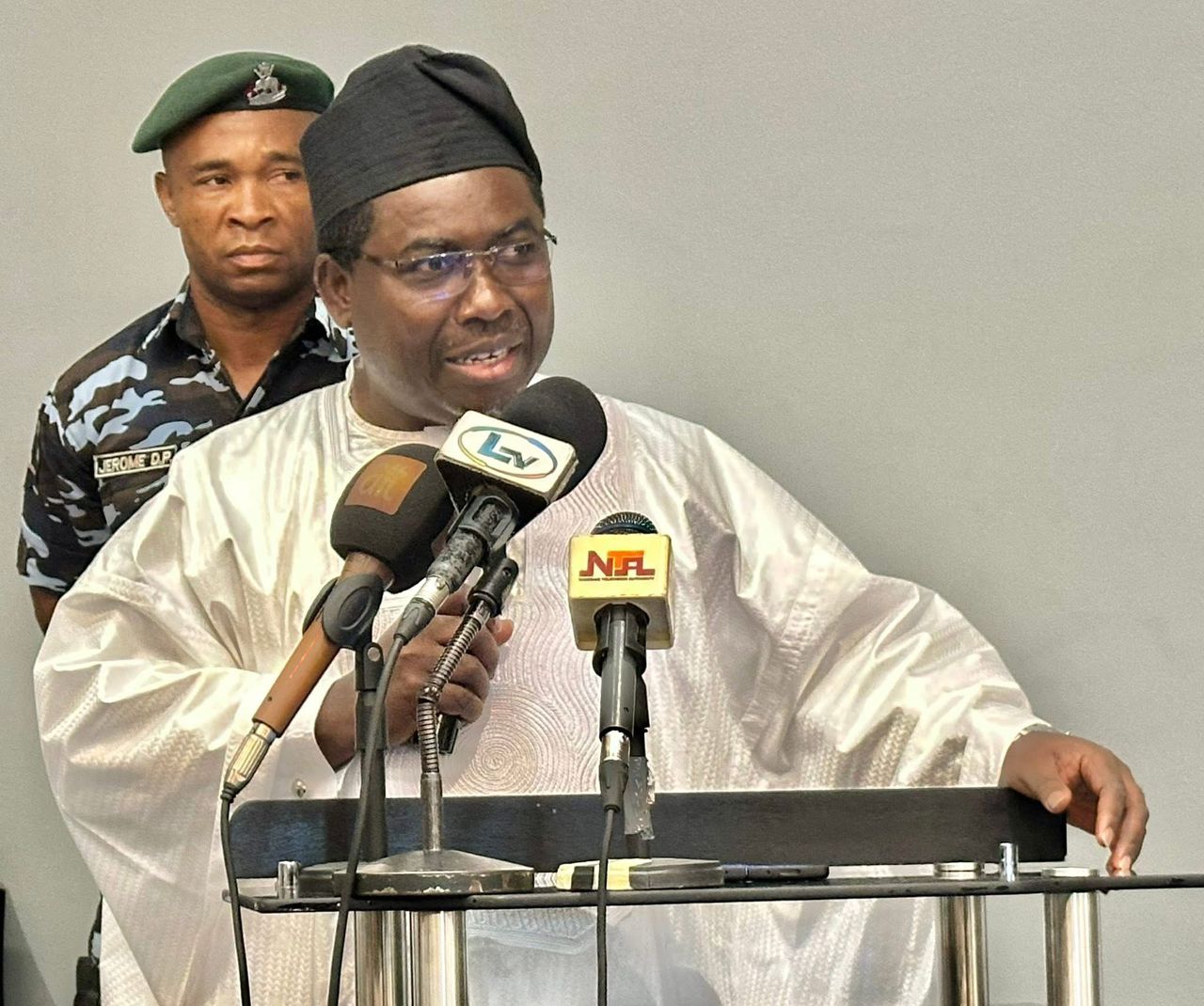
INEC Chairman, Prof Joash Amupitan has said that the Commission was considering a full audit of its electoral systems and a mock presidential election to test the readiness of its processes and technology ahead of the 2027 polls.
Amupitan disclosed this on Thursday while receiving the British High Commissioner to Nigeria, Dr Richard Montgomery, during a courtesy visit to the Commission’s headquarters in Abuja.
Amupitan said that the proposals, which were under consideration by the Commission, were informed by concerns arising from the 2023 general election, particularly over the reliability of election technology.
According to him, although the proposed exercises were not included in INEC’s budget, the Commission would explore ways to implement them because of their potential to enhance the credibility of the elections.
The INEC chairman said that the initiatives were part of broader efforts to improve technological reliability, including the continued deployment of the Bimodal Voter Accreditation System (BVAS) and the INEC Result Viewing Portal (IReV), as well as an ongoing review of the Commission’s cybersecurity architecture covering system redundancy.
Politics
Appeal Court restores INEC’s timetable for 2027 elections
The three Justices unanimously agreed that Justice Mohammed Garba Umar of the Federal High Court, who on May 20 nullified the guidelines on the ground that they violated some provisions of the Electoral Act, did so in gross error and occasioned a miscarriage of justice.
The Court of Appeal in Abuja on Thursday validated the guidelines issued by the Independent National Electoral Commission (INEC) for the conduct of the 2027 general elections.
In a unanimous judgment delivered by the justices , the appellate court voided and set aside the May 20 judgment of the Federal High Court in Abuja, which had nullified the guidelines and barred their implementation.
In the lead judgment, prepared by Justice Adebukola Banjoko and read by Justice Okon Abang, the Court of Appeal held that the Youth Party (YP), which instituted the case against INEC, lacked the legal standing (locus standi) to do so.
Justice Banjoko stated that the party did not explain how the guidelines affected it and its members in the conduct of its primary elections for the nomination of candidates for the 2027 polls.
The Court also held that the YP failed to establish how the guidelines affected the submission of its nominated candidates to INEC.
The three Justices unanimously agreed that Justice Mohammed Garba Umar of the Federal High Court, who on May 20 nullified the guidelines on the ground that they violated some provisions of the Electoral Act, did so in gross error and occasioned a miscarriage of justice.
INEC, which filed the appeal against the High Court decision, had argued that the lower court erred in law when it failed to pronounce on the jurisdictional issue of the suit being hypothetical and academic, and a denial of fair hearing to the appellant.
INEC, through its lead counsel, Alex Izinyon SAN, had asked the Court of Appeal to set aside the judgment of the Federal High Court which nullified part of the election guidelines put in place by the agency for the conduct of the 2027 general elections.
The lawyer said the lower court erred in law when it held:
“It is clear from the wording of Sections 29(1), 82, and 84 of the Electoral Act, 2026, the following can be understood. Section 29(1) of the Electoral Act, 2026 mandates political parties to submit the names of candidates first in the prescribed forms of the candidates who emerged from its valid primaries, which such political party intends to sponsor at the elections, not later than 120 days before the date of the General election.
“What is required of political parties to do under the Electoral Act, 2026 is to notify the Independent National Electoral Commission (INEC) 21 days before the holding of its primaries, congresses, or conventions, conference, or meeting convened for the election of its executive committees, other governing bodies, or nominating candidates.
“The defendant is not mandated to impose a timeframe for political parties to conduct their primaries, provided that it will be done and submitted not later than the 120 days provided by the Electoral Act, 2026. See Section 82(1) of the Electoral Act, 2026.”
Politics
ADC cheerful over successful upload on INEC portal
Hon Nafiu Bala Gombe, National Chairman, ADC confirmed the development on Monday .
The African Democratic Congress, ADC, has successfully completed the upload of its Presidential, Vice-Presidential, and National Assembly candidates on the INEC portal for the 2027 General Elections.
Hon Nafiu Bala Gombe, National Chairman, ADC confirmed the development on Monday .
“This achievement demonstrates our Party’s firm commitment to safeguarding the interests of our founding and legacy members in the face of anti-democratic tendencies.
As a Party, the ADC remains resolute in its mission to field credible, competent, and people-centered candidates who will provide purposeful leadership, promote good governance, and bring hope to the Nigerian people.”


Naira Exchange Rates Wednesday, July 22

Achimugu Seeks National, Global Protection Over Threats To Her Life and Businesses

Katsina Flood Sweeps Away Siblings Returning From Islamiyya School

Tech Expert, Zuckerberg trains with UFC champions, Adesanya, Alexander

Organ Trafficking: Ekweremadu bags 10 years in UK prison

SAINT OBI: Between his marriage and his death
-

 News2 days ago
BIJAMIC College Charges Class of 2026 Graduates to Embrace Resilience, Learn from Thomas Edison
-
 News2 days ago
Senegal President, Faye elected new ECOWAS chairman
-

 Crime3 days ago
Students Killed as Troops Foil ISWAP Abduction Bid in Borno
-

 News3 days ago
Badejo-Okusanya Emerges NBA National President (2026-2028)
-
 Sports2 days ago
FIFA To Review Hydration Breaks After World Cup Final – Wenger
-
 News2 days ago
Abbas inaugurating today committee to investigate illegal PFIPC agency
-
 Sports2 days ago
Burna Boy shines in first-ever World Cup Halftime Show
-

 Sports2 days ago
Ballon d’Or 2026 ranking: Yamal emerges favourite after Spain’s World Cup triumph