
News
Tinubu Pledges Support for Nigerian Media in Battle Against Big Tech.

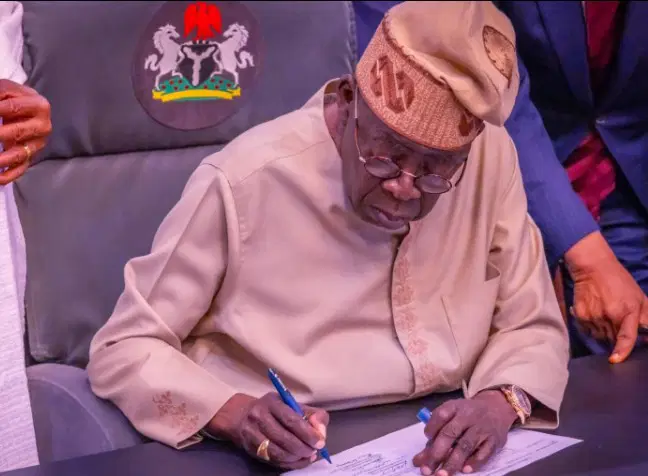
...Vows Tariff Relief on Newsprint and Equipment. President Bola Ahmed Tinubu has thrown the full weight of his administration behind Nigeria’s media industry in its escalating fight against Big Tech’s dominance, unfair content usage, and crippling economic pressures, while promising to slash or eliminate import tariffs on essential production materials.
Speaking at a high-level interfaith dinner held at the State House on Friday, March 13, 2026, the President described the Nigerian press as an “indispensable partner” in the country’s drive for economic recovery, democratic consolidation, and national unity.
“We will help dismantle the fiscal hurdles and digital cannibalisation currently threatening the survival of the press,” Tinubu declared, assuring the delegation that his government is actively reviewing the national tariff exemption list.
Among the items under consideration for zero or reduced duty (currently 5–10%) are newsprint, printing plates, chemicals, and broadcast equipment for radio and television—materials the media sector has long argued should receive the same preferential treatment as educational and research imports.
“You have the government’s full support, because we know how important your work is to the sustenance of democracy,” the President told representatives of the Nigerian Press Organisation (NPO) and other leading industry bodies.
The closed-door meeting brought together a powerful cross-section of Nigeria’s media leadership, including:
– Lady Maiden Alex-Ibru, NPO President and Publisher of The Guardian
– Frank Aigbogun, NPAN Deputy President and Publisher of BusinessDay (who delivered the industry’s joint address)
– Aremo Olusegun Osoba (Vanguard)
– Sam Amuka (THISDAY/ARISE News)
– Prince Nduka Obaigbena (Channels Television)
– Dr John Momoh, Director-General of the Nigerian Television Authority (NTA)
– Leaders of the Nigerian Guild of Editors, Guild of Corporate Online Publishers (GOCOP), and Nigeria Union of Journalists (NUJ), among others.
In his presentation, Aigbogun accused unnamed global tech platforms widely understood to include Google and Meta of systematically “scraping” Nigerian journalistic content, frequently breaching paywalls, to train artificial intelligence models without compensation.
He claimed these practices are depriving local media houses of up to 70% of their legitimate advertising and syndication revenue losses running into hundreds of millions of dollars annually while triggering widespread job losses across newsrooms.
Aigbogun called on the President to instruct the Federal Competition and Consumer Protection Commission (FCCPC) to launch a formal investigation, in partnership with media stakeholders, into Big Tech’s alleged anti-competitive behaviour.
Minister of Information and National Orientation, Alhaji Mohammed Idris, told the gathering that preliminary engagements with major tech companies, including Meta and Google, are already in progress.
“The government will not allow anybody to come here, reap from our economy, and go away without giving back,” Idris said firmly.Vice President Kashim Shettima, together with several senior presidential aides, also attended the event.
The State House meeting follows an earlier January 2026 letter and public statement from the NPO highlighting the existential threat posed by unregulated digital platforms to Nigeria’s independent media ecosystem.
Industry observers view the President’s commitments as a potential turning point, offering both short-term cost relief through tariff adjustments and longer-term policy backing in the global push for fair revenue sharing between traditional media and dominant tech intermediaries.








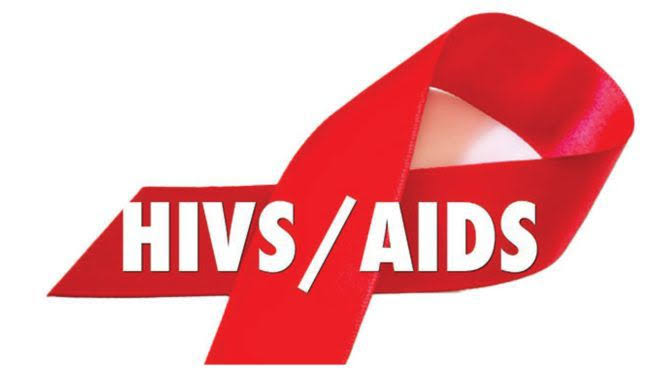
as National Total Hits 102,025Lagos State has recorded the highest number of new HIV infections in the country, according to fresh data from the Federal Ministry of Health and Social Welfare, raising concerns about the ongoing challenge of controlling the epidemic despite years of prevention efforts.
A total of 102,025 new HIV infections were documented across Nigeria’s 36 states and the Federal Capital Territory (FCT) in 2025, per the State of the Health of the Nation Report 2025. Lagos led with 10,430 new cases, followed by Rivers State (6,287) and Kano State (6,106).
Other states with significant new infections in the top 10 included Akwa Ibom (5,413), Taraba (4,854), Benue (4,804), Anambra (4,468), Kaduna (3,659), Adamawa (2,989), and the FCT (2,764). Several additional states reported over 2,000 new cases each, highlighting a concentrated burden in certain regions.
The report underscores that while Nigeria has achieved notable progress in HIV management compared to previous decades—through expanded antiretroviral therapy (ART) access and awareness campaigns—the 2025 figures indicate the epidemic is far from over. Health experts point to factors such as population density in urban centers like Lagos, high mobility, and gaps in consistent prevention and testing as contributors to the state’s leading position.
Officials and advocacy groups have called for intensified, targeted interventions, including scaled-up testing, education on safe practices, and sustained funding for treatment programs to meet the 2030 goal of ending AIDS as a public health threat. Stakeholders warn that declining external support could reverse hard-won gains if not matched by increased domestic investment.
This data comes amid broader efforts by the National Agency for the Control of AIDS (NACA) and state agencies to strengthen surveillance and response strategies. Public health authorities urge Nigerians to prioritize regular testing, condom use, and adherence to treatment for those living with the virus.

Nigeria’s First Lady, Senator Oluremi Tinubu, has clarified that the Federal Government’s support for small-scale traders extends beyond ‘akara’ sellers to include tomato and pepper sellers across the country.
Speaking at an event, Mrs. Tinubu emphasized the government’s commitment to empowering various categories of informal traders and food vendors.
“Not only ‘akara’, FG also supports tomato, pepper sellers,” she stated.
The First Lady’s remark appears to address recent discussions and criticisms regarding government intervention programmes for petty traders. She highlighted that initiatives aimed at supporting small businesses cover a wide range of essential food items and vendors, including those dealing in tomatoes and peppers, which are staple commodities in Nigerian markets.
Mrs. Tinubu reassured citizens that the administration remains focused on inclusive economic support for vulnerable groups and market women. She noted that such interventions are designed to cushion the effects of economic hardship and promote self-reliance among small-scale entrepreneurs.
The statement has sparked reactions on social media, with many commending the First Lady’s direct engagement while others called for more visible and widespread implementation of the support programmes.
News
Insecurity: NSCIA fumes “Enough is Enough” over attacks on Islam and Muslims in Nigeria
The warning was contained in a statement by the NSCIA’s Public Affairs Officer, Abbas Jimoh, on behalf of the council led by its President-General and Sultan of Sokoto, His Eminence Alhaji Muhammad Sa’ad Abubakar.

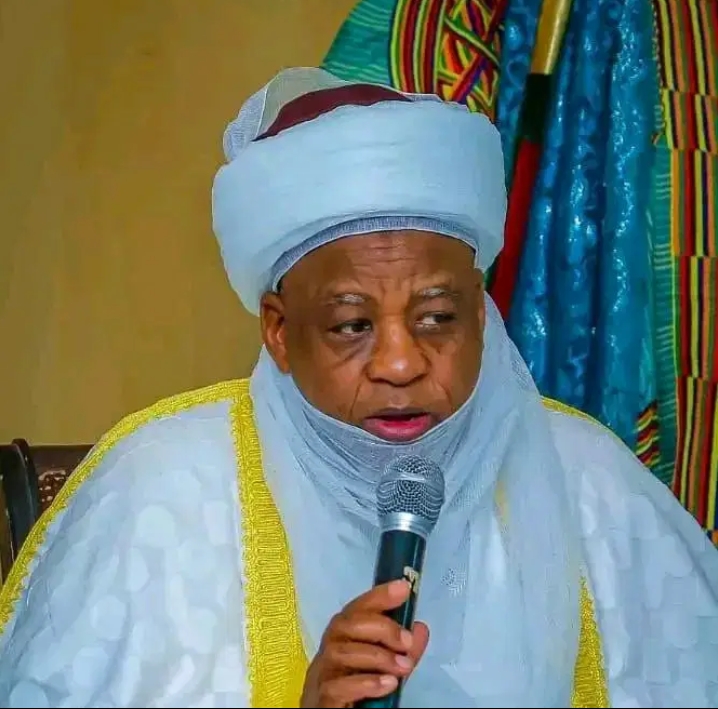
Photo: Sultan of Sokoto Muhammad Sa’ad Abubakar III
The umbrella body of Muslims community in Nigeria (Nigerian Supreme Council for Islamic Affairs (NSCIA) has warned the Federal Government and security agencies to act before Muslims ‘run out of patience’.
According to the NSCIA,the community’s continued restraint amid what it described as persistent attacks, profiling and marginalisation should not be mistaken for weakness.
The warning was contained in a statement by the NSCIA’s Public Affairs Officer, Abbas Jimoh, on behalf of the council led by its President-General and Sultan of Sokoto, His Eminence Alhaji Muhammad Sa’ad Abubakar.
The NSCIA also called on the government to ensure that those responsible for what it described as heinous crimes in Kaduna and Benue states were brought to justice without delay.
“While the NSCIA continues to appeal to Muslims for continuous restraint, it is imperative that government and security agencies should act decisively before the Muslims run out of patience in the light of persistent attacks and unbridled marginalization,” the council said.
The council urged the authorities to rein in what it described as persistent attacks on Islam and Muslims in public spaces, saying that was essential to preserving peace and national cohesion.
“The barrage of open assaults on the integrity of Islam and the Muslims in public spaces should be checked in the interest of peace and order. Enough is enough,” the statement added.


JUST IN: Third Batch of Evacuated Nigerians from SA Arrives in Lagos Amid Xenophobia Fears

Lagos Tops Nigeria’s HIV Burden with Highest New Infections as National Total Hits 102,025

HAPPENING NOW: Shops, businesses shut as protesters gather in South Africa over xenophobia

Tech Expert, Zuckerberg trains with UFC champions, Adesanya, Alexander

Organ Trafficking: Ekweremadu bags 10 years in UK prison

SAINT OBI: Between his marriage and his death
-

 News1 day ago
JUST IN: Two Trucks, Car Collide on Lagos Expressway, Several Injured
-
 Business1 day ago
Naira Exchange Rates Monday, 29 June 2026
-

 Health1 day ago
WHO Confirms 1,300 deaths in Europe heatwaves
-
 Politics1 day ago
2027: Atiku Alleged Plot To Keep ADC Off Ballot
-

 News1 day ago
FG bans motorcycles, tricycles on Lagos-Calabar Coastal Highway
-
 News2 days ago
SGF Akume Condemns Killing of MACBAN Chairman in Benue
-
 News1 day ago
JAMB and Rite Foods Initiate Rewarding Top Performing Candidates
-

 Crime2 days ago
Operation Whirl Stroke Troops Foil Terrorist Attack at Tor Donga Yam Market (Images)