
Business
Dangote Forecasts Major Naira Appreciation to ₦1,100 per Dollar in 2026

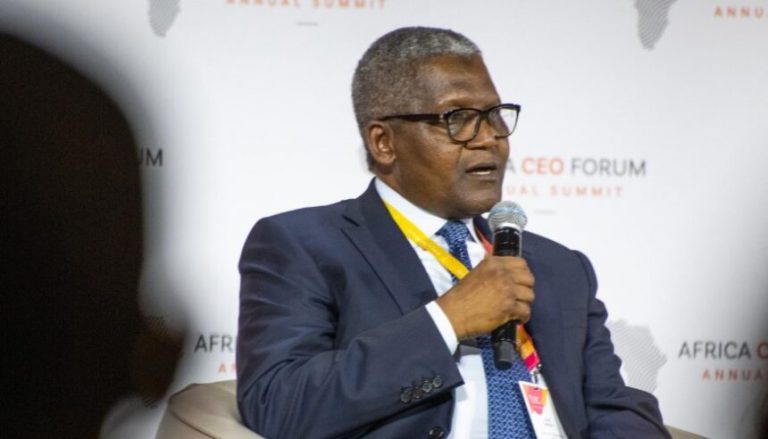
Africa’s richest man and Chairman of the Dangote Group, Aliko Dangote, on Tuesday projected a significant strengthening of the Nigerian naira, forecasting it could rally to as low as ₦1,100 per US dollar within 2026, driven by government reforms, import restrictions, and increased local production.
Speaking at the official launch of the National Industrial Policy 2025 in Abuja, attended by Vice President Kashim Shettima and other dignitaries, Dangote expressed optimism about the currency’s trajectory amid ongoing economic measures.
“Today, the dollar is N1,340. Mr Vice-President, I can assure you that, with what I know, by blocking all this importation and so on, the naira this year will be as low as N1,100 if we are lucky,” Dangote stated, according to multiple reports from the event.
He attributed the potential appreciation to reduced foreign exchange demand from imports, as local manufacturing ramps up including contributions from his own Dangote Petroleum Refinery, which is scaling toward full capacity. Dangote praised recent policy directions for beginning to yield positive results, noting that manufacturers are increasingly optimistic.
The forecast comes as the naira has shown signs of stabilization in recent weeks, trading around ₦1,300–₦1,340 to the dollar in official and parallel markets, a marked improvement from higher levels earlier in the year.
Dangote suggested that sustained import controls and industrial growth could push the currency even further, potentially toward ₦1,000 per dollar under ideal conditions, though he cautioned that policy consistency would be key.
The remarks align with broader optimism in some quarters, including from billionaire Femi Otedola, who recently projected the naira could trade below ₦1,000/$ before year-end, largely crediting the Dangote Refinery’s role in cutting dollar outflows for fuel imports.
Dangote also highlighted challenges, emphasizing the need for reliable power supply and continued government incentives to support industrial expansion and sustain the projected currency rally.
Analysts view the prediction as bullish but contingent on factors like forex policy enforcement, oil revenues, and global commodity prices.
The naira’s performance has been volatile in recent years due to external pressures and domestic structural issues, but recent CBN interventions and refinery developments have fueled renewed confidence among investors.
The statement has sparked discussions on social media and economic forums, with many welcoming the positive outlook while others call for concrete actions to realize such gains for everyday Nigerians facing inflation and import costs.
Business
Afreximbank Hails Africa Credit Rating Agency
” We must all use it, and in return expect a complete assessment of where we (Africa) stand: the strengths the market has ignored, and the weaknesses we still need to fix.”

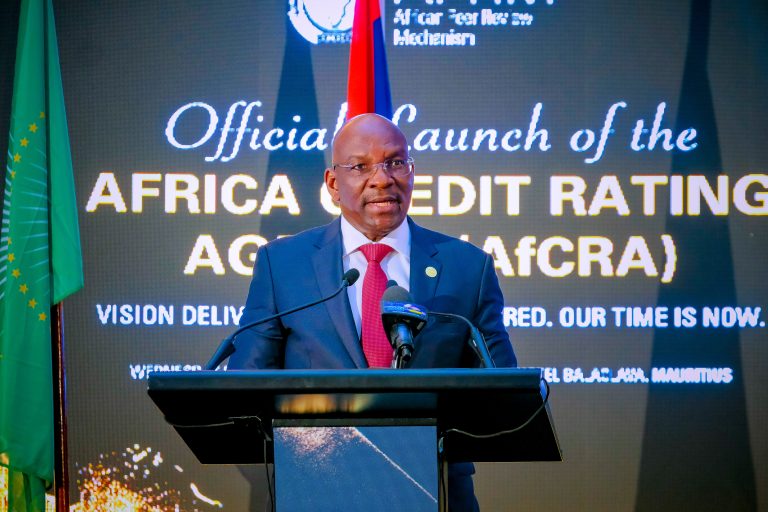
Photo: Mr Denys Denya, Senior Executive Vice President of Afreximbank addresses guests during the launch of the Africa Credit Rating Agency in Port Louis, Mauritius on October 7, 2026
African Export-Import Bank (Afreximbank) has declared it’s strong backing for the recently launched Africa Credit Rating Agency (AfCRA) by the African Union.
“AfCRA is an important milestone in strengthening Africa’s financial architecture and expanding the continent’s capacity to generate credible, independent analysis of African credit risk,” said Mr Denys Denya, Senior Executive Vice President of Afreximbank.
Mr Denya emphasised that credit ratings play an important role in determining access to capital, influencing investor perceptions and shaping the cost at which governments, institutions and businesses can finance development.
It is therefore essential that assessments of African credit risk are independent, rigorous and evidence-based, while reflecting a complete understanding of the structures, institutions and economic realities being assessed.
The establishment of AfCRA adds an important African-led source of credit opinion to the market.
Its value will not be measured by whether it produces more favourable ratings, but by the credibility of its analysis, the quality of its data and transparency of its methodology, and its ability to deepen understanding of African sovereigns, sub-sovereigns and corporate credit.
This is particularly important given that many African issuers remain unrated, while local-currency and sub-sovereign markets continue to have limited rating coverage.
Expanding credible rating coverage can improve the information available to investors and support the development of deeper domestic and regional capital markets.
Alongside fellow members of the Alliance of African Multilateral Financial Institutions (AAMFI), Afreximbank has consistently maintained that African Multilateral Financial Institutions should be assessed on the basis of their fundamentals, performance, legal frameworks, mandates and operating models.
Ensuring that these institutional characteristics are properly understood is essential to achieving informed, balanced and credible assessments of African risk.
Commenting on the uniqueness of the African market, and need for AfCRA’s rating methodology to reflect this, Mr Denya, said: “The rating methodology AfCRA develops must recognise the uniqueness of our environment and its institutional structures.
The Agency must set its own standards and not follow those set elsewhere — it must build a unique identity that conforms to an ‘African best practice.
”Highlighting the need for the autonomy of the Africa Credit Rating agency as it takes off, Mr Denya added: “Most importantly, AfCRA must set a new benchmark for the continent, maintain its independence, and remain wholly owned and controlled by Africans.
“We must all use it, and in return expect a complete assessment of where we (Africa) stand: the strengths the market has ignored, and the weaknesses we still need to fix.”
AfCRA should therefore be seen as complementary to existing international and regional rating agencies, broadening the range of credible analysis available to investors and issuers while strengthening competition, transparency and analytical capacity within Africa’s credit markets.
As Africa seeks to mobilise the scale of capital required for industrialisation, trade, infrastructure and economic transformation, credible African institutions that improve information, strengthen market confidence and deepen the continent’s financial markets will become increasingly important.
Afreximbank congratulates the African Union, the African Peer Review Mechanism (APRM) and all those involved in bringing AfCRA from concept to launch, and looks forward to the contribution the Agency will make to deeper, more transparent and more efficient African capital markets.
Business
Nigeria’s ₦33bn Fruit Import Bill Exposes Missed Opportunities in Jos
“In North Central Plateau State, apples grow very well. Unfortunately, …, the government, especially the state government, has not been serious about mobilising farmers, training them, giving them improved varieties and the right inputs.”
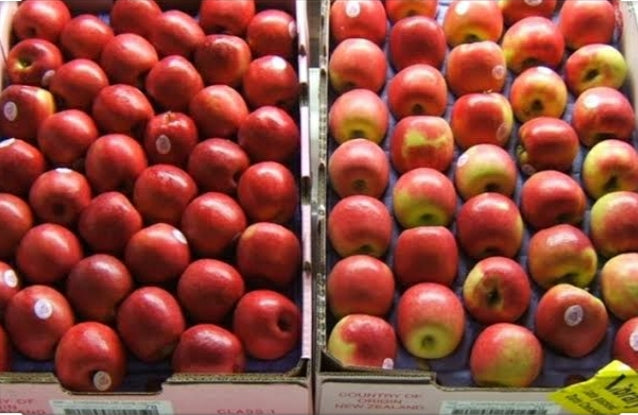
Data from the foreign trade statistics compiled by the National Bureau of Statistics (NBS) revealed that Nigeria imported apples and strawberries worth N33 billion from South Africa in the first half of 2026 (January -June).
The report stated that N10.38bn of apples were imported in the first quarter while N22.65bn of apples and strawberries were imported in the second quarter.
According to the report, apples are known to grow best in temperate climates with cold seasons providing 800–1,000+ chilling hours below 45°F (7°C) to break dormancy and ensure proper fruit set.
It can also grow in moderate weather (ideally 65–75°F or 18–24°C). This helps with optimal growth and flavour development without excessive heat stress.
This temperature is suitable in Plateau State, however, a former President of the All Farmers Association of Nigeria (AFAN), Mohammed Gettado, explained that apples were grown in limited quantities in Plateau State but suffered neglect due to poor government attention and the widespread view that the fruit was meant for the wealthy.
Gettado said, “In North Central Plateau State, apples grow very well. Unfortunately, people consider apples a fruit for the elite only. So, the government, especially the state government, has not been serious about mobilising farmers, training them, giving them improved varieties and the right inputs.”
He added that production remained “very small” because farmers lacked support, stressing that subsidised inputs delivered at the right time were critical to scaling output.
“What farmers require are inputs such as fertiliser, agrochemicals and improved varieties, and they must be given at the right time, before planting,” he said. “If farmers can get these, and also have access to markets, Nigeria can produce whatever it needs and even beyond.”
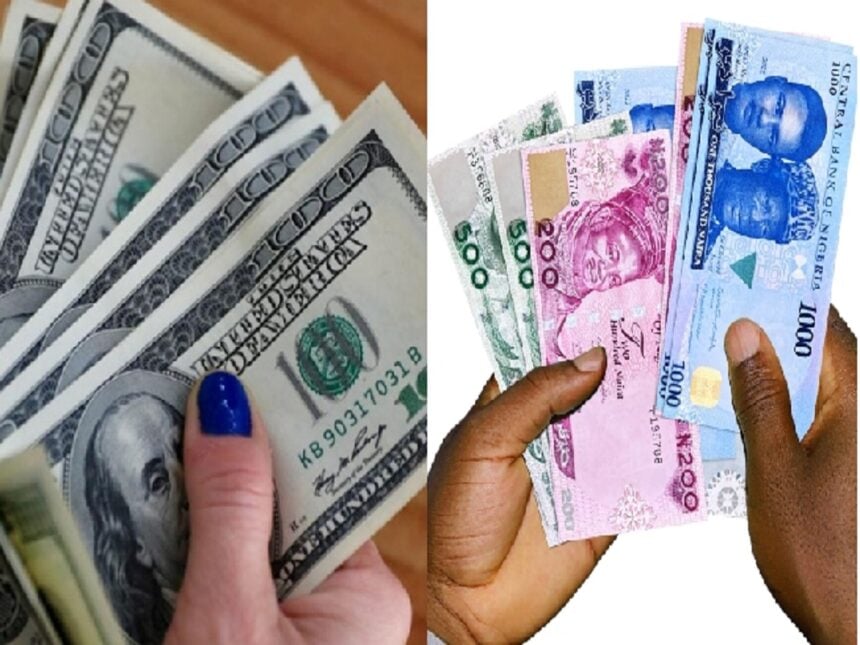
Black Market (parallel market) Rates
₦1370DOLLAR (USD)
₦1825POUND (GBP)
₦1520 EURO (EUR)
₦970 CANADIAN DOLLAR (CAD)
₦65 SOUTH AFRICAN RAND (ZAR)
₦350 UAEDIRHAM (AED)
₦190 CHINESE YUAN (CNY)
₦100 GHANAIAN CEDI (GHS)
₦2300 CFA F.(XOF)
₦2200CFA F.(XAF)
₦850 AUSTRALIAN DOLLAR (AUD)
Official CBN Exchange Rates
DOLLAR (USD)₦1331.19
POUND (GBP)₦1759.16
EURO (EUR)₦1490.80
SWISS FRANC (CHF)₦1600.37CBN
JAPANESE YEN (JPN)₦8.41
CFA FRANC (XOF)₦2.27
WEST AFRICAN UNIT OF ACCOUNT (WAUA)₦1800.11
CHINESE YUAN (CNY)₦198.91
SAUDI RIYAL (SAR)₦354.51
SOUTH AFRICAN RAND (ZAR)


2027: 119 Women Jostle For State’s Governors

Afreximbank Hails Africa Credit Rating Agency

Nigeria’s ₦33bn Fruit Import Bill Exposes Missed Opportunities in Jos

Tech Expert, Zuckerberg trains with UFC champions, Adesanya, Alexander

Organ Trafficking: Ekweremadu bags 10 years in UK prison

SAINT OBI: Between his marriage and his death
-

 News3 days ago
JUST IN: Omi Eko Project Debunks Claims of Zero Progress
-

 News3 days ago
South African Human Rights Lawyer, Navi Pillay, Wins 2026 Nobel Peace Prize •”It must be a joke,”she reacts
-

 News3 days ago
JUST IN: A’Court Stalls SERAP, Oluwadare Defamation Appeals Over Late Briefs
-

 Crime3 days ago
‘Stop Giving Testimony In Church, And Why’ – Police IRT Commander
-

 Business3 days ago
JUST IN: NNPC Clarifies Petrol Discount: Relief Initiative, Not Subsidy Restoration
-

 Business2 hours ago
Naira To Dollar, Pound ,Euro …Rates For Monday, October 12
-

 International15 hours ago
‘Up to our people’ to pick leader, Zelenskyy responds to Trump’s pledge for new elections in Ukraine
-

 Opinions9 hours ago
Human Capital Africa Statement For International Day of the Girl Child 2026