
Politics
ADC Slams Senate Over Rejection of Key Electoral Reforms, Including Electronic Transmission of Results

The African Democratic Congress (ADC) has strongly condemned the 10th Senate’s decision to reject critical amendments to the Electoral Act, describing the move as a deliberate effort to undermine Nigeria’s democracy and pave the way for manipulation in future elections.
In a statement issued by its National Publicity Secretary, Bolaji Abdullahi, the party urged the Conference Committee on the Electoral Act to override the Senate’s position and approve reforms that align with democratic principles and the aspirations of Nigerians.
The ADC particularly criticized the Senate’s refusal to mandate electronic transmission of election results from polling units, a measure widely seen as essential for enhancing transparency and credibility.
The party also faulted the rejection of provisions allowing electronic downloads of voter cards, as well as reductions in election notice periods and shortened timelines for publishing candidate lists.
These decisions, according to the ADC, represent a setback for improving the efficiency of the Independent National Electoral Commission (INEC) and ensuring the integrity of upcoming elections, including those in 2027.
“The actions of the Senate are a deliberate attempt to undermine Nigeria’s democracy,” the statement read. The party accused the APC-led Senate of prioritizing political interests over electoral transparency, warning that such rejections signal an unwillingness to subject elections to genuine public scrutiny.
The condemnation follows the Senate’s passage of the Electoral Act (Amendment) Bill 2026 after extensive debate, during which lawmakers retained existing provisions for electronic transmission as per the 2022 Act but rejected proposals for compulsory real-time uploads to the INEC Result Viewing (IReV) portal.
Senate President Godswill Akpabio clarified that the chamber did not outright reject electronic transmission but opted against mandating real-time processes.
The ADC’s stance echoes criticisms from other opposition figures, including former Vice President Atiku Abubakar (an ADC chieftain), who described the rejection of real-time transmission as an assault on electoral transparency and a tactic to protect incumbents.
The party called on the National Assembly to reconsider these key provisions to safeguard the credibility of Nigeria’s electoral process and prevent future rigging opportunities.










The All Progressives Congress (APC) in Lagos State has officially named Princess Damilola Sonayon-James as the deputy governorship candidate to pair with Dr. Kadri Obafemi Hamzat, the party’s flagbearer for the 2027 election.
The announcement was made following extensive consultations and a rigorous selection process by the party leadership. Sonayon-James, who currently serves as the Lagos State Deputy Woman Leader of the APC, is a 40/41-year-old Badagry princess with a strong background in public policy, community development, agriculture, women’s empowerment, and social services.
Lagos APC Chairman Cornelius Ojelabi praised her competence, loyalty, and grassroots appeal, describing the Hamzat-Sonayon-James ticket as a powerful combination of experience, innovation, and visionary leadership that will continue to drive development across the state.
The selection is seen as a strategic move to strengthen the ticket’s appeal, particularly by providing representation from Badagry and boosting support among women and younger voters ahead of the February 2027 polls. Supporters have welcomed the choice, hailing it as a balanced and progressive pairing.
Dr. Hamzat, the incumbent Deputy Governor, emerged as the APC’s consensus governorship candidate earlier in 2026 and is widely viewed as the frontrunner to succeed Governor Babajide Sanwo-Olu, who is completing his second term.
This development marks another key step in the APC’s preparations for the 2027 elections in Nigeria’s commercial capital.
The Nigeria Democratic Congress (NDC) has firmly asserted the supremacy of the party over individual interests, reaffirming its commitment to building a strong, enduring political institution ahead of future elections.
In resolutions from its recent National Executive Committee (NEC) meeting, the party emphasized that no member or group should operate outside the party’s structures and leadership. It declared that elected officials must consult party organs on key decisions and that all support groups, NGOs, and affiliated movements must subordinate themselves to the party’s directorates and overall control.
“The Party is Supreme. We do not tolerate any cult of personality in the NDC,” the party stressed in its communique.
As part of efforts to promote accountability and discipline, the NDC approved the establishment of a comprehensive Code of Conduct for all party officials and candidates. A committee, headed by the National Legal Adviser, has been constituted to draft the framework and guidelines, which will apply across all levels of the party.
The moves come as the relatively new party—bolstered by figures including Senator Henry Seriake Dickson, Peter Obi, and Rabiu Kwankwaso—seeks to position itself as a credible alternative focused on institutional strength rather than personal ambitions. Additional resolutions include demands for full financial transparency through dedicated party accounts.
Party leaders described the resolutions as essential for fostering unity, discipline, and effective leadership as Nigeria prepares for the 2027 general elections. The decisions have drawn mixed reactions, with supporters hailing them as a necessary “riot act” to prevent fragmentation, while some observers note potential tensions with various support movements.
The NDC was founded in early 2026 and continues to expand its structures, including recent steps like constituting a National Selection Committee for upcoming primaries.
Politics
Senate President Akpabio Denies Promising Tickets to Defeated Senators, Opposes Public Probe of Military
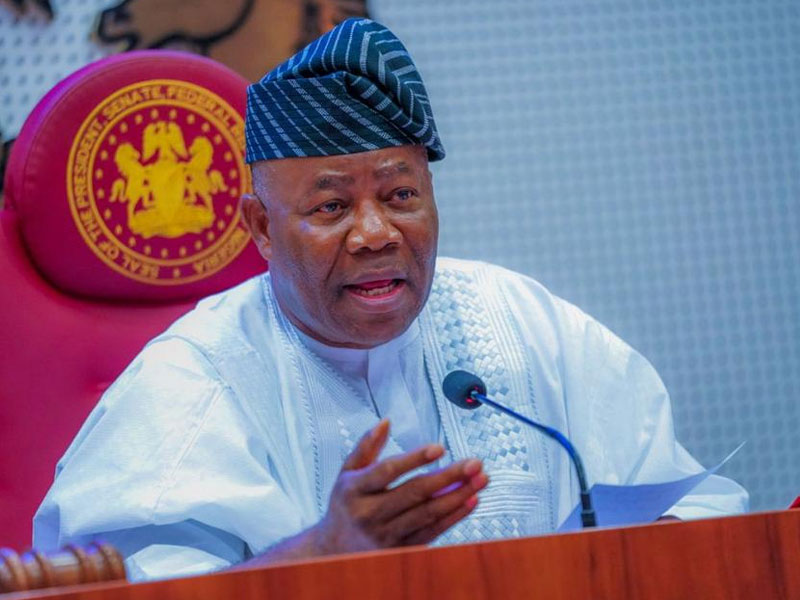
The Office of the President of the Senate has issued a strong clarification, debunking media reports claiming that Senate President Godswill Akpabio promised to secure senatorial tickets for senators who lost their party primaries.
In a statement signed by Hon. Eseme Eyiboh, Special Adviser on Media and Publicity, the Senate President’s office described the reports as misleading and inaccurate.
“The attention of the Office of the President of the Senate has been drawn to misleading reports circulating in sections of the media suggesting that the President of the Senate has promised to secure senatorial tickets for senators who lost their party primaries,” the statement read.
It emphasized that Senator Akpabio neither made nor authorized any such promise. According to the clarification, what the Senate President actually conveyed during interactions with colleagues was empathy for senators affected by the primaries’ outcomes. He assured them that the leadership of the All Progressives Congress (APC) is actively addressing issues from the primaries, with the final list of candidates to be released in due course in accordance with the party’s constitution and electoral guidelines.
Senator Akpabio, the statement added, remains committed to party discipline, due process, and the APC’s internal mechanisms for resolving disputes. He will not interfere in the party’s autonomous processes or make commitments beyond the scope of his role as Senate President.
On Security and Legislative Oversight
The office also addressed another report quoting a senator on the need for the Senate to probe the military over recent security incidents. While acknowledging that legislative oversight is a constitutional duty of the National Assembly, Senator Akpabio believes the current period is not appropriate for a public probe of the Armed Forces.
“At a time when our troops are engaged on multiple fronts against terrorism, banditry and other threats to National Security, subjecting the military to a public legislative inquisition could undermine morale and operational focus,” the statement explained.
The Senate President advocates for support, collaboration, and closed-door engagements with security agencies, describing these as more productive during this critical time. He assured that oversight will continue to be exercised responsibly, without creating distractions that could embolden adversaries or divert attention from securing the nation.
Senator Akpabio urged the media and the public to disregard sensational and inaccurate reports of his remarks and to always seek clarification from his office before publication.


JUST IN: IED Explosion Kills One, Injures Seven on Anka-Bagega Road in Zamfara ( Photos)

FG Welcomes Positive IMF Assessment of Nigeria’s Economy, Vows to Sustain Reform Momentum

Tony Elumelu’s United Capital Secures approval to operate in Ethiopia

Tech Expert, Zuckerberg trains with UFC champions, Adesanya, Alexander

Organ Trafficking: Ekweremadu bags 10 years in UK prison

SAINT OBI: Between his marriage and his death
-

 News1 day ago
Court Voids ₦110bn N’Assembly Vehicles, Allowances
-
 Business2 days ago
Senate’s approval of Sugar – Sweetened Beverages Tax Bill, Shocking, says CPPE, Lobbying Reps for rejection
-

 Crime3 days ago
BREAKING: Police Rescue Kidnapped Sister of Ex-minister Adelabu and Twin Sons
-
 News2 days ago
Court Declares National Assembly’s N110bn SUV and Allowance Schemes Unlawful
-

 News1 day ago
FG Clears Five-Month Allowance Arrears for University Lecturers
-

 News1 day ago
Lagos Begins 500-Tree Campaign to Tackle Extreme Heat
-

 Politics1 day ago
2027: Lagos APC picks Damilola as Hamzat ‘s Deputy Governor
-
 Politics1 day ago
NDC Declares Party Supremacy, Approves Code of Conduct Committee