
Business
Beyond GDP, UNCTAD to launch new economic indicators for measuring countries prosperity
Accordingly , a High-Level Expert Group on Beyond GDP, mandated by the UN’s landmark Pact for the Future has been tasked with developing recommendations for a set of universally relevant indicators that countries can own and use to guide policy.

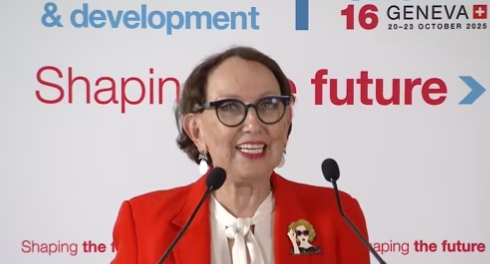
Photo: UNCTAD Secretary-General Rebeca Grynspan. Credit: UNCTAD
UN Trade and Development (UNCTAD) says a new metrics for measuring countries progress beyond GDP, will be launched during the upcoming UN General Assembly in the spring of 2026.
Accordingly , a High-Level Expert Group on Beyond GDP, mandated by the UN’s landmark Pact for the Future has been tasked with developing recommendations for a set of universally relevant indicators that countries can own and use to guide policy.
UNCTAD serves as co-secretariat to the “Beyond GDP” expert group, alongside other entities including the Executive Office of the UN Secretary-General, the UN Department of Economic and Social Affairs and the UN Development Programme.
This initiative stems from the urgent need for measures of progress that enable more balanced and integrated pursuit of sustainable development.
GDP does not capture progress in well-being, equity, inclusiveness or sustainability – and it was designed as a measure of economic activity.
“Our approach will emphasize how better well-being and its drivers, such as health, social capital and the quality of the environment, are not only good for societal welfare but also contribute in an integral way to economic prosperity,” the interim report argues.
The “Beyond GDP” agenda, increasingly gaining traction among UN member countries, is about complementing traditional economic measures, rather than replacing them.
To do so, five principles are important.
First, countries need to look at more than GDP to gauge material well-being more accurately.Second, it takes more than income to capture all aspects of well-being.
Third, when addressing inequality and exclusion it’s necessary to look beyond average figures.
Fourth, the need to think in the long term, to ensure economic, environmental, social and institutional sustainability for future generations.
In addition, well-being is interconnected across countries in today’s world.
This makes cooperation all the more crucial, in setting global norms of measurement, unlimited to specific countries or regions.
Business
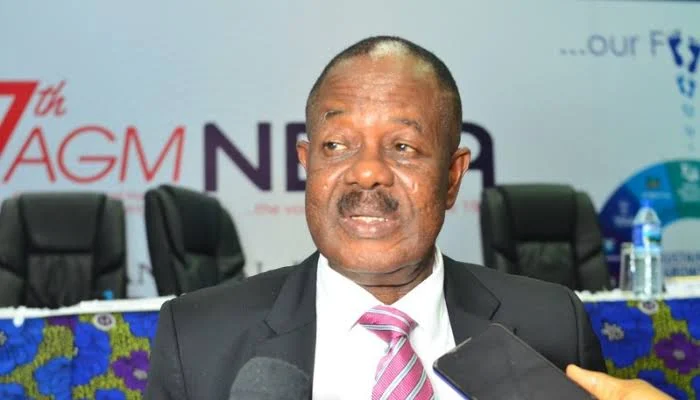
Juhel CEO-Dr Ifeanyi Okoye, Becomes MAN President
Before he was elected President, Dr. Okoye served the Association in various capacities, including as Chairman of the Enugu, Anambra and Ebonyi States Branches from 1998 to 2005, and as Vice President from 2006 to 2010.
Business
Investors Rush For Airtel Money IPO on LSE
Airtel Money is proving popular among retail investors ahead of full admission next week.

Airtel Money began conditional trading on the London Stock Exchange this morning in a £5.3 billion market debut, dubbed Africa’s Revolut.
Shares, which were open only to investors allocated stock in the offer, were trading flat at around 194p.
But armchair investors are rushing to sign up to the City’s largest IPO in five years ahead of full admission on October 14.
It is the ninth most popular initial public offering on AJ Bell’s investment platform based on the number of customers applying to take part in the offer, it said.
Airtel Money is proving popular among retail investors ahead of full admission next week
Airtel Money, a subsidiary of Airtel Africa, which offers mobile payment services in 13 countries across Africa, is a subsidiary of FTSE 100 telecoms group Airtel Africa, whose shares have trebled in less than two years.

The Nigerian National Petroleum Company Limited (NNPC Ltd) has clarified that its ongoing petrol discount is a temporary customer relief measure and does not amount to a restoration of the petroleum subsidy abolished in 2023.
In a statement issued on Friday by Chief Corporate Communications Officer Andy Odeh, the company said the N66-per-litre sales discount, first introduced on 1 October 2026 to mark Nigeria’s 66th Independence Anniversary, will continue until 31 October 2026 at NNPC Retail stations nationwide.
NNPC stressed that the initiative is designed to ease the burden of rising fuel prices linked to elevated global crude oil costs and the Middle East conflict. It applies only to NNPC Retail outlets and does not set a uniform national pump price or change the market-based pricing framework for petroleum products.
“This discount is a customer relief initiative and does not represent the reintroduction of petroleum subsidy,” the statement said. The company urged the public to disregard any interpretation of the measure as a return to the subsidy regime.
The clarification followed comments by Finance Minister and Coordinating Minister of the Economy Taiwo Oyedele, who explained that the discount is funded solely from NNPC Retail’s own profit margin and involves no public funds from the federal budget or Federation Account.


Juhel CEO-Dr Ifeanyi Okoye, Becomes MAN President

Investors Rush For Airtel Money IPO on LSE

JUST IN: NNPC Clarifies Petrol Discount: Relief Initiative, Not Subsidy Restoration

Tech Expert, Zuckerberg trains with UFC champions, Adesanya, Alexander

Organ Trafficking: Ekweremadu bags 10 years in UK prison

SAINT OBI: Between his marriage and his death
-

 News2 days ago
Tears, Embraces as Rescued NYSC Members Reunite with Families in Ibadan
-
 Business2 days ago
Naira Exchange Rates Friday, October 9
-
 Business2 days ago
Manufacturers sitting on N40trn untapped opportunities, says report
-
 News3 days ago
VON now broadcast in nine languages — DG
-
 News2 days ago
Ahmadu Bello University Hikes Fees Across Programme
-
 News3 days ago
NDC Dismisses Tinubu’s 30-Day Petrol Discount as “Tokenism and Deceit,”
-
 Politics2 days ago
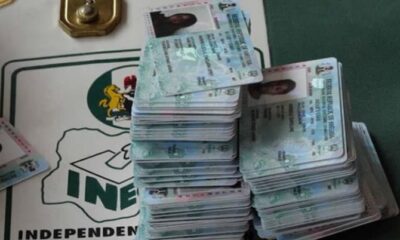
2027: INEC Displays Voter Register, Begins PVC Distribution Today
-
 News3 days ago
FG Plans National Strategic Fuel Reserve As Oil Price Bites