
Opinions
Agbakoba Writes Oyetola on ‘Unlocking Nigeria’s Maritime Potential to Generate ₦70 Trillion Annually’
In the West and Central Africa region, 80% of containers are destined for Nigeria, but less than 20% actually arrive because of the decayed infrastructure—whether at Lagos, Port Harcourt, or other ports.

IN SUMMARY
The N70 trillion will come from :
1. Port Infrastructure Development (N14 trillion annually)
2. Inland Waterways Development (N10-12 trillion annually).
3. Cabotage Enforcement (N8 trillion annually).
4. Oil Rig Taxation (N6 trillion annually—approximately 17% of the National Budget).
5. Oil and Gas Maritime Services (N16 trillion in annual losses)
6. Maritime Security and Blue Economy (N8-10 trillion annually).
7. Emerging Maritime Technologies (N5-6 trillion annually).
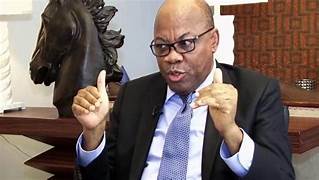
Dr. Olisa Agbakoba SAN Senior Partner, Olisa Agbakoba Legal (OAL), recently wrote to the minister of finance / coordinating minister of the economy, Wale Edun , on Positioning Nigeria Towards A N1 Quadrillion Economy.
This time, he writes to the Minister of Marine and Blue Economy, Mr. Adegboyega Oyetola, on the subject: “Unlocking Nigeria’s Maritime Potential to Generate ₦70 Trillion Annually.
INTRODUCTION
The maritime sector is potentially Nigeria’s largest economic sector outside oil and gas.
The Nigerian Institution of Marine Engineers and Naval Architects (NIMENA) projects that the maritime industry could contribute approximately $44 billion (N70 trillion) annually to Nigeria’s GDP with improved governance and regulation.
However, we are currently losing enormous revenue due to inadequate legal frameworks, poor infrastructure, and insufficient private sector participation.
The adoption of the National Policy on Marine and Blue Economy (2025-2034) by the Federal Executive Council is most welcome.
The policy document contains comprehensive recommendations for legal and regulatory reforms.
What is now needed is decisive implementation to unleash the sector’s tremendous potential.
It is within this implementation context that I write to present specific, revenue-generating interventions that can accelerate the policy’s objectives and deliver quantifiable outcomes within one year.

• Cargo ships
THE OPPORTUNITY: N70 TRILLION IN ANNUAL RECOVERABLE REVENUE
OAL study reveals that Nigeria’s maritime sector presents extraordinary opportunities currently unrealised due to legal and regulatory gaps.
The transformative element of this proposal is that the National Policy on Marine and Blue Economy (2025-2034) already contains most of the required legal and institutional reforms needed to capture these opportunities.
I shall now proceed to set them out as follows:
1. Port Infrastructure Development (N14 trillion annually)
Ports are critical to the development of any economy.
If people produce goods but cannot move them, the economy cannot get ahead.
In the West and Central Africa region, 80% of containers are destined for Nigeria, but less than 20% actually arrive because of the decayed infrastructure—whether at Lagos, Port Harcourt, or other ports.
A recent report by Dynanmar, a Dutch consultancy firm, shows that Nigeria loses approximately N20 billion daily at the ports due to poor infrastructure and inefficiencies, with most revenue flowing to neighbouring ports, particularly Cotonou, Tema, and Lomé.Nigeria should be a maritime hub like Morocco, which is building one of the biggest sea ports to trade effectively with Europe, the Middle East, and North Africa.
But we cannot be a maritime hub if our ports are in a bad state.
Yet the Lekki Deep Sea Port demonstrates the transformative potential—it is already attracting over $20 billion in investment and provides a replicable model for port modernization across Nigeria. Imagine what would come if all other ports were operating optimally.
The Apapa City Port requires massive overhaul. Strategic ports remain grossly underdeveloped or abandoned.
The Onitsha River Port lies idle despite its potential to transform inland cargo movement and decongest Lagos ports. New ports at Azumiri and Oraji are underdeveloped.
Port development projects in Akwa Ibom and Ogun states are commendable, but much more needs to be done.
To unlock this opportunity requires:
(a) enacting the Ports and Inland Waterways Development Act to modernise port operations, establish legal backing for Public-Private Partnerships (PPPs) in port development, reform governance of the Nigerian Ports Authority to improve efficiency and competitiveness, regulate inland waterway transport ensuring safe navigation and infrastructure investment, and provide incentives for private sector investment in modern port infrastructure and smart port technology;
(b) amending the Nigerian Ports Authority (NPA) Act (1999) to enhance private sector participation through robust PPP frameworks; and(c) amending the National Inland Waterways Authority (NIWA) Act (1997) to mandate systematic dredging programmes, establish inland port development frameworks, and enable private sector participation in waterway management.
Achieving cargo dwell time of 48 hours or less and port throughput growth of 15% yearly or more are critical performance indicators.
Revenue streams include port tariffs and cargo handling fees from vessels using Nigerian ports, berthing and anchorage fees, container storage fees, transit trade fees for landlocked countries using Nigerian ports, and special economic zones for shipbuilding, repairs, and logistics.
2. Inland Waterways Development (N10-12 trillion annually).
The bad state of the ports is directly connected to our inland waterways. When the British were here, we had 42 inland waterways connected to roads and railways for cargo movement.
Nigeria must build a multimodal superhighway linking roads, trains, and inland waterways to maximize our trade potential.Nigeria’s inland waterways represent transformational economic corridors comparable to the Nile in Egypt.
Dredging the River Benue to Lokoja and the River Niger from Baro in Niger State to the Atlantic Ocean to a minimum draught of ten feet will enable transportation from Baro to Onitsha by speed boat in 90 minutes instead of 9 hours, and ferrying tonnes of yam and other farm produce from Makurdi to Onitsha on self-propelled barges in three hours.
Over 25,000 foreign vessels illegally trade in Nigeria’s coastal waters, representing both a national security challenge and massive economic loss.
The Nile River, at 26 to 36 feet deep, supports busy traffic of cargo and cruise ships, with cruises costing up to $500 per person for four days.
A fully operational Niger-Benue river system would dramatically reduce transportation costs, decongest road infrastructure, and create substantial tourism revenues comparable to Egypt’s Nile-based economic corridor.
This requires:(a) amendments to the NIWA Act to mandate systematic dredging programmes and inland port development;(b) enacting a Marine Spatial Planning (MSP) Act to regulate ocean space usage and avoid conflicts between industries (fishing, shipping, tourism, offshore energy), establishing a Marine Spatial Planning Authority to allocate maritime zones, setting rules for zoning fishing areas, shipping lanes, conservation zones, and renewable energy projects, and providing mechanisms for stakeholder consultation and dispute resolution;(c) enacting a Sustainable Fisheries and Aquaculture Act to strengthen regulation of fisheries and aquaculture ensuring sustainability and food security, introducing a national fisheries management system to enforce fishing quotas and conservation rules, creating a licensing system for commercial and artisanal fisheries, banning destructive fishing practices and regulating foreign fishing vessels, and strengthening penalties for Illegal, Unreported, and Unregulated (IUU) fishing; and
(d) revitalisation of abandoned inland ports including the Onitsha River Port to restore the integrated multimodal transport system essential for economic competitiveness.
Revenue streams include toll charges on inland waterway transport managed by NIWA, revenue from ferry services for passenger and cargo transportation, foreign vessel licensing fees for companies fishing in Nigeria’s Exclusive Economic Zone (EEZ), commercial fishing permits for industrial-scale fishing companies, artisanal fishing licenses for small-scale fishers, and value-added income from fish processing industries.
3. Cabotage Enforcement (N8 trillion annually)
Over 25,000 foreign vessels illegally trade in Nigeria’s coastal waters, representing both a national security challenge and massive economic loss.
The National Policy specifically recommends reviewing the Coastal and Inland Shipping (Cabotage) Act 2003, strengthening institutions for effective enforcement, encouraging inter-agency synergy for implementation, and streamlining access to the Cabotage Vessel Financing Fund (CVFF).
To capture this opportunity requires:(a) amending the Cabotage Act (2003) to establish strict enforcement mechanisms and compliance requirements, with penalties including vessel seizure for violations, thereby ensuring Nigerian-crewed vessels constitute 50% or more of coastal trade and preventing the ongoing haemorrhaging of revenue to foreign operators;
(b) strengthening inter-agency collaboration between NIMASA, NPA, NIWA, Nigerian Navy, Marine Police, and security agencies for better governance and coordinated enforcement; and
(c) establishing a National Blue Economy Commission as a centralized body to coordinate activities across ministries of transport, environment, fisheries, petroleum, and trade, and develop marine economic zones to attract investments.
Revenue streams include registration fees from Nigerian-flagged vessels under NIMASA, fees from foreign vessels operating in Nigerian waters under the Cabotage Act, seafarers’ certification and training fees from maritime workers and companies, and increased domestic shipping revenues from Nigerian vessels.
4. Oil Rig Taxation (N6 trillion annually—approximately 17% of the National Budget)
Oil rigs have formed a cartel for tax avoidance. OAL is representing NIMASA in a tax avoidance case brought by oil rig companies.
NIMASA has confirmed that tax is currently not collected from oil rigs.Capturing this revenue requires:(a) amending the Nigerian Maritime Administration and Safety Agency (NIMASA) Act (2007) to expand its mandate beyond shipping, marine labor, and environmental protection to include responsibilities for marine conservation and blue economy oversight, establish a robust taxation framework for oil rigs operating in Nigerian waters, increase penalties for maritime pollution, illegal vessel operations, and labor violations, and strengthen NIMASA’s role in coastal tourism and renewable energy initiatives;(b) enacting a Marine Pollution Control and Climate Adaptation Act to strengthen environmental protection measures addressing pollution, oil spills, and climate risks, establish stricter penalties for marine pollution including oil spills, plastic waste, and ship-based pollution, require all offshore oil and gas companies to develop spill response and cleanup plans, support coastal communities with climate adaptation strategies including shoreline protection and disaster response, and mandate green shipping initiatives including reduced carbon emissions for vessels;(c) amending the Petroleum Industry Act (2021) to strengthen regulations on offshore oil and gas drilling to reduce environmental risks and introduce mandatory decommissioning funds for oil companies to clean up decommissioned offshore platforms;(d) creating a Marine Pollution Task Force to monitor and enforce environmental regulations across ports, coastal industries, and offshore platforms; and(e) amending the Exclusive Economic Zone (EEZ) Act (1978) to update and increase Nigeria’s control over deep-sea mining and marine biodiversity conservation, and introduce provisions for sustainable offshore energy projects including offshore wind farms.
Revenue streams include royalties from offshore oil drilling and gas extraction, corporate taxes on oil companies operating in deep-sea oil fields, fees for pipeline installations and seabed resource extraction rights, tax revenue from private-sector investments in fish farms and marine aquaculture, revenue from private investment in offshore wind farms and tidal energy projects, and carbon credit sales under global climate agreements for using clean marine energy.
5. Oil and Gas Maritime Services (N16 trillion in annual losses)
This presents enormous losses across four critical value chains that exclude Nigerians.
Over $1 billion worth of legal work annually is lost to foreign firms. Nigerian shipping companies are not engaged to lift our crude oil products.
Funds accruable to Nigeria from crude oil production are domiciled in foreign banks and sometimes held for months before remittance to the Central Bank of Nigeria.
No Nigerian marine insurance company is involved in insurance underwriting for the over 1,000 oil rigs in Nigerian waters.
This stands in stark contrast to Saudi Arabia’s successful IKTVA program, which mandates and enforces local content, ensuring value retention within its economy.
To recapture these losses requires:(a) amending the Merchant Shipping Act (2007) to regulate the shipping industry, ship registration, and safety, and reviewing the legal framework for carriage of cargo from Free on Board (FOB) to Cost Insurance and Freight (CIF) to support growth of a national fleet;(b) strengthening enforcement of the Nigerian Oil and Gas Industry Content Development (Local Content Act) 2010 across all excluded value chains including legal services, shipping, banking, and insurance;(c) establishing the Maritime Development Bank to provide critical maritime assets and financing for indigenous capacity development; and(d) developing public-private partnerships (PPPs) in port expansion, inland waterway development, shipbuilding, and maritime infrastructure through tax incentives for investments in sustainable fishing, tourism, and renewable energy.Revenue streams include recaptured legal services fees, shipping revenues from Nigerian vessels lifting crude oil, timely remittance of oil revenues to CBN, and marine insurance underwriting fees.
6. Maritime Security and Blue Economy (N8-10 trillion annually)
This revenue potential comes through increased port traffic, reduced insurance premiums, and enhanced foreign direct investment in maritime infrastructure.
The Deep Blue Project, inaugurated in June 2021, has proven effective—the International Maritime Bureau acknowledged a 30 per cent drop in piracy cases in 2021 alone, demonstrating measurable return on security investments.
However, only a coast guard can adequately protect and assure maritime safety and security.
A fully secured maritime environment would attract international shipping lines currently avoiding Nigerian waters, dramatically increasing port revenues and related economic activities.
Achieving insurance premium reduction of 40% or more through sustained security would further unlock this sector’s potential.
This requires:(a) strengthening implementation of the Suppression of Piracy and Other Maritime Offences (SPOMO) Act of 2019 as specifically recommended in the National Policy;(b) enacting a Coast Guard Establishment Act to create a dedicated institution for maritime safety and security;(c) enacting a Maritime Security and Piracy Suppression Act to strengthen legal measures to combat piracy, sea robbery, and other maritime crimes, provide additional legal backing for Nigerian Navy and Marine Police to enforce security in Nigerian waters, establish specialized maritime courts to handle piracy, smuggling, and maritime security violations, and strengthen public-private partnerships for maritime surveillance including deploying technology for monitoring Nigerian waters;
(d) strengthening the Nigerian Navy and Marine Police through better funding and technology for coastal and offshore surveillance; and
(e) improving collaboration with ECOWAS and Gulf of Guinea partners for regional maritime security.Nigeria should also align with international and regional frameworks including the United Nations Convention on the Law of the Sea (UNCLOS), International Maritime Organization (IMO) Conventions (MARPOL for pollution control, SOLAS for safety, STCW for seafarers), Convention on Biological Diversity (CBD), Paris Agreement on Climate Change, FAO Port State Measures Agreement for combating illegal fishing, African Union Blue Economy Strategy, African Continental Free Trade Agreement (AfCFTA), Gulf of Guinea Maritime Security Strategy, and ECOWAS Integrated Maritime Strategy (EIMS).
Revenue streams include fees from shipping companies for naval escort services in piracy-prone areas, revenue from joint maritime security operations with foreign shipping companies, fines imposed on vessels violating maritime laws (illegal fishing, pollution, piracy), confiscation and auctioning of vessels involved in illegal activities, tax revenue from hotels, resorts, and tourism operators along Nigeria’s coastline, fees from coastal ecotourism activities including whale watching, diving, and marine parks, entry fees for protected marine areas and islands, berthing fees from cruise ships docking at Nigerian ports, licenses for private yacht operations and water sports businesses, and luxury tourism taxes on high-end marine tourism experiences.
7. Emerging Maritime Technologies (N5-6 trillion annually)
This revenue potential comes through early adoption advantages and positioning Nigeria as a regional hub for digital maritime services.
The International Maritime Organisation (IMO) will implement mandatory requirements for Maritime Autonomous Surface Ships (MASS) by January 1, 2028.
Early implementation before this deadline would give Nigeria competitive advantage in West African maritime services, attract technology investments, and capture digital trade documentation fees currently lost to foreign platforms.Nigeria must:
(a) enact the Legal Framework for Maritime Autonomous Surface Ships (MASS) to position Nigeria for emerging maritime technologies before IMO’s mandatory 2028 requirements;(b) enact the Electronic Bill of Lading (eB/L) Framework to digitalise maritime trade documentation and capture fees currently lost to foreign platforms;
(c) enact a Blue Economy Act to establish a comprehensive legal framework for Nigeria’s blue economy covering marine governance, resource management, and economic development, with provisions establishing the National Blue Economy Commission to coordinate activities across ministries and agencies, providing clear rules on marine resource allocation, licensing, and conservation, defining legal responsibilities for the private sector, local communities, and government agencies, and outlining penalties for environmental violations, illegal fishing, and marine pollution;(d) amend the Sea Fisheries Act (1992) to increase fines and penalties for IUU fishing, strengthen monitoring and surveillance of Nigeria’s fishing waters using satellite tracking and observer programs, and require fishing vessels to adopt sustainable practices and report catch data transparently; and
(e) support capacity building and research institutions—support universities and research institutes in marine sciences and innovation to develop indigenous expertise.Revenue streams include revenue from pharmaceutical companies using marine resources for drug development, licensing fees for marine research and bioprospecting companies exploring Nigeria’s waters, tax income from seaweed farming for export as food, cosmetics, and biofuel raw material, government partnerships with investors in marine-based biofuels, government revenue from companies extracting rare earth minerals, manganese, and cobalt from Nigeria’s EEZ, taxes on companies exploring for marine-based minerals for battery production, income from controlled sand dredging for construction and land reclamation, and licensing fees for coral harvesting for medicinal and scientific purposes.
CONCLUSION
Nigeria’s maritime sector presents a N70 trillion annual opportunity (as projected by NIMENA) currently unrealised due to legal and regulatory gaps.
The transformative element of this proposal is that the National Policy on Marine and Blue Economy (2025-2034) already contains most of the required legal and institutional reforms.
The roadmap exists; what is needed is decisive implementation to translate policy into law and law into measurable economic outcomes.
This policy paper outlines a comprehensive legislative framework comprising nine new laws to be enacted (Ports and Inland Waterways Development Act, Marine Spatial Planning Act, Sustainable Fisheries and Aquaculture Act, Marine Pollution Control and Climate Adaptation Act, Coast Guard Establishment Act, Maritime Security and Piracy Suppression Act, Legal Framework for MASS, Electronic Bill of Laden.

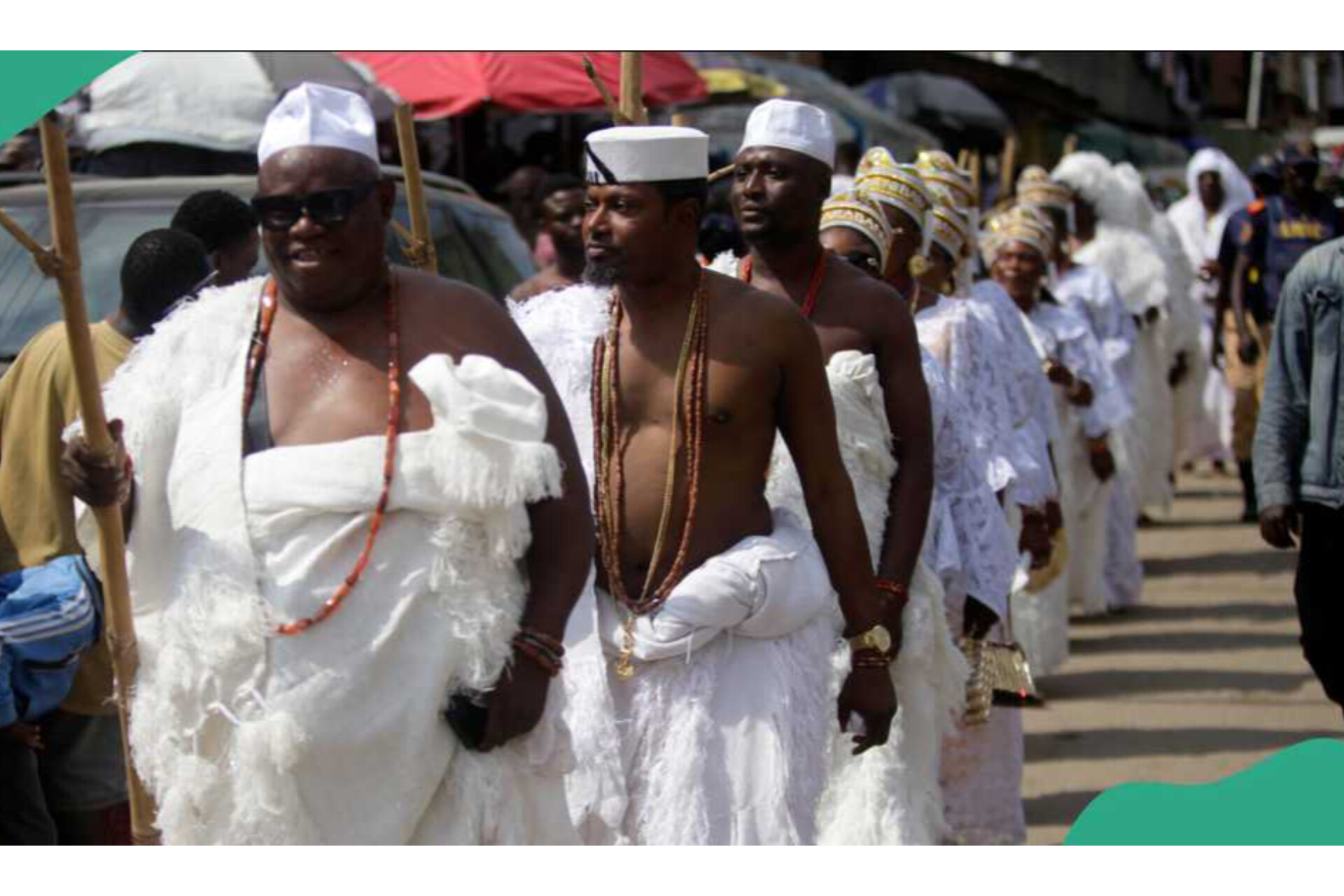
The Lagos State Government has declared Thursday, August 20, 2026, a work-free day for public servants, political appointees and others to mark this year’s Ìṣẹ̀ṣe Day celebration.
The announcement was made by the Special Adviser to the Governor on Tourism, Arts and Culture, Idris Aregbe, in a statement on Wednesday. He described Ìṣẹ̀ṣe as “not a relic” but “a living expression of our traditions and a celebration of Yoruba spirituality as an important part of Nigeria’s cultural and religious landscape.”
Authorities expect the event to draw more than three million residents and traditional worshippers in what is billed as one of the largest gatherings of its kind. Celebrations will feature prayers, rituals, processions, drumming and cultural displays dedicated to the Òrìṣà, coordinated by the Association of African Traditional Religion Nigeria and Overseas.
Ìṣẹ̀ṣe Day has been observed as a work-free day in Lagos since 2023, following a request by the Lagos State Council of Obas and Chiefs. Governor Babajide Sanwo-Olu has maintained the practice annually as part of the administration’s commitment to indigenous values and religious inclusiveness under the THEMES+ Agenda.
Normal government activities are expected to resume on Friday, August 21. Residents have been urged to celebrate peacefully and respectfully.
Opinions
Remi Tinubu and the Road to the President’s Re-election, By Dr Dayo Israel
Over the past three years, the Renewed Hope Initiative associated with the First Lady has become a significant platform for interventions touching women’s empowerment, education, health, humanitarian support and social welfare.
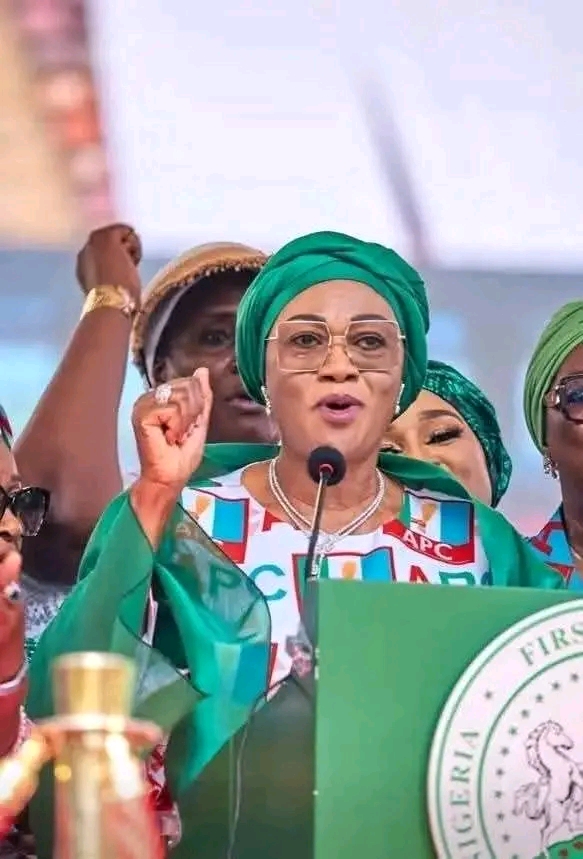
Cover image: First Lady Senator Oluremi Tinubu
Every political journey has its visible protagonists.
History of political spouses
There is the candidate, the campaign, the crowds, the rallies and, ultimately, the votes. But behind many historic political journeys are people whose contributions are less easily captured in campaign posters or ballot papers.
Among them are the spouses who choose, despite the pressures of public life, to stand beside their partners when the road becomes difficult. It is an often underestimated role.
The Constitution may define the powers of a President, but it does not define the emotional architecture that sustains a person carrying the weight of a nation.
It does not describe the person who listens when the cameras are switched off, who understands the pressure behind the public smile, who watches a spouse become the subject of national controversy, or who must decide whether to retreat into private life or step forward into the political storm.
Around the world, First Ladies and First Spouses have answered that question differently. Michelle Obama became one of the most compelling modern examples of a First Lady who embraced public life as a platform for service.
She developed causes and initiatives of her own, travelled extensively, spoke directly to citizens and became a powerful communicator of the Obama administration’s broader values, while remaining an important partner to Barack Obama through the demands of his presidency and political career.
Her model demonstrated that a First Lady need not be a ceremonial appendage to the President; she can become a force multiplier, using access and visibility to strengthen causes, communities and the broader social mission surrounding an administration.
But the history of political spouses also reminds us that there is no single template for standing beside a political leader.
Melania Trump offered a strikingly different model during Donald Trump’s 2024 return to the presidential campaign.
She was largely absent from the campaign trail, appearing selectively rather than becoming a constant presence at rallies and political events.
Her public role was shaped by a preference for privacy and selectivity, and although she eventually made appearances in support of her husband, including a surprise appearance at Madison Square Garden shortly before the election, she largely remained away from the daily theatre of the campaign. Reports also indicated that her influence did not disappear simply because her public appearances were limited; she remained a private sounding board for her husband.
Her example is important because it demonstrates that there are different ways of being a political spouse.
Public political conversation
One may support privately, advise quietly and appear selectively, or one may choose the more demanding route of visibility, travelling, speaking, mobilising, meeting people and allowing one’s own reputation to become part of the public political conversation.
Senator Oluremi Tinubu has unmistakably chosen the latter.To describe her simply as the wife of President Bola Ahmed Tinubu would be to miss much of the story.
Before she became Nigeria’s First Lady, Senator Oluremi Tinubu had already lived a substantial public life of her own. She served in the Senate, participated in Nigeria’s political life and developed her own convictions and public identity.
The presidency expanded her platform, but it did not create her. The more interesting question is what she has chosen to do with that platform, and over the last several months the answer has become increasingly visible.
She has travelled across the country, engaged women and communities, spoken to young people, participated in political and social initiatives and increasingly placed herself in the difficult space where national leadership, grassroots mobilisation and public communication intersect. She has chosen not to remain at the edge of the political conversation, but to enter it.
That choice comes with a cost. Public visibility creates exposure, and exposure creates vulnerability. In the age of instant headlines, social media clips and political polarisation, the distance between what a public figure says and what the public believes she said can sometimes be measured in seconds.
Senator Tinubu has had her share of this experience.
She has been criticised, scrutinised and, on occasions, had her words interpreted through partisan lenses or separated from the context in which they were delivered.
Controversy and Clarification
Some of her remarks have generated controversy and required explanation or clarification.
But perhaps the more revealing part of the story is not that she has escaped controversy; she plainly has not. It is that controversy has not driven her out of the arena.
She has continued to show up. That matters because courage in public life is not the absence of criticism. It is the ability to continue fulfilling one’s responsibilities when criticism arrives.
It is easy to stand beside power when the crowd is applauding; it requires a different kind of conviction to remain visible when applause becomes argument.
This is where Senator Oluremi Tinubu’s story becomes more than a story about political loyalty. It becomes a story about partnership, public service and the practical use of influence.
Renewed Hope Initiative
Over the past three years, the Renewed Hope Initiative associated with the First Lady has become a significant platform for interventions touching women’s empowerment, education, health, humanitarian support and social welfare.
A review published earlier this year reported that the initiative had mobilised and disbursed more than ₦100 billion over its first three years through direct interventions, donations and multi-year commitments.
The number is significant, but numbers alone do not tell the human story. The more important question is what influence enables other people to do.
A speech may inspire someone for an afternoon; a resource can enable that person to do something tomorrow.
That is why some of Senator Tinubu’s recent interventions deserve to be considered through the lens of capacity rather than simply generosity.
Provision of vehicles to APC women leaders
In June 2026, for instance, she announced the provision of vehicles to APC women leaders in Abia, Anambra, Bauchi, Osun and Oyo, particularly women working in states where the APC does not control the governorship.
The significance goes beyond the vehicles themselves. Grassroots politics, like grassroots development, requires infrastructure.
A woman leader cannot reach communities she cannot travel to.
A political structure can possess passion, commitment and people, but without the tools to activate that commitment, enthusiasm can eventually become exhaustion. Mobility creates access, access creates connection, connection creates organisation, and organisation creates participation.
What appears on the surface to be a simple donation can therefore become an investment in the ability of people to do the work they have been asked to do.
APC National Youth Wing
That same logic is visible in the recent intervention that is particularly close to me: the presentation of nine buses to the APC National Youth Wing.
I received those buses on Friday, and therefore I do not speak about them merely as an observer reading a press statement.
I saw what the intervention means to a youth structure that has carried enormous responsibilities while often contending with logistical limitations and the weariness that comes when young people are expected to carry national responsibilities without adequate institutional support. Nine buses do not solve every problem, but they solve one important problem: movement.
They give young leaders greater capacity to travel into communities, support programmes across states, connect with young Nigerians beyond the familiar centres of political activity and take national engagement closer to the grassroots. In that sense, the buses are more than vehicles.
They are organisational infrastructure. They carry people, but they also carry ideas, programmes, conversations and possibilities.The same philosophy extends beyond the immediate political environment.
INSPIRE, the Inclusive Network for Supporting Progressive Leadership
In May, Senator Tinubu launched INSPIRE, the Inclusive Network for Supporting Progressive Leadership, Innovation, Reform and Equity for Women, aimed at strengthening women’s leadership, inclusion and professional advancement within Nigeria’s Federal Civil Service.
That intervention is important because it illustrates another dimension of her public role: influence is not necessarily most valuable when it is used to make oneself more prominent; it is most valuable when it makes other people more capable.
The legacy of a First Lady should therefore not be measured only by rallies attended or political structures mobilised.
It can also be measured by the women whose confidence grows, the young people who become more engaged, the institutions that become better equipped and the citizens who discover that their participation matters.
And perhaps that is the most interesting measure of Senator Oluremi Tinubu’s influence: not simply what she does herself, but what her example causes other people to do.
Mummy’s Men (and Women) Movement
This is where the emergence of the Mummy’s Men (and Women) Movement becomes particularly intriguing.
The idea began with a simple question: if Mummy is doing her part, what should her followers be doing? It is a question that captures something larger than the creation of another political support group. It speaks to the multiplier effect of example.
One person acts, another observes, inspiration follows, and inspiration eventually becomes organisation and participation.
If Mummy is walking the road, there should be followers and fans willing to walk it with her too.
That is the most compelling way to understand Mummy’s Men Movement. It is not simply about praising the First Lady. It is about responding to example with action.
If a woman can travel across the country, invest her time, strengthen structures, support women, empower young people and continue to participate despite the inevitable criticism that accompanies public life, then perhaps the appropriate response from men who admire that example is not merely applause but contribution.
Admiration watches; influence moves
And perhaps Senator Oluremi Tinubu’s most enduring contribution at this stage of her public journey may eventually be found not only in the things she personally accomplished, but in the number of people she inspired to decide that they too should carry some weight on the road.It is important, however, not to reduce her story to loyalty to her husband.
That would diminish both the woman and the office she occupies. Senator Tinubu is entitled to be understood as a public figure in her own right, with her own political history, interests, convictions and record of service. Nor should the contrast with Melania Trump be interpreted as a judgement about which model is superior.
Melania exercised her agency through a largely private and selective role, maintaining influence without embracing the daily visibility of the campaign trail. Senator Oluremi Tinubu has exercised hers differently.
She has chosen to be visible, to travel, to engage, to mobilise and to place her reputation into the public arena. Both approaches demonstrate that there is no single way for a political spouse to support a partner.
What makes Senator Tinubu’s choice distinctive is the scale of her public participation and her willingness to remain present even when that visibility exposes her to criticism.That willingness deserves to be understood in its proper context.
The road to an election will ultimately be measured in votes, and those votes belong to Nigerians. But political journeys are made long before Election Day.
Standing beside a political leader does not mean declaring that he is beyond criticism, nor does it require a spouse to surrender her individuality. Political support and democratic accountability can exist together.
A healthy democracy requires scrutiny, disagreement and the freedom to question those in power. But within that democratic space, a spouse can still decide that she will stand with her husband, contribute to the work around him and use the access that comes with her position to strengthen people and institutions.
The President carries the constitutional burden of governing the country; the First Lady does not share that constitutional mandate. Yet she can help strengthen the social, humanitarian, political and human ecosystem around the presidency.
That is a legitimate form of public service.Perhaps this is what makes the present chapter of Senator Oluremi Tinubu’s public life so compelling.
She has accepted the paradox of being a First Lady: she occupies an office that is not constitutionally defined in the same way as elected political offices, yet she possesses a platform powerful enough to shape public conversation; she does not sit in the President’s chair, yet she can strengthen the people and structures around him; she is not the principal actor in the electoral contest, yet her visibility can affect the political atmosphere in which that contest takes place. She has chosen to embrace rather than avoid that paradox. And with that choice has come scrutiny.
It has brought applause in some places and criticism in others, moments of celebration and moments of controversy. But there is something dignified about the decision to remain present when disappearing would be easier.
The public sees the President at the podium, the campaign, the crowds and the speeches.
What it does not see is the invisible architecture of political life: the private conversations, the counsel, the emotional support, the family pressures and the people who decide, in their own way, whether to carry some part of the burden.
Senator Oluremi Tinubu has chosen to carry some of it in public.
The road to an election will ultimately be measured in votes, and those votes belong to Nigerians. But political journeys are made long before Election Day.
They are made in conversations across states, in meetings with women, in youth engagements, in community visits, in the strengthening of grassroots structures and in the countless acts of support that make participation possible.
They are made when a woman leader receives the means to reach communities that were previously difficult to access; when a young organiser is given the mobility to travel; when a civil servant sees a pathway to leadership; and when men who have watched the First Lady’s example decide that they too should become participants rather than spectators.
That, perhaps, is the deeper story behind Remi Tinubu and the road to the President’s re-election. It is not simply the story of a woman accompanying her husband on a political journey.
It is the story of a woman who has increasingly chosen to make that journey visible, to turn influence into practical support and to inspire others to contribute their own weight to the road.
She has not been a woman without critics, nor has she been a woman who has never been misunderstood.
She has been tested by the peculiar pressures of public life, yet she has continued to show up.History will eventually judge the Tinubu presidency by its policies, outcomes, successes, failures and the lived experiences of Nigerians. The electorate will make its decision in accordance with its convictions.
That is the proper order of democracy. But alongside that history, there will also be the quieter story of those who walked the road with the principal actor, strengthened the people around him and chose not to retreat when the journey became difficult.
Senator Oluremi Tinubu has chosen to walk.
And perhaps that is what courage sometimes looks like: not the absence of noise, not the certainty that everyone will understand you, not a life without criticism, but the quiet determination to keep moving when the road becomes difficult.
If Mummy is walking the road, perhaps the most fitting response from those inspired by her is not simply to watch.It is to walk too.
∆ Dayo Israel is the National Youth Leader of the APC and the Convenor of the Mummy’s Men Movement, and he writes from Abuja.
Opinions
Am I A Thief?
Sometimes, we think being a thief is only about taking what is not ours in obvious ways.
One of our Sudanese brothers once shared a deeply touching story titled “Am I a Thief?”—and honestly, it’s not just a story… it’s a mirror to the soul.
He spoke of two moments that seemed small on the surface, yet carried profound weight.
He had traveled to Ireland for a medical exam. The fee was £309, but without change, he paid £310. It felt insignificant—just £1 extra. He completed his exams and eventually returned to Sudan, probably never thinking about it again.
But then… a letter arrived.
Inside was a check for £1, with a message that pierced deeper than the money itself:
“You made a mistake when paying your exam fees. The fee was £309, but you paid £310. This is your £1… we do not take more than what is rightfully ours.”
Pause for a moment and let that sink in…
The envelope, the stamp, the process—it all costs more than £1. Yet, integrity was not measured by cost, but by principle.
It wasn’t about the money. It was about doing what is right… even when no one is watching, even when it doesn’t “make sense.”
The second moment:
On his daily route between college and home, he would stop by a small grocery shop run by a woman and buy chocolate for 18 pence.
One day, he noticed something different. The same chocolate—same size, same quality—but now there were two prices: 18 pence and 20 pence.
Curious, he asked why.
She calmly explained:
“There were issues in Nigeria, where we get cocoa. Prices have gone up. The new stock is 20 pence, but the old one remains 18.”
He thought logically, like many of us would:
“Then people will only buy the 18 until it finishes, before moving to 20.”
She nodded, “Yes, I know.”
So he suggested what seemed like a “smart” solution:
“Why not mix them together and sell everything at 20? No one will know the difference.”
She leaned closer… lowered her voice… and asked a question that struck like lightning:
“Are you a thief??”
He was stunned. Speechless.
He walked away—but that question followed him… echoed within him… refused to let him go:
“Am I a thief??!!”
Sometimes, we think being a thief is only about taking what is not ours in obvious ways.
But this story challenges something deeper.
It asks:
What do we do with the little things?
The unnoticed moments?
The quiet opportunities to bend the truth… just a little?
Because integrity is not proven in grand gestures.
It is revealed in the smallest decisions—when profit is possible, when shortcuts are easy, when no one would ever know.
And perhaps the real question is not what others call us…but what our conscience whispers when we are alone.


City Boy Movement: FTSE’s Nigeria frontier market restoration validates Tinubu’s reforms

JUST IN: Terrorists kill 4, abduct others in Gorau after boat tragedy

FG commissions 37 electric buses for civil servants

Tech Expert, Zuckerberg trains with UFC champions, Adesanya, Alexander

Organ Trafficking: Ekweremadu bags 10 years in UK prison

SAINT OBI: Between his marriage and his death
-

 Business3 days ago
Naira Exchange Rates Tuesday, August 25
-

 Politics3 days ago
President Tinubu Retrieves APC Campaign List For Readjustment
-
 Politics3 days ago
[UPDATED] 2027: APC dismisses report of campaign council list withdrawal
-
 Politics3 days ago
Amaechi to Sowore: Close Your Mouth When Politicians Are Talking
-

 News3 days ago
FG Moves To Fix Benin-Asaba Federal Highway
-
 News3 days ago
Enugu iron-smelting site Gets $125,000 US Grant
-

 Entertainment3 days ago
Australia Bans Music Entirely Generated By AI
-
 News2 days ago
Sanwo-Olu Wins 2026 Global Governance Prize