
Business
Where Will the Lagos-Calabar Coastal Road Pass? Land Speculators Alert!By Dennis Isong
Spanning approximately 700 kilometers, the road is designed to stretch from Lagos, Nigeria’s beating commercial heart, all the way to Calabar in Cross River State.

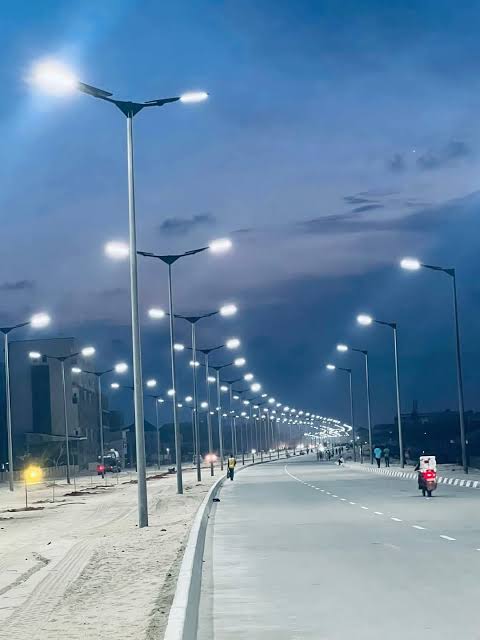
The morning sun had barely pushed through the Lagos skyline when Emeka received the phone call that shook his world.
His uncle, who owned a modest piece of land near Eleko, was practically yelling on the phone:”Emeka! They’re building a massive highway right through our area! The government men came yesterday with their measuring tapes and equipment.
This thing is real, oh!”For Emeka, and many like him, that single call wasn’t just gist—it was a wake-up call to the kind of transformation that only infrastructure of historic scale can bring.
In a country where road projects often drag or die midway, the Lagos-Calabar Coastal Highway is a different beast entirely. It is not just a road. It is a symbol. A promise. And, depending on how you position yourself, it can either make or break fortunes.
This kind of scene is playing out across Nigeria’s southern coast—small landowners scrambling to understand what is happening, speculators eyeing quick gains, investors calculating their next moves, and everyday Nigerians wondering if this project will truly deliver on its promise.
So, where exactly will this superhighway pass, and what does it mean for those who own or plan to own land in its path? Let’s dive deeper.
The Grand Vision: A 700-Kilometer Journey Along Nigeria’s Coast
The Lagos-Calabar Coastal Highway represents one of the boldest infrastructure projects Nigeria has seen in decades.
Spanning approximately 700 kilometers, the road is designed to stretch from Lagos, Nigeria’s beating commercial heart, all the way to Calabar in Cross River State, hugging the coastline and connecting seven states along its path.
This is not a mere patchwork road; it is planned as a modern superhighway with ten lanes in total—five on each side—built to international standards.Why does this matter?
Because this isn’t just transportation. This is economic transformation laid out in asphalt and concrete.
By deliberately tracing the coastline, the government has chosen a route that will connect Nigeria’s key ports, industrial zones, and tourism hubs, while simultaneously opening up communities that have long been ignored in national development.
For land speculators and investors, this positioning is everything.
Places that once looked like sleepy fishing communities will suddenly find themselves positioned as gateways to Nigeria’s next economic corridor.
Phase One: Lagos to Eleko Junction – The Reality on Ground
When it comes to massive projects like this, talk can be cheap. But the Lagos-Calabar Coastal Highway is already moving from blueprint to bulldozers.
The first section of the highway, measuring roughly 47.47 kilometers, runs from Ahmadu Bello Way in Victoria Island to Eleko Junction in Lagos State.
This stretch—already commissioned—provides the clearest picture of where land opportunities currently exist.
Works began in March 2024, with the government promising to complete this section by May 29, 2025. That timeline matters, because for investors and speculators, time is money.
The earlier you position yourself in areas adjacent to the development, the greater the potential upside when the project fully matures.
And let’s not miss the strategic brilliance here: this Lagos stretch links directly to the Lekki Deep Seaport, which is a multi billion-dollar game changer.
Think about it—Nigeria’s busiest commercial hub, Lagos, directly tied to a world-class seaport by a brand-new highway.
The result? A logistics, trade, and industrial hub unlike anything the country has seen before.No wonder places like Ibeju-Lekki, Eleko, and the Lekki Free Trade Zone are buzzing with activity. Property inquiries have shot up.
Land values are rising. Developers are circling. And communities that once felt like far-flung outposts now find themselves in the glare of investor attention.
Works began in March 2024, with the government promising to complete this section by May 29, 2025. That timeline matters, because for investors and speculators, time is money.
The Wider Corridor: What Each State Stands to Gain
To truly understand the impact of the Lagos-Calabar Coastal Highway, you must look beyond Lagos. The real story lies in how each state it passes through will be reshaped.
Ogun State: Sitting right next to Lagos, Ogun is already known for its industrial clusters. The highway will only accelerate this by making Ogun’s coastal communities prime for both residential and commercial expansion. Lagos is bursting at the seams; Ogun will absorb much of that overflow.
Ondo State: With rich natural resources and agricultural potential, Ondo’s coastal areas have been relatively cut off. Improved access will turn sleepy fishing villages and farmlands into investment hotspots.
Delta State: Already an oil-rich state, Delta could diversify its economy with better access. Expect agriculture, trade, and services to grow once the coastal road improves logistics.
Bayelsa State: Known for oil but underserved in infrastructure, Bayelsa’s coastal communities could finally open up to tourism and commerce.
Rivers State: With Port Harcourt already a major commercial hub, the coastal highway provides an alternative to inland congestion, positioning more coastal towns for growth.
Akwa Ibom & Cross River: Tourism and trade could boom here. Imagine smooth access to Calabar Carnival, Tinapa, or Akwa Ibom’s beaches, making these states magnets for local and foreign investors, and thus, .making these states magnets for local and foreign investors.
The Demolition Dilemma: Right-of-Way Challenges
Projects rarely happen without pain. And for many small land and property owners, the highway has already been a bulldozer nightmare.In April 2024, bulldozers rolled into Oniru waterfront in Lagos, clearing kiosks, restaurants, and beachside businesses.
By December, 750 structures across different stretches of the coastal states had been affected.
This highlights a key reality: if your land sits directly on the highway’s path, you may lose it. But if your property lies slightly off the road—still close enough to benefit from its presence—you might be sitting on a goldmine.
The government, to its credit, has announced compensation programs. For example, in Section 1 alone, the federal government paid ₦2.75 billion in compensation for affected properties within the first 3 kilometers.
That not only shows seriousness but also gives speculators a benchmark for property values in these zones.Investment Hotspots: Where Smart Money Is FlowingSo, where should the alert investor look?
Lekki Free Trade Zone: This is the no-brainer. With direct ties to the seaport and highway, it’s a magnet for industry and logistics.
Eleko: Once a quiet community, it now marks the endpoint of the first phase. Land values here are rising sharply.Ibeju-Lekki: Already touted as “the new Lagos,” the highway cements its place as a hotspot for both residential estates and industrial projects.Beyond Lagos, expect hotspots to emerge in Ogun’s border communities, Ondo’s coastal villages, and eventually in Akwa Ibom and Cross River when the highway nears completion.
Timeline & Tolling: The Next 10 Years
According to Minister of Works, Dave Umahi, the first Lagos section will be ready by May 2025. But the plan isn’t just to build and abandon—the road will be tolled for 5 to 10 years to recover costs and ensure maintenance.
This matters because tolled roads generally receive better upkeep than free ones.
For investors, this means areas along the road are less likely to fall into disrepair, protecting land and property values.Interestingly, the government isn’t just building from Lagos outward.
Construction has also begun on Sections 3 and 4 from Calabar, meaning both ends are being tackled simultaneously. This could shorten the overall timeline and bring benefits faster than expected.
Beyond Transport: The Ripple Effects
The Lagos-Calabar Coastal Highway isn’t just a road—it’s an economic multiplier.Tourism: Beach towns, cultural centers, and resorts will become more accessible, boosting hospitality investments.Agriculture: Farmers along the coast will move goods to major markets more efficiently, making agribusiness attractive.Industry: Manufacturing and processing plants will spring up near the road, cutting transportation costs.Services: Retail, banking, telecoms, and education services will follow population growth along the corridor.In short, entire towns could spring up where there was once only bush.
Risks: What Investors Must Watch
Not every land along the road is a jackpot. Risks abound.Environmental concerns may slow or alter parts of the route.
Funding risks exist, though current progress looks promising.Land title disputes—always a Nigerian headache—could derail your investment.
Speculative oversupply may flood some markets, depressing values.Competing infrastructure projects could draw attention away from certain stretches. Due diligence is non-negotiable. Verify titles. Study local government plans.
Don’t just buy because everyone else is rushing in.
The Decade Ahead: What to Expect in Fast 10 years Ahead.
The Lagos-Calabar Coastal Highway is fully operational. What will Nigeria’s coast look like?Coastal towns from Lagos to Calabar will likely become bustling hubs.
Migration patterns will shift as people move to newly accessible areas.
International investors will look more favorably at Nigeria’s coastline.
Government will likely designate new special economic zones along the route.
The highway may even link into wider West African trade routes, cementing Nigeria’s position as a regional hub.
For the alert investor, the message is clear: this road is not just geography, it is opportunity.
Final Word: Land Speculators, Be Alert!
So, wlhere will the Lagos-Calabar Coastal Road pass? Through Lagos, Ogun, Ondo, Delta, Bayelsa, Rivers, Akwa Ibom, and Cross River.
But more importantly, it will pass through the heart of Nigeria’s economic future.From Lagos Island to Calabar, this project is about more than concrete—it’s about reshaping communities, economies, and lives.If you are a land speculator or investor, your success won’t just depend on knowing where the road physically runs, but on understanding how it will transform everything around it.
Some will lose their land to bulldozers. Others will turn bush plots into multimillion-naira estates.
History is being built on Nigeria’s coastline.
The question is: will you just watch, or will you position yourself to ride the wave?

Business
UBA wins 2026 ‘Banker Technology’ award for AI innovation
UBA’s recognition centres on integrating Leo, its AI-powered chatbot, with the Pan-African Payment and Settlement System (PAPSS), enabling customers to send funds across borders in local currencies via a conversational interface.

United Bank for Africa (UBA) Plc, has been named the winner of the African category at the 2026 Banker Technology Award
In its assessment of UBA’s winning entry, The Banker noted that “the bank has cemented its status as a leading digital operator by placing technology at the centre of its growth strategy across more than 20 countries, with this approach most visible in its work on cross-border transfers, spanning digital payments, AI-driven engagement, and e-business”
UBA’s Executive Director Designate, Digital Banking, Emmanuel Lamptey, received the award on behalf of the bank.
He emphasised that the bank’s aim to fully digitise banking across the entire continent“.
” Africa’s financial future will not be built on branches or borders. It will be built on intelligence, interoperability, and trust at scale,” Lamptey said.
Business
Tony Elumelu’s United Capital Secures approval to operate in Ethiopia
Elumeu lauded the transformational Prime Minister of Ethiopia, His Excellency @AbiyAhmedAli , for promoting economic reforms and regional cooperation, the Director General of Ethiopian Capital Market Authority @CMAEthiopia , Ms. Hana Tehelku, and the team at @UnitedCap on this landmark achievement.
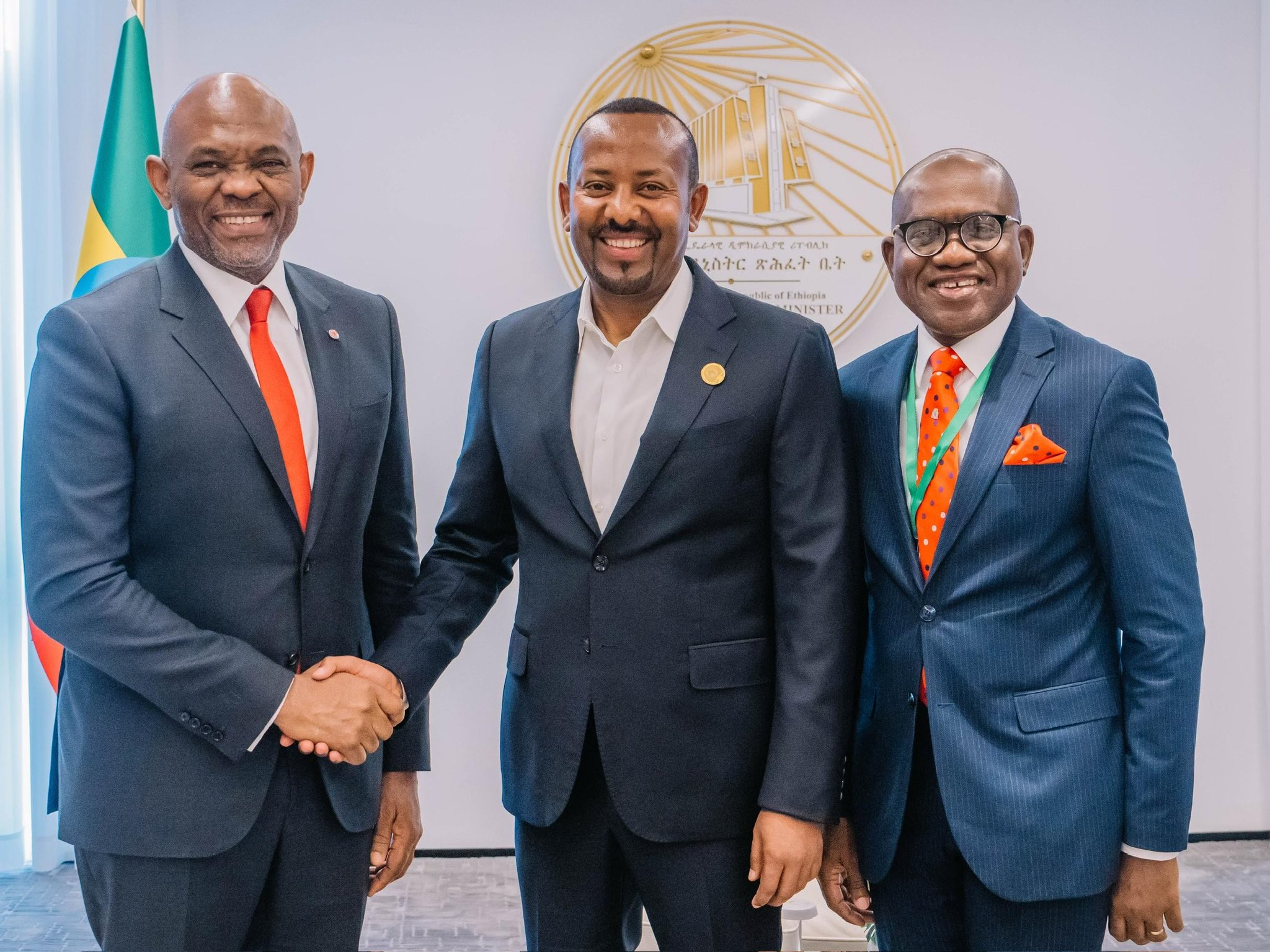
United Capital Group has again secured regulatory approvals to commence operations in Ethiopia.
Its Chairman, Tony Elumelu, broke the news on Tuesday, via his official X.
” This development is particularly noteworthy because Ethiopia only recently opened its financial sector to foreign participation, making United Capital’s entry a historic step for both the company and the ongoing integration of African capital markets,” said Elumelu.
Last month, United Capital commenced operations in Rwanda, marking its formal entry into East Africa and reinforcing its ambition to build a leading continental financial services institution.
The Group’s newly established entities include United Capital Trustees Rwanda Limited, licensed to provide trusteeship services, and United Capital Financial Services Rwanda Limited, licensed to offer investment management services, including portfolio management, investment advisory, capital mobilisation, capital market advisory, and fund management solutions.
With this development, United Capital now operates in 11 countries, including Nigeria, with a strong presence in key African markets, a recent expansion into the eight countries within the West African Economic and Monetary Union (WAEMU) region, alongside a growing footprint in East Africa.
According to Elumelu, African institutions are increasingly leading, competing, and succeeding across the continent.
For decades, Africa witnessed foreign capital flowing in while profits largely flowed out.
That narrative is beginning to change.
This is Africapitalism in action — a vision that recognizes the importance of both indigenous and international capital working together to finance Africa’s development and unlock shared prosperity.
Elumeu lauded the transformational Prime Minister of Ethiopia, His Excellency @AbiyAhmedAli , for promoting economic reforms and regional cooperation, the Director General of Ethiopian Capital Market Authority @CMAEthiopia , Ms. Hana Tehelku, and the team at @UnitedCap on this landmark achievement.
Business
Lagos developing world – class new business district —Sanwo-Olu
Sanwo-Olu said Lagos was deliberately building a globally competitive economy driven by innovation, infrastructure and private-sector participation.
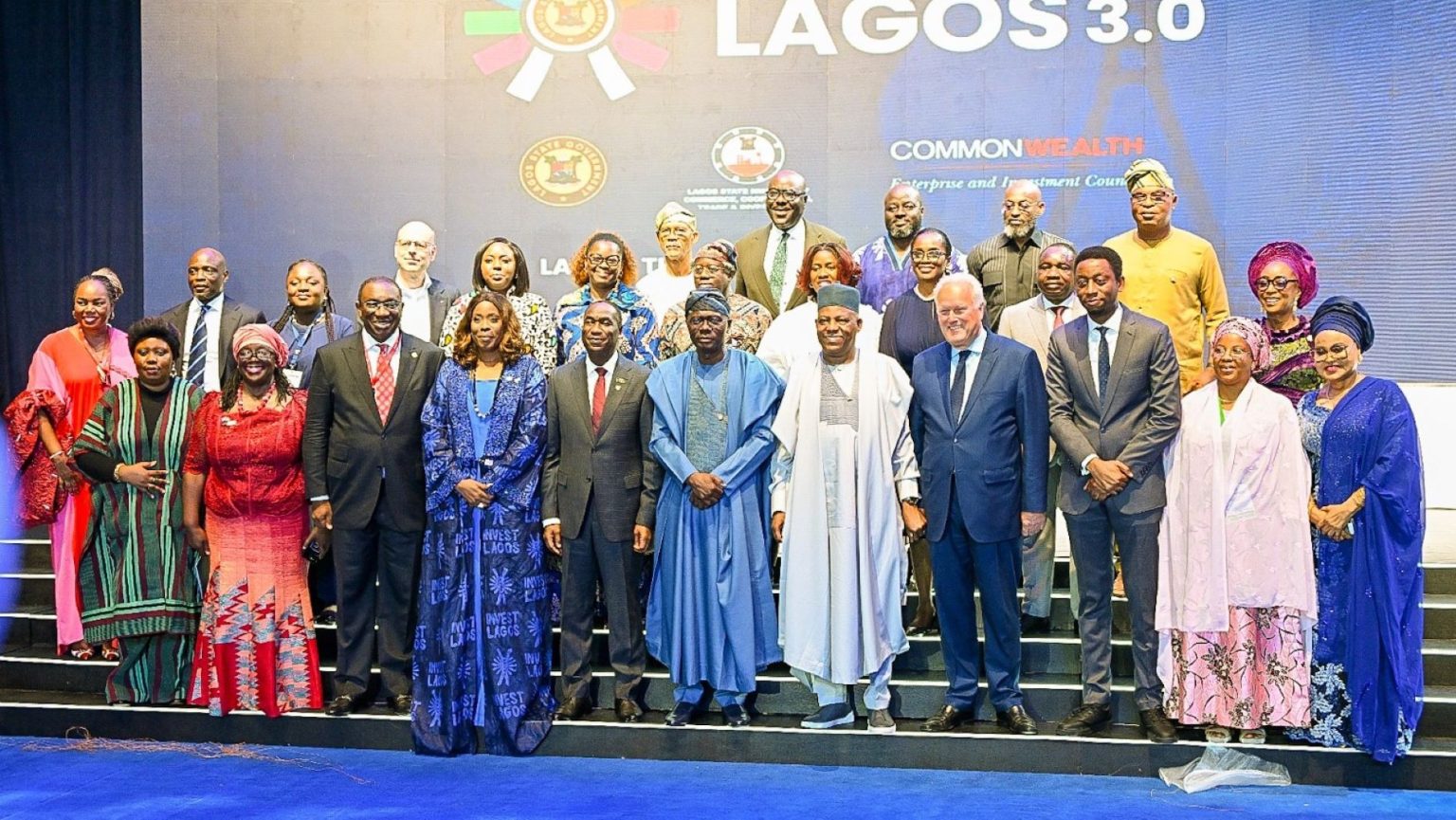
• Invest Lagos Summit 3.0: Secretary to the Lagos State Government, ‘Bimbola Salu-Hundeyin (right); Member, House of Representatives, Kafilat Ogbara; Commissioner for Innovation, Science and Technology, Tunbosun Alake; Chairman, Commonwealth Enterprise & Investment Council (CWEIC), Lord Jonathan Marland; Vice President Kashim Shettima; Governor of Lagos State, Babajide Sanwo-Olu; his Deputy, Dr. Obafemi Hamzat; Commissioner for Commerce, Cooperatives, Trade & Investment, Mrs Folashade Bada Ambrose-Medebem; Deputy Chief of Staff to the Governor, Sam Egube, Dr Toyosi Akerele-Ogunsiji and members of the State Executives Council at the opening of Invest Lagos 3.0, themed: “Lagos – The Business Gateway to Africa”, in Lagos, yesterday.
Lagos State Governor, Babajide Sanwo-Olu, has disclosed that as part of efforts to deepen access to global capital, his administration is developing the Lagos International Financial Centre (LIFC), envisioned as a world-class financial district that would strengthen the state’s position as a gateway for investment into Africa.
Speaking yesterday at the third edition of the Invest Lagos Summit, attended by Vice President Kashim Shettima, other governors, foreign investors, development finance institutions and business leaders, Sanwo-Olu said Lagos was deliberately building a globally competitive economy driven by innovation, infrastructure and private-sector participation.
Sanwo-Olu said that the state had recorded significant economic progress in recent years through targeted reforms across transportation, digital infrastructure and industrial development.
Highlighting key infrastructure achievements, Sanwo-Olu cited investments in road networks, waterways and rail transportation, describing them as critical enablers of economic growth and investor confidence.
The governor noted that Lagos was increasingly serving as a gateway to African markets and global capital, positioning itself at the centre of continental trade under the African Continental Free Trade Area (AfCFTA).
According to him, Lagos remains one of the continent’s most strategic economic hubs, with a population exceeding 25 million and a gross domestic product steadily approaching the $300 billion mark.


UBA wins 2026 ‘Banker Technology’ award for AI innovation

JUST IN: IED Explosion Kills One, Injures Seven on Anka-Bagega Road in Zamfara ( Photos)

FG Welcomes Positive IMF Assessment of Nigeria’s Economy, Vows to Sustain Reform Momentum

Tech Expert, Zuckerberg trains with UFC champions, Adesanya, Alexander

Organ Trafficking: Ekweremadu bags 10 years in UK prison

SAINT OBI: Between his marriage and his death
-
 News2 days ago
Court Voids ₦110bn N’Assembly Vehicles, Allowances
-
 Business2 days ago
Senate’s approval of Sugar – Sweetened Beverages Tax Bill, Shocking, says CPPE, Lobbying Reps for rejection
-
 News2 days ago
FG Clears Five-Month Allowance Arrears for University Lecturers
-

 News2 days ago
Lagos Begins 500-Tree Campaign to Tackle Extreme Heat
-
 News2 days ago
Court Declares National Assembly’s N110bn SUV and Allowance Schemes Unlawful
-

 Politics2 days ago
NDC Declares Party Supremacy, Approves Code of Conduct Committee
-

 Politics1 day ago
2027: Lagos APC picks Damilola as Hamzat ‘s Deputy Governor
-

 Entertainment2 days ago
Nigerian-British Singer Talay Riley Dies in London Stabbing, Others Mourn