
Business
Beer manufacturers reject tax stamps rollout by govt
Executive Director of the Beer Sectoral Group (BSG), Abiola Laseinde noted that the measure could trigger production disruptions and worsen the country’s inflation crisis.


Nigeria’s brewing sector has appealed to the Federal Government to abandon plans to introduce tax stamps on excisable goods.
Executive Director of the Beer Sectoral Group (BSG), Abiola Laseinde noted that the measure could trigger production disruptions and worsen the country’s inflation crisis.
She urged government to sustain existing home-grown digital excise systems rather than introducing tax stamps also known as track-and-trace identifiers, which she described as counterproductive.
The industry’s concerns echo recent warnings from the Manufacturers Association of Nigeria (MAN), which cautioned that the proposed tax stamp system could compound economic pressures and fuel consumer price increases.
Laseinde stressed that the application of tax stamps in the beer sector would not address illicit trade, as counterfeiting is virtually non-existent due to the complexity of the brewing process, the bulkiness of beer products and their low resale value.
She added that the industry already maintains strict compliance with excise rules, backed by digital counters, on-site Customs officers and auditable records.
Business
RMRDC Taking 2027 Africa Raw Materials Summit To Kenya
Speaking with newsmen during the conclusion of the ARMS 2026, Ike-Muonso said Nigeria is the only county that has an organisation, government-owned organisation in the continent that is fully dedicated to adding value to raw materials.
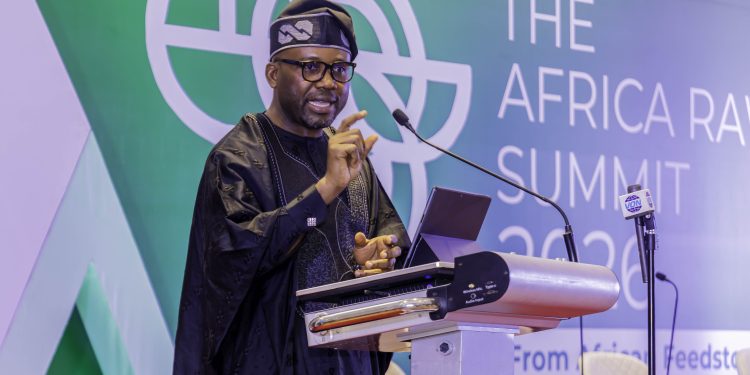
• Photo: Hon.Minister, Federal Ministry of Innovation, Science and Technology (FMIST), Dr Kingsley Udeh, declaring the event open.
The third edition of the Africa Raw Materials Summit (ARMS) 2027, would be used to garner support for setting up a centralised continental database for raw processing and value addition that is accessible to investors and industrialists.
The Director-General of the Raw Materials Research and Development Council (RMRDC), Prof. Nnanyelugo Ike-Muonso, disclosed this during the ARMS 2026 Summit , held in Abuja, themed, ‘From African Feedstock To Factories.’
Building enthusiasm ahead of the next year’s event scheduled to hold in Kenya, East Africa, Ike-Muonso explained that the decision to take the summit to Kenya was reached following what he described as the East Africa country participants’ dominance in the first and second edition of the summit.
Ike-Muonso said Nigeria is the only county that has an organisation, government-owned organisation in the continent that is fully dedicated to adding value to raw materials.
Business
JPMorgan Eyeing Entry Into Nigeria’s Banking Industry
J.P. Morgan operates in more than 100 countries worldwide, providing financial services, investment banking, asset management, and commercial banking across major global markets in the Americas, Europe, the Middle East, Africa, and Asia-Pacific.

JPMorgan Chase & Co has deposited N50 billion with the Central Bank of Nigeria as part of efforts to secure a merchant banking licence and expand its operations in Nigeria .
J.P. Morgan operates in more than 100 countries worldwide, providing financial services, investment banking, asset management, and commercial banking across major global markets in the Americas, Europe, the Middle East, Africa, and Asia-Pacific
Bloomberg reported that the CBN deposit, valued at about $38m, meets a key requirement in the American lender’s application and signals its readiness to establish a licensed banking operation in Nigeria.
However, the payment does not guarantee approval, as the CBN is yet to make a final decision on the application.
People familiar with the process, said the deposit was one of the final regulatory requirements for the licence.
They added that the bank expects to obtain approval by the end of 2026 or in early 2027, subject to the regulator’s decision.
Business
How I steal ATM users’ PINs, defraud them
“I do go to the ATM machine to lie in wait for gullible customers who believe whatever I may tell them, and people that seek for help too,” he said.
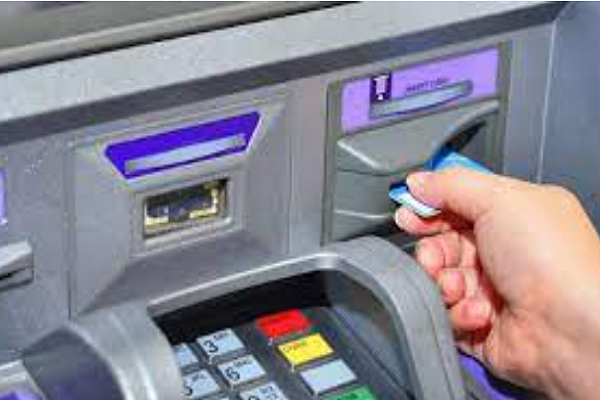
A fraudster has confessed to the police how he stole bank customers’ PINs by pretending to help them operate automated teller machines
The suspect, whose identity was not disclosed in a statement by the Cross River State Police Command, said that he targeted customers who needed assistance at ATM points, withheld their cards and observed them entering their PINs before leaving the premises.
The Cross River State Police Command’s Public Relations Officer, ASP Sunday Eitokpah, disclosed this in a video uploaded to the command’s Facebook page on Tuesday.
Eitokpah said the suspect was arrested on October 6, 2026, over alleged fraud involving unsuspecting ATM users.
Explaining the alleged method, the suspect said he approached customers who appeared to need help and exploited their willingness to trust him.
“I do go to the ATM machine to lie in wait for gullible customers who believe whatever I may tell them, and people that seek for help too,” he said.
He added, “So, if you call for help or assistance from me, what I do is I put the ATM on the cardless transaction mode and withhold your card. You’ll be thinking your card is inside, but your card is not inside.”
According to the suspect, he watched as customers selected the transactions they wanted to carry out and entered their PINs.
He said, “And you’ll choose a transaction which you want to perform. It’s either withdrawal or transfer or inquiry. By the time you click on any of them, ask you to put your password, to put your password, and confirm your password, I will leave the premises.”
Eitokpah said the suspect allegedly memorised customers’ PINs as they entered them, then left the ATM point with the information needed to carry out fraudulent transactions elsewhere.
The customers would subsequently discover that their cards were missing and their accounts had been debited.


RMRDC Taking 2027 Africa Raw Materials Summit To Kenya
JPMorgan Eyeing Entry Into Nigeria’s Banking Industry

How I steal ATM users’ PINs, defraud them

BREAKING: Lagos Govt Declares Today, Thursday Work-Free to Mark 2026 Ìṣẹ̀ṣe Day

Tech Expert, Zuckerberg trains with UFC champions, Adesanya, Alexander

Organ Trafficking: Ekweremadu bags 10 years in UK prison
-

 News2 days ago
JUST IN: Ex-Delta Gov Uduaghan Dies at 71, Oborevwori Mourns
-

 Sports2 days ago
Mbappé wins Onze d’Or award for 2025/26 season
-

 Business3 hours ago
Naira Exchange Rates Wednesday, October 21, 2026
-

 Business2 hours ago
Currency Words You Should Know
-

 Business2 hours ago
NCC, CBN To Warn Companies By Flagging Fraudulent Phone Numbers
-

 Sports2 days ago
Ronaldo Gets 30-Day Suspension For Portugal Camp Walkout
-
Business1 hour ago
JPMorgan Eyeing Entry Into Nigeria’s Banking Industry
-

 Health16 hours ago
BREAKING: Nigeria Confirms First Ebola Case