
News
Nigeria New Tax Laws: What You Need to Know

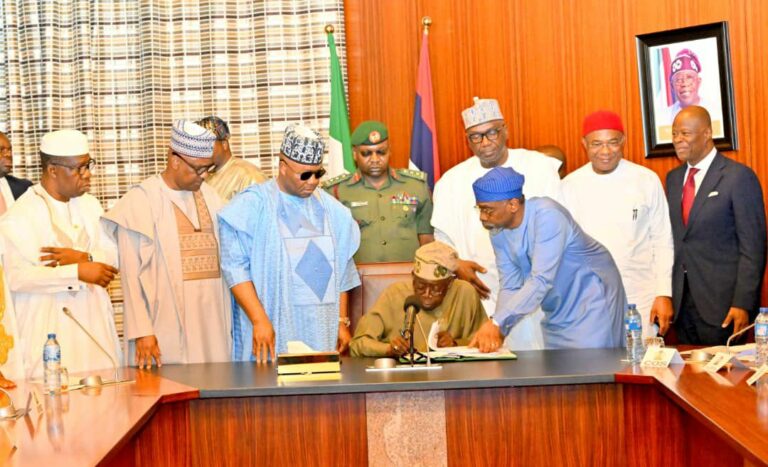
President Bola Tinubu on Thursday signed four new tax laws aimed at modernising and streamlining the country’s tax system.
In the new tax law, the Value Added Tax rate remains at 7.5 per cent despite initial proposals to increase to 12.5 per cent, but its scope is expanded.Essential items—such as food, education, healthcare, public transport, residential rent, and exports—are zero-rated to ease inflationary pressure.
For revenue allocation is restructured: now 30 per cent of VAT proceeds are distributed based on consumption (rather than contribution), 50 per cent equally among states, and 20 per cent to population-based allocation.
With the latest development, it is expected that state revenue streams will increase, and it will also discourage tax evasion.
Overview of the four new lawsNigeria Tax Act:
Consolidates various tax rules into a single, simplified code, eliminating over 50 small, overlapping taxes. This reduces complexity and duplication, making it easier for businesses to comply.
Tax Administration Act:
Establishes uniform rules for tax collection across federal, state, and local governments, ensuring consistency and reducing administrative conflicts.
Nigeria Revenue Service Act:
Replaces the Federal Inland Revenue Service with the independent Nigeria Revenue Service, aiming for greater efficiency and autonomy in tax administration.
Joint Revenue Board Act:
Enhances coordination between different government levels and introduces a Tax Ombudsman and Tax Appeal Tribunal to handle disputes fairly.
Key objectives of the new tax rules
Simplify Tax System:
Reduces bureaucratic hurdles and overlapping taxes to make compliance easier, especially for small businesses and informal traders.
Increase Revenue Efficiency:
Aims to boost Nigeria’s tax-to-GDP ratio from 10% (below the African average of 16–18%) to 18 per cent by 2026 without raising taxes on essential goods.
Reduce Financial Burden:
Provides relief for low-income households and small businesses while ensuring high-income earners and luxury consumers contribute more.
Fund Public Services: Increased revenue will support infrastructure, healthcare, and education, reducing reliance on borrowing.Who benefits and how
Low-Income Households:
Individuals earning up to ₦1 million ($650) annually receive a ₦200,000 rent relief, reducing taxable income to ₦800,000, exempting them from income tax.
VAT exemptions on essential goods and services (food, healthcare, education, rent, power, baby products) lower living costs.
Small businesses:
Businesses with an annual turnover below ₦50 million ($32,400) are exempt from company income tax.
Simplified tax filing without requiring audited accounts reduces compliance costs.
Large businesses:
Corporate tax rates drop from 30 per cent to 27.5 per cent in 2025 and 25 per cent thereafter.Tax credits for VAT paid on expenses and assets allow businesses to recover the 7.5 per cent VAT.
Charitable, educational, and religious organisations:
Tax incentives for non-commercial earnings, encouraging community-focused activities.
Impact on different groups
Low-Income Earners:
Benefit most from income tax exemptions and lower costs for essentials, increasing disposable income.
Small Businesses and informal traders:
Simplified rules and tax exemptions encourage compliance and reduce financial strain, potentially formalising more businesses.
High-income earners and luxury consumers face higher VAT on luxury goods and premium services, plus capital gains tax on large share sales.
Government: Expects increased revenue for public services without overburdening vulnerable citizens.
Why reforms were needed:
Nigeria’s tax system was outdated, inefficient, and disproportionately harsh on low-income groups.
The low tax-to-GDP ratio (10%) limited funding for critical services like healthcare and infrastructure.
Overlapping taxes and complex rules deterred compliance, especially among small businesses and informal traders.
Public and expert reactionsPositive sentiment:
Small business owners welcome tax exemptions but seek clarity on enforcement to avoid unexpected levies.
Low-income earners appreciate relief on essentials but remain cautious about implementation.
Taiwo Oyedele, head of the Presidential Fiscal Policy and Tax Reform Committee, claims 90% public support, emphasising that success depends on awareness and trust.
The reforms align with Tinubu’s administration’s goal to reduce economic inequality and boost fiscal capacity without overburdening citizens.
By encouraging voluntary compliance and reducing reliance on loans, Nigeria aims to strengthen its economy and fund development projects.
These reforms mark a significant step toward a fairer, more efficient tax system, with a focus on supporting vulnerable groups while fostering economic growth.
However, their success hinges on transparent enforcement and public trust.
For further details, you can refer to official statements from the Nigerian government or credible news sources covering the reforms.



News
Nigerian Law school student dies after falling from hostel rooftop
The deceased was a student of the Nigerian Law School, Enugu campus, who was undergoing externship programme at the Lagos campus.


•Faith Alayande
A Nigerian Law School student identified as Faith Alayande, is dead after she fell from the rooftop at Lagos campus.
In a statement on Monday, Aderonke Osho, secretary to the council and director of administration, said that the deceased was a student of the Nigerian Law School, Enugu campus, who was undergoing externship programme at the Lagos campus.
Osho said preliminary findings revealed that the student died from injuries sustained after falling from the rooftop of the campus hostel around 4am on Friday.
The Nigerian Law School is deeply saddened by this tragic development.
“Management is working closely with the appropriate authorities and the family to establish the circumstances surrounding the incident, ensure that all necessary procedures are duly followed, and provide further information as appropriate.”
News
Ekwulobia Suspends New Yam Festival for Kidnap Billionaire Son
A source from the community said the traditional ruler of Ekwulobia where Ezeokafor hails from, His Royal Majesty, Igwe (Engr) Emmanuel Chukwukadibia Onyeneke, officially suspended the Ekwulobia New Yam Festival, saying there was no need to celebrate while their son remained in captivity.
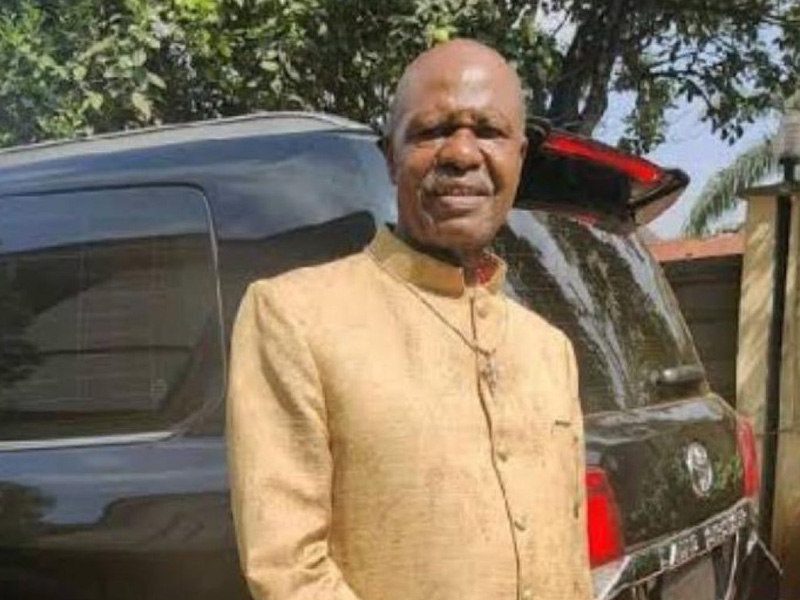
• Joseph Ezeokafor
Ekwulobia community in Aguata Local Government Area of Anambra State has cancelled its New Yam festival celebration billed for September 4, 2026.
Ohibaba.com learned that this is because of the kidnap of billionaire businessman and owner of Jezco Group of Companies, Chief Joseph Ezeokafor.
Ezeokafor was kidnapped in Awka on Tuesday last week when he stepped out of his house without his security details to attend to his spiritual need, where he goes to offer prays.
Public Relations Officer of Anambra State Police Command, SP Tochukwu Ikenga who confirmed the development said that serious operation is currently ongoing to save the elder statesman.
His kidnap has sent his community into mourning, causing the postponement of the new Yam festival, an annual festival which holds on a static date every year.
A source from the community said the traditional ruler of Ekwulobia where Ezeokafor hails from, His Royal Majesty, Igwe (Engr) Emmanuel Chukwukadibia Onyeneke, officially suspended the Ekwulobia New Yam Festival, saying there was no need to celebrate while their son remained in captivity.
“The Igwe said the community of Ekwulobia cannot celebrate while their son remains in the custody of the kidnappers,” the source said.
News
NLC disrupts Air Peace flight
The affected Air Peace flight, scheduled to depart Lagos at 6:30am, could not take off as passengers waited amid the disruption.

The Nigeria Labour Congress (NLC) on Tuesday disrupted flight operations in Lagos, leaving passengers scheduled to travel on an Air Peace flight stranded at the airport.
Our Reporter learned that the “protest was intended to enforce Air Peace employees right to join the union.”
Zulu terminal gate was under lock and key. The protest started at about 5am.
The affected Air Peace flight, scheduled to depart Lagos at 6:30am, could not take off as passengers waited amid the disruption.


Millions Rushing To Watch Solar Eclipse in Europe

NBA’s Los Angeles Lakers to be sold for $12.5bn – Report

Osun Polls: INEC Includes SDP Candidate, Deputy On Ballot Papers

Tech Expert, Zuckerberg trains with UFC champions, Adesanya, Alexander

Organ Trafficking: Ekweremadu bags 10 years in UK prison

SAINT OBI: Between his marriage and his death
-

 News2 days ago
Tinubu Flags Off Eko, Marine Bridge Repairs
-

 Crime1 day ago
Governor Mbah Commends Security Forces Over Arrest Of Affa Church Kidnappers
-

 Crime2 days ago
Troops Rescue 33 Hostages in Zamfara (Photos)
-

 International1 day ago
Trump cancels 175,000 visas for violations of public safety
-

 Crime1 day ago
UK court jails Congolese for murder of Nigerian
-

 News2 days ago
147 Lagos Structures to Face Impact From Coastal Highway
-

 News1 day ago
Scavengers Damaging Lagos Bridges [PHOTOS]
-

 News1 day ago
NLC disrupts Air Peace flight