
Business
FG Announces New Procurement Policy Shift Favouring Local Manufacturing

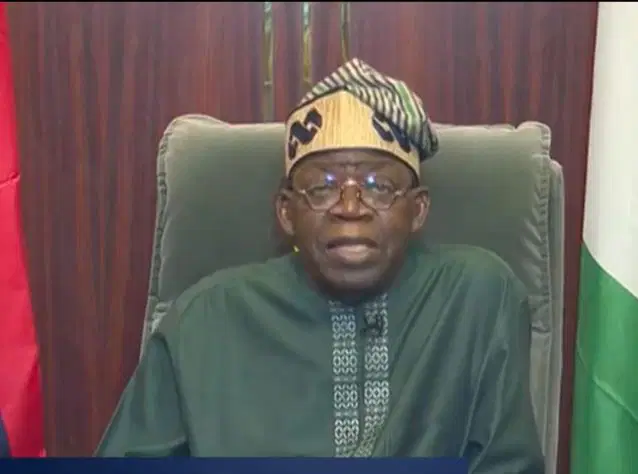
The Federal Executive Council (FEC) has approved a “Nigeria First Policy” aimed at prioritising the use of locally made goods and services in all government procurements.
The Minister of Information, Mohammed Idris, made the disclosure saying that the policy seeks to domesticate all government processes.
The Nigerian government expects that with the new policy, local manufacturers will get priority in the provision of goods and services.
“No procurement of foreign goods or services already available locally shall proceed without justification, and where there is an exceptional need for these services to procure from outside, there must be a waiver to be obtained, written waiver to be obtained by the Bureau of Public Procurement (BPP),” Mr Idris said.
“Where no viable local option exists, contracts must include provisions for technology transfer, local production or skills development.
For example, the provision of portal allocations under the sugar master plan should take into consideration participants’ backwards integration plans and investment in Nigeria and ensure compliance with the Master Plan.
“The MDAs have also been directed to immediately conduct an audit of all procurement plans and submit revised versions in line with these directives. Breaches will attract sanctions, including cancellation of procurement processes by such MDAS, and indeed disciplinary action against responsible officers,” the minister noted.
The federal cabinet approved these proposals on Monday and the office of the Attorney General of the Federation has been directed to prepare an Executive Order to be issued by President Bola Tinubu.
This is a major shift in government policy, Mr Idris added. “It puts Nigeria – not foreign companies, not imports – at the heart of our national development.”Once signed into law, Mr Idris said, the legislation will “foster a new business culture that will be bold, confident, but also very, very Nigerian, and it aims at making the government invest in our people and our industries by changing how the government spends money, how we procure and how we also build our economy.”“Going forward, Nigerian industry will take precedence in all procurement processes,” the minister said.
This is a major shift in government policy, Mr Idris added. “It puts Nigeria – not foreign companies, not imports – at the heart of our national development.
”Once signed into law, Mr Idris said, the legislation will “foster a new business culture that will be bold, confident, but also very, very Nigerian, and it aims at making the government invest in our people and our industries by changing how the government spends money, how we procure and how we also build our economy.”
Where local supply falls short, contracts will be structured to build capacity domestically, according to Mr Idris. “Contractors will no longer serve as intermediaries sourcing foreign goods where local factories die. I take the example of the sugar industry.”
“For example, we still have so much importation of sugar coming into this country, yet we have the Nigerian sugar council that was set up to look inward to see how sugar production can be produced, you know, for the benefit of Nigerians.
President Tinubu has proposed that we will no longer just sit there and allow importation to come into this country where there is the capacity for production of these commodities locally.
Now, as I said, the president has proposed the following directives, and all of them have been approved by the Federal Executive Council.”
President Tinubu has proposed that we will no longer just sit there and allow importation to come into this country where there is the capacity for production of these commodities locally. Now, as I said, the president has proposed the following directives, and all of them have been approved by the Federal Executive Council.”

Business
Kuda to layoff 40% workforce in Nigeria , six other countries
Co-founder and CEO Babs Ogundeyi said the restructuring is needed to improve operational efficiency and position the company for long-term profitability.

Kuda has announced plans to lay off about 40 employees across seven countries in its second round of job cuts in 2026.
Kuda currently employs about 500 people, with about 40 positions potentially affected. The cuts will affect approximately 7.5% of its workforce.
The countries are Nigeria, the United Kingdom, South Africa, Canada, Tanzania, Uganda and Ghana.
The digital bank is targeting group-wide profitability by 2027 and says customer deposits and services will not be affected.
Co-founder and CEO Babs Ogundeyi said the restructuring is needed to improve operational efficiency and position the company for long-term profitability.
Ogundeyi said investors increasingly expect financial returns rather than continued dependence on external funding.
Kuda’s Nigerian banking operation is already profitable, but the company wants the entire group to be profitable by 2027.
The CEO also linked the decision to higher regulatory capital requirements after the Central Bank of Nigeria approved Kuda’s national microfinance banking licence in January.
The licence requires a minimum paid-up capital of ₦5 billion.
Business
Fidelity Bank Designates Amuchie Next MD/ CEO
Amuchie brings more than 30 years of financial services experience to the role.

Fidelity Bank Plc has confirmed Stanley Chiedoziem Amuchie as its new Managing Director and Chief Executive Officer after the Central Bank of Nigeria approved the appointment.
He will take over on January 1, 2027 from Nneka Onyeali-Ikpe, whose tenure ends on December 31, 2026.
Amuchie currently serves as Executive Director and Chief Operations and Information Officer at the bank.
The handover is set for January 1, 2027.
Board Chairman Amaka Onwughalu said the board was confident in Amuchie’s ability to lead Fidelity Bank.
She pointed to his deep knowledge of the bank’s operations and broader industry experience, adding that his strategic insight would help the lender build on recent achievements and move into its next growth phase.
Onwughalu also paid tribute to outgoing chief executive Onyeali-Ikpe.
She credited her with steering the bank through a period of institutional transformation and improved competitiveness.
The board, she said, would work closely with Amuchie to drive innovation, operational efficiency and long-term sustainable growth.
Amuchie brings more than 30 years of financial services experience to the role.
His expertise covers financial management, treasury operations, capital raising and strategic execution.
He joined Fidelity Bank in January 2022 as Executive Director for Operations and Information Technology.
He contributed to the bank’s digital transformation drive and broader growth strategy.Before joining Fidelity Bank, he built much of his career at Zenith Bank Plc, where he rose to Group Chief Financial Officer.
His notable achievements include supporting Fidelity Bank’s acquisition of Union Bank UK, now rebranded FidBank UK, and playing a central role in the bank’s successful $400 million Eurobond refinancing.
Amuchie holds a First Class degree in Industrial Chemistry and a master’s degree in Corporate Governance.
He is a Fellow of the Institute of Chartered Accountants of Nigeria and an Honorary Senior Member of the Chartered Institute of Bankers of Nigeria.
He is also pursuing a PhD in Management of Technology and Innovation.

Black Market Rates
₦1465DOLLAR (USD)
₦1860POUND (GBP)
₦1550 EURO (EUR)
₦950 CANADIAN DOLLAR (CAD)
₦70 SOUTH AFRICAN RAND (ZAR)
₦350 UAE DIRHAM (AED)
₦190 CHINESE YUAN (CNY)
₦100 GHANAIAN CEDI (GHS)
₦2240 WEST AFRICAN CFA F.(XOF)
₦2180 CENTRAL AFRICAN CFA F.(XAF)
₦820 AUSTRALIAN DOLLAR (AUD)


Armed Men Attack Fmr. Super Eagles Captain, Segun Odegbami in Abeokuta Residence (Images)

Dr. Victor Okhai Named Dean of the Osiri University School of Business

ESUT to be renamed after Jim Nwobodo – Mbah

BREAKING: Lagos Govt Declares Today, Thursday Work-Free to Mark 2026 Ìṣẹ̀ṣe Day

Tech Expert, Zuckerberg trains with UFC champions, Adesanya, Alexander

Organ Trafficking: Ekweremadu bags 10 years in UK prison
-

 Crime2 days ago
UPDATE: 17 Kidnap Victims Rescued After Forest Gun Battles in Kogi – Police (Images)
-

 Business2 days ago
Naira Black Market Exchange Rates Thursday, Nov 2026
-

 News2 days ago
Lockdown on Lagos/Ibadan highway [PHOTOS] motorists spend whole day in traffic
-
 Business2 days ago
Inflation Retreats, But Has the Cost of Living Fallen?
-

 Politics2 days ago
Soludo Bets on Tinubu – Shettima Winning Second Term
-

 News3 days ago
Tinubu Hails National Assembly For Quick Work on State Police Bill
-

 Politics2 days ago
ADC Crisis: INEC Explains Why Atiku’s Name Remains on Website
-

 Crime2 days ago
JUST IN: Joint Security Team Rescues 15 Kidnap Victims from Kogi Forest (Images)