
News
Lagos APC, GAC in dilemma over Seyi Tinubu’s rumoured 2027 guber ambition

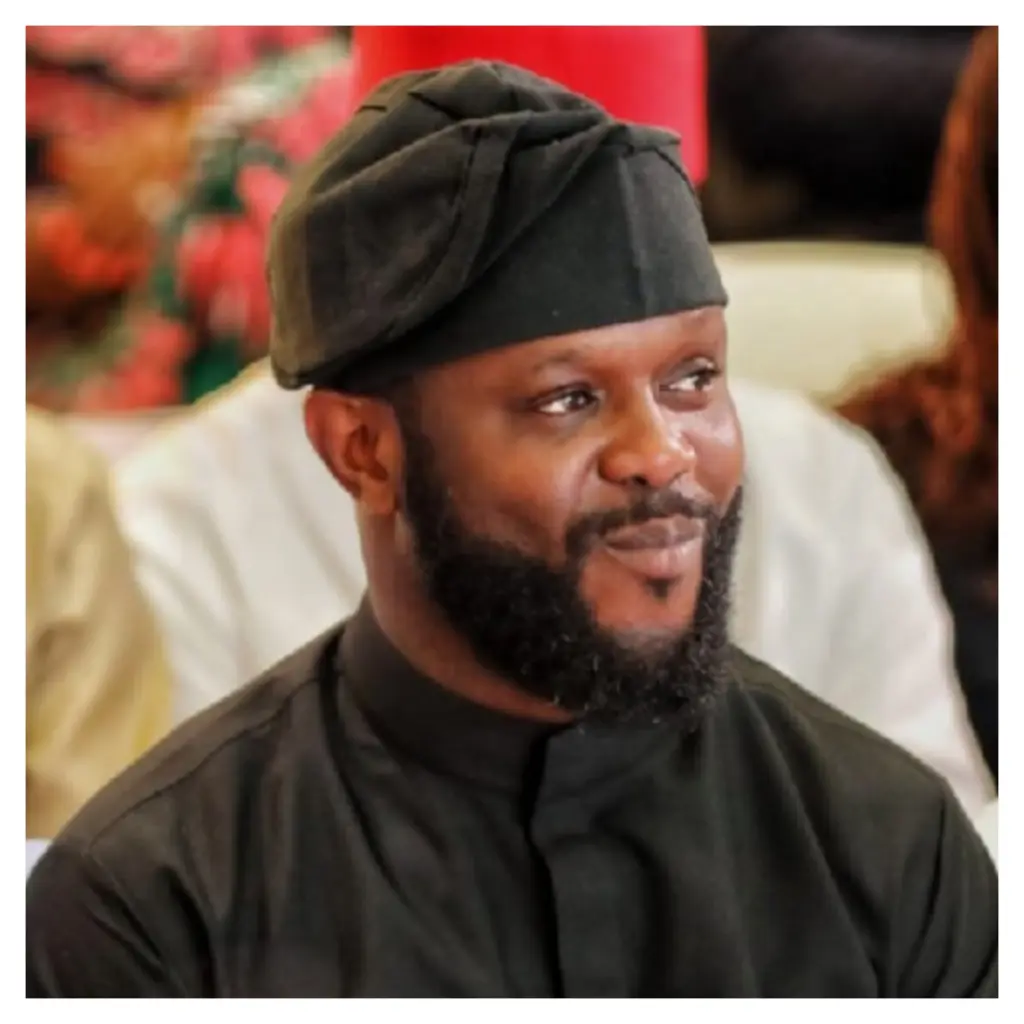
Tensions are reportedly growing within the Lagos chapter of the All Progressives Congress, APC, and its influential Governance Advisory Council, GAC, over the rumoured governorship ambition of Seyi Tinubu, son of President Bola Ahmed Tinubu.
At just 39 years old, Seyi Tinubu is being tipped by several youths and diaspora groups as the next ideal candidate to lead Lagos State.
His endorsements from the Coalition of Nigerian Youth Leaders, The Future Platform, and some Nigerian communities abroad have given wind to speculation that he may soon throw his hat into the governorship race.
Although he has yet to make a formal declaration, insiders say underground efforts to lobby for his candidacy are already in full gear.
If Seyi Tinubu, 39, emerges as governor in 2027, he would set a new record as the youngest person to lead Lagos State since its creation in 1967.
Currently, that record is held by Babatunde Fashola, who became governor at age 43 in 2007.
But far from being met with a resounding welcome, the development has placed the party and its leadership in a difficult position.
The GAC, a 30-man powerful and highly influential political organ founded by President Tinubu himself when he was governor in 1999, is reportedly divided over the prospect of Seyi emerging as the APC’s governorship flag bearer.
The group, headed by Prince Tajudeen Olusi, has 30 members, including ex-governors, ex-deputy governors, ex-speakers, former and incumbent senators as well as elder statesmen and women.
Since Tinubu’s exit as governor in 2007, the GAC has operated as the unseen hand behind Lagos’ political machinery, often deciding who gets what within the state’s structure.
It was instrumental in the emergence of former governors Babatunde Fashola and Akinwunmi Ambode and later Governor Babajide Sanwo-Olu.
However, the possibility of Seyi Tinubu stepping into the frame has raised questions about political dynasty, merit and the direction of the party in the country’s most strategic state.
It was observed that some stakeholders are worried that fielding Seyi, who lacks any track record of political office, could backfire, especially with Lagos being a politically sophisticated and economically complex state.
Critics argue that his only known role so far is as CEO of Loatsad Promomedia Ltd, an outdoor advertising firm.
For a state of over 20 million people and massive infrastructural needs, many within the APC question whether youthful energy alone is enough to handle such a task.
One senior party member from Oshodi-Isolo, described the move as “political arrogance.”
He suggested that it would send the wrong message for the president’s son to govern Lagos while his father seeks re-election in 2027.
“It would feel like dictatorship, not democracy. We risk alienating the electorate,” the source said.Others, however, strongly disagree.
They pointed to global and local political dynasties to support their argument.
A pro-Seyi supporter, Laken Agbaje, from Alimosho, cited examples like the Philippines, where Ferdinand Marcos Sr was president while his son served as governor and the United States, where George W. Bush governed Texas after his father, George H. W. Bush, served as president.
They also referenced the Saraki family of Kwara State, where both father and son held the governor’s seat at different times.
“Seyi is a constitutional Nigerian with political rights. If the people want him and the party clears him, why not?” the APC chieftain said, while noting that Seyi enjoys significant goodwill among Lagos youth and digital-savvy voters.
Following the growing push for Seyi Tinubu’s governorship candidacy, sources indicate that he is strategically positioning some of his loyalists to contest for key positions, including chairman roles, in the upcoming local government elections in Lagos State.
This move has sparked concern among residents, who have raised alarms over what they described as “undue interference” in the electoral process.
In the 2023 presidential election, President Bola Tinubu lost Lagos State to Peter Obi of the Labour Party, a development many interpreted as a warning sign of waning political dominance in his traditional stronghold.
This, observers believe, could be further compounded if Seyi Tinubu emerges as the APC governorship candidate, as such a move may deepen voter resentment and hinder the party’s chances of reclaiming broad support across the state.
Still, for many party loyalists, the issue is not only about political dynasty or competence, but fairness and equity.
Lagos State is divided into five administrative districts known as IBILE: Ikorodu, Badagry, Ikeja, Lagos Island and Epe.
The last four governors of the state, including Tinubu, Fashola, Ambode and Sanwo-Olu, have hailed from Lagos Island and Epe.
In fact, Alhaji Lateef Jakande, the first civil governor of the state also claimed to be a native of Lagos Island.
This leaves Ikorodu, Badagry and Ikeja without representation at the top.
The clamour for zoning has gained traction, with many party members arguing that it is high time the governorship seat rotated to other underrepresented districts, particularly Ikorodu or Badagry.
It was gathered that during a recent meeting in Epe, the issue of Seyi Tinubu’s potential governorship ambition came up among Lagos APC stakeholders.
However, the matter was quickly flagged and set aside, as Seyi has yet to officially declare his intentions to the party or its key stakeholders.
This has left many in the party uncertain about how to proceed, with some urging caution until Seyi formally makes his move.
However, it was learnt that a faction within the party is silently backing Babajimi Benson, a member of the House of Representatives, representing the Ikorodu Federal Constituency as the next governor of the state.Another top APC source, who spoke on the condition of anonymity, said, “The GAC and APC stakeholders are increasingly worried over Tinubu’s silence on the growing calls for his son’s governorship bid.“The lack of clarity is creating a sense of uncertainty within the party and many of us are unsure how to proceed without guidance from the president himself.”



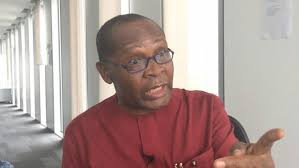


Former Vice President Atiku Abubakar has demanded the immediate release of five men arrested in Borno State for wearing T-shirts bearing the slogan “Tinubu Must Go.”
In a statement issued on Wednesday, the African Democratic Congress (ADC) presidential candidate condemned the arrests, describing the slogan as a legitimate political expression rather than a crime. He argued that wearing a T-shirt with a political message should not lead to detention in a democracy.
The five men — identified as Baba Aji Gremami, Mustapha Abba Yemen, Abacha Mohammed Ali, Adam Umar Gubio and Abdulhamid Mohammed — were reportedly arrested by the Borno State Police Command in Maiduguri and charged with offences including criminal conspiracy and inciting disturbance.
Atiku recalled that President Bola Tinubu had previously protested against the fuel pricing policies of the Goodluck Jonathan administration. He insisted that Nigerians must equally be free to express dissatisfaction with current government policies.
“‘Tinubu Must Go’ is a demand for political change. It is not a weapon, a threat or a crime,” Atiku said. “Tinubu was free to tell Jonathan that his policies were hurting Nigerians. Nigerians must be free to tell Tinubu that his policies are hurting them. Release these five citizens now.”
He called on the authorities to disclose the detainees’ whereabouts, grant them access to their families and lawyers, and free them if the political slogan was the sole basis for their arrest.

The Federal Government has officially declared Thursday, October 1, a public holiday across the country to commemorate Nigeria’s Independence Day anniversary.
In a statement released on Wednesday, the government directed all ministries, departments, and agencies of government, as well as private sector organisations, to observe the day as a work-free day. The declaration follows the long-standing tradition of marking October 1 as a national holiday in celebration of the nation’s independence from British colonial rule on October 1, 1960.
The announcement comes as Nigerians prepare to reflect on 66 years of nationhood. Independence Day remains one of the most significant dates on the national calendar, serving as a moment for citizens to honour the sacrifices of the founding fathers and to reaffirm commitment to unity, peace, and progress.
Government officials have urged Nigerians to use the holiday to engage in peaceful celebrations, community activities, and patriotic reflection. Security agencies have also been directed to maintain law and order throughout the period to ensure a peaceful observance of the anniversary.
As the nation marks another year of independence, the Federal Government called on all citizens to remain committed to the ideals of democracy, national cohesion, and sustainable development.
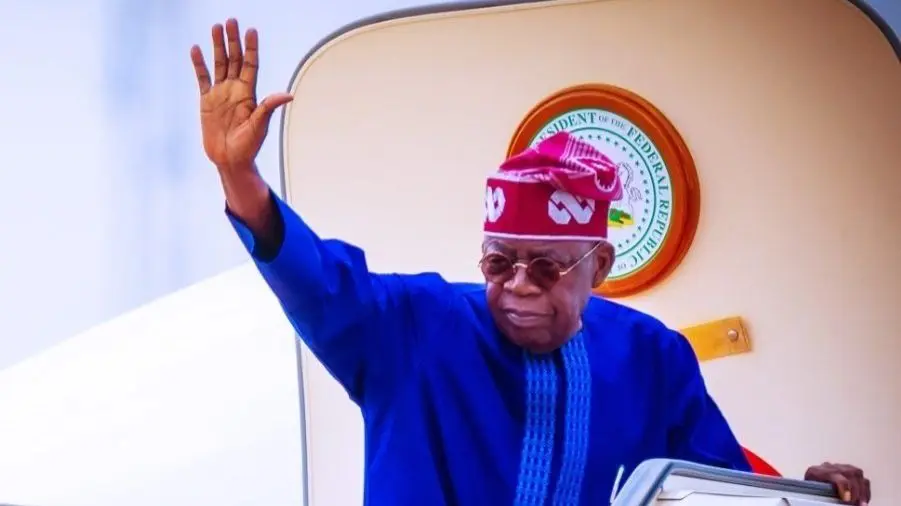
President Bola Tinubu has ended his working vacation in Europe and departed Paris for Nigeria on Tuesday, with his aircraft expected to land at Murtala Muhammed Airport in Lagos later in the evening.
The announcement was made by his Special Adviser on Information and Strategy, Bayo Onanuga. Tinubu left Abuja on August 30 for what was initially billed as a three-week working vacation.
He spent one week in London before proceeding to Paris. The trip was later extended, bringing his total time abroad to about 30 days.
The President chose to return through Lagos rather than Abuja to honour the memory of the late Chief MKO Abiola, the presumed winner of the June 12, 1993 presidential election.
On Independence Day, October 1, he is scheduled to attend the premiere of a movie celebrating Abiola at the Wole Soyinka National Theatre in Iganmu, Lagos.
While in Lagos, Tinubu will hold strategic meetings with political leaders and associates over several days as preparations for the 2027 general elections intensify. He is expected to return to Abuja after those engagements.
During his stay in Paris, the President attended a private dinner with French President Emmanuel Macron and held meetings with business leaders, including Vincent Bolloré of the Bolloré Group.
He also met with First Holdings Chairman Femi Otedola and witnessed the signing of a Memorandum of Understanding between the Ogun State Government and DP World for a deep seaport and Blue Marine Economic Zone.


Plane Makes Emergency Landing After Pilots Fight in Cockpit

Atiku Demands Release of 5 Arrested Over ‘Tinubu Must Go’ T-Shirts

ON-GOING: Dangote $16 billion refinery groundbreaking holds in Kenya (Images)

Tech Expert, Zuckerberg trains with UFC champions, Adesanya, Alexander

Organ Trafficking: Ekweremadu bags 10 years in UK prison

SAINT OBI: Between his marriage and his death
-
 Business2 days ago
NGX Debuts Invest WhatsApp Channel
-
 Business2 days ago
SEC Highlights Focus of National Capital Market Conference 2026
-
 Sports2 days ago
Flamingos win WAFU B U-17 women’s tournament
-

 Entertainment2 days ago
Madonna and Taylor Swift win big at the MTV VMAs
-

 Business2 days ago
Naira To Dollar, Pound, Euro …Today, September 28
-
 Business2 days ago
Ghana Moves to Cut Domestic Airfares as Ticket Prices Stay High
-

 News2 days ago
Nigeria is 66, Thursday October 1
-

 News2 days ago
JUST IN: Fire Engulfs Lagos Customs Command Office