
Business
AI’s Market Value Surging to $4.8 trillion by 2033- UNCTAD
Accordingly, the UN trade body urged: ” Countries should act now – by investing in digital infrastructure, building capabilities and strengthening AI governance – to harness the AI potential for sustainable development.


• A data center stores and processes data, the foundation on which AI systems learn, improve, and make decisions. © Shutterstock/Goodenough |
UN Trade and Development’s (UNCTAD) Technology and Innovation Report 2025 has projected that Artificial intelligence (AI) is expected to reach $4.8 trillion in market value by 2033.
Accordingly, the UN trade body urged: ” Countries should act now – by investing in digital infrastructure, building capabilities and strengthening AI governance – to harness the AI potential for sustainable development.”
In the report, UNCTAD Secretary-General Rebeca Grynspan underlined the importance of ensuring people are at the centre of AI development, calling for stronger international cooperation to “shift the focus from technology to people, enabling countries to co-create a global artificial intelligence framework”.
She said;” AI’s economic benefit is massive but must be shared, becoming a prominent force in digital transformation; noting that. however, access to AI infrastructure and expertise remains concentrated in a few economies.”
Just 100 firms, mainly in the US and China, account for 40% of global corporate research and development (R&D) spending. Leading tech giants, such as Apple, Nvidia and Microsoft, each have a market value of around $3 trillion, rivalling the gross domestic product of the whole African continent.
Market dominance, at both national and corporate levels, may widen technological divides, leaving many developing nations at risk of missing out on the benefits of AI.”
She emphasized that AI is reshaping jobs , and therefore, investment in skills is crucial”AI could impact 40% of jobs worldwide, offering productivity gains but also raising concerns about automation and job displacement.
The benefits of AI-driven automation often favour capital over labour, which could widen inequality and reduce the competitive advantage of low-cost labour in developing economies.
However, AI is not just about replacing jobs – it can also create new industries and empower workers.
Investing in reskilling, upskilling and workforce adaptation is essential to ensure AI enhances employment opportunities rather than eliminating them,” said Grynspan.
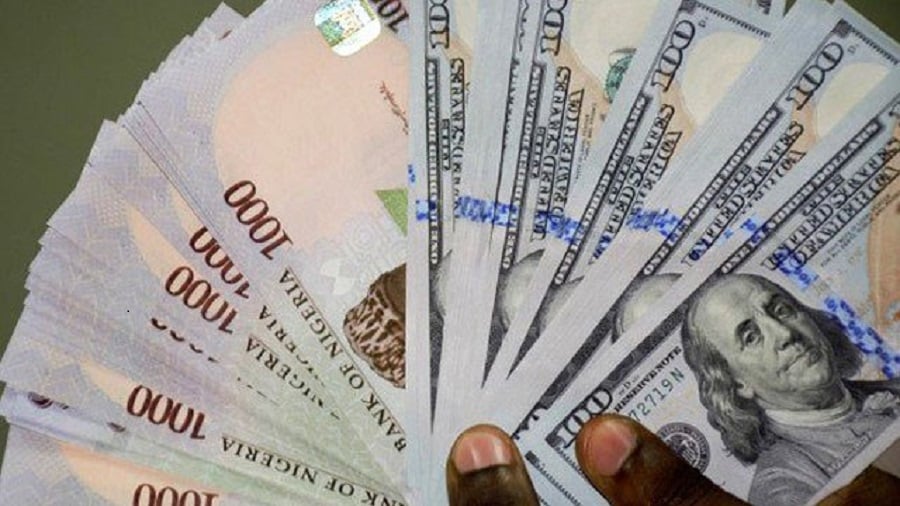
BLACK MARKET RATES
US DOLLAR (USD) Buy ₦1,405 Sell ₦1,410
GREAT BRITISH POUND (GBP) Buy ₦1,880Sell: ₦1,900
EURO (EUR) Buy ₦1,570 Sell ₦1,590
CANADIAN DOLLAR (CAD) Buy ₦1,020 Sell ₦1,080
SOUTH AFRICAN RAND (ZAR) Buy ₦75 Sell ₦90
UAE DIRHAM Buy ₦350 Sell ₦370 CHINESE YUAN Buy ₦190 Sell ₦205
GHANA CEDI (GHS) Buy ₦95 Sell ₦110
WEST AFRICAN CFA Buy ₦2, 300 Sell ₦2, 400
CENTRAL AFRICAN CFA Buy ₦2,150 Sell 2,250
AUSTRALIAN DOLLAR Buy ₦800 Sell ₦900
Commercial Bank Exchange Rates
Fidelity Bank
Currency Sell
USD / NGN ₦1375.00
GBP / NGN ₦1863.40
EUR / NGN ₦1596.10
Official CBN Exchange Rates
US DOLLAR (USD) ₦1,362. 21
GREAT BRITISH POUND (GBP) ₦1,814.05
EURO (EUR) ₦1,550.19
SWISS FRANC (CHF) ₦1,665.29
JAPANESE YEN (JPN) ₦8.32
CHINESE YUAN (CNY) ₦201. 32
WEST AFRICAN CFA (XOF) ₦2. 39
WEST AFRICAN UNIT ACCOUNT (WAUA) ₦1,867.90
SAUDI RIYAL (SAR) ₦362.87
SOUTH AFRICAN RAND (ZAR) ₦81.28
Business
IEA Cushions Global Oil Supply By 290 Million Barrels March -July
Ultimately, a full and unconditional reopening of the Strait of Hormuz remains essential to avoid a further deterioration in global energy security.

Image credit : IEA Oil Market Report
The International Energy Agency (IEA) said that its member countries had so far released 290 million barrels of oil available to the market.
IEA Executive Director, Dr Fatih Birol confirmed,in a statement posted on the website, Monday.
” Since the announcement on 11 March of the IEA collective action to make 400 million barrels of oil available to the market, around 290 million barrels have been released by IEA Member countries, with more continuing to flow to the market.”
Birol said that IEA countries still hold a substantial volume of emergency stocks in reserve, including over 1 billion barrels of government-controlled stocks.
He emphasised that, for the moment, crude oil and gas markets have continued to benefit from several cushioning factors.
These include significant supplies from Gulf producers – notably through major efforts by Saudi Arabia and the United Arab Emirates – that have continued to reach global markets via various routes. In addition, oil producers in other regions – notably the United States, Brazil, Venezuela and Kazakhstan – have increased exports, helping offset some of the supply losses.
On the demand side, China has played an important role in stabilising markets by reducing its crude oil imports by nearly 50% compared with pre-war levels. is closely monitoring the situation in oil markets following recent developments in the conflict in the Middle East – with the escalation in hostilities affecting the Strait of Hormuz and energy infrastructure in the region increasing security of supply concerns and casting greater uncertainty over the market outlook.
Threats to the Bab el-Mandeb Strait, an increasingly important alternative shipping route for bypassing Hormuz, are adding to those concerns.
Dr Birol emphasised that there is no room for complacency on oil security amid the escalation in hostilities and drawing down of available commercial inventories.
Refinery activity and product supplies have not picked up as much as crude deliveries, meaning that markets for refined oil products, including diesel and gasoline, are considerably tighter than those for crude.
Ultimately, a full and unconditional reopening of the Strait of Hormuz remains essential to avoid a further deterioration in global energy security.
For natural gas, a large majority of the liquefied natural gas (LNG) supply lost due to the Hormuz disruptions has been offset by LNG flows from other markets, led by the United States.
But further delays in resuming Gulf exports risk keeping global LNG markets tighter for longer, Dr Birol warned.
Business
Nigerian Exchange Emerges Top In Africa By Dollar Values
By comparison, Zimbabwe Stock Exchange, trails Nigeria when returns are converted into dollars, underscoring how currency movements can significantly alter relative market standings from a global investment perspective.
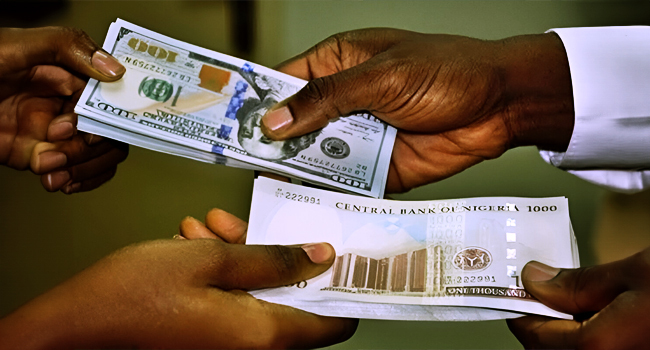
The Nigerian equities market has emerged Africa’s strongest performer in U.S. dollar terms with a 68.2 percent Year- till-Date (YtD) return in the first seven months of 2026.
The bourse performance between January and July 24, 2026 outpaced other continental stock markets helped by investors confidence on the back of reforms by the Nigerian government.
The strong performance in dollar terms highlights the impact of exchange rate dynamics and renewed foreign portfolio participation.
By comparison, Zimbabwe Stock Exchange, trails Nigeria when returns are converted into dollars, underscoring how currency movements can significantly alter relative market standings from a global investment perspective.
Source: ThisDay


Real Madrid generate €1.2bn revenue despite failing to win a trophy

Sports betting industry spending on US midterm elections surpasses $72 million

FIFA plans to establish new $20 billion subsidiary, UEFA not happy

Tech Expert, Zuckerberg trains with UFC champions, Adesanya, Alexander

Organ Trafficking: Ekweremadu bags 10 years in UK prison

SAINT OBI: Between his marriage and his death
-
 Business2 days ago
Naira Exchange Rates To Foreign Currencies Monday, July 27
-

 Sports2 days ago
Saudi’s Club Al-Ittihad Table €10.5m Bid For Super Eagles Captain Ndidi
-

 Business2 days ago
Phillips Consulting Report Ranks Enugu Nigeria’s Fastest Improving State
-
 Business2 days ago
Rural Electrification Agency targets 3.7GW solar manufacturing to close Nigeria’s power gap
-

 Politics1 day ago
Why I committed to one term presidency – Peter Obi
-
 Business2 days ago
IMF Warns of AI Financial Shocks Across Institutions, Markets
-
 Business1 day ago
Nigerian Exchange Emerges Top In Africa By Dollar Values
-

 International1 day ago
Spain and France wildfires force more than 300,000 to flee as Macron calls crisis meeting