
News
BREAKING: Tinubu Sacks NNPCL Board , Replaces Mele Kyari with Bashir Ojulari as Group CEO
The new 11-man board has Engineer Bashir Bayo Ojulari as the Group CEO and Ahmadu Musa Kida as non-executive chairman,” the statement reads.Adedapo Segun, who replaced Umaru Ajiya as the chief financial officer last November, has been appointed to the new board.

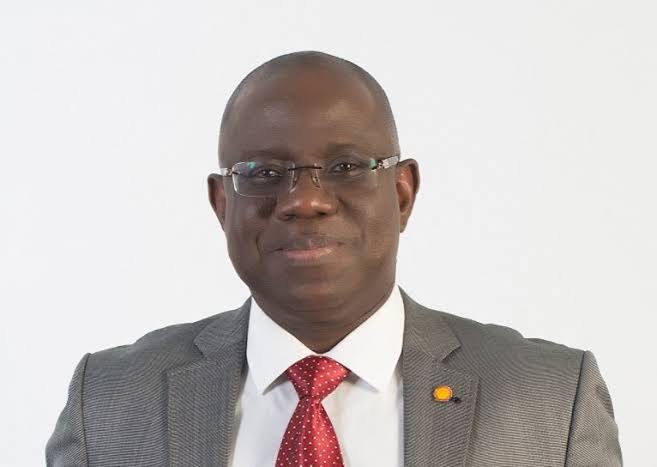
President Bola Tinubu has sacked Mele Kyari as the group chief executive officer (CEO) of the Nigerian National Petroleum Company (NNPC) Limited and dissolved the board.
Consequently, the President appointed Bashir Ojulari as the new CEO, effective from April 2, 2025.
Tinubu’s Special Adviser on Information and Strategy, Bayo Onanuga, revealed the development in a statement he signed in the early hours of Wednesday titled, ‘President Tinubu reconstitutes NNPC limited board, appoints new Chairman, Group CEO.’President Tinubu removed all other board members appointed with Akinyelure and Kyari in November 2023.
The new 11-man board has Engineer Bashir Bayo Ojulari as the Group CEO and Ahmadu Musa Kida as non-executive chairman,” the statement reads.Adedapo Segun, who replaced Umaru Ajiya as the chief financial officer last November, has been appointed to the new board.
Six board members, non-executive directors, represent the country’s geopolitical zones.
They are Bello Rabiu representing the North West, Yusuf Usman representing the North East, and Babs Omotowa, a former managing director of the Nigerian Liquified Natural Gas, who represents North Central.“
President Tinubu also appointed Austin Avuru as a non-executive director from the South-South, David Ige as a Non-executive director from the South West, and Henry Obih as a non-executive director from the South East.“Mrs Lydia Shehu Jafiya, permanent secretary of the Federal Ministry of Finance, will represent the ministry on the new board, while Aminu Ahmed will represent the Ministry of Petroleum Resources,” Onanuga stated.
All the appointments are effective today, April 2.
President Tinubu, invoking the powers granted under Section 59, subsection 2 of the Petroleum Industry Act, 2021, emphasised that the board’s restructuring is crucial for enhancing operational efficiency, restoring investor confidence, boosting local content, driving economic growth, and advancing gas commercialisation and diversification.
He also handed out an immediate action plan to the new board “to conduct a strategic portfolio review of NNPC-operated and Joint Venture Assets to ensure alignment with value maximisation objectives.
”Since 2023, the Tinubu administration has implemented oil sector reforms.Onanuga said that in 2024, NNPC reported $17bn in new investments within the sector.
“The administration now envisions increasing the investment to $30bn by 2027 and $60bn by 2030.
“The Tinubu administration targets raising oil production to two million barrels daily by 2027 and three million daily by 2030.
“Concurrently, the government wants gas production jacked to 8 billion cubic feet daily by 2027 and 10 billion cubic feet by 2030,” he explained.


News
Eko Electricity blames Lekki-Ajah power outages on feeders disruption
The following feeders are currently out of supply: Ibeju, Ajah Local 1, Medallion Data, Urban Prime, Main One, Maroko, Chevron, Oke-Ira, Ikate Express, Ilasan, NTDA 1, Eleko,” the company said.

Eko Electricity Distribution Plc (EKEDP) has announced a power outage across parts of Lagos, including Lekki, Ajah and Ibeju-Lekki, following a loss of supply affecting 12 feeders.
The affected feeders are Ibeju, Ajah Local 1, Medallion Data, Urban Prime, Main One, Maroko, Chevron, Oke-Ira, Ikate Express, Ilasan, NTDA 1 and Eleko.
In a notice to customers, EKEDP said the VGC, Oke-Ira and Agungi injection substations were also affected by the disruption.
The distribution company attributed the outage to a fault affecting electricity supply within the Lekki, Ajah and Ibeju-Lekki axis.
The following feeders are currently out of supply: Ibeju, Ajah Local 1, Medallion Data, Urban Prime, Main One, Maroko, Chevron, Oke-Ira, Ikate Express, Ilasan, NTDA 1, Eleko,” the company said.
EKEDP said it was working with the Transmission Company of Nigeria (TCN) to restore the affected transformer and reconnect all the impacted feeders.
News
IGP Disu Launches Nigeria Police Force Vigilant App, for Tracking Crimes
” The police cannot be everywhere at the same time, but through technology and partnership with the citizens, we can significantly expand our capability to prevent and respond to crimes,” he noted.

The Inspector-General of Police, IGP Olatunji Disu, has launched the Nigeria Police Force Vigilant App as part of efforts to strengthen public engagement, internal communication and the fight against increasingly sophisticated crimes.
Disu also unveiled MTN Closed User Group (CUG) Network for strengthening communication among police commands, formations, divisions and specialised units nationwide.
Speaking during the launch ceremony in Abuja, IGP Disu said that the changing nature of crime and the speed at which information travels have made it necessary for the police to embrace technology.
The policing environment is changing rapidly. Crime is becoming more sophisticated. Information moves faster, and citizens increasingly expect public institutions to be accessible and respond to technology,”said Disu.
He explained that the Vigilant App was designed to improve communication between the police and members of the public by enhancing information sharing and citizen engagement.
The IGP urged Nigerians to use the platform responsibly to report suspicious activities, provide useful information and seek assistance when necessary .
Disu also charged officers managing the platform to operate with professionalism and integrity, stressing that information received through the system must be handled responsibly, investigated diligently and protected appropriately.
“The police cannot be everywhere at the same time, but through technology and partnership with the citizens, we can significantly expand our capability to prevent and respond to crimes,” he noted.
Disu observed that effective communication often determines the success of operations, emergency responses and investigations.
“In policing, information delayed can be information lost,” the IGP declared.
News
Edo Influential Politician, Daniel Orbih, dies at 64 •Obaseki mourns
Obaseki said Orbih’s contributions to Nigerian politics and the PDP remained significant, particularly during his years of service in Edo.

•Chief Daniel Osi Orbih
Chief Daniel Osi Orbih, a chieftain of the Peoples Democratic Party (PDP) is dead, aged 64.
Orbih, known by his traditional title, the Kulukulu 1 of Ogoni Land and Oduma of Uzairue, reportedly died on Monday, 31st August 2026.
His death was confirmed in a statement issued by his family and signed by Francis Udukhomoi Orbih, Esq., on behalf of the Orbih family.
Orbih was born on the 27th of October, 1961, to Chief and Mrs M.C.K. Orbih of Ogbona in Etsako Central Local Government.
He ventured into politics in 1999, and was the deputy governorship candidate of the All Peoples Party (APP) in Edo State, describing Orbih as a prominent figure and influential voice in Edo politics.
Condolences
Former governor of Edo, Godwin Obaseki, lamented that Orbih ‘s death represents a significant loss to Edo.
Obaseki said Orbih’s contributions to Nigerian politics and the PDP remained significant, particularly during his years of service in Edo.
“For many years, he provided leadership to the Peoples’ Democratic Party (PDP) in Edo State as its State Chairman and subsequently served as the PDP National Vice Chairman, South-South.
“Through these roles, he contributed significantly to the development of the party in the Edo State and Nigeria, ” he said.
He emphasised that the former PDP chairman’s death represented a significant loss to Edo State and Nigeria, while commiserating with his family, friends and political associates.


Forest Sector Employs 42m People Globally – FAO

China -Egypt lubricate over 70 years trade, diplomatic relation

BREAKING: Uber winds down operations in Nigeria, effective September 2

Tech Expert, Zuckerberg trains with UFC champions, Adesanya, Alexander

Organ Trafficking: Ekweremadu bags 10 years in UK prison

SAINT OBI: Between his marriage and his death
-

 Business2 days ago
Commercial Banks Borrowing From CBN Drops By 89% in August
-

 Politics3 days ago
G100 Opposition Summit Proposes Single 4-year Term
-
 Business3 days ago
Nigeria’s GDP grew 4.43% in Q2 2026, says NBS
-

 Crime3 days ago
10 Out of 15 Abducted NYSC Members Rescued in Kogi (Video)
-
 Politics3 days ago
Timipre Sylva resigns from APC membership
-
 Business1 day ago
Naira Exchange Rates Wednesday, September 2
-

 Sports3 days ago
Romero Replaces Messi As Argentina’s New Captain
-

 News2 days ago
EFCC Summons Sylva for Questionings