
Business
JUST IN: Lagos State Launches Industrial Policy 2025-2030


The Lagos State Government has launched a new industrial policy aimed at promoting a sustainable industrial environment within the state.
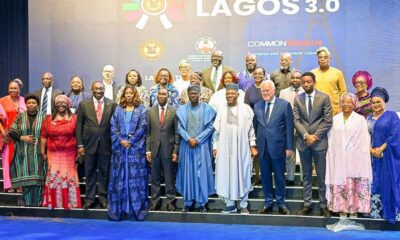
The “Industrial Policy (2025-2030) was presented to the public by the State’s Commissioner for Commerce, Cooperatives, Trade, and Investment, Folashade Ambrose, during the Lagos State Industrial Policy Consultative Assembly and Validation Workshop, which took place at Alausa Ikeja.
Ambrose mentioned that as the world transitions towards a new era of economic modernisation driven by technology, sustainability and global competitiveness, it is imperative to recalibrate the State’s industrial policies to align with both domestic imperatives and international best practices.
Today’s assembly speaks to our commitment to creating an enabling business environment that encourages sustainable investment, infrastructure development, and industrial growth – pillars that are essential to achieving the objectives outlined in the State’s major development policy documents; T.H.E.M.E.S+ Development Agenda and the Lagos State Development Plan (LSDP 2052).
“Industrial Policy (2025-2030) is a defining document – one that signals our readiness to elevate Lagos into a hub of industrial excellence, where businesses can thrive, investments can flourish, and job creation can be maximised,” she said.
According to Ambrose, the disruptions caused by the COVID-19 pandemic exposed vulnerabilities in global supply chains and highlighted the need for stronger local production capacity, and as the State navigates the challenges and opportunities of a post-pandemic global economy, industrial policy must be viewed as a strategic tool for economic resilience.
She said, “Lagos State has long been the cornerstone of Nigeria’s economic advancement, acting as the gateway to trade, commerce, and industrialisation for the nation and beyond.
As Nigeria’s commercial capital, the State must lead the charge in developing a self-sufficient, innovative, and globally competitive industrial ecosystem – one that leverages our vast human capital, geographic advantage, and entrepreneurial strength.”
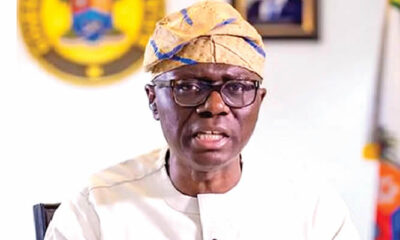
While describing Lagos as the Future-Ready Economic Giant, she reaffirmed the commitment of the administration of Babajide Sanwo-Olu to ensure a technology-driven economy and a sustainable and climate-resilient state in the continent of Africa.
The Commissioner explained that the consultative assembly is not just another meeting but a call to action to define the future of Lagos’ industrial sector.
Guest Speaker at the event, the National Programme Officer, United Nations Industrial Development Organisation, UNIDO, Reuben Bamidele, underscored the pivotal role of sustainability, innovation and global best practices in shaping a resilient and competitive industrial landscape.
Bamidele commended Lagos State’s commitment to policy-driven industrialisation, emphasising that a robust framework aligned with international standards will foster inclusive growth, attract investment and enhance industrial productivity.
He said, “The Lagos State Government has been recording great traction in the area of facilitating the ease of doing business and implementing smart city, climate-conscious manufacturing and digital transformation initiatives.
More efforts should be devoted to promoting strategic public-private partnerships in green industrialisation, environmental sustainability and circular economy while incentivising Industrial Energy Efficiency (IEE) and Resource Efficient Cleaner Production (RECP) as part of key drivers of economic prosperity.
“In this era of Fourth Industrial Revolution, the State must encourage industrial production that leverages technology, industrial information and data, research and development, domestic and foreign business linkages and certification of artisans.”
In his remarks, the Managing Director of Lekki Worldwide Investments Limited, Mr Adeniyi Akinlusi, described the consultative assembly as a bold initiative and a re-affirmation by Governor Sanwo-Olu that Lagos is not only open for business but ready for business.
He said, “There is no African strategy without a Nigerian strategy, and there is no Nigeria strategy without a Lagos strategy.”
Others who spoke at the event commended the Lagos State Government for its visionary initiative, emphasising the commitment to support policies that empower industries and businesses and strengthen the economy.







Business
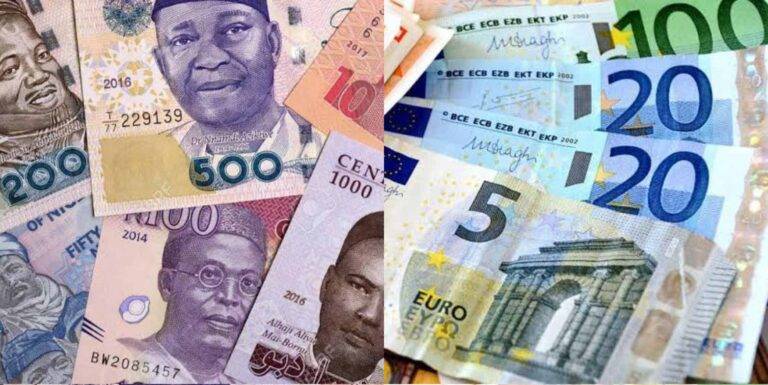
Exchange Rates Today Friday, 12 June
Black Market Rates
US Dollar (USD) ₦1,397
Great British Pound (GBP) ₦1,850

Official CBN Exchange Rates
US Dollar (USD) ₦1,363. 83
Great British Pound (GBP) ₦1,821. 25
EURO (EUR) ₦1,572. 90
SWISS FRANC (CHF) ₦1,706. 49
JAPANESE YEN (JPN) ₦8.50
CHINESE YUAN (CNY) ₦201.20
West African CFA (XOF) ₦2.40
West African Unit Account (WAUA) ₦1,857. 45
SAUDI RIYAL (SAR) ₦363. 29
SOUTH AFRICAN RAND (ZAR) ₦82.61
Black Market Rates
US Dollar (USD) Buy ₦1,397 Sell ₦1,405
Great British Pound (GBP) Buy ₦1,850 Sell: ₦1,870
EURO (EUR) Buy ₦1,587 Sell ₦1, 607
Canadian Dollar (CAD) Buy ₦1,030 Sell ₦1,100
South African Rand (ZAR) Buy ₦75 Sell ₦90
UAE Dirham Buy ₦350 Sell ₦370
Chinese Yuan Buy ₦180 Sell ₦200
Ghana Cedi (GHS) Buy ₦95 Sell ₦110
West African CFA Buy ₦2, 380 Sell ₦2, 460
Central African CFA Buy ₦2, 220 Sell 2,300
Australian Dollar Buy ₦800 Sell ₦900
Business
Airtel launches data calculator to counter depletion complaints
Commenting on the significance of the launch, Dinesh Balsingh, Chief Executive Officer, Airtel Nigeria, said that the company remains focused on building a network and customer experience ecosystem anchored on trust, transparency and continuous improvement.

Airtel Nigeria has launched the Airtel Web Data Calculator, a new digital tool designed to help customers estimate and better understand their internet data consumption based on real-life usage patterns.
Available through Airtel’s website, the calculator enables customers to estimate data usage across common digital activities such as video streaming, social media engagement, voice and video calls, and everyday web browsing.
Speaking on the launch, Oladokun Oye, Customer Experience Director, Airtel Nigeria, said that the initiative reflects Airtel’s commitment to customer empowerment and service transparency.
“As Nigerians become increasingly dependent on digital services for work, education, entertainment and communication, it is important that customers have clear visibility into how their data is consumed.
The Airtel Web Data Calculator was developed to help our customers understand their usage patterns better, make informed choices, and enjoy greater confidence in their digital experience,” he said.
Commenting on the significance of the launch, Dinesh Balsingh, Chief Executive Officer, Airtel Nigeria, said the company remains focused on building a network and customer experience ecosystem anchored on trust, transparency and continuous improvement.
“The future of telecommunications will be defined not only by network investments but also by how effectively operators help customers understand and manage their digital lives. The Airtel Web Data Calculator represents a practical innovation that places more information and control directly in the hands of our customers.” He said.
Business
Kingsley Moghalu chairs Bluecode Africa subsidiary in Nigeria
Moghalu served as Deputy Governor of the Central Bank of Nigeria from 2009 to 2014, heading the Financial System Stability and Operations Directorates at different periods.
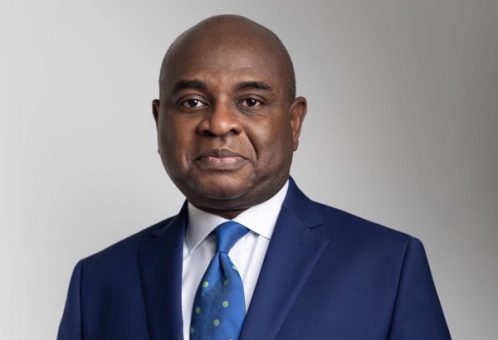
Bluecode Africa, the European payments infrastructure operator backed by leading US and European institutional investors, has named Prof Kingsley Chiedu Moghalu as Chairman of the Advisory Board of its Nigerian subsidiary, Bluecode Payments Nigeria Limited as the company formally enters the Nigerian market.
The appointment was jointly announced by Chris Pirkner, Founder of Bluecode, and Odin Krismayr, Managing Director of Bluecode Africa, who described it as a foundational governance decision for the company’s Nigerian and continental operations.
Moghalu served as Deputy Governor of the Central Bank of Nigeria from 2009 to 2014, heading the Financial System Stability and Operations Directorates at different periods.
He led the team that introduced the unique-identifier Bank Verification Number (BVN), enrolling 50 million banking users, simplifying Know Your Customer (KYC) procedures, and doubled Nigeria’s financial inclusion rate from 33 to 60 per cent.


Edo Queens Win 2025/26 NWFL Title

World Cup: Japan Holds Netherlands To 2-2 Draw

Police begins enforcement on vehicles with covered number plates

Tech Expert, Zuckerberg trains with UFC champions, Adesanya, Alexander

Organ Trafficking: Ekweremadu bags 10 years in UK prison

SAINT OBI: Between his marriage and his death
-

 Opinions3 days ago
Democracy Still Struggling 33 Years After June 12, PDP Laments by Comrade Ini Ememobong
-

 Crime2 days ago
Bandits Kill 19 Farmers, Injure 12 Others in Fresh Attack in Zamfara
-

 Crime2 days ago
BREAKING: Retired General Dies in Kidnappers’ Captivity, Demand Release of Gang Members
-

 Sports3 hours ago
World Cup: Sweden beats Tunisia 5-1
-

 Sports1 day ago
Balogun: This is something I dreamed of for a long time
-

 Sports1 day ago
FIFA World Cup 2026 Day 3: Qatar draws Switzerland 1: 1
-

 Sports2 days ago
FIFA World Cup Day 2: Canada holds 1-1 Bosnia-Herzegovina
-
 International3 hours ago
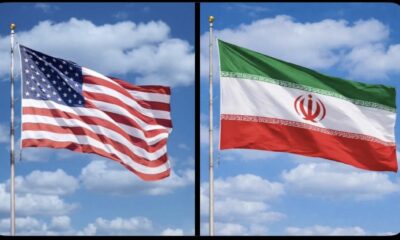
US and Iran to sign historic peace deal June 19 in Switzerland