
International
Japan targets 40-50% power supply from renewables by 2040

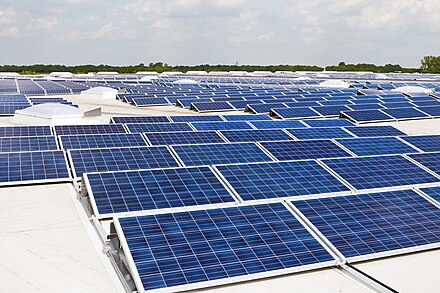
(Reuters) – Japan wants renewable energy to account for up to 50% of its electricity mix by fiscal year 2040 with nuclear power taking up another 20%, according to a draft of its revised basic energy policy, as it makes a clean energy push while meeting rising power demand.
As the world’s second-largest importer of liquefied natural gas and a major consumer of Middle Eastern oil, Japan and its basic energy plans are drawing global attention from oil, gas and coal producers.
While the previous energy plan’s primary focus was decarbonisation, it has shifted greater attention to energy security given heightened geopolitical risks, including the Russia-Ukraine war.
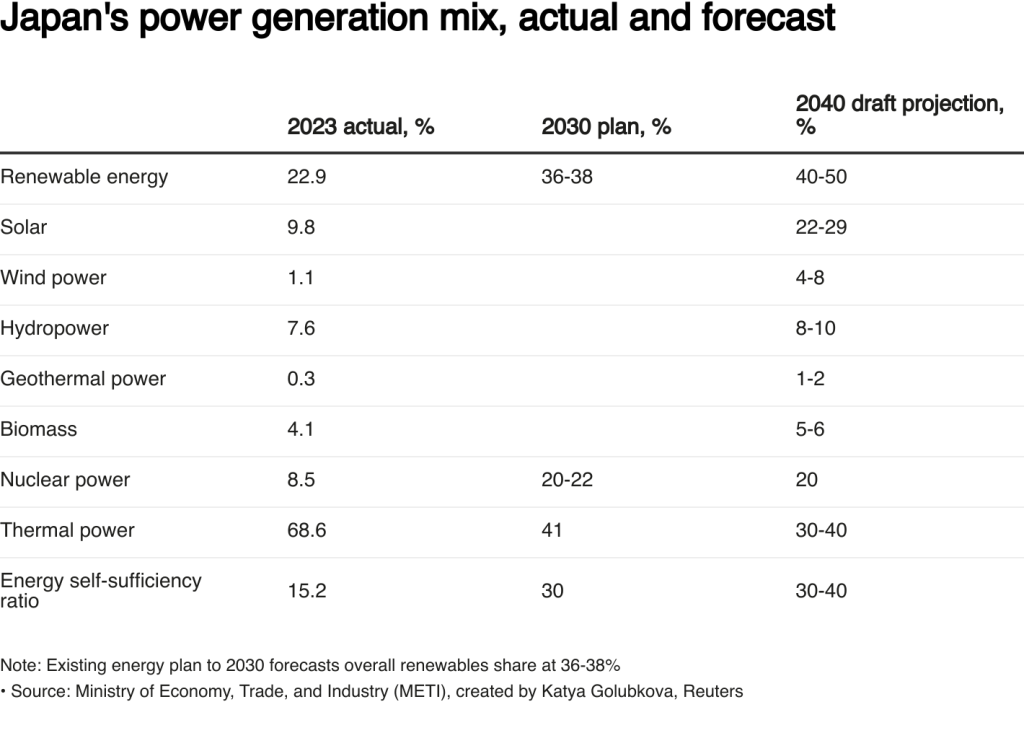
The industry ministry’s policy draft, unveiled on Tuesday, proposes increasing renewables to between 40% and 50% of power supplies in the 2040 fiscal year, roughly doubling the 22.9% share in the 2023 fiscal year and exceeding the 2030 target of between 36% and 38%.
Thermal power usage, particularly from inefficient coal-fired power plants, is set to decrease to between 30% and 40% of the mix by 2040 from 68.6% in 2023, although the draft energy policy does not specify the breakdown of coal, gas and oil.
Advocates for renewable energy have criticised the draft, however, noting the lack of a roadmap for phasing out coal-fired power.
Mika Ohbayashi, a director at the Renewable Energy Institute, also pointed to the small target share for wind power, between 4% and 8%, compared with 20% for nuclear.
That could leave Japan lagging in wind power compared with other markets worldwide.
The draft also called for the government and the private sector to secure long-term LNG contracts to hedge against price hikes and supply disruption risks.
“It is necessary to utilise LNG-fired power as a realistic means of transition,” it said.Japan’s 2040 nuclear power target is in line with the 2030 target of between 20% and 22%, despite the challenges faced by the industry after the 2011 Fukushima disaster.
Nuclear power accounted for 8.5% of the country’s power supply in 2023.
The new energy plan removes the previous target of “reducing reliance on nuclear power as much as possible” and includes plans to build innovative next-generation reactors at nuclear power sites owned by operators who have decided to decommission existing reactors.
The 2040 forecasts assume an increase in electricity demand of between 12% and 22% from 2023 levels, particularly from semiconductor factories and data centres. All targets are provisional.
The new proposed energy plan is more realistic than the existing targets through 2030, some analysts say, indicating that the government wants to attract investments in renewable energy, including storage batteries, and keep LNG as a transition fuel.
International
Zimbabwe Wins UN Security Council Seat for 2027-2028
The five countries were elected by the 193-member General Assembly to serve as non-permanent members of the Security Council for two-year terms beginning on January 1, 2027.
Zimbabwe has been elected to a non-permanent, two-year term on the United Nations Security Council, the third time the country will be represented on the body mandated to maintain international peace and security.
Voice of Nigeria reports that the other countries that secured seats around the iconic horseshoe table are Austria, Portugal, Trinidad and Tobago, and Kyrgyzstan.
The five countries were elected by the 193-member General Assembly to serve as non-permanent members of the Security Council for two-year terms beginning on January 1, 2027.
Austria and Portugal won the two seats allocated to the Western European and other States (WEOG) Group, while Trinidad and Tobago and Zimbabwe were elected from the Latin American and Caribbean Group and the African Group, respectively.
Kyrgyzstan secured the Asia-Pacific seat after defeating the Philippines in four rounds of voting.
International
Finland’s president says EU should expand to 40 states — including Canada
His comments come as the Trump administration’s actions, alongside Russia’s war with Ukraine, prompt some countries to reconsider the benefits of EU membership.
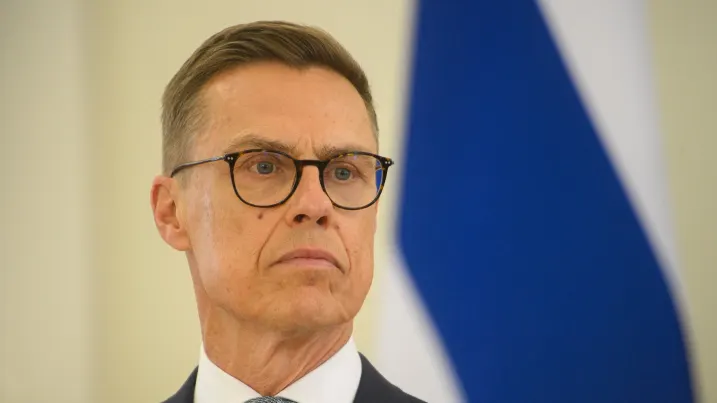
• Finland’s president Alexander Stubb
Finnish President Alexander Stubb has stressed the need for a much larger European Union, saying the 27-nation bloc should increase its membership to 40 states and named the U.K., Canada, Turkey, Norway and Iceland as potential candidates to join.
Stubb made the call at an energy conference in the Finnish capital on Wednesday.
His comments come as the Trump administration’s actions, alongside Russia’s war with Ukraine, prompt some countries to reconsider the benefits of EU membership.
Stubb told the Eurelectric Power Summit that “the window of opportunity” for EU enlargement “is quite short because when the war in Ukraine ends and perhaps when the U.S. administration changes, I don’t know, then people are going to take their foot off the gas pedal and start heckling about unnecessary stuff again.”
Stubb added that “European strategic autonomy or European geopolitical power” is “often based on size and scale and I think the best European policy ever has been European enlargement.”
“In this moment, we need to think big and geographically, we need to enlarge or at least create memberships which are flexible enough to bring in a sum total of 40 European states — or even non-European,” Stubb said.
Finland’s president said the EU should look to its western flank and bring the U.K., which left the bloc in 2020, back into the fold, or at least “as close as possible
.”Canada should be considered as another option, Stubb said. “Wouldn’t it be lovely if Canada was the 28th state of the European Union rather than the 51st state of the United States?”
International
Iran Kuwait’s airport attack injures 63
Health ministry spokesman Abdullah al-Sanad said 25 ambulances were dispatched at Kuwait International Airport, adding that “63 injured individuals were received and distributed among hospitals.
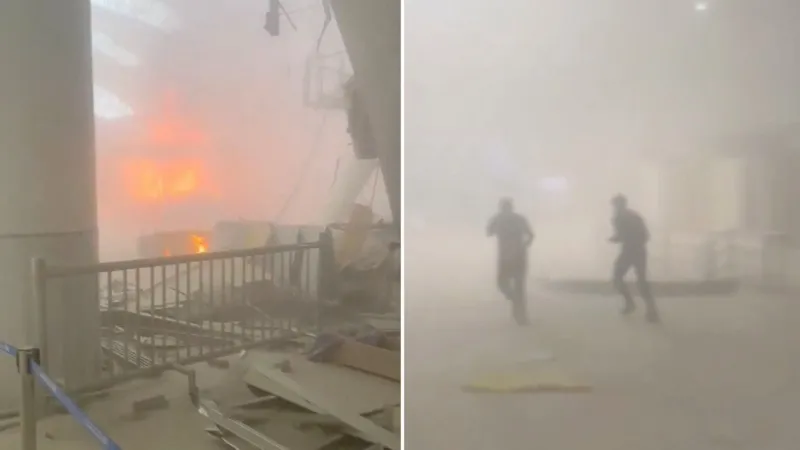
Today Wednesday June 3: Kuwait International Airport was hit by Iranian drones.
An Iranian attack on Kuwait’s airport wounded at least 63 people on Wednesday, the health ministry said, with authorities earlier reporting one person killed.
Health ministry spokesman Abdullah al-Sanad said 25 ambulances were dispatched at Kuwait International Airport, adding that “63 injured individuals were received and distributed among hospitals.
This includes serious injuries… including head wounds, cerebral hemorrhages, amputations and injuries resulting from explosions.”
An airport source told AFP that the death in Kuwait was an Indian national at the airport.


FIFA World Cup 2026 Day 3: Qatar draws Switzerland 1: 1

Balogun: This is something I dreamed of for a long time

BREAKING: Retired General Dies in Kidnappers’ Captivity, Demand Release of Gang Members

Tech Expert, Zuckerberg trains with UFC champions, Adesanya, Alexander

Organ Trafficking: Ekweremadu bags 10 years in UK prison

SAINT OBI: Between his marriage and his death
-
 Business3 days ago
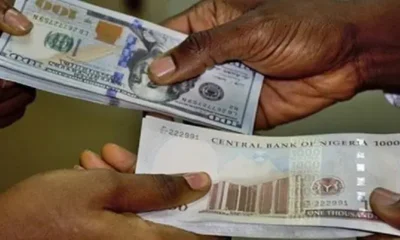
Exchange Rates Thursday,11June 2026
-

 News3 days ago
JUST IN: Nigerians evacuated from South Africa arrives Lagos
-

 Business3 days ago
FCMB appoints Rewane non-executive director, board chair
-
 Business3 days ago
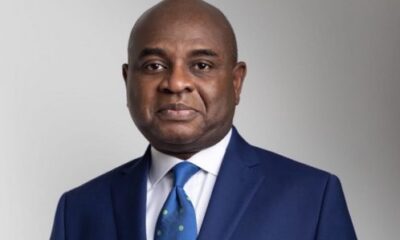
Kingsley Moghalu chairs Bluecode Africa subsidiary in Nigeria
-

 Business3 days ago
Airtel launches data calculator to counter depletion complaints
-

 News3 days ago
BREAKING: House of Reps Unveils New Minority Leader
-

 Sports3 days ago
Davido uses W’Cup stage to demand action for abducted Nigerian pupils
-

 Opinions2 days ago
Nigeria Cannot Build Flood Resilience While Destroying Its Wetlands