
Business
Global trade set to hit record $33 trillion by year-end

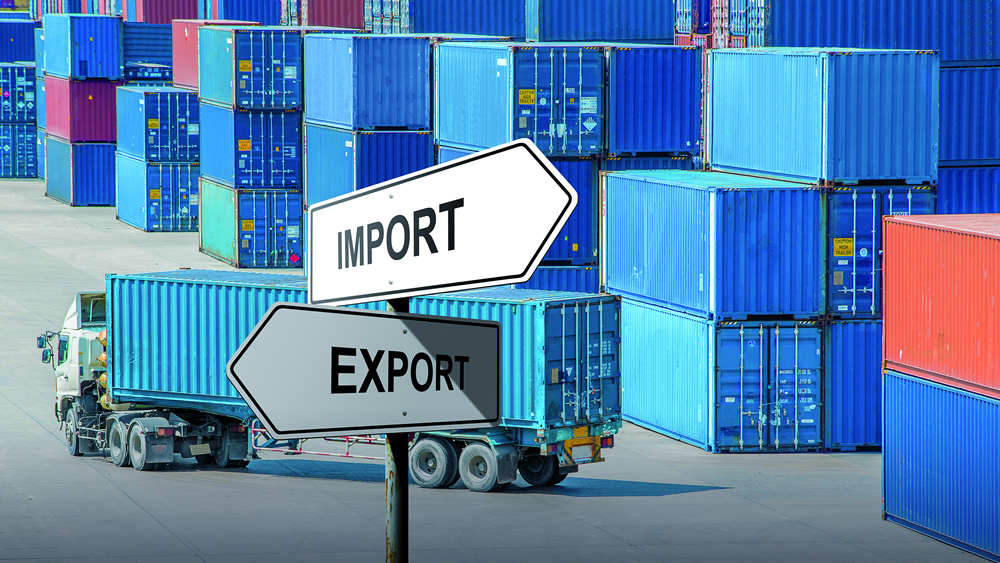
Global trade is set to reach a record $33 trillion in 2024, according to the latest Global Trade Update published by UN Trade and Development (UNCTAD).
This $1 trillion increase, reflecting 3.3% annual growth, highlights resilience in global trade despite persistent challenges.
Robust growth in services trade, up 7% for the year, accounted for half of the expansion, while goods trade rose 2% but remained below its 2022 peak. Opportunities amidst uncertainty
Developing economies, traditionally strong drivers of global trade, faced headwinds in 2024, with imports contracting 1% and South-South trade falling by the same margin in the third quarter.
In contrast, developed economies led Q3 growth, with stable demand driving a 3% rise in imports and 2% in exports.
Despite these challenges, opportunities remain for developing economies to capitalize on high-growth sectors.
ICT and apparel trade surged, with increases of 13% and 14%, respectively, in the third quarter 2024.
This growth underscores the potential for diversification and entry into value-added industries.
Stable global growth forecasts and easing inflation also present a chance to build resilience in 2025.
Sectoral pressures and growth prospects While ICT and apparel showed strong momentum, traditional sectors critical to developing economies faced declines.
Energy trade fell 2% for the quarter and 7% for the year, while metals trade contracted by 3% both quarterly and annually.
Automotive trade dropped 3% in Q3 but is expected to end the year with modest 4% growth.
A call for strategic action
UNCTAD urges developing economies to adopt targeted policies that enhance trade diversification and invest in high-value sectors to mitigate risks.
The organization underscores that trade is a cornerstone of sustainable development.
To capitalize on opportunities in 2025, developing economies require coordinated support to navigate uncertainty, reduce dependencies and strengthen global market links.
Business
Naira Exchange Rates To Dollar, Pound, Euro…Wednesday, 16 September 2026
How much is 100 pounds in naira today?
At the current black market rate of 1880 per pound, 100 British Pounds = 188,000 Naira
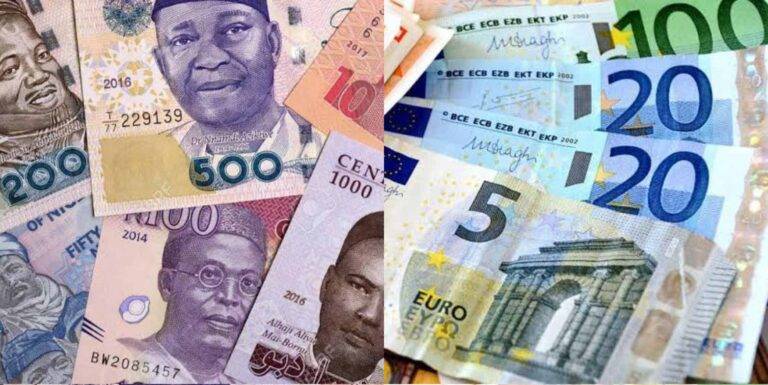
BLACK MARKET RATE
1 US Dollar is 1380 Naira.
1 Great British Pound (GBP) is 1880 Naira.
1 Euro (EUR) is 1575 Naira.
1 Canadian Dollar (CAD) is 1000 Naira.
1 Chinese Yuan is 190 Naira.
1 Ghanaian Cedi is 100 Naira.
1 South African Currency, Rand (ZAR) is 70 Naira.
1 UAE Dirham is 370 Naira.
1 CFA Franc (XOF) is 2350 Naira.
1 CFA Franc (XAF) is 2250 Naira.
1 Australian Dollar (AUD) is 850 Naira.
CBN Exchange Rate
DOLLAR (USD) ₦1329.15
POUND (GBP) ₦1793.69
EURO (EUR) ₦1534.77
SWISS FRANC (CHF) ₦1622.69
JAPANESE YEN (JPN) ₦8.5
CFA FRANC (XOF) ₦2.33
WEST AFRICAN UNIT OF ACCOUNT (WAUA) ₦1811.58
CHINESE YUAN (CNY)₦198.03
SAUDI RIYAL (SAR)₦353.85
SOUTH AFRICAN RAND (ZAR)₦81.79
Business
Textiles was my biggest business mistake — Dangote
Dangote disclosed that almost 8,000 workers were laid off across the textile business, with 6,920 of them coming from Nigerian Textile Mills in Ikeja alone.
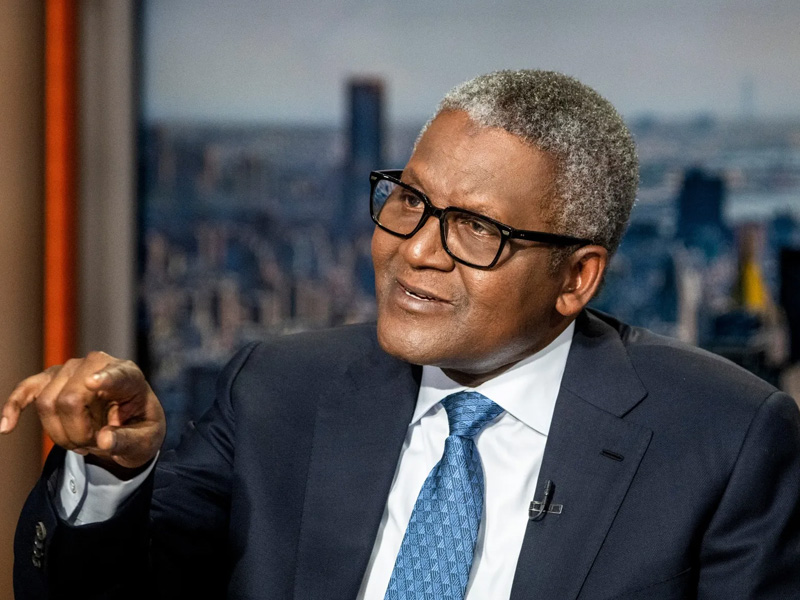
•Aliko Dangote
President of Dangote Group, Aliko Dangote, has described his investment in the textile industry as the biggest business mistake of his decades in business.
Dangote made the disclosure during an appearance on Arise Television, where he reflected on some of the challenges he encountered while building his business empire.
Dangote’s comments come amid ongoing concerns over the survival of local manufacturing industries and the impact of imported goods on domestic production and employment.
“My biggest business mistake was textiles,” he said.
According to the industrialist, the textile business eventually collapsed due to inadequate policy protection and what he described as dumping by foreign manufacturers.
“We were swamped by Chinese dumping and Indian dumping. So eventually we had to close down,” Dangote said.
He said the closure had a significant impact on workers, particularly employees of Nigerian Textile Mills in Ikeja, Lagos.
Dangote disclosed that almost 8,000 workers were laid off across the textile business, with 6,920 of them coming from Nigerian Textile Mills in Ikeja alone.
He said the experience shaped his approach to subsequent investments, stressing the need to ensure that businesses remain viable even when government protection is eventually withdrawn.
Business
Dangote: Africa Is Like a ‘Scratch Card’ — Opportunities Are Immense
Dangote’s message, therefore, extends beyond the refinery itself: Africa’s opportunities will remain invisible unless capital is deployed to “scratch” the surface and turn potential into productive assets.
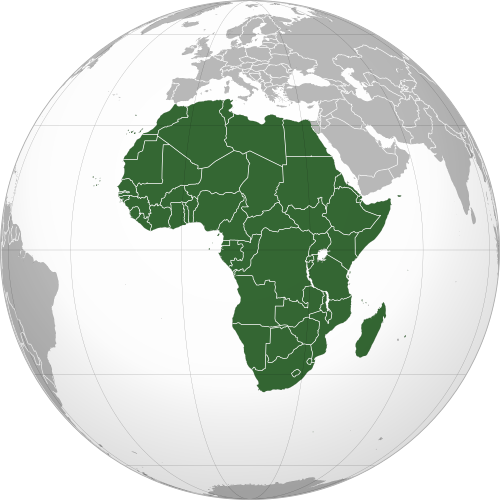
| map of Africa by Wikipedia
By Ochefa
Africa is sitting on enormous economic opportunities that remain largely untapped, President and Chief Executive Officer of Dangote Industries Limited, Alhaji Aliko Dangote, has declared.
Dangote likened the continent to a “scratch card”, saying its vast opportunities would only become visible when Africans and investors take deliberate steps to unlock them.
“Africa is like a scratch card. Unless you scratch it, you don’t see the use of it. The opportunities are immense,” Dangote said.
He spoke in Lagos during the Dangote Petroleum Refinery and Petrochemicals “Facts Behind the Offer” presentation and opening gong ceremony, held to mark the formal opening of the refinery’s Initial Public Offering (IPO) on the Nigerian Exchange Limited (NGX).
The offer comprises 4.1 billion new ordinary shares at ₦525 per share, giving the issue a value of about ₦2.15 trillion, with a minimum subscription of 10 shares valued at ₦5,250. The offer is scheduled to close on October 13, 2026, subject to the terms contained in the prospectus.
Dangote said the group was looking beyond Nigeria as it seeks to expand its industrial footprint across Africa, disclosing plans being explored for the establishment of a refinery in Lamu, Kenya.
The move, he said, reflects the need to build African businesses capable of attracting large-scale international capital while creating greater economic integration across the continent.
According to him, the Dangote Group’s expansion strategy is not simply about building individual businesses, but about creating platforms through which Africans and international investors can participate in the continent’s economic transformation.
“What we are trying to do is to open up the market and make sure that when we open up the market, Africans and non-Africans will join us to have what you call the new Africa rising,” he said.
The refinery IPO represents a major test of Nigeria’s ability to mobilise domestic and international capital behind large-scale industrial projects.
Dangote urged Nigerians and other Africans to seize the opportunity presented by the offer, arguing that the refinery has the potential to become Africa’s largest company by the end of 2026.
His “scratch card” analogy captures the central argument behind the expansion strategy: Africa’s economic potential may be enormous, but unlocking it requires capital, infrastructure, industrial investment and businesses willing to take long-term risks.
For Nigeria, the refinery’s public offering also signals a potentially significant shift in the ownership structure of one of the country’s biggest industrial assets—from a project largely associated with one private investor to an enterprise in which a broader pool of investors can participate.
The development comes as Nigeria seeks to deepen its capital market, retain more domestic savings within the economy and mobilise long-term funding for productive investment.
Dangote’s message, therefore, extends beyond the refinery itself: Africa’s opportunities will remain invisible unless capital is deployed to “scratch” the surface and turn potential into productive assets.


Olu Jacobs: His Life and Times
EXCLUSIVE: Veteran Nollywood Actor, Olu Jacobs Dies at 84

Naira Exchange Rates To Dollar, Pound, Euro…Wednesday, 16 September 2026

Tech Expert, Zuckerberg trains with UFC champions, Adesanya, Alexander

Organ Trafficking: Ekweremadu bags 10 years in UK prison

SAINT OBI: Between his marriage and his death
-
 Business2 days ago
Naira Exchange Rates To Dollar, Pound , Euro… September 14
-
 News2 days ago
Boko Haram Denies Ceasefire with FG, Vows Continued Attacks
-
 Business3 days ago
Filling Stations Selling Petrol, Diesel Higher Driven By Global Crude Prices
-
 Politics2 days ago
Again, Desmond Elliot begs political mentor,Gbajabiamila , “I’m sorry, Daddy”
-
 Business3 days ago
Dangote Refinery’s IPO Officially Opens Today On NGX
-
 Business2 days ago
Dangote at IPO Listing, Charges Public,”I don’t want to be called richest man in Africa”
-

 News2 days ago
Police Raise Alarm Over Terrorists and Informants Spying on Schools, Other Targets
-
 Crime2 days ago
Boko Haram Attacks Adamawa Community, Kills Residents