
News
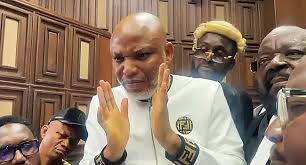
Biafra: Sentence Ekpa, release Nnamdi Kanu – Southeast stakeholders

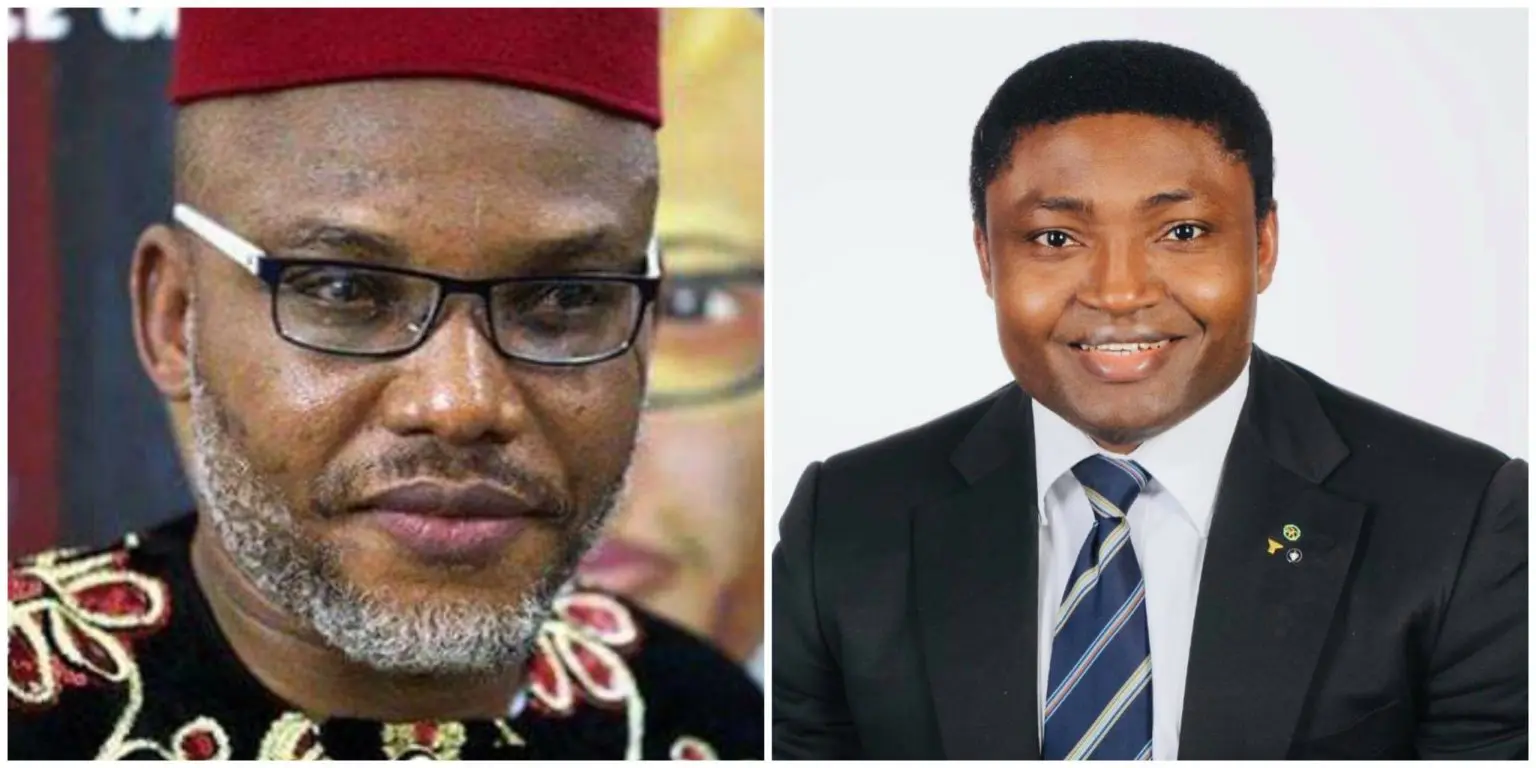
The recent arrest of Simon Ekpa, the self-proclaimed Prime Minister of Biafra, has sparked mixed reactions, particularly among Southeast indigenes, many of whom are calling for his prosecution and sentencing in Finland.
Ekpa was arrested last Thursday by Finnish authorities alongside four others. They were subsequently detained by the Päijät-Häme District Court for allegedly “spreading terrorist propaganda on social media.” The Finnish National Bureau of Investigation (NBI) disclosed that Ekpa, a dual citizen of Finland and Nigeria, faces charges of inciting public offenses with terrorist intent and financing terrorism.
Chief Inspector Otto Hiltunen, leading the investigation, accused Ekpa of using social media to incite violence against civilians and public authorities in Southeastern Nigeria. “From Finland, the suspect has orchestrated efforts resulting in violence and crimes in Southeast Nigeria,” Hiltunen stated.
Ekpa’s arrest coincides with escalating insecurity in Nigeria’s Southeast, where armed groups have been enforcing violent sit-at-home orders, initially introduced by the Indigenous People of Biafra (IPOB) to demand the release of their leader, Nnamdi Kanu. Despite IPOB suspending the sit-at-home directive, Ekpa and his supporters have continued to propagate violence, a stance IPOB has consistently disavowed.
Voices from the Southeast
Senator Eyinnaya Abaribe, representing Abia South, suggested that releasing Nnamdi Kanu would better address insecurity in the region than Ekpa’s arrest. He argued that Kanu’s release would differentiate genuine agitators from criminals exploiting the situation. “You cannot achieve Biafra by killing fellow Biafrans or creating chaos,” Abaribe remarked. “When Kanu is released, we can identify the true agitators from those using his incarceration as an excuse for violence.”
A retired U.S. Army Captain and strategist, Bishop Johnson, stressed that the Finnish government’s handling of Ekpa’s case would determine its impact on the Southeast. He noted that holding Ekpa accountable in Finland could disrupt his influence and stop his sponsors. However, he cautioned that extraditing Ekpa to Nigeria could escalate violence, especially if due process is not followed.
Call for Accountability
Osita Okechukwu, former Director General of Voice of Nigeria (VON) and a chieftain of the All Progressives Congress (APC), lauded Ekpa’s arrest, calling it overdue. He criticized Ekpa’s violent methods, saying, “He has caused untold harm to Ndigbo, grounding the Southeast economy and leading to countless deaths. His strategy is criminal and unjustifiable.” Okechukwu urged for Ekpa’s sentencing, either in Finland or Nigeria, emphasizing that justice must be served for his actions.
A Path to Peace
Experts and stakeholders have argued that a combination of Ekpa’s prosecution and Kanu’s release would help restore peace in the Southeast. Johnson observed, “Releasing Kanu would remove the pretext used by criminals masquerading as agitators, while prosecuting Ekpa would curtail external incitement.”
As investigations and legal proceedings continue, the Southeast looks to these developments as potential turning points in resolving the region’s prolonged insecurity and violence.




News
FG launches new digital postcodes
The code is designed to provide a precise, GIS-enabled reference for identifying locations.

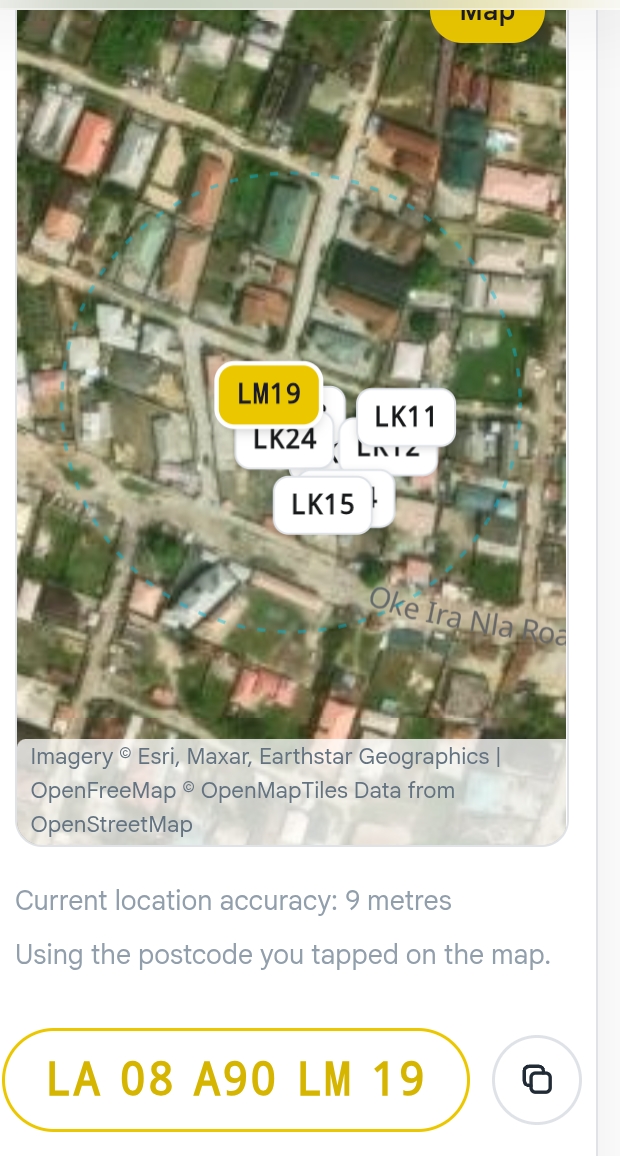
• Image credit: NIPOST
The Federal Government has launched the National Digital Alphanumeric Postcode System, urging Nigerians to find and begin using their postcodes.
The National Digital Alphanumeric Postcode, operated by the Nigerian Postal Service, gives every addressable building a unique 11-character code — the code is designed to provide a precise, GIS-enabled reference for identifying locations.system. Easier to find, share and use.
The Minister of Communications, Innovation and Digital Economy, Bosun Tijani announced the launch in a post on X on Thursday.
Tijani described the system as a step towards making locations across the country easier to identify and connecting people and businesses to services and opportunities.
Tijani said the system could help businesses reach customers beyond their immediate neighbourhoods, enable families to provide accurate locations during emergencies and help government agencies reach communities with essential services.
The minister encouraged Nigerians to search for their postcodes through the official Digital Postcode website, postcode.gov.ng, and share them with family members, friends and businesses.
News
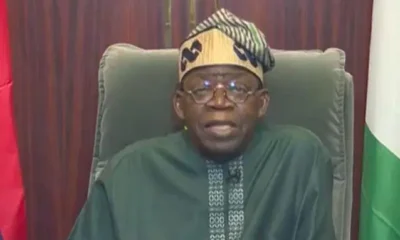
Nigeria @ 66: President Tinubu says next phase of reforms’ll cut cost of living
“Our reforms did not create the weaknesses in our economy. They confronted them,” he said, while warning against attempts to reverse the policies and return to what he described as the “abuse of addictive subsidies”.
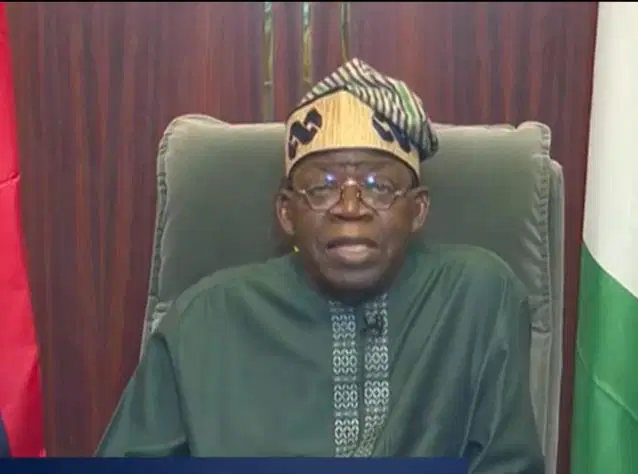
President Bola Tinubu has declared that the next phase of his administration’s reform will be focused on reducing the cost of living, creating jobs and ensuring that the benefits of economic growth were widely shared.
President Tinubu gave the assurance in his Independence Day address to mark Nigeria’s 66th anniversary, titled “From Reform to Prosperity”, in which he defended the economic policies of his administration and urged Nigerians to stay the course.
Tinubu said the reforms undertaken since his assumption of office had corrected the country’s economic direction, describing them as painful but necessary treatment for longstanding structural problems.
Using a cancer patient as an analogy, the President said Nigeria had for too long treated the symptoms of its economic problems rather than confronting their underlying causes.
“By 2023, poverty was rising, and hope was nearly gone. The country’s situation was darker than ever. We had no choice but to act,” he said.
Tinubu said previous administrations had chosen “morphine” by sustaining inefficient arrangements and postponing difficult decisions, while his administration chose to “excise the cancer”.
He acknowledged that the reforms had produced painful “side effects”, but argued that the hardship should not be confused with the underlying economic problems they were designed to address.
“Our reforms did not create the weaknesses in our economy. They confronted them,” he said, while warning against attempts to reverse the policies and return to what he described as the “abuse of addictive subsidies”.
The President’s speech came as some stakeholders and analysts regretted that, despite various reforms embarked upon by successive Federal Governments, the country was yet to come out of the woods economically and socially.

Former Vice President Atiku Abubakar has demanded the immediate release of five men arrested in Borno State for wearing T-shirts bearing the slogan “Tinubu Must Go.”
In a statement issued on Wednesday, the African Democratic Congress (ADC) presidential candidate condemned the arrests, describing the slogan as a legitimate political expression rather than a crime. He argued that wearing a T-shirt with a political message should not lead to detention in a democracy.
The five men — identified as Baba Aji Gremami, Mustapha Abba Yemen, Abacha Mohammed Ali, Adam Umar Gubio and Abdulhamid Mohammed — were reportedly arrested by the Borno State Police Command in Maiduguri and charged with offences including criminal conspiracy and inciting disturbance.
Atiku recalled that President Bola Tinubu had previously protested against the fuel pricing policies of the Goodluck Jonathan administration. He insisted that Nigerians must equally be free to express dissatisfaction with current government policies.
“‘Tinubu Must Go’ is a demand for political change. It is not a weapon, a threat or a crime,” Atiku said. “Tinubu was free to tell Jonathan that his policies were hurting Nigerians. Nigerians must be free to tell Tinubu that his policies are hurting them. Release these five citizens now.”
He called on the authorities to disclose the detainees’ whereabouts, grant them access to their families and lawyers, and free them if the political slogan was the sole basis for their arrest.


Naira Rates To Dollar, Pound ,Euro… Friday, October 2

Obafemi Hamzat promises to end ‘unauthorised levies’ in Lagos if he is elected

President Tinubu, Other Political Leaders Watch MKO Documentary

Tech Expert, Zuckerberg trains with UFC champions, Adesanya, Alexander

Organ Trafficking: Ekweremadu bags 10 years in UK prison

SAINT OBI: Between his marriage and his death
-
 Business2 days ago
Naira To Dollar, Pound, Euro… Rates Friday, October 1
-
 News2 days ago
Nigeria @ 66: President Tinubu says next phase of reforms’ll cut cost of living
-

 News3 days ago
Atiku Demands Release of 5 Arrested Over ‘Tinubu Must Go’ T-Shirts
-

 News3 days ago
FG Declares October 1 Public Holiday to Mark Independence Day Anniversary
-

 Business2 days ago
Court orders NMDPRA to continue issuing fuel import licences to Matrix Energy, AA Rano, AYM Shafa
-

 International3 days ago
Plane Makes Emergency Landing After Pilots Fight in Cockpit
-
 News2 days ago
FG launches new digital postcodes
-
 Business3 days ago
ON-GOING: Dangote $16 billion refinery groundbreaking holds in Kenya (Images)