
News
₦570bn Hardship Grant: FG Didn’t Give Any State Money, Makinde Counters Tinubu


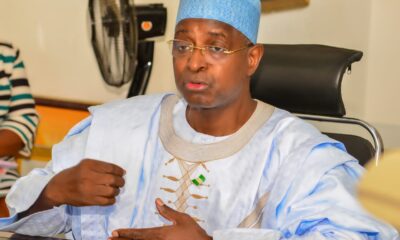
The Governor of Oyo State, Seyi Makinde has denied taking part in the ₦570bn hardship grant claimed to have been given to the state governments by the Federal Government.
President Bola Tinubu while addressing Nigerians in a broadcast during the #EndBadGovernance nationwide protests against hunger and hardship, said the government has disbursed ₦570bn to the 36 states.
Tunubu also said that Nigeria spends ₦2tn monthly to import Premium Motor Spirit, popularly called petrol, and Automotive Gas Oil, otherwise known as diesel.
He disclosed that ₦9.1tn was accumulated as total fiscal revenue to the Federal Government’s coffers during the first half of 2024, marking a significant increase from what was earned by the previous administration.
“Also, more than ₦570bn has been released to the 36 states to expand livelihood support to their citizens, while 600,000 nano-businesses have benefitted from our nano-grants.
An additional 400,000 more nano-businesses are expected to benefit,” the President stated.
“Let me state categorically that this is yet another case of misrepresentation of facts. The said funds were part of the World Bank-assisted NG-CARES project—a Programme for Results intervention.
“The World Bank facilitated an intervention to help States in Nigeria with COVID-19 Recovery.
CARES means COVID-19 Action Recovery Economic Stimulus. It was called Programme for Results because States had to use their money in advance to implement the programme.
After the World Bank verified the amount spent by the State, it reimbursed the States through the platform provided at the Federal level.
The Federal Government did not give any State money; they were simply the conduit through which the reimbursements were made to States for money already spent.
“It is important to note that the World Bank fund is a loan to States, not a grant. So, States will need to repay this loan.
Note also that NG-CARES, which we christened Oyo-CARES in our State, predates the present federal administration.
“So, in direct response to the message, the Federal Government did not give Oyo State any money.
We were reimbursed funds (N5.98 billion in the first instance and N822 million in the second instance) we invested in the three result areas of NG-CARES, which includes inputs distribution to smallholder farmers within our State.
In fact, when the World Bank saw our model for the distribution of inputs preceded by biometric capturing of beneficiary farmers, they adopted it as the NG-CARES model.”
“Let me state categorically that this is yet another case of misrepresentation of facts. The said funds were part of the World Bank-assisted NG-CARES project—a Programme for Results intervention.
“The World Bank facilitated an intervention to help States in Nigeria with COVID-19 Recovery. CARES means COVID-19 Action Recovery Economic Stimulus. It was called Programme for Results because States had to use their money in advance to implement the programme.
After the World Bank verified the amount spent by the State, it reimbursed the States through the platform provided at the Federal level.
The Federal Government did not give any State money; they were simply the conduit through which the reimbursements were made to States for money already spent.
“It is important to note that the World Bank fund is a loan to States, not a grant. So, States will need to repay this loan.
Note also that NG-CARES, which we christened Oyo-CARES in our State, predates the present federal administration.
“So, in direct response to the message, the Federal Government did not give Oyo State any money.
We were reimbursed funds (N5.98 billion in the first instance and N822 million in the second instance) we invested in the three result areas of NG-CARES, which includes inputs distribution to smallholder farmers within our State.
In fact, when the World Bank saw our model for the distribution of inputs preceded by biometric capturing of beneficiary farmers, they adopted it as the NG-CARES model.”
Makinde’s denial comes on the heels of controversies that greeted the nationwide hunger and hardship protests.
The protest reported to have been peaceful in many states, had also turned violent in some northern states, with hoodlums carting away goods and facilities belonging to both the government and individuals.
Some protesters in the north were also seen brandishing the Russian flag, a development which has been widely condemned and described as a treasonable offence.
The Department of State Service (DSS) has since announced the arrest and investigation of sponsors of the violent protests, including the arrest of seven Polish nationals.
The Services also vowed to announce the names of the sponsors behind the violent protests.







News
NMMA shortlist 972 entries for 2026 awards
NMMA was founded by a former Chairman of Daily Times, the late Alhaji Babatunde Jose, who led the organisation for 10 years.


The Nigerian Media Merit Award (NMMA) said that it has shortlisted 972 of 1,112 entries for this year’s awards.
The Chairman of the NMMA Panel of Assessors, Otunba Dele Adetiba, said that the entries for the 34th edition cut across print, radio, and television categories.
Chairman of the NMMA Board of Trustees, Prof. Dayo Duyile, said that the award was established in 1990 to promote professionalism, ethical journalism and excellence among media practitioners.
Duyile, a veteran journalist and academic, said the NMMA was founded by a former Chairman of Daily Times, the late Alhaji Babatunde Jose, who led the organisation for 10 years.
News
Nigerian Law school student dies after falling from hostel rooftop
The deceased was a student of the Nigerian Law School, Enugu campus, who was undergoing externship programme at the Lagos campus.

•Faith Alayande
A Nigerian Law School student identified as Faith Alayande, is dead after she fell from the rooftop at Lagos campus.
In a statement on Monday, Aderonke Osho, secretary to the council and director of administration, said that the deceased was a student of the Nigerian Law School, Enugu campus, who was undergoing externship programme at the Lagos campus.
Osho said preliminary findings revealed that the student died from injuries sustained after falling from the rooftop of the campus hostel around 4am on Friday.
The Nigerian Law School is deeply saddened by this tragic development.
“Management is working closely with the appropriate authorities and the family to establish the circumstances surrounding the incident, ensure that all necessary procedures are duly followed, and provide further information as appropriate.”
News
Ekwulobia Suspends New Yam Festival for Kidnap Billionaire Son
A source from the community said the traditional ruler of Ekwulobia where Ezeokafor hails from, His Royal Majesty, Igwe (Engr) Emmanuel Chukwukadibia Onyeneke, officially suspended the Ekwulobia New Yam Festival, saying there was no need to celebrate while their son remained in captivity.
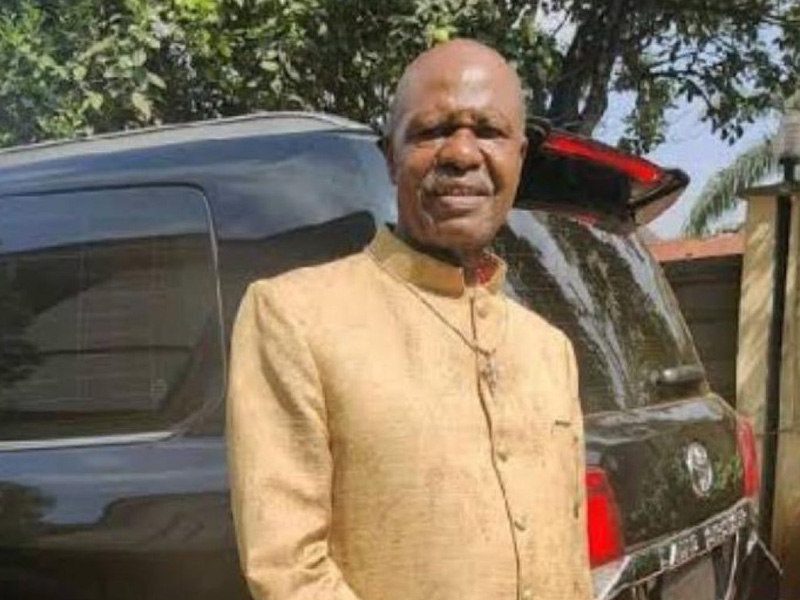
• Joseph Ezeokafor
Ekwulobia community in Aguata Local Government Area of Anambra State has cancelled its New Yam festival celebration billed for September 4, 2026.
Ohibaba.com learned that this is because of the kidnap of billionaire businessman and owner of Jezco Group of Companies, Chief Joseph Ezeokafor.
Ezeokafor was kidnapped in Awka on Tuesday last week when he stepped out of his house without his security details to attend to his spiritual need, where he goes to offer prays.
Public Relations Officer of Anambra State Police Command, SP Tochukwu Ikenga who confirmed the development said that serious operation is currently ongoing to save the elder statesman.
His kidnap has sent his community into mourning, causing the postponement of the new Yam festival, an annual festival which holds on a static date every year.
A source from the community said the traditional ruler of Ekwulobia where Ezeokafor hails from, His Royal Majesty, Igwe (Engr) Emmanuel Chukwukadibia Onyeneke, officially suspended the Ekwulobia New Yam Festival, saying there was no need to celebrate while their son remained in captivity.
“The Igwe said the community of Ekwulobia cannot celebrate while their son remains in the custody of the kidnappers,” the source said.


BREAKING: INEC declares Adeleke winner of Osun gov poll

BREAKING: Adeleke coasts to victory winning 19 LGs, APC’s Oyebamiji secures 11 LGs

#OsunDecides2026: Accord Party in early lead, APC trails behind

Tech Expert, Zuckerberg trains with UFC champions, Adesanya, Alexander

Organ Trafficking: Ekweremadu bags 10 years in UK prison

SAINT OBI: Between his marriage and his death
-
 Politics2 days ago
Osun Election: President Tinubu mobilises Voters “Go Out to Vote Candidate of Your Choice on Saturday Without Fear
-

 Crime3 days ago
SITREP: Rival Cult Groups Clash on Freedom Way Near the Dome, Sparking Chaos
-
 Politics2 days ago
Accord says Imumolen has no electoral value
-
 Politics2 days ago
The Top Three Gladiators Locking Horns For Osun Governorship
-

 Business2 days ago
Naira Exchange Rates Friday, August 14
-
 Politics2 days ago
Osun governorship election will be transparent, says INEC
-

 News2 days ago
NMMA shortlist 972 entries for 2026 awards
-

 Politics12 hours ago
(UPDATED) #OsunDecides2026: INEC Uploads 3,119 of 3,763 Polling Unit Results as Collation Continues