
News
Why Labour strike is illegal, by Federal Govt


The Federal Government has described as “premature, ineffectual and illegal” Labour’s strike call over the new minimum wage, which begins today.
It said Organised Labour failed to meet all statutory requirements and International Labour Organisation (ILO) principles before the declaration of industrial action.
It also said there is a subsisting court order precluding Labour from embarking on strike, which is yet to be vacated.
The government, through the Attorney-General of the Federation (AGF) and Minister of Justice Lateef Fagbemi (SAN), listed sections 41(1) and 42(1) of the Trade Disputes Act 2004 (as amended) which requires labour to give a 15-day prior strike notice before embarking on a strike and Section 31(6) of the Trade Unions Act (as amended) as some of the laws.
Fagbemi, in a letter yesterday to the two labour centres – the Nigeria Labour Congress (NLC) and Trade Union Congress (TUC) – pointed out that the unions did not take “recourse to conciliation, meditation, and (voluntary) arbitration procedures” as outlined by the ILO before declaring the strike.
He consequently appealed to the NLC and TUC to reconsider their positions because of the negative effects the strike would have on the citizenry and the economy.
Also yesterday, the National Assembly said it would engage the parties to the dispute (Federal Government, states, and the private sector) “in constructive dialogue and explore a variety of solutions in addressing the issues at hand.”
The NLC and TUC on Friday directed their affiliate unions to mobilise for the strike to register their displeasure over the outcome of Thursday’s meeting by the wage committee.
At the meeting on Thursday, the Federal Government and the private sector increased their offers to N60,000 while labour buckled down from its initial demand of N615,000 to N494,000.
Labour expressed displeasure that governors, a critical component of the government side, showed no keenness in the negotiations.
On Saturday, Information and National Orientation Minister Mohammed Idris explained that the government rejected the N494,000 demand by labour because it would lead to a rise in its wage bill of N9.5 trillion annually.
In the letter to the labour unions dated June 1, Fagbemi also reminded Labour of the non-vacation of June 5, 2023, interim order by the National Industrial Court barring them from ‘’embarking on any industrial action or strike of any nature.’’
The letter reads: “My attention has been drawn to the statement made on 31st May 2024, by the leadership of the NLC and TUC declaring an indefinite nationwide strike action from 3rd June 2024.
“I wish to note that this latest declaration of strike action by organised labour is premature at a time when the Federal Government and other stakeholders involved in the tripartite committee on the determination of a new national minimum wage had not declared an end to negotiation.
“You are aware that the Federal and state governments are not the only employers to be bound by the new national minimum wage, hence, it is vital to balance the interest and capacity of all employers of labour in the country (inclusive of the organised private sector), in order to determine a minimum wage for the generality of the working population.
“I would like to draw your attention to Sections 41(1) and 42(1) of the Trade Disputes Act 2004 (as amended), which requires both NLC and TUC to issue mandatory strike notices of a minimum of 15 days.
“It is pertinent to observe that at no time did either NLC or TUC declare a trade dispute with their employers, or issue a strik
“It is not in doubt that the fundamental importance of the 15-day notice is underscored by the fact that Sections 41(1) and 42(1)(b) criminalise non-compliance with this requirement for a valid declaration of strike action.
“In addition to the foregoing, the legality or legitimacy of the proposed strike action is also strongly called to question by the fact that both NLC and TUC failed to comply with the statutory condition precedent (dispute resolution procedures) provided for under Section 18(1)(a) of the Trade Disputes Act 2004 (as amended).
“Furthermore, the proposed strike action is also in breach of relevant conditions itemised under Section 31(6) of the Trade Unions Act (as amended).
“I wish to further draw your attention to the fact that the conditions outlined by our national legislation for exercising the right to strike are in tandem with the International Labour Organisation (ILO) principles concerning the right to strike.
“It is the position of the ILO Committee on Freedom of Association that the obligation, to give prior notice, obligation to have recourse to conciliation, meditation and (voluntary) arbitration procedures (on industrial disputes, etc are prior prerequisites for declaring a strike
“Thus, the alleged issuance of an ultimatum to the government by labour for the conclusion of negotiations before 31st May 2024 does not satisfy the requirement of issuing a categorical and unequivocal formal notice of strike action.
“Consequent to the foregoing, the call to industrial action is premature, ineffectual, and illegal. The proposed strike action is also at variance with the order of the National Industrial Court and ongoing mediatory/settlement efforts over issues connected with the subject matter of the order.
“You are further invited to recall the pendency of the interim injunctive order granted on 5th June 2023 in Suit No: NICN/ABJ/158/2023 – Federal Government of Nigeria & another v. Nigerian Labour Congress & another, which order restrained both NLC and TUC from embarking on any industrial action or strike of any nature.
“This order has neither stayed nor set aside, therefore it remains binding on the labour unions.
“It would be recalled that in the aftermath of the removal of fuel subsidy. both the government and labour consented to measures to ameliorate the adverse consequences thereto, by executing a Memorandum of Understanding (MOU) on 2nd October 2023.
“The MOU entails provisions for payment of wage award, setting up of the minimum wage committee, provision of CNG (Compressed Natural Gas) buses and conversion kits, tax incentives, etc.
“It is remarkable to note that in the same MOU, both NLC and TUC committed ‘to henceforth abide by the dictates of social dialogue in all our future engagements.’
“While the government assures that it would continue to adopt a conciliatory approach to resolving matters pertaining to workers’ and citizens’ welfare in the spirit of collective bargaining, I would like to urge you to kindly reconsider the declaration of strike action and return to the on-going negotiation meetings, winch has been adjourned to a date to be communicated to parties.
“This would be a more civil and patriotic approach and will enable your congress to pursue its cause within the ambit of the law and avoid foisting avoidable hardships on the generality of Nigerians, which this proposed industrial action is bound to cause.”
The National Assembly had before its meeting with the labour leaders said it decided to wade into the matter because ‘’both parties have tenable reasons for their respective positions.’’
NLC, TUC insist on strike
After their deliberations with Senate President Godswill Akpabio and House of Representatives Speaker, labour leaders said there was no going back on the strike.
The labour leaders said they would have been happy if they had reached an understanding requiring them to sign ‘’off issues bordering on the minimum wage’’ tomorrow (today) morning.
TUC President Festus Osifo spoke with reporters after the meeting that also had Secretary to the Government of the Federation George Akume, Information, and National Orientation Minister Idris, and six other ministers in attendance.
Osifo said: “There was an appeal from the Senate President for us to call off the industrial action tonight (last night). But on our path, we said that we had heard him.
“It is not possible for us to sit here and call off any industrial action because there are conditions precedent given to us by our NEC (National Executive Committee).
“We would have been happy if this (yesterday) evening we had a great understanding. That would have enabled us to sign off issues bordering on the minimum wage tomorrow (today) morning. It would have just been to prepare the report and sign.
“But we have listened to them, we will take all their plea to our organs. But for now, we don’t have the power to call off the industrial action.
“So, the industrial action will continue while we have a conversation with our respective organs as soon as possible to lay bare what they have put forward and what they have proposed.”
Earlier, Akpabio said the strike was not desirable as it would take a negative toll on ordinary Nigerians requiring essential services to survive.
Akpabio said: “We decided to intervene because we are a people’s parliament. The 10th National Assembly believes strongly that anything that will bring more yoke, more suffering to the people of Nigeria must be avoided.’’
Idris expressed optimism that labour would heed the appeal by the leadership of the National Assembly and call off the strike.
He said: “We are optimistic that given all the pleas…, labour would call off the strike.
“Nigeria cannot afford a strike at this moment when we are facing challenges with our economy, when everyone needs to be on hand to ensure that we move to prosperity.
“Strike is not an option at this point. And we believe that the organised labour will see reason with the Federal Government, the National Assembly, and everybody to call off the strike in the interest of Nigeria.’’
‘Labour’s demand unrealistic’
The Presidency also cautioned that the N494,000 demanded by labour could have devastating consequences for the economy.
Special Adviser to President Bola Tinubu on Media and Publicity, Ajuri Ngelale, told a national television yesterday that acceding to the demand by labour could lead to ‘’massive job losses, business closures, and unsustainable price increases.’’
Ngelale emphasised that while President Tinubu was committed to improving the welfare of Nigerians, current economic realities cannot support labour’s demand.
School proprietors, bishop, CAN Owerri, others caution against action
The National Association of Proprietors of Private Schools (NAPPS), Bishop of Ibadan South Diocese, Anglican Communion, Rt. Rev. Akintunde Popoola, Christian Association of Nigeria (CAN), Imo State branch, and former Director-General of the Voice of Nigeria(VON), Osita Okechukwu joined in the call on the NLC and TUC to shelve the strike.
They said the unions should do so in the interest of the citizens and the nation.
NAPPS National President Yomi Otubela said while the association identifies with the struggles of the NLC and TUC to improve the living conditions of workers, “we must prioritise the well-being of our nation.’’
He added: “Rather than resorting to industrial action, we encourage both the Federal Government and the unions to further engage in constructive dialogue, negotiation, and mediation to find a mutually acceptable solution.
“NAPPS is willing to offer its support and expertise in facilitating the negotiation process to ensure a fair and sustainable resolution for all parties involved.”
Otubela added that their members were enjoined not to participate in the strike because it ‘’will disrupt the education sector and affect both students as well as teachers.’’
Adding that “the ongoing West African Senior School Certificate Examination (WASSCE) will continue as scheduled,’’ he enjoined students ‘’to adhere to the original timetable and ensure timely attendance.
In Owerri, the Imo State chapter of CAN said organised labour should consider the economic implications of such a drastic increase in the wage of workers on the economy.
“Can Mr.(Joe) Ajaero (NLC President) honestly say that Imo State or any other state government in Southeast can pay a minimum wage of N494,000 without collapsing?
“Does Ajaero want to collapse the Nigerian economy? If not, why is he making impossible demands?” asked the state CAN chairman, Rev. Eches Divine Eches.
While Popoola said the unions must realise that their N494,000 demand could lead to inflation, Okechukwu argued that the sum was unaffordable considering that most states are unable to pay the current N30,000 minimum wage.
Sultan, WAEC plead with labour
Sultan of Sokoto Muhammad Sa’ad Abubakar III advised labour leaders to consider the effects of the strike on Nigerians whose interests they are fighting for.
The Sultan said labour and government should listen to each other’s points of argument and not plunge the nation into further hardship.
“We appeal to Labour not to take the nation through another leg of hardship because that exactly is what will happen if they make good their plan to go on this strike.
“They should try to listen to the government while the government should listen to them and both parties arrive at a conclusion that would be beneficial to all Nigerians with the working class inclusive,” he said in a statement.
Sultan Abubakar said, having been personally involved in such negotiations in the past, he was aware of the fact that the labour leaders are doing what is right by making a case for better welfare for workers.
“You are doing what is right for your class of fellow workers but you should do it within the ambit of compassion and see strike always as the last option,” the monarch added.
WAEC appealed to organised labour to consider students sitting for the WASSCE as it plans an indefinite strike.
The Head of the National Office of WAEC, Dr Amos Dangut, made the appeal in Lagos yesterday.
Dangut, however, said that the council shared in the concerns of labour for Nigerian workers.
He said: “The attention of the West African Examinations Council (WAEC) has been drawn to a notice of the commencement of an indefinite strike by NLC and TUC effective Monday, June 3.
“WAEC shares in the concerns of the generality of Nigerian workers, as most of its employees in Nigeria consist of members of both unions.
“It is also worthy of mention that the unions have always been partners with WAEC in the successful implementation of its mandate through the years.
“On this premise, we wish to gently remind the unions of the ongoing conduct of the West African Senior School Certificate Examination (WASSCE) for school candidates, 2024.
“The examination commenced in Nigeria and other member-countries of WAEC – The Gambia, Liberia, and Sierra Leone -on April 30, and is scheduled to end by June 24.
“The week, June 3 to June 7, is scheduled for the conduct of such papers as Physics, Economics, Government and Civic Education across the federation and some West African countries.”
He warned that any disruption in the activities and arrangements for the conduct of the examination would place candidates at a major disadvantage in their academic pursuits.
“We hereby appeal to all stakeholders and the unions to cooperate with the council, as always, to allow the continuous smooth and peaceful conduct of the examination as has been scheduled.
“We remain committed to excellence and the service of the Nigerian people within the mandate of the council,” the WAEC boss said.
News
FG Withdraw Charges Against PFIPC DG Adeyemi
When the matter was called on Monday, the DPPF notified the court that the AGF, after a proper review of the case file, had found some loopholes that informed his decision to withdraw the charge.

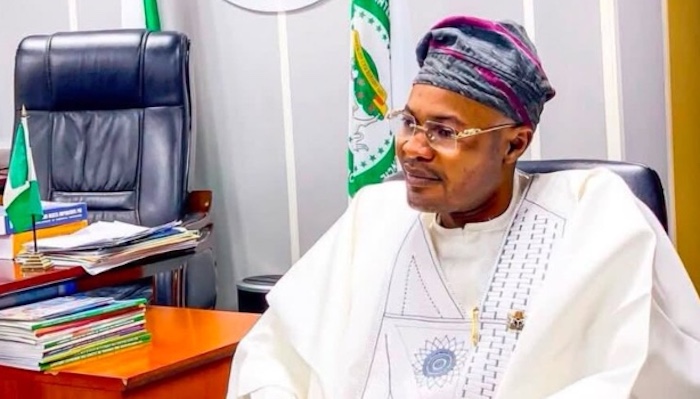
The Federal High Court in Abuja on Monday struck out the eight-count forgery charge brought against the self-styled Director-General (DG) of the alleged “non-existent” Presidential Foreign Investment Promotion Council (PFIPC), Prince Adeniyi Adeyemi.
Justice Mohammed Umar terminated further proceedings in the case following an application by the Federal Government, which was represented by the Director of Public Prosecutions of the Federation (DPPF), Mr. Rotimi Oyedepo, SAN.
It will be recalled that although the charge was originally brought before the court by the police, the office of the Attorney-General of the Federation (AGF) took over the prosecution at the last adjourned date.
When the matter was called on Monday, the DPPF notified the court that the AGF, after a proper review of the case file, had found some loopholes that informed his decision to withdraw the charge.
He told the court that the government had concluded plans to move the case to the High Court of the Federal Capital Territory (FCT) for a fresh arraignment of the defendant.
News
CJN Kekere-Ekun swears in 68 new SANs
During her address at the Supreme Court Complex in Abuja, Kekere-Ekun urged judicial officers to embrace reforms aimed at accelerating the administration of justice, citing the increasing number of cases before the courts.
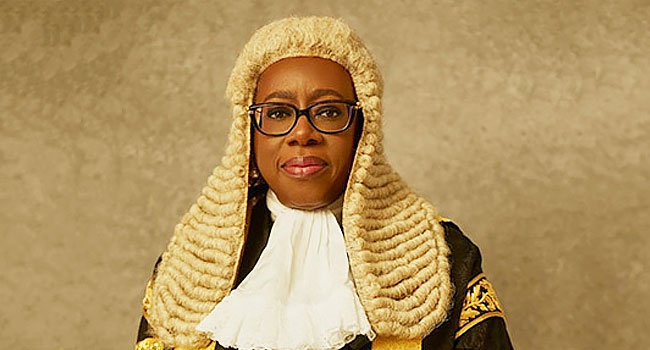
Chief Justice of Nigeria, Justice Kudirat Kekere-Ekun, has sworn in 68 new Senior Advocates of Nigeria (SANs) at the ceremony marking the 2026/2027 legal year.
The Nigerian Television Authority (NTA) reported the development accompanied by a video and photographs shared on its official X handle, on Monday.
During her address at the Supreme Court Complex in Abuja, Kekere-Ekun urged judicial officers to embrace reforms aimed at accelerating the administration of justice, citing the increasing number of cases before the courts.
She also encouraged judges to leverage technology to improve the adjudication of cases.
Reviewing the judiciary’s performance in the year under review, the CJN disclosed that more than 2,000 cases were filed at the Supreme Court, with civil matters accounting for the majority.
Kekere-Ekun also cautioned legal practitioners against discrediting court judgments in the media.

A fire has broken out at a First Bank of Nigeria branch along the busy Abuja-Keffi Road, with thick black smoke billowing from the building this afternoon.
Videos circulating on social media show flames and heavy smoke rising from the structure, identified by multiple eyewitnesses as the First Bank location in the Mararaba/Karu area of the expressway. Bystanders can be seen attempting to douse the blaze with buckets of water amid reports that fire service response was delayed or absent in the initial moments.
The exact cause of the fire remains unconfirmed at this time. There are no immediate reports of casualties, though the full extent of damage to the bank building and any impact on surrounding properties or traffic along the heavily congested Abuja-Keffi corridor is still being assessed.
Emergency responders, including fire service personnel, are expected on the scene. Commuters and residents in the Nyanya-Mararaba-Karu axis are advised to exercise caution as the incident may cause further traffic disruptions on the already busy route.
Further updates will follow as more details emerge from official sources.


AI to eliminate 40% of global jobs – IMF boss

JUST IN: Pope Leo XIV to Undergo Surgery for Early-Stage Lung Nodule

FG Withdraw Charges Against PFIPC DG Adeyemi

Tech Expert, Zuckerberg trains with UFC champions, Adesanya, Alexander

Organ Trafficking: Ekweremadu bags 10 years in UK prison

SAINT OBI: Between his marriage and his death
-

 Business21 hours ago
Nigeria’s ₦33bn Fruit Import Bill Exposes Missed Opportunities in Jos
-

 Business22 hours ago
Naira To Dollar, Pound ,Euro …Rates For Monday, October 12
-
 International1 day ago
‘Up to our people’ to pick leader, Zelenskyy responds to Trump’s pledge for new elections in Ukraine
-

 Opinions1 day ago
Human Capital Africa Statement For International Day of the Girl Child 2026
-

 News22 hours ago
Forbes Scores GTBank Best Employers 2026
-
 Politics20 hours ago
2027: 119 Women Jostle For State’s Governors
-
 Politics16 hours ago
BEWARE: Fake 2027 Gov’ Candidates List Circulating Online — INEC Raises Alarm
-

 International1 day ago
Time for Ukraine to get a new president’, says Trump