
International
Ukraine to present US with Russia partial ceasefire deal


Ukraine will present the United States on Tuesday with a plan for a partial ceasefire with Russia, hoping to restore support from its key benefactor, which under President Donald Trump has demanded concessions to end the three-year war.
The talks in Saudi Arabia come as Russia has ramped up attacks against Ukraine and Kyiv has hit back, including with an overnight attack on Moscow involving dozens of drones, the city’s mayor said Tuesday.
The meeting will be the most senior since a disastrous White House visit last month when Trump berated Ukraine’s President Volodymyr Zelensky for purported ingratitude.
Since Trump’s dressing down of Zelensky, Washington has suspended military aid to Ukraine as well as intelligence sharing and access to satellite imagery in a bid to force it to the negotiating table.
Zelensky, who wrote a repentant letter to Trump, flew to the port city of Jeddah to meet Saudi rulers, but was leaving the talks to three top aides.
US Secretary of State Marco Rubio, who will be joined by Trump’s national security advisor Mike Waltz, said the aid suspension was “something I hope we can resolve” in the talks on Tuesday.
“Hopefully, we’ll have a good meeting and good news to report,” Rubio said.
Rubio said that the United States had not cut off intelligence for defensive operations.
Zelensky left the White House without signing an agreement demanded by Trump that would give the United States access to much of Ukraine’s mineral wealth as compensation for past weapons supplies.
Zelensky has said he is still willing to sign, although Rubio said it would not be the focus of Tuesday’s talks.
Russia has since escalated its strikes against Ukrainian infrastructure and retaken villages in its Kursk region that Ukraine had captured in a bid for bargaining leverage.
On the eve of the Saudi talks, Ukraine carried out what Moscow mayor Sergei Sobyanin described as a “massive” attack on the Russian capital, with 69 drones intercepted as of early Tuesday morning.
The attack killed at least one person and injured another three, according to Andrei Vorobyov, governor of the Moscow region.
– Forced into concession –
In the White House meeting, Zelensky refused to bite his tongue in the face of criticism from Vice President JD Vance, with the Ukrainian leader questioning why his country should trust promises from Russia which launched a full-scale invasion in 2022 despite previous diplomacy.
But faced with Washington’s pressure, Ukraine will lay out its support for a limited ceasefire.
“We do have a proposal for a ceasefire in the sky and ceasefire at sea,” a Ukrainian official told AFP on Monday, speaking on condition of anonymity.
Because these are the ceasefire options that are easy to install and to monitor, and it’s possible to start with them.
”Rubio signalled that the Trump administration would likely be pleased by such a proposal.
“I’m not saying that alone is enough, but it’s the kind of concession you would need to see in order to end the conflict,” he told reporters.
“You’re not going to get a ceasefire and an end to this war unless both sides make concessions.”
“The Russians can’t conquer all of Ukraine and obviously it will be very difficult for Ukraine in any reasonable time period to force the Russians all the way back to where they were back in 2014,” Rubio said, referring to the time of a partial offensive and Russian seizure of the Crimea peninsula.
In a meeting with Saudi Crown Prince Mohammed bin Salman ahead of the US-Ukraine talks, Zelensky discussed Ukraine’s conditions for any permanent peace deal, including the release of prisoners and the return of children Kyiv accuses Moscow of abducting, the Ukrainian leader’s office said in a statement Monday.
The two leaders “discussed the possible mediation of Saudi Arabia in the release of military and civilian prisoners and the return of deported children”, the statement said.
“The leaders exchanged views on the formats of security guarantees and what they should be for Ukraine so that war does not return again.”
– Reporting back to Russia –
Rubio said he did not expect to sit in a room in Jeddah with the Ukrainians “drawing lines on a map” towards a final deal.
But Rubio said he would bring the ideas back to Russia. Rubio and Waltz met last month, also in Saudi Arabia, with counterparts from Russia, ending a freeze in high-level contacts imposed by former president Joe Biden after Russia defied Western warnings and launched its invasion.
Trump last week also threatened further sanctions against Russia to force it to the table as it carried out strikes on Ukraine.
But Trump’s abrupt shift in US policy has stunned many allies. Rubio said the United States was objecting to “antagonistic” language on Russia at a gathering of Group of Seven foreign ministers later this week in Canada.
German Foreign Minister Annalena Baerbock called the scene from the White House “unspeakable” and described a “new age of infamy” that will require Europeans to shoulder more responsibility.
French senator Claude Malhuret, in a speech that went viral in the United States even in translation, said that Trump had failed to see through Kremlin propaganda and that Russia was failing in Ukraine, picking up only small pockets of land after three years attacking a smaller country.
“The American lifeline to Putin is the biggest strategic mistake ever made during a war,” he said.
AFP







International
Zimbabwe Wins UN Security Council Seat for 2027-2028
The five countries were elected by the 193-member General Assembly to serve as non-permanent members of the Security Council for two-year terms beginning on January 1, 2027.

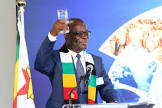
Zimbabwe has been elected to a non-permanent, two-year term on the United Nations Security Council, the third time the country will be represented on the body mandated to maintain international peace and security.
Voice of Nigeria reports that the other countries that secured seats around the iconic horseshoe table are Austria, Portugal, Trinidad and Tobago, and Kyrgyzstan.
The five countries were elected by the 193-member General Assembly to serve as non-permanent members of the Security Council for two-year terms beginning on January 1, 2027.
Austria and Portugal won the two seats allocated to the Western European and other States (WEOG) Group, while Trinidad and Tobago and Zimbabwe were elected from the Latin American and Caribbean Group and the African Group, respectively.
Kyrgyzstan secured the Asia-Pacific seat after defeating the Philippines in four rounds of voting.
International
Finland’s president says EU should expand to 40 states — including Canada
His comments come as the Trump administration’s actions, alongside Russia’s war with Ukraine, prompt some countries to reconsider the benefits of EU membership.
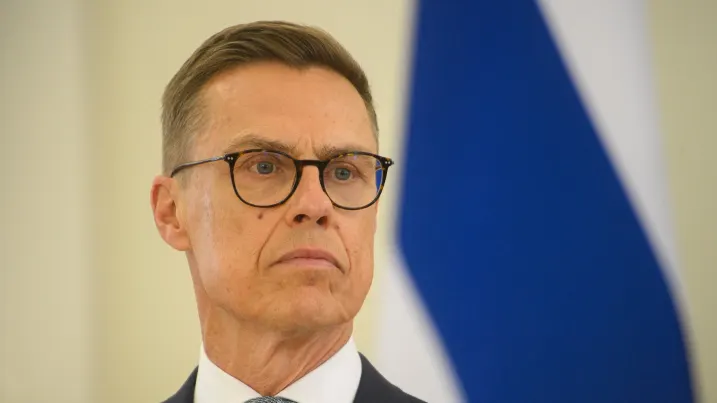
• Finland’s president Alexander Stubb
Finnish President Alexander Stubb has stressed the need for a much larger European Union, saying the 27-nation bloc should increase its membership to 40 states and named the U.K., Canada, Turkey, Norway and Iceland as potential candidates to join.
Stubb made the call at an energy conference in the Finnish capital on Wednesday.
His comments come as the Trump administration’s actions, alongside Russia’s war with Ukraine, prompt some countries to reconsider the benefits of EU membership.
Stubb told the Eurelectric Power Summit that “the window of opportunity” for EU enlargement “is quite short because when the war in Ukraine ends and perhaps when the U.S. administration changes, I don’t know, then people are going to take their foot off the gas pedal and start heckling about unnecessary stuff again.”
Stubb added that “European strategic autonomy or European geopolitical power” is “often based on size and scale and I think the best European policy ever has been European enlargement.”
“In this moment, we need to think big and geographically, we need to enlarge or at least create memberships which are flexible enough to bring in a sum total of 40 European states — or even non-European,” Stubb said.
Finland’s president said the EU should look to its western flank and bring the U.K., which left the bloc in 2020, back into the fold, or at least “as close as possible
.”Canada should be considered as another option, Stubb said. “Wouldn’t it be lovely if Canada was the 28th state of the European Union rather than the 51st state of the United States?”
International
Iran Kuwait’s airport attack injures 63
Health ministry spokesman Abdullah al-Sanad said 25 ambulances were dispatched at Kuwait International Airport, adding that “63 injured individuals were received and distributed among hospitals.
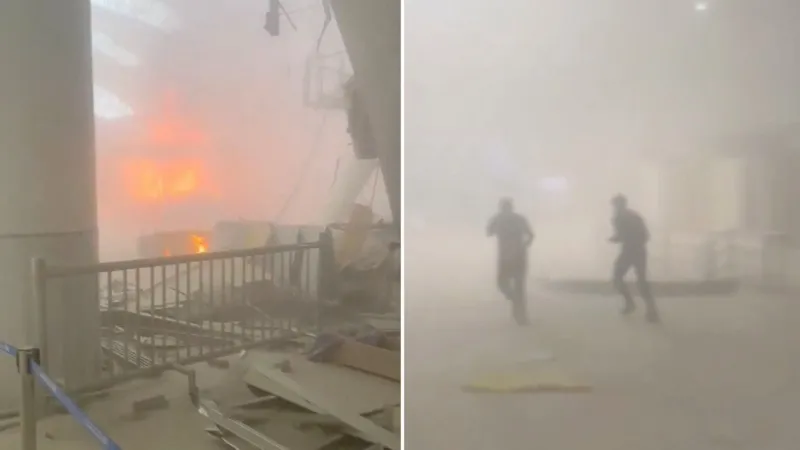
Today Wednesday June 3: Kuwait International Airport was hit by Iranian drones.
An Iranian attack on Kuwait’s airport wounded at least 63 people on Wednesday, the health ministry said, with authorities earlier reporting one person killed.
Health ministry spokesman Abdullah al-Sanad said 25 ambulances were dispatched at Kuwait International Airport, adding that “63 injured individuals were received and distributed among hospitals.
This includes serious injuries… including head wounds, cerebral hemorrhages, amputations and injuries resulting from explosions.”
An airport source told AFP that the death in Kuwait was an Indian national at the airport.


FIFA World Cup Day 2: Canada holds 1-1 Bosnia-Herzegovina

Democracy Still Struggling 33 Years After June 12, PDP Laments by Comrade Ini Ememobong

JUNE 12: President Bola Ahmed Tinubu’s Democracy Day Address (Full Speech)

Tech Expert, Zuckerberg trains with UFC champions, Adesanya, Alexander

Organ Trafficking: Ekweremadu bags 10 years in UK prison

SAINT OBI: Between his marriage and his death
-

 Business3 days ago
UBA wins 2026 ‘Banker Technology’ award for AI innovation
-
 Business2 days ago
Exchange Rates Thursday,11June 2026
-
 Sports3 days ago
Olympic qualifier: Comoros to face Super Falcons following 30-0 victory over Sudan
-
 Business3 days ago
Invest in Lagos 3.0 Summit Attracts more than 600 delegates
-

 News2 days ago
JUST IN: Nigerians evacuated from South Africa arrives Lagos
-
 Health3 days ago
Ebola: President Tinubu approves N10bn to strengthen NCDC preparedness
-
 Politics3 days ago
Bamidele tasks 11th Senate to consider single term for President, govs
-
 News2 days ago
NLC President Joe Ajaero wins Arthur Svensson International award for worker’s rights