
International
UK, Nigeria launch creative industries technical Working Group

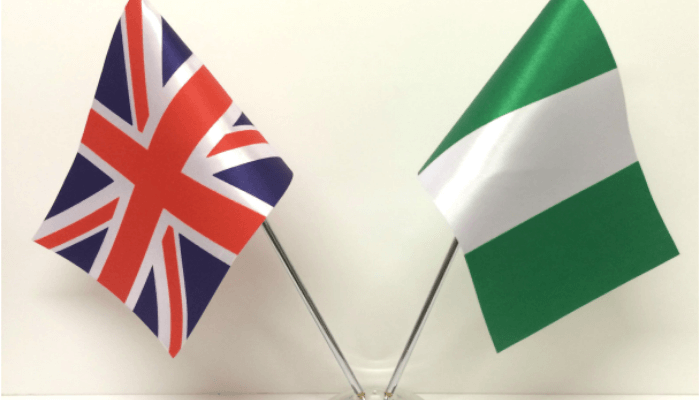
The UK and Nigeria have officially launched the Creative Industries Technical Working Group, marking a pivotal development in the UK-Nigeria Enhanced Trade and Investment Partnership (ETIP).
This partnership aims to deepen bilateral ties and create a robust framework for growth within the creative sectors of both nations.
A statement by the UK High Commission in Lagos said the launch of this working group and a match-making event for UK-Nigeria creative industries leaders today in London represents a milestone in the UK-Nigeria relationship, designed to boost innovation, cross-border creative collaborations, and sustainable economic growth and development.
It said both events provided a dynamic platform to explore new opportunities and form commercial alliances within key creative subsectors such as Film and TV, Music, Fashion & Design, Architecture, Advertising, and Gaming.
The initiative is poised to foster long-term growth, enhance job creation, and unlock new pathways for creativity and innovation in both countries by prioritising collaboration and cultural exchange.
Speaking on the significance of the launch, Florence Eshalomi MP, the UK’s Trade Envoy to Nigeria and Co-Chair of the UK-NG Creatives Technical Working Group, said: “Today marks a significant moment as we launch the UK-Nigeria Creatives Working Group.
Our nations share a rich cultural bond and a deep belief in the transformative power of creativity, through music, film, fashion, and the arts.
“This initiative, rooted in our landmark Enhanced Trade & Investment Partnerships (ETIP), will drive stronger trade ties, foster deeper collaboration, and unlock the full potential of our creative industries.
“By enhancing market access and investing in skills, we are opening doors to new opportunities that will create jobs and boost economic growth in the UK and Nigeria.”
Emphasising the need for deeper creative and cultural ties, Mr Obi Asika, Director General of the National Council for Arts and Culture and Co-Chair of the UK-NG Creatives Technical Working Group in Nigeria, said: “Nigeria’s creative economy is a global force, driven by our storytellers, musicians, designers, and digital innovators.
From Nollywood to Afrobeats, fashion to gaming, our industries are reshaping global culture and commerce.
“However, to unlock the full potential of this sector, we need strategic investment and support not just in talent, but in the institutions and infrastructure that will sustain long-term growth.”
Representing Mr., Obi Asika from the Nigerian side, Prince Baba Agba, Special Assistant to the President of Nigeria on Creativity, underscored the importance of leveraging UK expertise for impactful collaborations, adding:
“The UK’s creative industries stand as a global benchmark for institutional excellence, market distribution, and innovation.
We are eager to tap into your expertise for meaningful partnerships.
“This Working Group isn’t just about discussions – it’s about taking concrete actions that will yield tangible outcomes for creators, businesses, and industry stakeholders on both sides.”


International
South Africa Anti-Immigration Peaceful Protests To Continue Weekly Till Demands Are Met
A senior reporter, Channel, Africa, Nhlanhla Mahlangu, reported that the anti-immigration protests held across several South African cities remained largely peaceful despite isolated incidents of violence and attempted looting.

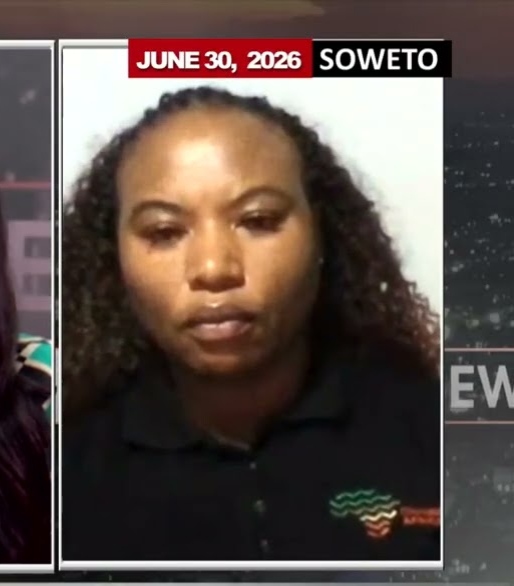
The organisers of South Africa anti-immigrant protest have announced that come next week, from Thursday, every Thursday, they will be taking to the streets until the government heeds to their call and ensure that all undocumented nationals leave the country.
A senior reporter, Channel, Africa, Nhlanhla Mahlangu, reported that the anti-immigration protests held across several South African cities remained largely peaceful despite isolated incidents of violence and attempted looting.
She also revealed that organisers intend to continue with weekly demonstrations from next Thursday until their demands are met.
Mahlangu further reported that an inter-ministerial committee comprising ministers within South Africa’s security cluster commended the largely peaceful conduct of the protests while condemning isolated incidents of violence reported across the country.
International
Cut Petrol Prices Now, Trump orders Retailers
Trump warned that his administration would not tolerate price gouging, describing the practice as illegal and cautioning retailers that those who ignore the call to lower prices could face “big problems
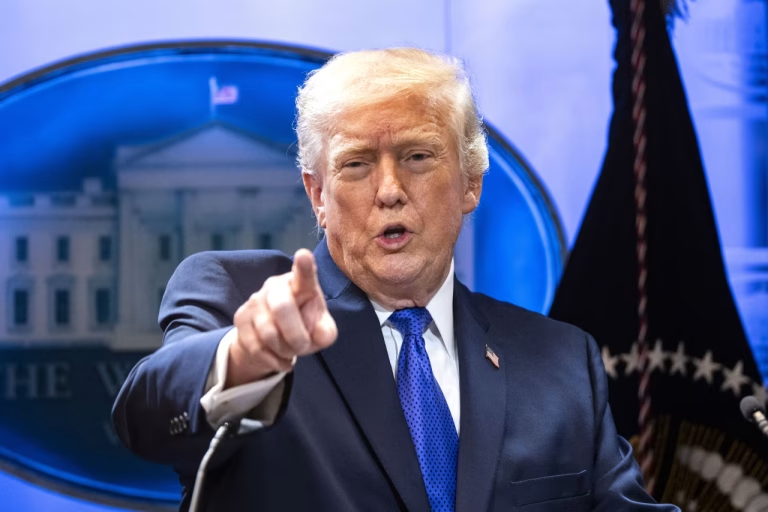
United States President Donald Trump has directed gasoline retailers across the country to reduce pump prices without delay.
Trump issued the directive in a post on his Truth Social platform, accusing fuel retailers of keeping prices unnecessarily high despite crude oil trading at about $68 per barrel.
“Gasoline retailers must get their prices down immediately”, the president declared, urging companies to “do what they know is right” by passing lower costs on to consumers.”
He argued that declining global crude oil prices should translate into immediate relief for American motorists.
Trump warned that his administration would not tolerate price gouging, describing the practice as illegal and cautioning retailers that those who ignore the call to lower prices could face “big problems.”
International
JUST IN: Third Batch of Evacuated Nigerians from SA Arrives in Lagos Amid Xenophobia Fears
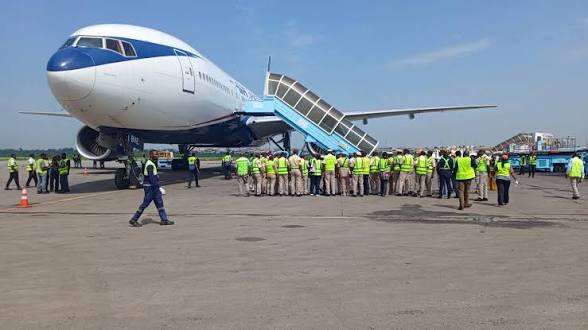
A fresh group of Nigerians evacuated from South Africa has landed safely in Lagos as the Federal Government continues its voluntary repatriation exercise amid heightened anti-immigrant tensions in the country.
The Air Peace flight carrying approximately 271 returnees touched down at the Murtala Muhammed International Airport (MMIA) in Lagos on Tuesday morning, shortly before 11 a.m. This marks the third major batch in the ongoing operation.
Officials from the National Emergency Management Agency (NEMA), Nigeria Immigration Service (NIS), Nigerians in Diaspora Commission (NiDCOM), and other relevant agencies were on ground to receive the evacuees, who will undergo documentation, profiling, and medical checks before reintegration support.
The latest flight departed Johannesburg late Monday night / early Tuesday, following an earlier departure from Nigeria. It forms part of President Bola Tinubu administration’s efforts to ensure the safety and welfare of citizens choosing to return home voluntarily.
Prior batches included around 258-268 returnees who arrived on June 11 and 66 more on June 25, bringing the cumulative total to over 500 before today’s arrival. The government has indicated plans for additional flights to accommodate more registered Nigerians wishing to leave South Africa.
The evacuations come ahead of and in response to planned anti-migrant protests in South Africa on June 30, with reports of over 15,000 Nigerians still potentially interested in returning amid fears of xenophobic attacks, looting, and harassment.
The Ministry of Foreign Affairs has urged remaining Nigerians in South Africa to stay vigilant, maintain contact with the Nigerian High Commission, and take advantage of available evacuation support where needed. Officials continue to monitor the situation closely while providing consular assistance.


Nigeria Moves from Decline to Stability – Finance Minister Oyedele (Photos)

CBN revokes 46 MFBs’ licences

Nigeria must never experience another civil war, Obasanjo warns

Tech Expert, Zuckerberg trains with UFC champions, Adesanya, Alexander

Organ Trafficking: Ekweremadu bags 10 years in UK prison

SAINT OBI: Between his marriage and his death
-
 News3 days ago
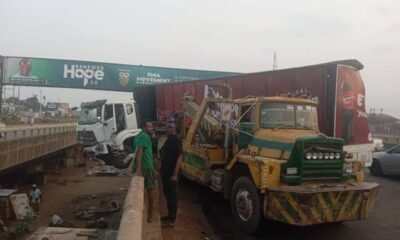
JUST IN: Two Trucks, Car Collide on Lagos Expressway, Several Injured
-
 Business3 days ago
Naira Exchange Rates Monday, 29 June 2026
-

 Health3 days ago
WHO Confirms 1,300 deaths in Europe heatwaves
-
 Politics3 days ago
2027: Atiku Alleged Plot To Keep ADC Off Ballot
-

 News3 days ago
JAMB and Rite Foods Initiate Rewarding Top Performing Candidates
-
 Business2 days ago
BUA Group Denies Reports of Bid to Acquire Stake in Kano Pillars Football Club
-
 News3 days ago
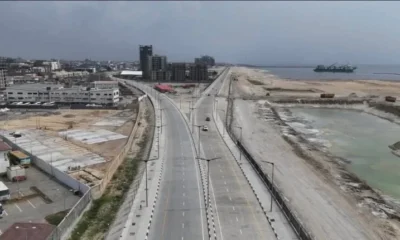
FG bans motorcycles, tricycles on Lagos-Calabar Coastal Highway
-
 Politics3 days ago
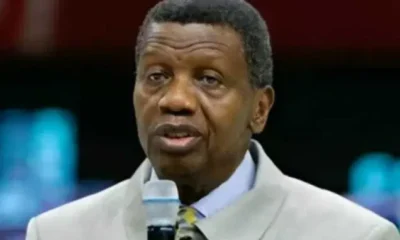
JUST IN: Adeboye says he Admires Trump, declaring “He is the best politician I’ve met’