
Sports
Ugborodo’s abandoned FIFA project
Pinnick and Monimichelle accuse each other of being responsible for the project’s abandonment, while the public remains in the dark about what funds were released, how they were utilised, and why the project has been put on hold.

(Vanguard): When former FIFA President, Joseph S. Blatter, launched the FIFA Goal Project in 1999, the initiative was envisioned as a catalyst for global football development; one that would help countries build modern training grounds, nurture grassroots talents and strengthen the structures of football administration.
For many nations, the project has been nothing short of transformative.
In Nigeria, however, the story is painfully familiar.In 2020, FIFA approved the construction of two mini-stadiums: one in Birnin Kebbi, Kebbi State and another in Ugborodo, Delta State; each valued at $1.2 million.
While the Kebbi facility, built by Enron Construction, now stands completed, the Ugborodo project has become mired in controversy, delay and finger-pointing. And once again, Nigerians are left asking: How did we get here?
Launched with enthusiasm, the Ugborodo mini-stadium was celebrated as a project that would unite the Itsekiri, Ilaje, and Ijaw communities.
Delta State officials promised full support, applauding FIFA and the NFF for selecting the community.
Yet today, the site, awarded to Monimichelle Sports Construction Company under the leadership of then NFF President Amaju Pinnick, has become a symbol of yet another failed infrastructure dream.
While the Kebbi facility, built by Enron Construction, now stands completed, the Ugborodo project has become mired in controversy, delay and finger-pointing.
The stalled project is not just a physical eyesore, it is a metaphor for the deeper malaise afflicting Nigeria’s sports development ecosystem.
At a time when the nation continues to produce exceptional football talents against all odds, the very infrastructure meant to nurture these talents is either non-existent, ill-maintained or abandoned.
Worse still, the key actors are now trading blame instead of providing answers.
Pinnick and Monimichelle accuse each other of being responsible for the project’s abandonment, while the public remains in the dark about what funds were released, how they were utilised, and why the project has been put on hold.
Nigerians deserve better than recycled excuses. They deserve accountability.
The FIFA Goal Project operates with strict implementation and reporting standards.
If Nigeria cannot properly manage a $1.2 million mini-stadium, what message does that send about our seriousness in sports administration?
Why has no one been held accountable? How much was disbursed? What are the deliverables? Who failed to meet them?The Ugborodo embarrassment should be a turning point.
Every FIFA-funded or assisted project in Nigeria must henceforth undergo independent auditing, transparent, publicly accessible reporting and community-level monitoring to prevent abandonment and diversion.
Sports infrastructure is not a political souvenir to be handed out for patronage. It is a national asset with long-term developmental value.
Treating such projects casually undermines the opportunities for young athletes. It erodes public trust.
Ugborodo should therefore stand as a wake-up call, not another forgotten statistic in Nigeria’s long list of uncompleted projects.
And Nigeria must finally learn to move from fanfare to follow-through, from ceremonial ground-breaking to sustained institution-building.
Our young talents deserve better and more.
Sports
FIFA ranks Super Eagles third in Africa, 26th globally
Globally, France has reclaimed the number one spot after wins over Colombia and Brazil, overtaking Spain, which was held to a goalless draw by a ten-man Egypt. Argentina, England, Portugal, and Brazil round out the top six.
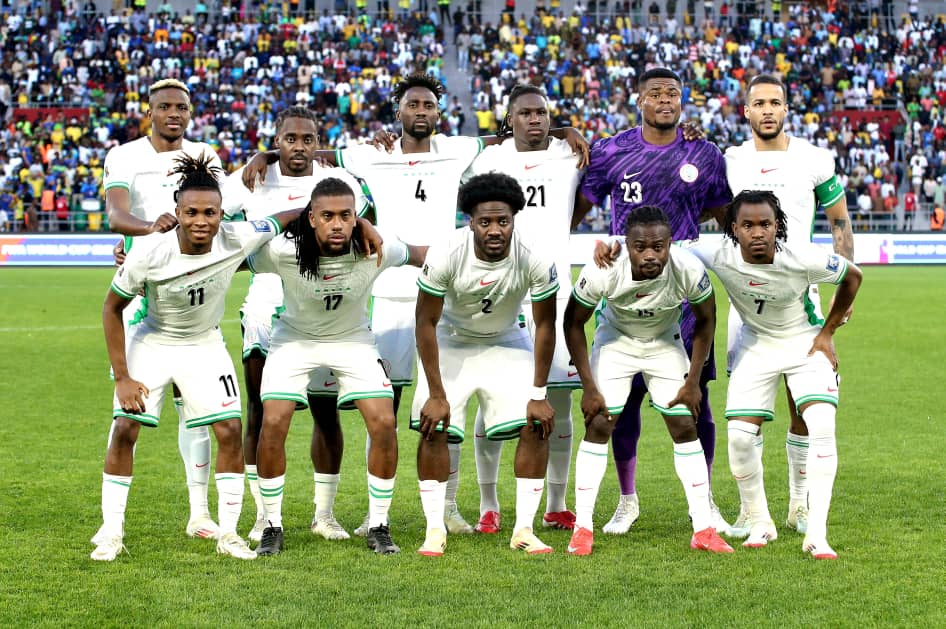
The world’s football body , FIFA, has ranked Nigeria’s Super Eagles third in Africa (behind Morocco and Senegal), and 26th globally.
In a post on FIFA’s website on Wednesday, the ranking reflects Nigeria’s strong performances in friendlies, including a 2‑1 win over Iran and a 2‑2 draw with Jordan, as well as their showing at the Africa Cup of Nations earlier this year.
In the 2025 AFCON tournament, Nigeria won five matches against Tanzania, Tunisia, Uganda, Mozambique, and Algeria, drew with Morocco in the semi-finals, and defeated Egypt in the third-place playoff.
Other nations saw minor adjustments in the rankings.
Iran slipped from 20th to 21st following consecutive defeats, while Jordan moved up to 63rd after draws with Nigeria and Costa Rica.
Globally, France has reclaimed the number one spot after wins over Colombia and Brazil, overtaking Spain, which was held to a goalless draw by a ten-man Egypt. Argentina, England, Portugal, and Brazil round out the top six.
Sports
FirstBank Sponsors Samuel Okwaraji U-16 Football Championship 2026
The tournament will engage secondary schools from all 36 states and the FCT, in a two-stage competition.
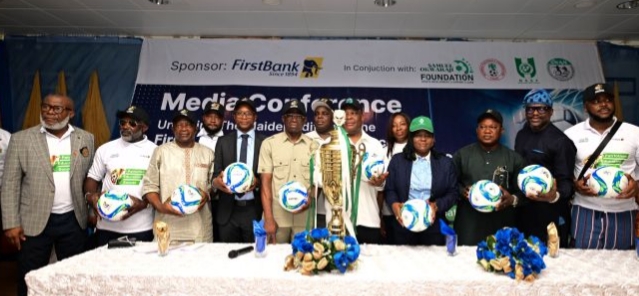
FirstBank, through its First@Sports initiative, is sponsoring the maiden edition of the Samuel Okwaraji Under 16 Football Championship.
The competition is a nationwide youth football tournament organised to honour the late Samuel Okwaraji, one of Nigeria’s most celebrated football legends renowned for his patriotism, discipline, and commitment to national service.
The tournament will engage secondary schools from all 36 states and the FCT, in a two-stage competition.
The first stage will feature zonal eliminations across the six geopolitical zones, followed by a national final in Abuja featuring the top 12 qualifying teams.
In a statement , the Managing Director/ CEO of FirstBank, Olusegun Alebiosu, said: “Football is the strongest unifier of Nigerians. It brings communities together, inspires discipline, and nurtures talents across the country.
FirstBank is making a deliberate incursion into grassroots football development with this sponsorship, creating an enabling environment for the next generation of Samuel Okwarajis to discover, refine, and maximise their potential, thereby shaping the future of Nigerian football.”
In his remarks, Senator Osita Izunaso, the Chairman of the Championship Organising Committee commended FirstBank for throwing its weight around the championship.
Sports
Sportsville Awards: Olopade Leads NSC Delegation to Honour Dikko with Transformative Impact Award

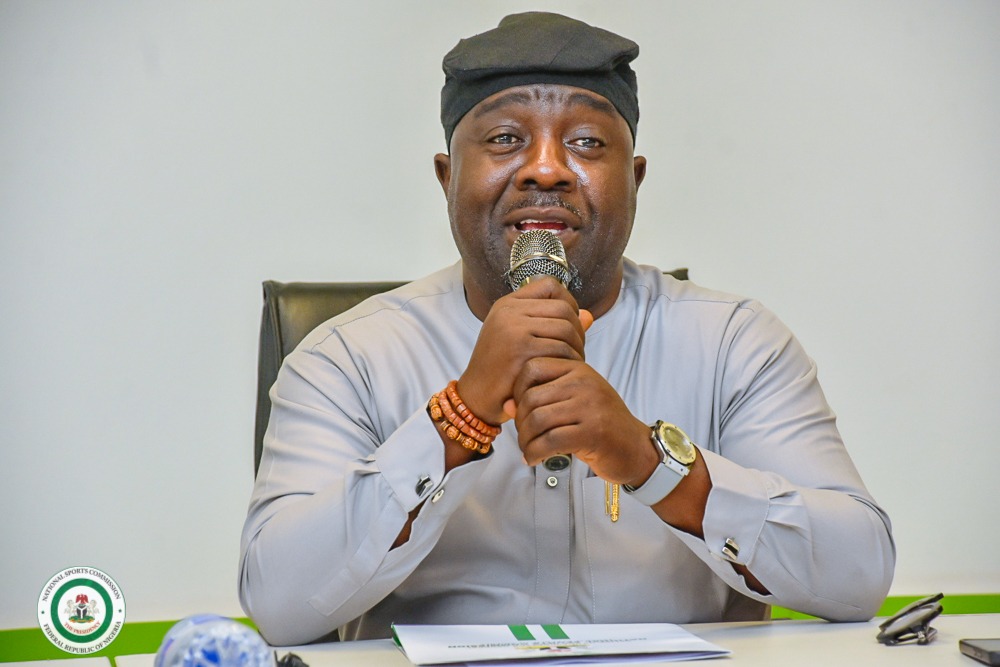
The Director-General of the National Sports Commission (NSC), Hon. Bukola Olopade, on Tuesday led a high-powered delegation from the Commission to the prestigious Sportsville Awards in Lagos to honour NSC Chairman, Mallam Shehu Dikko.
Dikko is set to receive the Transformative Impact Award at the 2026 edition of the Sportsville Special Recognition Awards, in recognition of his outstanding leadership and contributions to repositioning Nigerian sports.
The NSC delegation’s presence underscored the Commission’s unity and support for its Chairman, who has been widely praised for driving reforms, fostering inclusivity, and delivering renewed optimism in Nigerian sports administration alongside Olopade.
Former NPFL scribe Salihu Abubakar and other stakeholders have already extended congratulations to Dikko, describing the nomination as well-deserved.
Stakeholders, including Dr. Danladi Bako, have lauded Sportsville as one of the most authentic sports awards in the country, commending the organisers for recognising genuine impact in the sector.
The sixth edition of the Sportsville Awards, which also featured former Minister of Sports, Sunday Dare, as a top guest, celebrates excellence and transformative contributions across Nigeria’s sporting ecosystem.
Other nominees include Hon. Itiako Ikpokpo and several prominent figures in sports development.
Hon. Olopade, who himself was recently crowned Sports Administrator of the Year at the New Telegraph Awards, dedicated previous honours to President Bola Tinubu and Chairman Dikko, highlighting the collaborative leadership driving Nigeria’s sports renaissance.
Mallam Shehu Dikko’s leadership at the NSC has been credited with major gains in infrastructure, athlete welfare, and international competitiveness, marking a turning point for Nigerian sports.
The event is expected to draw key stakeholders from the sports industry, government, and private sector as it honours individuals making lasting contributions to the development of sports in Nigeria.
Full coverage and reactions from the awards ceremony are anticipated as the night unfolds in Lagos.


Resident Doctors Set to Begin Nationwide Indefinite Strike on April 7 Over Unmet Demands

Nigerian Army Debunks Claims of Attack on Bishop Matthew Kukah’s Residence and Sokoto Catholic Cathedral

JUST IN: Lagos Fire Service Successfully Contains Two Overnight Fire Incidents iin Lagos

Tech Expert, Zuckerberg trains with UFC champions, Adesanya, Alexander

Organ Trafficking: Ekweremadu bags 10 years in UK prison

SAINT OBI: Between his marriage and his death
-
 Crime3 days ago
Ebonyi: Gunmen Assasinate Another Traditional Ruler
-
 Politics2 days ago
INEC Dismisses Calls for Chairman’s Removal
-
 Crime1 day ago
Three Killed, One Injured in Fresh Jos Attack (Video)
-
 Politics1 day ago
Labour Party to hold presidential primary April 28
-
 Politics1 day ago
Onyejeocha resigns as Minister of State for Labour
-
 Politics1 day ago
No force can defeat Tinubu in 2027 –Umahi
-
 News24 hours ago
JUST IN: Lagos Fire Service Successfully Contains Two Overnight Fire Incidents iin Lagos
-
 News19 hours ago
Nigerian Army Debunks Claims of Attack on Bishop Matthew Kukah’s Residence and Sokoto Catholic Cathedral