
International
Turkey Supports Sweden’s Nato membership

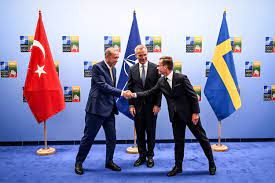
Turkey’s President Recep Tayyip Erdogan has agreed to support Sweden’s bid to join Nato, the military alliance’s chief Jens Stoltenberg says.
He said the Turkish leader would forward Sweden’s bid to parliament in Ankara and “ensure ratification”.
Meanwhile, Swedish Prime Minister Ulf Kristersson said: “I am very happy, it is a good day for Sweden.”
Turkey had previously spent months blocking Sweden’s application, accusing it of hosting Kurdish militants.
As one of Nato’s 31 members, Turkey has a veto over any new country joining the group.
Reacting to the news, US President Joe Biden said he welcomed the commitment by President Erdogan to proceed with “swift ratification”.
“I stand ready to work with President Erdogan and Turkey on enhancing defence and deterrence in the Euro-Atlantic area. I look forward to welcoming Prime Minister Kristersson and Sweden as our 32nd Nato ally,” a White House statement said.
German Foreign Minister Annalena Baerbock tweeted: “At 32, we’re all safer together.” British Prime Minister Rishi Sunak said Sweden joining would “make us all safer”.
Mr Stoltenberg announced the agreement late on Monday following talks between the Turkish and Swedish leaders in the Lithuanian capital Vilnius.
The Nato chief described it as a “historic step”, but stressed that a “clear date” could not be given for when Sweden would join the military alliance – as this relied on the Turkish parliament.
Sweden and its eastern neighbour Finland, both long considered as militarily neutral, announced their intention to join Nato in May last year, several months after Russia launched its full-scale invasion of Ukraine. Finland formally joined in April.
Mr Stoltenberg said Turkey and Sweden had addressed “Turkey’s legitimate security concerns” and as a result Sweden had amended its constitution, changed its laws, expanded its counter-terrorism operation against the PKK (Kurdistan Workers’ party) and resumed arms exports to Turkey.
Turkey and Hungary are currently the only two Nato members yet to ratify Sweden’s membership application.
Hungarian Foreign Minister Peter Szijjarto said on Tuesday that ratification of Sweden’s bid is now “only a technical question”.
On Monday, President Erdogan had also appeared to link Turkish support for Sweden’s Nato bid to the EU re-opening frozen membership talks with Ankara.
EU officials were quick to reject the demand, saying those were two separate issues.
But in a statement after the deal was announced, Nato said Sweden would actively support efforts to “reinvigorate Turkey’s EU accession process” and this would include “modernisation of the EU-Türkiye customs union and visa liberalisation”.
Turkey first applied to join the EU way back in 1987, but its drift towards authoritarianism under President Erdogan brought the accession process to a halt.
However since Russia’s invasion of Ukraine, Mr Erdogan has also played a unique role as a Nato leader with influence in Moscow.
He helped broker last year’s Black Sea Grain Initiative, which enables Ukraine to export agricultural products from its ports.
Turkey has helped keep the deal alive, despite frequent Russian threats to withdraw.
But Turkey has also angered the Kremlin by supplying armed drones to Ukraine.

Vietnamese authorities have busted what officials describe as one of the country’s largest cryptocurrency scams, arresting key suspects in a multi-billion dollar Ponzi-style scheme that allegedly defrauded thousands of investors both domestically and overseas.
The operation, centered around a fraudulent digital token known as Paynet Coin (PAYN), was dismantled by police in Phu Tho province in August 2025. Authorities charged at least 20 individuals, including the alleged ringleader, Nguyen Van Ha, a 45-year-old entrepreneur and founder linked to the Hahalolo platform.
According to reports from local state media, including Công an Nhân dân, the suspects operated an illegal multi-level marketing (MLM) network disguised as a legitimate cryptocurrency investment platform.
Victims were lured with promises of high returns through the Paynet Coin scheme, which authorities labeled as the biggest crypto fraud uncovered in Vietnam to date. The operation reportedly spanned multiple provinces and attracted investors from abroad.
Police seized evidence related to the scheme and charged the suspects with fraud and organizing illegal MLM activities. Estimates of the total scale have varied in reports, with some describing losses in the billions of dollars, though exact figures for victim losses and assets recovered have not been fully disclosed publicly.
This bust is part of a broader crackdown on cryptocurrency-related crimes in Vietnam, where digital asset trading has grown rapidly in recent years but has also attracted scammers exploiting regulatory gaps.
Other recent cases include arrests tied to platforms like ONUS and HanaGold for alleged price manipulation, as well as smaller scams involving fake exchanges and investment schemes totaling millions of dollars.
Vietnamese law enforcement has intensified efforts against online fraud, Ponzi schemes, and unlicensed crypto operations amid a surge in investor complaints. Officials have warned the public to exercise caution with high-yield crypto investments promising unrealistic returns.
The investigation remains ongoing, with authorities urging additional victims to come forward. This case highlights the risks in Vietnam’s booming but largely unregulated crypto market, where millions of citizens hold digital assets.
No further details on trial dates or additional arrests have been released as of the latest reports.
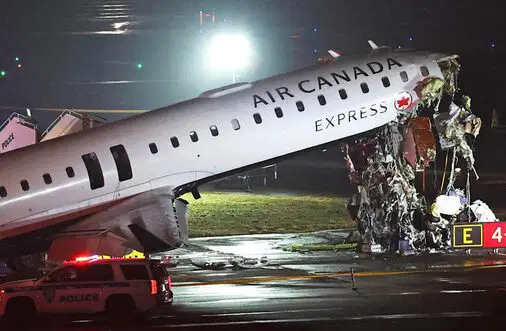
Two pilots were killed and at least 41 people were hospitalized after an Air Canada regional jet struck a Port Authority fire truck on a runway at LaGuardia Airport late Sunday night, officials said.
The incident occurred around 11:40 p.m. on March 22, 2026, when Air Canada Flight 8646 — operated by Jazz Aviation as an Air Canada Express service — was landing after departing from Montreal.
The Bombardier CRJ-900 aircraft, carrying 72 passengers and four crew members, collided with the airport’s Aircraft Rescue and Firefighting vehicle, which was crossing the runway in response to a separate incident.
Both the captain, identified as 30-year-old Antoine Forest, and the first officer, Mackenzie Gunther, died in the crash. The impact heavily damaged the cockpit area of the jet.
At least 41 passengers and crew were transported to area hospitals with injuries ranging from minor to serious, while additional people were treated at the scene. Two Port Authority workers in the fire truck were also reported injured.
Passengers described the collision as sudden and violent, with some crediting the pilots’ actions for helping mitigate a worse outcome.
CCTV and other video footage captured the moments leading up to and during the collision, showing the aircraft striking the emergency vehicle. Air traffic control audio reportedly included urgent calls of “Stop, truck 1. Stop” just before impact.
LaGuardia Airport was temporarily closed following the crash, causing widespread flight delays and cancellations across the New York area. It reopened on Monday at reduced capacity as investigators continued their work on the scene.
The U.S. National Transportation Safety Board (NTSB), along with Canadian aviation authorities and the Port Authority of New York and New Jersey, have launched a full investigation into the runway incursion and collision.
Preliminary reports suggest the fire truck had been cleared to cross the active runway.
Air Canada expressed condolences to the families of the deceased pilots and said it is cooperating fully with investigators.
“Our thoughts are with everyone affected by this tragic event,” the airline stated. This marks a rare fatal ground collision at a major U.S. airport in recent years, raising fresh questions about runway safety protocols and vehicle movements during active landings.
International
Middle East War: IEA recommends options to ease oil price pressures on consumers, Motorists
Work from home where possible. Displaces oil use from commuting, particularly where jobs are suitable for remote work.


Image credit : Shutterstock
Immediate actions to reduce demand:
1. Work from home where possible. Displaces oil use from commuting, particularly where jobs are suitable for remote work.
2. Reduce highway speed limits by at least 10 km/h. Lower speeds reduce fuel use for passenger cars, vans and trucks.
3. Encourage public transport. A shift from private cars to buses and trains can quickly reduce oil demand.
4. Alternate private car access to roads in large cities on different days.
Number-plate rotation schemes can reduce congestion and fuel-intensive driving.
5. Increase car sharing and adopt efficient driving practices. Higher car occupancy and eco-driving can lower fuel consumption quickly.
6. Efficient driving for road commercial vehicles and delivery of goods
Better driving practices, vehicle maintenance and load optimisation can cut diesel use.
7. Divert LPG use from transport
Shifting bi-fuel and converted vehicles from LPG to gasoline can preserve LPG for cooking and other essential needs.
8. Avoid air travel where alternative options exist
Reducing business flights can quickly ease pressure on jet fuel markets.
9. Where possible, switch to other modern cooking solutions
Encouraging electric cooking and other modern options can reduce reliance on LPG.
10. Leverage flexibility with petrochemical feedstocks and implement short-term efficiency and maintenance measures
Industry can help free up LPG for essential uses while reducing oil consumption through quick operational improvements


Abia State Holds State Burial for Renowned Evangelist Rev. Dr. Uma Ukpai

Soludo Orders Suspension of Absentee Workers After Surprise Secretariat Visit

Vietnam Police Dismantle Multi-Billion Dollar Cryptocurrency Fraud Operation

Tech Expert, Zuckerberg trains with UFC champions, Adesanya, Alexander

Organ Trafficking: Ekweremadu bags 10 years in UK prison

SAINT OBI: Between his marriage and his death
-

 Sports2 days ago
Tributes To NRA President Sanni Zubairu
-

 Sports2 days ago
Int’l friendlies: 15 players open Eagles camp in Turkey
-

 Sports2 days ago
NBF Kida’s board to remain in office until October , says FIBA
-
 Business2 days ago
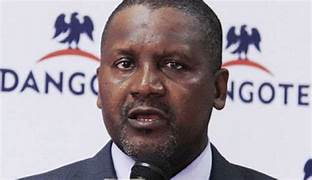
Dangote: Middle East crisis might take us back to ‘Work from home’ COVID era
-

 Sports2 days ago
Mohamed Salah quitting Liverpool after nine historic years
-

 News2 days ago
Nigeria partner Japan to redevelop Abuja Master Plan
-

 Business2 days ago
Niger Delta Chamber Investment Summit Targets $5bn, 500,000 Jobs
-

 Politics2 days ago
2027: Labour Party says Presidential flag bearer must be a southerner