
International
Trump Might Shut Down US Embassies in Africa — Report
A CNN report on Wednesday, citing an internal US State Department document, states that the embassies in the Republic of Congo, Central African Republic, Lesotho, and South Sudan are among those proposed for closure.


The Donald Trump administration might shut down nearly 30 United States embassies and consulates around the world, including several in Africa, as part of a sweeping plan to reduce the country’s diplomatic presence abroad.
A CNN report on Wednesday, citing an internal US State Department document, states that the embassies in the Republic of Congo, Central African Republic, Lesotho, and South Sudan are among those proposed for closure.
A US consulate in South Africa may also be shut down.
“The list also includes five consulates in France, two in Germany, two in Bosnia and Herzegovina, one in the United Kingdom, one in South Africa, and one in South Korea,” the report stated.
International
Trump blasts Pope Leo for criticism of U.S. foreign policy
Trump said Leo is “Weak on Crime, Weak on Nuclear Weapons, does not sit well with me
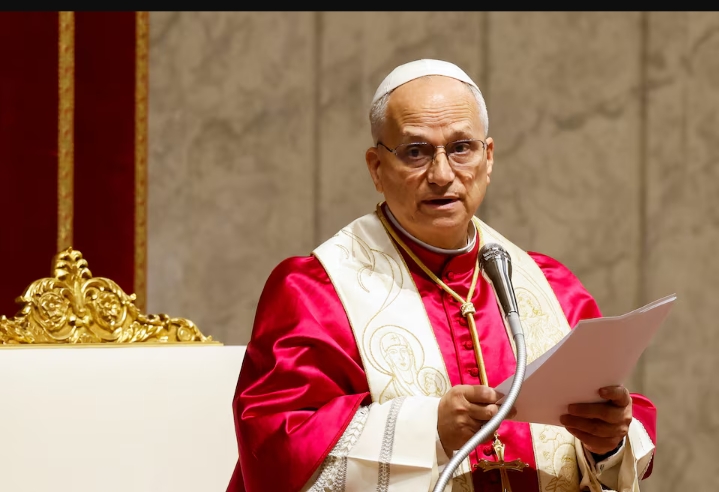
President Donald Trump on Sunday blasted Pope Leo XIV over the Roman Catholic pontiff’s criticism of the U.S. war with Iran.
The president said in a Truth Social post he does not “want a Pope who criticizes the President of the United States because I’m doing exactly what I was elected, IN A LANDSLIDE, to do.”
Leo, the first U.S.-born pope, and other church leaders have also at times been sharply critical of Trump’s domestic immigration policies.
Trump linked the pope’s ascension to his return to office as president.“Leo should be thankful because, as everyone knows, he was a shocking surprise,” Trump said.
“He wasn’t on any list to be Pope, and was only put there by the Church because he was an American, and they thought that would be the best way to deal with President Donald J. Trump. If I wasn’t in the White House, Leo wouldn’t be in the Vatican.”
Trump said Leo is “Weak on Crime, Weak on Nuclear Weapons, does not sit well with me, nor does the fact that he meets with Obama Sympathizers like David Axelrod, a LOSER from the Left, who is one of those who wanted churchgoers and clerics to be arrested,” referring to a recent meeting between the pope and President Barack Obama’s former political aide.
International
Hungarian opposition wins election landslide
Results based on 81.5% of votes counted showed the center-right, pro-EU Tisza party of Peter Magyar winning 137 seats for a crucial two-thirds majority in the 199-member parliament, defeating Orban’s Fidesz party.
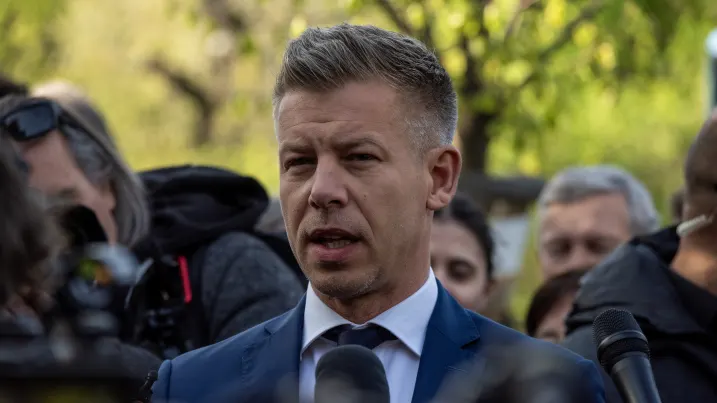
Photo: President of the Tisza Party, Peter Magyar / CNBC
Hungary’s veteran nationalist leader Viktor Orban conceded defeat on Sunday after a landslide election victory by the upstart opposition Tisza party, ending Orban’s 16-year rules.
Results based on 81.5% of votes counted showed the center-right, pro-EU Tisza party of Peter Magyar winning 137 seats for a crucial two-thirds majority in the 199-member parliament, defeating Orban’s Fidesz party.
“The election results are not final yet, but the situation is understandable and clear,” Orban, 62, said at the Fidesz campaign offices.
Some of his supporters who had gathered outside cried as they watched him speak on TV screens.
“The election result is painful for us, but clear.”Election officials estimated turnout at a record of 79% or more, in an election that many Hungarians saw as a watershed moment for their country.
Tisza’s Magyar, 45, had cast the vote as a choice between “East and West,” warning voters that Orban and his confrontational stance towards Brussels would take the country further away from the European mainstream.
International
Oil jumps 7% to above $100 ahead of US blockade of Strait of Hormuz
U.S. Central Command said U.S. forces would begin implementing the blockade of all maritime traffic entering and exiting Iranian ports at 10 a.m. ET (1400 GMT) on Monday.
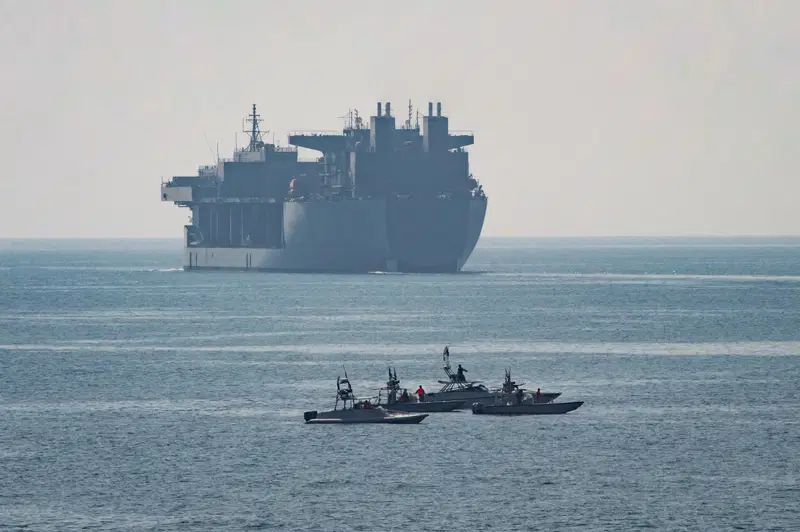
Oil prices jumped above $100 a barrel on Monday as the U.S. Navy prepared to block ships from reaching Iran via the Strait of Hormuz, a move that could restrict Iranian oil exports, after Washington and Tehran failed to reach a deal to end the war.
U.S. Central Command said U.S. forces would begin implementing the blockade of all maritime traffic entering and exiting Iranian ports at 10 a.m. ET (1400 GMT) on Monday.
Reuters reported that Brent crude futures rose $6.71, or 7.05%, to $101.91 a barrel by 0104 GMT after settling 0.75% lower on Friday.
U.S. West Texas Intermediate was at $104.16 a barrel, up $7.59, or 7.86%, following a 1.33% loss in the previous session.
“The market is now largely back to conditions before the ceasefire, except now the U.S. will block the remaining up to 2 million barrels per day Iranian linked flows through the Strait of Hormuz as well,” said Saul Kavonic, head of energy research at MST Marquee.
President Donald Trump said on Sunday the U.S. Navy would start blockading the Strait of Hormuz, raising the stakes after marathon talks with Iran failed to reach a deal to end the war, jeopardising a fragile two-week ceasefire.


Trump blasts Pope Leo for criticism of U.S. foreign policy

Hungarian opposition wins election landslide

Asha Bhosle: Bollywood’s legendary singer dies aged 92

Tech Expert, Zuckerberg trains with UFC champions, Adesanya, Alexander

Organ Trafficking: Ekweremadu bags 10 years in UK prison

SAINT OBI: Between his marriage and his death
-

 News3 days ago
CBN Debunks Viral Fake News of ₦5,000 Banknote Featuring President Tinubu’s Image
-
 Politics3 days ago
2027: Bode George warns INEC, Judiciary Drifting Nigeria Towards ” One Party Rule”
-
 Business3 days ago
DR Congo Central Bank Announces Ban on Foreign Currency Cash Transactions from 2027
-

 Politics3 days ago
NBA Cautions Lawyers Against Involvement in Political Party Disputes
-

 Business3 days ago
Supreme Court Overturns Appellate’s Ruling on $2bn Debt Recovery Battles Nestoil /Neconde Energy vs FBNQuest Merchant Bank
-
 News1 day ago
FG Unmasks 60 Persons and Corporates Behind Terrorism Financing, Order Banks To Freeze Their Accounts
-

 Entertainment4 hours ago
Tuface, Laolu Gbenjo, others set to electrify Vanguard Personality of the Year Award
-
 News3 days ago
Plateau Community Laments ‘ No Security To Repel Attackers’