
Business
Transcorp Group Posts Strong Performance with N82.1bn revenue in H1 2023

Transcorp’s President/Group Chief Executive Officer, Dr. (Mrs) Owen Omogiafo, says that in spite of the challenging business environment in Nigeria, the Group, posted sustained growth in its financials for the first half of the year ended June 30, 2023, across all its business interests- Power, Hospitality and Energy sectors.

In its financial report filed with the Nigerian Exchange (NGX), the Group achieved an impressive revenue of N82.1 billion in H1 2023, compared to N62.9 billion in H1 2022.
This represents a substantial 31percent growth year-on-year.
Also, the Group’s operating income grew by 46 percent from N20.5 billion in June 2022 to N29.9 billion in June 2023.
However, operating expenses for the period ended June 30, was N15.9 billion, an increase of 40 percent compared to N11.3 billion of the corresponding previous year.
Further, Transcorp reported an 39 percent growth in profit before tax to N18.5 billion in H1 2023, from N13.4 billion in H1 2022.
Interest cost declined by 9 percent to N6.6 billion in June 2023 from N6.1 billion in the same period under review.
Transcorp continues to maintain a strong balance sheet, with Total Assets rising to N495.3 billion, representing a 12 percent increase over the N442.7 billion recorded at the end of June 2022, due to the increase in Debt and equity securities (+61percent) and Trade and Other Receivables (+40 percent) which cushioned the effect of the decline in Inventories (+68 percent).
Transcorp shareholders’ funds remained very strong at N176.3 billion up from N154.8 billion recorded in the same period in 2022.
Dr.Omogiafo attributed the impressive performances to
” our dedication to driving innovation and seizing opportunities for sustainable growth, positioning Transcorp as a trailblazer in the Nigerian business realm.
“We remain focused on efficiency, cost leadership, and meeting market demand to consistently deliver profitability and value to all our shareholders.”
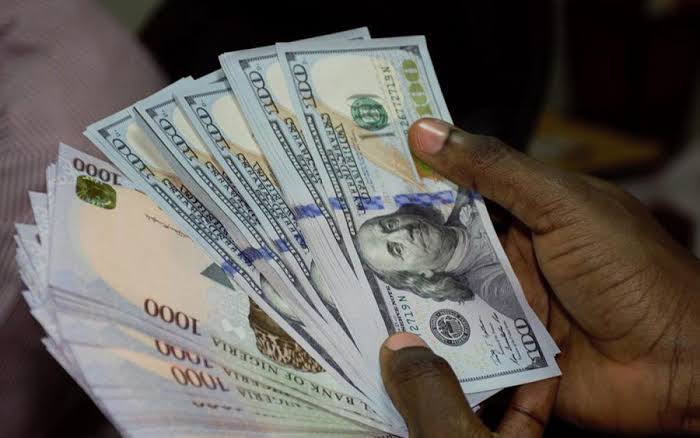
The Nigerian naira traded near recent levels against the US dollar on Thursday, with a modest gap between the official and parallel markets.
Official Market (CBN / NFEM)
- The official Nigerian Foreign Exchange Market (NFEM) rate closed around ₦1,334.72 per US dollar on October 21 (the most recent published CBN figure).
- Intraday trading on that day ranged roughly between ₦1,333 and ₦1,337.
- Interbank FX turnover rose sharply to about $127.6 million.
Parallel / Black Market (Aboki / Street Rate)
- Bureau de Change and parallel market dealers are quoting the dollar in the ₦1,370–₦1,390 range for selling (what you pay to buy dollars).
- Typical buy rates (what dealers pay for dollars) are around ₦1,355–₦1,375.
- The premium over the official rate remains relatively moderate by recent historical standards (roughly 3–4%).
Mid-Market Reference
International mid-market rates (used by many global converters) hover around ₦1,332–₦1,335 per dollar.
Quick Summary
| Market | Approx. Rate (₦ per $1) | Notes |
|---|---|---|
| Official (CBN/NFEM) | 1,335 | Latest published close |
| Parallel (Sell) | 1,370 – 1,390 | Street / BDC rate |
| Mid-market | 1,332 – 1,335 | Global reference |
Context: The naira has been relatively stable in recent sessions, supported by improved FX liquidity and external reserves. The gap between official and parallel rates remains narrower than the wide spreads seen in previous years, though demand for dollars for imports, travel, and remittances continues to influence the street rate.
Rates can shift during the day. Always confirm with a trusted bank, Bureau de Change, or licensed operator before transacting.
Business
RMRDC Taking 2027 Africa Raw Materials Summit To Kenya
Speaking with newsmen during the conclusion of the ARMS 2026, Ike-Muonso said Nigeria is the only county that has an organisation, government-owned organisation in the continent that is fully dedicated to adding value to raw materials.

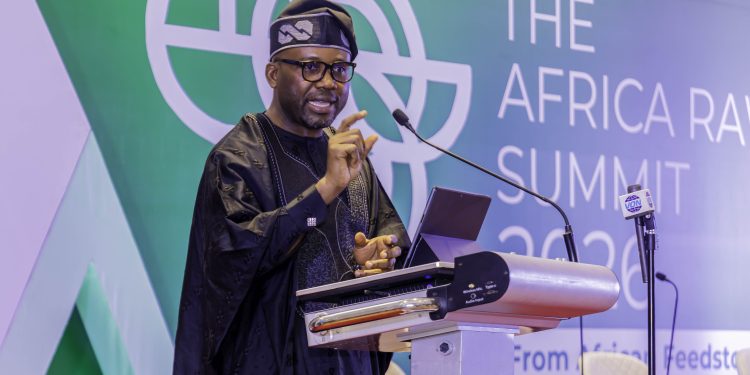
• Photo: Hon.Minister, Federal Ministry of Innovation, Science and Technology (FMIST), Dr Kingsley Udeh, declaring the event open.
The third edition of the Africa Raw Materials Summit (ARMS) 2027, would be used to garner support for setting up a centralised continental database for raw processing and value addition that is accessible to investors and industrialists.
The Director-General of the Raw Materials Research and Development Council (RMRDC), Prof. Nnanyelugo Ike-Muonso, disclosed this during the ARMS 2026 Summit , held in Abuja, themed, ‘From African Feedstock To Factories.’
Building enthusiasm ahead of the next year’s event scheduled to hold in Kenya, East Africa, Ike-Muonso explained that the decision to take the summit to Kenya was reached following what he described as the East Africa country participants’ dominance in the first and second edition of the summit.
Ike-Muonso said Nigeria is the only county that has an organisation, government-owned organisation in the continent that is fully dedicated to adding value to raw materials.
Business
JPMorgan Eyeing Entry Into Nigeria’s Banking Industry
J.P. Morgan operates in more than 100 countries worldwide, providing financial services, investment banking, asset management, and commercial banking across major global markets in the Americas, Europe, the Middle East, Africa, and Asia-Pacific.

JPMorgan Chase & Co has deposited N50 billion with the Central Bank of Nigeria as part of efforts to secure a merchant banking licence and expand its operations in Nigeria .
J.P. Morgan operates in more than 100 countries worldwide, providing financial services, investment banking, asset management, and commercial banking across major global markets in the Americas, Europe, the Middle East, Africa, and Asia-Pacific
Bloomberg reported that the CBN deposit, valued at about $38m, meets a key requirement in the American lender’s application and signals its readiness to establish a licensed banking operation in Nigeria.
However, the payment does not guarantee approval, as the CBN is yet to make a final decision on the application.
People familiar with the process, said the deposit was one of the final regulatory requirements for the licence.
They added that the bank expects to obtain approval by the end of 2026 or in early 2027, subject to the regulator’s decision.


UPDATE: Identity of Woman Who Flew into Nigeria with Ebola Virus Revealed

UNILAG School Teachers Begin Work-to-Rule Over Unpaid Arrears

Dollar to Naira Exchange Rate – Thursday, October 22, 2026

BREAKING: Lagos Govt Declares Today, Thursday Work-Free to Mark 2026 Ìṣẹ̀ṣe Day

Tech Expert, Zuckerberg trains with UFC champions, Adesanya, Alexander

Organ Trafficking: Ekweremadu bags 10 years in UK prison
-

 Business2 days ago
Naira Exchange Rates Wednesday, October 21, 2026
-
 Business2 days ago
Currency Words You Should Know
-

 Business2 days ago
NCC, CBN To Warn Companies By Flagging Fraudulent Phone Numbers
-
Business2 days ago
JPMorgan Eyeing Entry Into Nigeria’s Banking Industry
-

 Business2 days ago
RMRDC Taking 2027 Africa Raw Materials Summit To Kenya
-
 Health2 days ago
BREAKING: Nigeria Confirms First Ebola Case
-
 Health2 days ago
Ebola In Nigeria: Symptoms, Spread and How To Protect Yourself
-

 News1 day ago
JUST IN: Gas Emissions Hit Ogun Schools, Hundreds of Pupils Hospitalised