Business
Tax Reform Bills: Reps retain 7.5% VAT, reject increase to 15% by 2030
The House also dismissed a proposal to reintroduce inheritance tax under the guise of taxing family income.


The House of Representatives has retained Value Added Tax (VAT) at 7.5 percent, rejecting a proposed gradual increase to 15% by 2030.
The House also dismissed a proposal to reintroduce inheritance tax under the guise of taxing family income.
The Chairman of the House Committee on Finance, Rep. James Faleke, during today’s plenary, stated that the submitted report represents a comprehensive review of the bills, incorporating extensive public input.
The report covers four key bills aimed at overhauling Nigeria’s tax framework: Nigeria Tax Bill Nigeria Tax Administration Bill Nigeria Revenue Service (Establishment) Bill Joint Revenue Board (Establishment) Bill Key Amendments in the Tax Reform Bills Nigeria Revenue Service (NRS) Bill .
The NRS will now focus on federal-level revenue collection, excluding individual taxpayers in states and the Federal Capital Territory (FCT). Board Composition: Section 7 now requires six executive directors, each appointed by the president from the six geopolitical zones on a rotational basis.
Each state and the FCT will also have a representative on the board.
Secretary Qualifications: Section 13 mandates that the Secretary to the Board must be a lawyer, chartered accountant, or chartered secretary at the level of Assistant Director or higher.
Fixed Funding Rate: The NRS will now receive a 4% cost-of-collection rate (excluding royalties), subject to National Assembly approval.
Borrowing Powers Restricted: Section 28 now requires Federal Executive Council (FEC) and National Assembly approval before the NRS can secure any loans.
Joint Revenue Board (JRB) Bill Tax Appeal Commissioners’ Criteria Revised: Section 25 removes the requirement that commissioners must have business management experience, as the Committee deemed it irrelevant.
Strengthened Tax Ombud’s Independence: Section 43 mandates that the Tax Ombud’s Office be funded directly from the Consolidated Revenue Fund, eliminating reliance on external donations.
Independent Funding for Tax Appeal Tribunal (TAT): The tribunal will now operate independently of the Federal Inland Revenue Service (FIRS) to prevent conflicts of interest.
Stricter Adherence to the Evidence Act: New rules ensure that tax appeal proceedings strictly follow the Evidence Act.
Taxpayer Identification Number (TIN) Processing:
The timeline for issuing TINs has been extended from two working days to five to accommodate administrative delays.
Faster Tax Returns for Ceased Operations: Companies ceasing operations must now file income tax returns within three months, down from six months, to prevent revenue loss.
VAT System Adjustments: Section 22 ensures that taxable supplies are attributed to their place of consumption, addressing regional imbalances.
VAT Fiscalisation System: Section 23 introduces a new regulatory framework to improve VAT collection.
Increased Reporting Thresholds for Banking Transactions:
Individuals: ₦25 million → ₦50 million Corporate Entities: ₦100 million → ₦250 million
Judicial Oversight on Asset Seizure: Section 60 mandates that tax authorities must obtain a court order before seizing movable assets.
Mandatory Electronic Taxpayer Records Access: Section 61 formalizes the government’s right to access electronically stored tax records in line with modern practices.
New VAT Revenue Distribution Formula: 70% distributed equally among local governments 30% based on population .
General Amendments Across Tax Bills VAT Rate Maintained at 7.5% –
The Committee rejected the proposal to gradually increase VAT to 15% by 2030. Petroleum Gains Tax Reduced to 30% – Section 78 revises the tax rate on petroleum gains from 85% to 30%.
Excise Duty Provisions Removed – Excise duty-related provisions were deleted due to concerns about their negative economic impact.
Higher Turnover Threshold for Small Companies:
A business will now be classified as a small company if its annual turnover is ₦100 million or less (asset cap remains at ₦250 million).
New Penalties for Virtual Assets Service Providers (VASPs):
Stricter fines and potential license suspensions for non-compliant crypto and digital asset businesses.
While submitting the report, Rep. Faleke highlighted the importance of the tax reform bills in modernizing Nigeria’s tax system, boosting revenue collection, and fostering economic growth.
“These Bills are critical to implementing a modern, transparent, and efficient tax system that will support economic growth and improve revenue collection,” he said.
He added that the review process was extensive, incorporating input from the public and key government agencies, including: Nigeria Export Processing Zones Authority (NEPZA) National Agency for Science and Engineering Infrastructure (NASENI) National Information Technology Development Agency (NITDA) Tertiary Education Trust Fund (TETFund)
“We carefully examined every submission to ensure that public opinion was reflected in our recommendations. This process involved a thorough review of existing laws proposed for repeal or amendment,” Faleke noted.
The amendments impact key laws, including: Companies Income Tax Act (CITA) Value Added Tax Act (VAT Act) Personal Income Tax Act (PITA) Federal Inland Revenue Service (Establishment) Act Petroleum Industry Act Nigeria Export Processing Zones Act Oil and Gas Free Trade Zone Act
The House of Representatives is expected to deliberate on the report in the coming weeks as part of its legislative process.




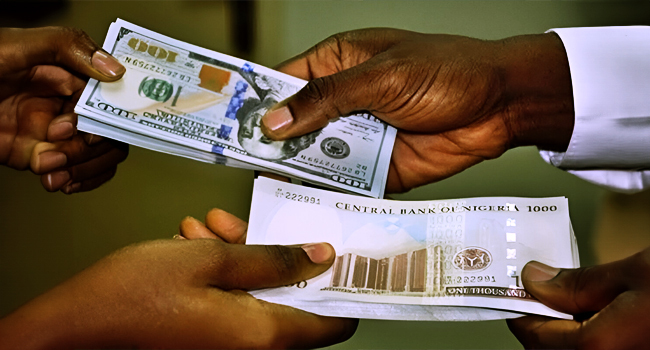
BLACK/ PARALLEL MARKET RATES
₦1370 DOLLAR (USD)
₦1800 POUND (GBP)
₦1510 EURO (EUR)
₦970 CANADIAN DOLLAR (CAD)
₦65 SOUTH AFRICAN RAND (ZAR)
₦350 UAE DIRHAM (AED)
₦190 CHINESE YUAN (CNY)
₦100 GHANAIAN CEDI (GHS)
₦2300 WEST AFRICAN CFA F.(XOF)
₦2200 CENTRAL AFRICAN CFA F.(XAF)
₦850 AUSTRALIAN DOLLAR AUSSIE (AUD)
CBN OFFICIAL RATES
DOLLAR (USD)₦1331.61
POUND (GBP)₦1764.26
EURO (EUR)₦1490.48
SWISS FRANC (CHF)₦1608.23
JAPANESE YEN (JPN)₦8.4
CFA FRANC (XOF)₦2.27
WEST AFRICAN UNIT OF ACCOUNT (WAUA)₦1802.33
CHINESE YUAN (CNY)₦199.01
SAUDI RIYAL (SAR)₦354.83
SOUTH AFRICAN RAND (ZAR)₦80.49
Business
WEF could appoint Lagarde as its next chair, sources say
The WEF’s Board of Trustees, which includes Lagarde herself, was due to meet on November 2 and could elect her as its next chair, said the people close to the organisation, who spoke on condition of anonymity due to the sensitivity of the matter.
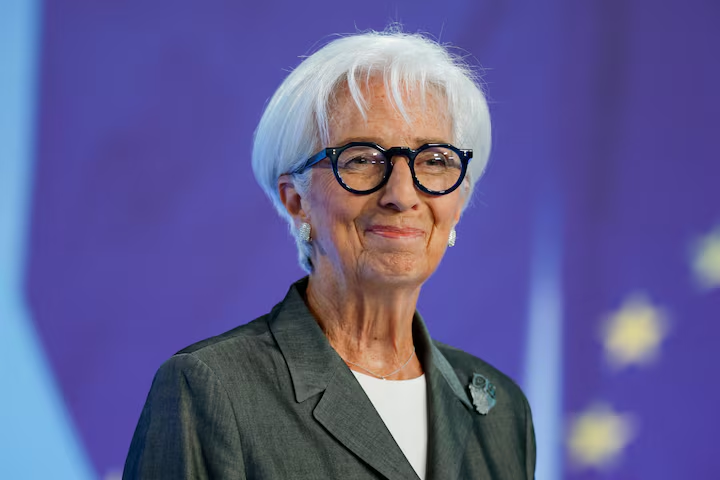
•European Central Bank President Christine Lagarde
The World Economic Forum could appoint Christine Lagarde as its next chair as soon as next month, four people close to the organisation told Reuters, meaning she would step down early as European Central Bank chief and trigger a wider reshuffle at the top of the ECB.Lagarde’s ECB term is scheduled to end in October 2027.
Leaving early would give European Union leaders a chance to pick a new ECB President before France’s spring presidential election, which opinion polls suggest the far-right could win, and could pave the way for a deal involving two other senior ECB roles.
The WEF’s Board of Trustees, which includes Lagarde herself, was due to meet on November 2 and could elect her as its next chair, said the people close to the organisation, who spoke on condition of anonymity due to the sensitivity of the matter.
No final decision has been taken yet, they said.
A spokesperson for the WEF said the forum could not confirm when the next full Board of Trustees meeting would take place, but that the aim was to hold one before the end of the year.
Business
Germany plans tax on sugary drinks
The tax is expected to generate additional revenue for the federal government of €690 million in 2027 and €925 million in 2028.
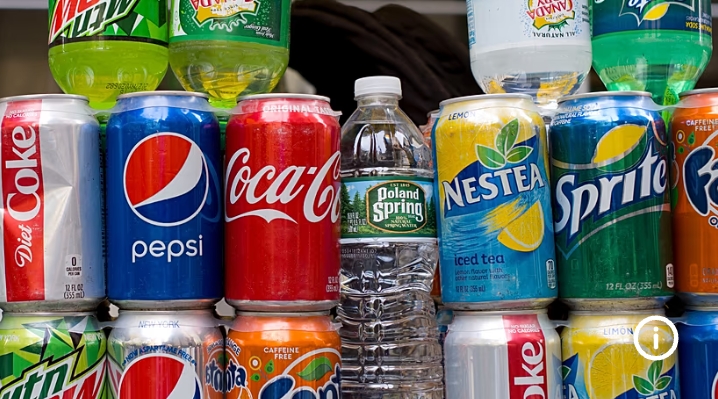
The German cabinet has approved draft legislation to tax sugary drinks in Europe’s biggest economy.
If passed by the German Bundestag, the tax will take effect on 1 July 2027.
The coalition aims to raise revenue for the federal budget while encouraging manufacturers to reduce sugar content and offer healthier products.
The levy is intended to ease pressure on the healthcare system, which faces costs of more than €2 billion every year linked to the high consumption of sugary drinks, which contributes to obesity, diabetes and tooth decay.
According to the federal government, Berlin is using the tax to implement “what associations from the fields of health, science, child protection, and consumer protection have long been demanding.”
The tax is expected to generate additional revenue for the federal government of €690 million in 2027 and €925 million in 2028.


JUST IN: Mob Sets BRT Bus Ablaze After Motorcyclist’s Death in Lagos

BREAKING: DSS Arrests Fugitive Maina Son, Hands Him to EFCC

BREAKING: 5 Arrested Over Imo NYSC Abduction

BREAKING: Lagos Govt Declares Today, Thursday Work-Free to Mark 2026 Ìṣẹ̀ṣe Day

Tech Expert, Zuckerberg trains with UFC champions, Adesanya, Alexander