
Business
Shettima’s Investments Drive to Sweden: Gluwa, Ericsson Commit $100m, $19m for digital economy

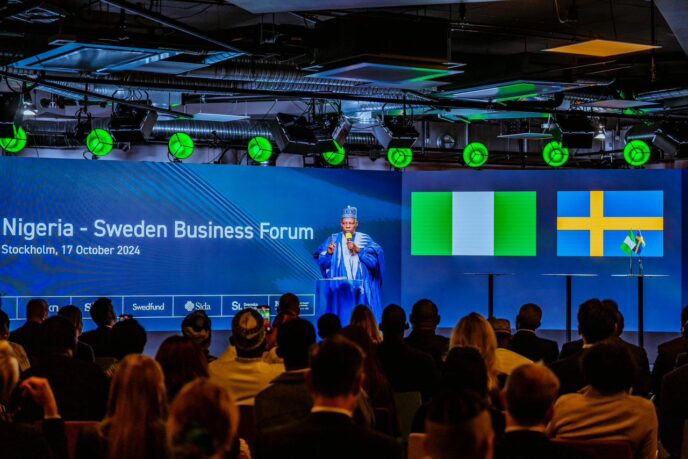
Vice President Kashim Shettima, at a business forum in Sweden, on Thursday, marketed investments opportunities that abound in Nigeria, to Swedish investors.
During the event at Epicenter, Stockholm, Sweden, where he is currently on a two-day working visit aimed at boosting trade and bilateral relations between both nations, VP Shettima noted that Nigeria and Sweden have a time-honored history of cooperation, particularly in trade, technology, and sustainable development.
Shettima urged the prospective investors to to seize opportunities in Nigeria’s MSMEs, agriculture, digital economy, renewable energy, health and other critical sectors.
Shettima pointed out that the nation is now “an ambitious nation, bound by the limitless potential of the Fourth Industrial Revolution.
VP Shettima assured that the Tinubu administration has done much within the last year to brighten Nigeria’s investment climate, creating vast investment opportunities.
He said, “Distinguished guests, ladies and gentlemen, there is tremendous potential for collaboration between Nigeria and Sweden across multiple sectors.
Whether in finance, renewable energy, digital innovation, agriculture, or education, our partnership holds the promise of immense benefits for both nations.
I urge Swedish investors to seize the opportunities in Nigeria and work with us to build a prosperous and sustainable future.”
The Vice President urged the Swedish investors to deploy their expertise in technology and innovation to collaborate with Nigerian start-ups, driving growth and creating jobs, even as he stressed that the partnership between both countries can accelerate this transition.
On agriculture, he said while Nigeria is working to modernize the sector, Swedish expertise in agriculture technology could assist the nation in achieving this through investments in precision farming, mechanization, and value-chain development, with a view to improving productivity and food security.
In an address of welcome, the Vice President of Sweden, Edgar Luczak, Chairman, Partner & Head of Advisory, Epicenter, Sweden, noted that the future is digital and sustainable, assuring that the Epicenter was ready to engage not just in words but in action. According to him, through collaboration, both countries can build a stronger economy, create jobs, and most importantly, ensure a future for the generations to come.
“We hope we can take this opportunity to launch an accelerated programme that will not only follow in the footsteps of our other excellent programmes that we do with the likes of Google, Microsoft, Singapore, and other countries but create our own path to support Nigeria in its unique growth,” he added.
Gluwa Commits $100m
Mr. Akinola Jones, Director of Gluwa, a digital wallet service, said as part of its contribution to the Renewed Hope Agenda of the Tinubu administration, the company would train over 30,000 people in digital skills. Jones said they had already started training about 1,000 people in Jigawa state, adding that they are committing $100 million across Nigeria.
“We have a big vision for Nigeria, and I think our vision is banking the unbanked and connecting the unconnected. We see a situation where, once we launch our satellite in December this year, we can connect direct satellite to WiFi. This is going to be a very big win for Nigeria and a very big win for the technology ecosystem.
“We have given about $100 million in loans. It is not just about disbursing loans, it is not just about trying to grow portfolios, it is really about giving back. We are pushing for a lot of impact, and we are also working with the government and presidency to train people on digital skills,” he said.
Ericsson To Build $19m Tech Hub In Nigeria
The Managing Director of Ericsson Nigeria, Mr. Peter Olusoji Ogundele, has revealed the company’s plan to build a technology hub worth about $19 million in Nigeria.
He said, “Nigeria has enough youths that can come into that field. We can train them, Ericsson will also take part in it, and some of them we can export to the world, and we will be like another India. “
Ericsson was the first to have over 1,000 sites in Nigeria and continues to invest in the country. We have been here since 1978, and for us, our partnership is an enduring one.”
On her part, Ms. Anthonia Huard, Regional Director, North & West Africa, Energy & Transport Lead, said Nigeria has become the country’s focal point in Africa for optimal engagement.
“In order to be efficient in Africa, the organization focused on prioritizing markets of which Nigeria is one and matched the areas of focus of Sweden to the needs and focus of the countries for optimal engagement,” she stated.
Also, the Director, Project Accelerator, of Swedfund, Mr. Hakan Danhltor, expressed the organization’s commitment to reducing poverty and supporting sustainable development through investments in the private sector and in local private companies.
For her part, Mikaela Edstrom of the Swedish Export Credit Agency said the agency is closely watching the ongoing economic reforms taking place in Nigeria and views them as positive for the future. “We can, together with our sister organization, provide a world-class export credit system for Nigeria,” Edstrom pledged.
Vice President Shettima held bilateral talks with the Minister of Foreign Affairs, Maria Malmer Stenergard and Deputy Prime Minister of Sweden, Ebba Busch. These discussions focused on strengthening ties and exploring new areas of cooperation between Nigeria and Sweden.






Business
Supreme Court Overturns Appellate’s Ruling on $2bn Debt Recovery Battles Nestoil /Neconde Energy vs FBNQuest Merchant Bank
In the lead judgment read by Justice Mohammed Baba Idris, the five-member apex court panel held it was a “legal anomaly” to allow lawyers appointed by the Receiver/Manager to also represent the companies, citing a conflict of interest.

The Supreme Court of Nigeria on Friday ruled in favor of Nestoil and Neconde Energy, overturning a previous appellate court decision that disqualified their legal counsel, including Wole Olanipekun (SAN) and Muiz Banire (SAN).
The court upheld the companies’ right to appoint their own lawyers to challenge the ongoing receivership.
The apex court ruled that despite the receivership initiated by a consortium of banks, Nestoil and Neconde retain the right to appoint their own legal counsel to challenge that very receivership.
Nestoil Limited (an oil services firm) and its affiliate Neconde Energy Limited (which holds interests in Oil Mining Lease 42) are embroiled in a multi billion-dollar debt recovery suit filed by lenders, primarily FBNQuest Merchant Bank Limited and First Trustees Limited.
The lenders allege that Nestoil, Neconde, and their promoters (Ernest Azudialu-Obiejesi and Nnenna Azudialu-Obiejesi) owe over $2 billion (plus N430 billion in related liabilities) under financing arrangements, including a Common Terms Agreement.
In the lead judgment read by Justice Mohammed Baba Idris, the five-member apex court panel held it was a “legal anomaly” to allow lawyers appointed by the Receiver/Manager to also represent the companies, citing a conflict of interest.
The judgment affirms that the boards of the companies retain the authority to act in defense of the companies’ interests.
A receiver/manager was appointed over the companies’ assets and interests, leading to disputes over who controls the companies and who can represent them in court.
In January 2026, the Supreme Court sent related appeals back to the Court of Appeal to resolve the preliminary issue of legal representation before proceeding on the merits.
On January 23, 2026, the Court of Appeal disqualified senior advocates Wole Olanipekun (SAN) (for Neconde) and Muiz Banire (SAN) (for Nestoil), ruling that the Ernest Azudialu-Obiejesi-led boards lacked authority to appoint counsel once the receiver/manager was in place. It allowed counsel appointed by the receiver to represent the companies instead.
Nestoil/Neconde and their promoters appealed this disqualification to the Supreme Court (one key appeal being SC/CV/48B/2026 by Neconde).
The apex court had reserved judgment after hearing arguments from a five-member panel.
In Friday’s ruling, the Supreme Court upheld the appeal by Nestoil and Neconde (and their promoters).
It set aside the Court of Appeal’s judgment disqualifying the companies’ chosen counsel.
Their boards (led by Ernest Azudialu-Obiejesi) retain the authority to appoint counsel of their choice to defend their interests, particularly since the validity of the receivership itself is being challenged.
Allowing the receiver/manager’s counsel (appointed by the lenders) to represent the companies would create a serious conflict of interest and undermine fairness and independence in legal representation.
The arrangement involving the lenders (FBNQuest and First Trustees) as appointors of the receiver was deemed fundamentally flawed.
The appointments of Wole Olanipekun (SAN) and Dr. Muiz Banire (SAN) (along with their teams) as counsel for Neconde and Nestoil are restored.
The companies are now free to proceed with their preferred lawyers in the ongoing debt recovery proceedings.
The ruling is procedural (focused solely on representation) and does not decide the merits of the underlying debt claims or receivership.
Those substantive issues will now continue in the lower courts with the restored counsel.

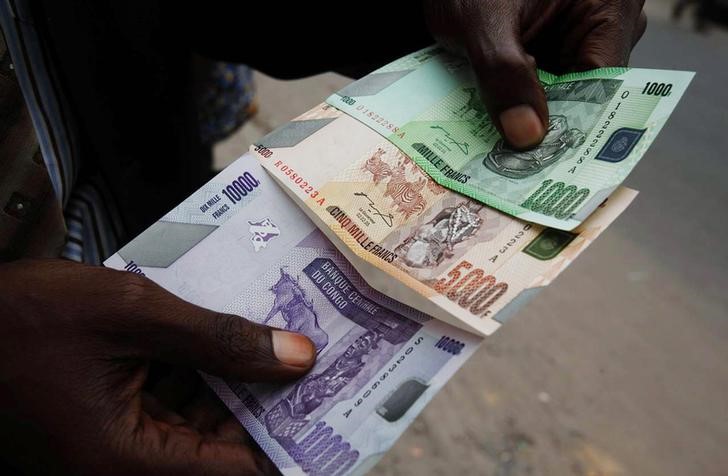
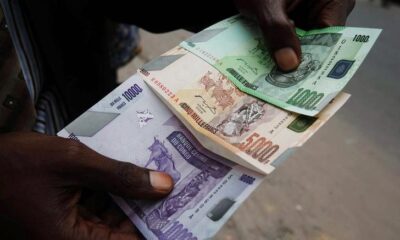
The Central Bank of the Democratic Republic of Congo (BCC) has announced plans to prohibit cash transactions in foreign currencies, including the US dollar, starting April 9, 2027, in a fresh attempt to promote the use of the local Congolese franc (CDF) and reduce dollarisation in the economy.
In a statement issued on Thursday, April 9, 2026, the BCC declared that from the effective date, “no person will be authorised to carry out cash transactions in foreign currencies,” and commercial banks will no longer be allowed to import or distribute physical foreign banknotes.
Under the new measure, payments in dollars, euros or other foreign currencies will still be permitted, but only through electronic means such as bank transfers, cards, or mobile money platforms. Cash dealings must be conducted exclusively in Congolese francs.
The BCC’s move aims to strengthen the national currency, enhance monetary sovereignty, and curb the widespread use of the US dollar, which dominates many business transactions in the country despite official policies favouring the CDF.
The Congolese economy has long been heavily dollarised, with foreign currency widely accepted even in everyday dealings.
This is not the first attempt by the BCC to limit dollar use. Previous efforts to ban or restrict foreign currency have largely failed to take full effect, as the dollar remains deeply entrenched in commerce, mining, and daily life across the vast Central African nation.
The announcement comes amid broader initiatives by the central bank, including interventions in the foreign exchange market and efforts to build gold reserves, to support the Congolese franc and reduce reliance on the US dollar.
Analysts and businesses are watching closely to see how the policy will be enforced, given past challenges in implementing similar restrictions in a country where cash remains king and banking penetration is relatively low.
The BCC has urged the public and financial institutions to prepare for the transition and to rely increasingly on formal banking and electronic payment systems.
Further details on implementation guidelines and penalties for non-compliance are expected in the coming months. The public is advised to monitor official communications from the Banque Centrale du Congo for updates.
Business
Crude Oil Prices Drop Below $95 After US-Iran Ceasefire
Earlier, crude prices had surged above $110 per barrel amid fears of supply disruptions as tensions escalated in the Middle East.

Crude oil prices fell below $95 per barrel in early trading on Wednesday following a ceasefire agreement between the United States and Iran.
The global oil benchmark fell by about 13% to around $94–$95 per barrel, marking one of the steepest single-day declines in recent years after weeks of war-driven price spikes.
The dramatic selloff came after U.S. President Donald Trump announced a conditional two-week ceasefire, pausing military operations in exchange for the reopening of the Strait of Hormuz—a critical route for global oil shipments.
West Texas Intermediate (WTI), the U.S. benchmark, also dropped significantly to around $95–$96 per barrel, reflecting a broad easing of geopolitical tensions and a rapid unwinding of the war risk premium in oil markets.
Earlier, crude prices had surged above $110 per barrel amid fears of supply disruptions as tensions escalated in the Middle East.
However, the ceasefire has restored some confidence that oil flows will resume, triggering a sharp correction in prices.


FG Unmasks 60 Persons and Corporates Behind Terrorism Financing, Order Banks To Freeze Their Accounts

Police reopens, handover PDP Hqtrs to Wike backed Faction

Gunmen Kill Traditional Ruler, Four Others in Imo State, Set Bodies Ablaze

Tech Expert, Zuckerberg trains with UFC champions, Adesanya, Alexander

Organ Trafficking: Ekweremadu bags 10 years in UK prison

SAINT OBI: Between his marriage and his death
-

 News2 days ago
CBN Debunks Viral Fake News of ₦5,000 Banknote Featuring President Tinubu’s Image
-
 Politics1 day ago
2027: Bode George warns INEC, Judiciary Drifting Nigeria Towards ” One Party Rule”
-
 News2 days ago
INEC releases updated voters registration figure nationwide
-
 Crime2 days ago
Tinubu Mourns Soldiers Killed in Benisheikh Terror Attack
-
 Business2 days ago
DR Congo Central Bank Announces Ban on Foreign Currency Cash Transactions from 2027
-
 News2 days ago
US Declares 23 Nigerian States High-Risk for Citizens
-

 News2 days ago
Police Debunk Viral “Terror Attack” Video in Abuja, Launch Investigation
-
 Politics1 day ago
NBA Cautions Lawyers Against Involvement in Political Party Disputes