
News
SERAP Seeks Spending Details Of N400bn Fuel Subsidy Savings from Tinubu

The Socio-Economic Rights and Accountability Project (SERAP) has urged President Bola Ahmed Tinubu to use his good offices and leadership position to “urgently publish details of spending of about N400bn so far saved as a result of the removal of subsidy on Premium Motor Spirit (PMS) popularly called petrol.”
SERAP urged him to “provide details of the plans on how subsequent savings from the removal of subsidy on petrol, including specific projects on which the funds would be spent, and the mechanisms that have been put in place to ensure that any such savings are not embezzled, misappropriated or diverted into private pockets.”
According to reports, the Federal Government has saved N400bn within the four weeks following the implementation of the policy on the removal of payment of subsidy on petrol.
In the letter dated 1 July 2023 and signed by SERAP deputy director Kolawole Oluwadare, the organisation said: “Your government has a legal responsibility to ensure that the savings from the removal of subsidy on petrol are spent solely for the benefit of the 137 million poor Nigerians who are bearing the brunt of the removal.”
SERAP said, “Prevention of corruption in the spending of savings from the removal of subsidy on petrol and preventing and addressing the challenges caused by the removal are serious and legitimate public interests.”
According to SERAP, “Nigerians have the right to know how the savings are spent. Publishing the details of the spending of the savings would promote transparency, accountability, and reduce the risks of corruption in the spending of the funds.”
The letter, read in part: “SERAP is concerned that the savings from subsidy removal may be embezzled, misappropriated or diverted into private pockets.”
“Opacity in the spending of the savings from subsidy removal would have negative impacts on the fundamental interests of the citizens and the public interest.”
“We would be grateful if the recommended measures are taken within 7 days of the receipt and/or publication of this letter. If we have not heard from you by then, SERAP shall consider appropriate legal actions to compel your government to comply with our request in the public interest.”
“Unless the government is transparent and accountable to Nigerians in how it spends the savings from the removal of subsidy on petrol, the removal will continue to undermine the rights of Nigerians, and increase their vulnerability to poverty and social deprivation.”
“Transparency would ensure that the funds saved from the removal of subsidy are not diverted into private pockets, and increase public trust and confidence that these savings would be used to benefit Nigerians.”
“The implementation of the National Social Safety Net Programme (NASSP) and spending on the programme have been mostly shrouded in secrecy.”
“Publishing the details of the spending of the N400bn and other savings from the removal of subsidy would also ensure that persons with public responsibilities are answerable to the people for the performance of their duties including the management of the funds.”
“Transparency and accountability in the spending details of the N400bn saved as a result of the removal of subsidy on petrol, and on the spending of subsequent savings from the removal would mean that the savings can help poor Nigerians to overcome the effects of such removal.”
“It would also help to avoid a morally repugnant result of double jeopardy on poor and socially and economically vulnerable Nigerians.”
The lack of transparency and accountability in the spending of savings from the removal of subsidy on petrol and the resulting human costs would directly threaten fundamental human rights that your government has an obligation to protect.”
“Your government has the legal obligations to address the effects of subsidy removal on the human rights of 137 million poor Nigerians, and to prevent and address some of the direst consequences that the removal may reap on human rights, especially given the disproportionate impact on these Nigerians.”
“SERAP also urges you to promptly instruct Independent Corrupt Practices and Other Related Offences Commission (ICPC) and Economic and Financial Crimes Commission (EFCC) to monitor the spending of all savings from subsidy removal.”
“SERAP notes that the removal of subsidy on petrol continues to negatively and disproportionately affect poor Nigerians, undermining their right to adequate standard of living.”
“Your government has a positive obligation to protect individuals against the threat posed to human rights by the removal of subsidy on petrol. Your government also has legal obligations to effectively address the aftermath of subsidy removal.”
“SERAP is seriously concerned that years of allegations of corruption and mismanagement in the spending of public funds and entrenched impunity of perpetrators have undermined public trust and confidence in governments at all levels.”
“The Freedom of Information Act, Section 39 of the Nigerian Constitution, article 9 of the African Charter on Human and Peoples’ Rights and article 19 of the International Covenant on Civil and Political Rights guarantee to everyone the right to information, including the details of how the N400bn and other savings from the removal of subsidy on petrol would be spent.”
“By the combined reading of the provisions of the Nigerian Constitution 1999 [as amended], the Freedom of Information Act 2011, and the African Charter on Human and Peoples’ Rights, there are transparency obligations imposed on your government to widely publish the details of how the N400bn and other savings from the removal of subsidy on petrol are spent.”
“The Nigerian Constitution, Freedom of Information Act, and the country’s anti-corruption and human rights obligations rest on the principle that citizens should have access to information regarding their government’s activities.”
“Section 13 of the Nigerian Constitution imposes clear responsibility on your government to conform to, observe and apply the provisions of Chapter 2 of the constitution. Section 15(5) imposes the responsibility on your government to “abolish all corrupt practices and abuse of power” in the country.”
“Under Section 16(1) of the Constitution, your government has a responsibility to ‘secure the maximum welfare, freedom and happiness of every citizen on the basis of social justice and equality of status and opportunity.’”
“Section 16(2) further provides that, ‘the material resources of the nation are harnessed and distributed as best as possible to serve the common good.’”
“Similarly, articles 5 and 9 of the UN Convention against Corruption also impose legal obligations on your government to ensure proper management of public affairs and public funds, and to promote sound and transparent administration of public affairs.”





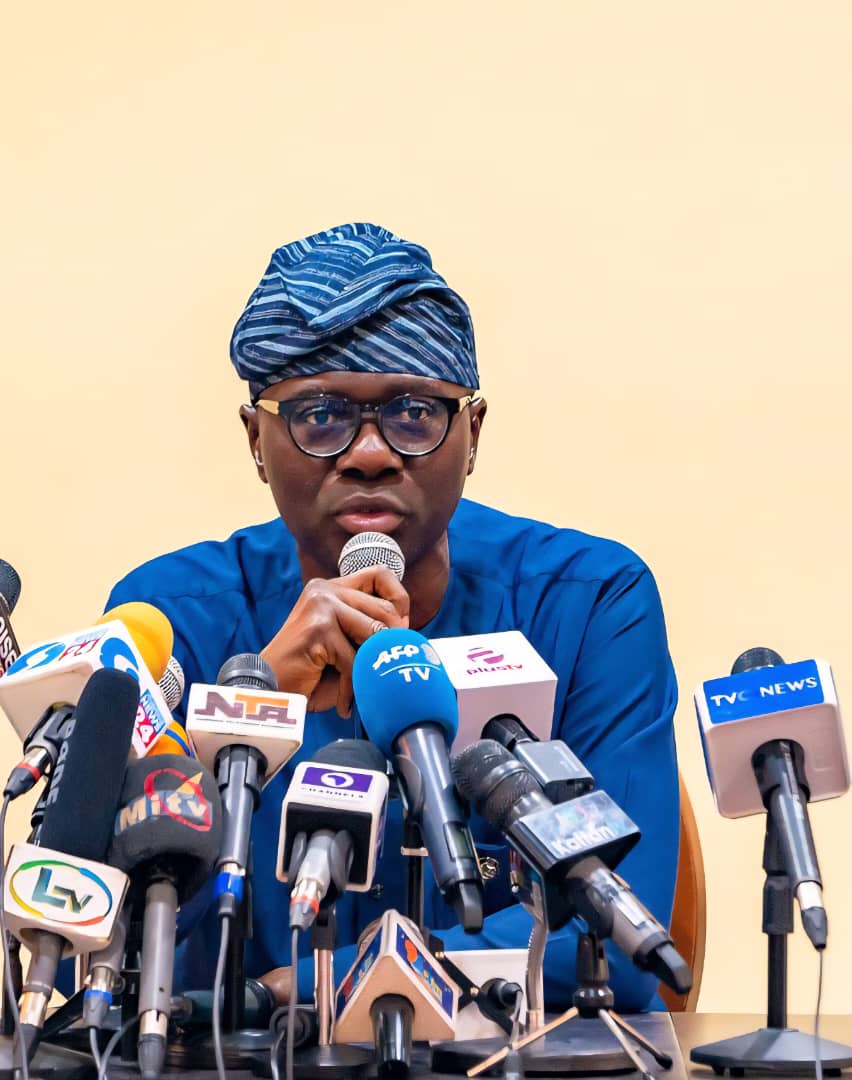
Lagos State Governor Babajide Sanwo-Olu has assured residents that the Opebi-Mende-Ojota Link Bridge will be opened to the public before Christmas, despite missing its earlier September completion target.
The governor gave the assurance on Sunday, October 25, 2026, during an inspection of the project to assess progress and determine the reasons for the delay. He said the distinctive steel superstructure on the bridge is about 80 per cent complete.
Sanwo-Olu explained that the complex architectural design — inspired by the area’s traditional cane-weaving heritage — involves installing more than 300 tonnes of steel at heights of up to 25 metres.
Three of the four major steel components have been completed, with work ongoing on the remaining one. LED lighting featuring the colours of Lagos State will also be installed to give the structure an iconic appearance.
He emphasised that the state government prioritises engineering quality and public safety over speed. Additional finishing works, including site cleaning, kerb repainting, restoration of affected areas and landscaping, will be carried out before the bridge opens.
The link bridge, which connects Opebi, Mende and Ojota, is expected to ease traffic congestion and provide an alternative route for motorists in the Ikeja, Maryland and surrounding corridors.
News
BREAKING: Former Arise News Anchor, Constance Ikokwu Appointed NDC National Campaign Council Spokesperson

Former Arise News Anchor, Dr. Chiogo Constance Ikokwu has been appointed Campaign Spokesperson for the Obi/Kwankwaso National Campaign Council. Her appointment is contained in the list of appointments released by the Nigeria Democratic Congress (NDC)
Ikokwu brings over two decades of experience in journalism across print, radio and television, alongside expertise in political communication, media strategy and international affairs. Her career includes Washington, DC Bureau Chief and Deputy Editor at THISDAY Newspapers, political analyst and anchor at Arise News, and academic work in journalism and communications. She holds a PhD in Journalism and Communications, with research focused on the intersection of media and politics. Ikokwu was also Strategic Communications Adviser to former Minister of Finance Dr. Ngozi Okonjo-Iweala and former Minister of Industry, Trade and Investment Dr. Okechukwu Enelamah.
She recently participated in the NDC’s nomination process for the House of Representatives seat for Idemili North and South Federal Constituency, Anambra State, and continues to pursue her commitment to public service.
In her new role, Ikokwu will serve as a Spokesperson for the National Campaign Council, helping to communicate Obi/Kwankwaso positions, articulate campaign messages and engage the media on issues relating to the party’s programmes and priorities. Her appointment comes as the party prepares to strengthen its public communications and engagement with Nigerians ahead of the 2027 general elections.
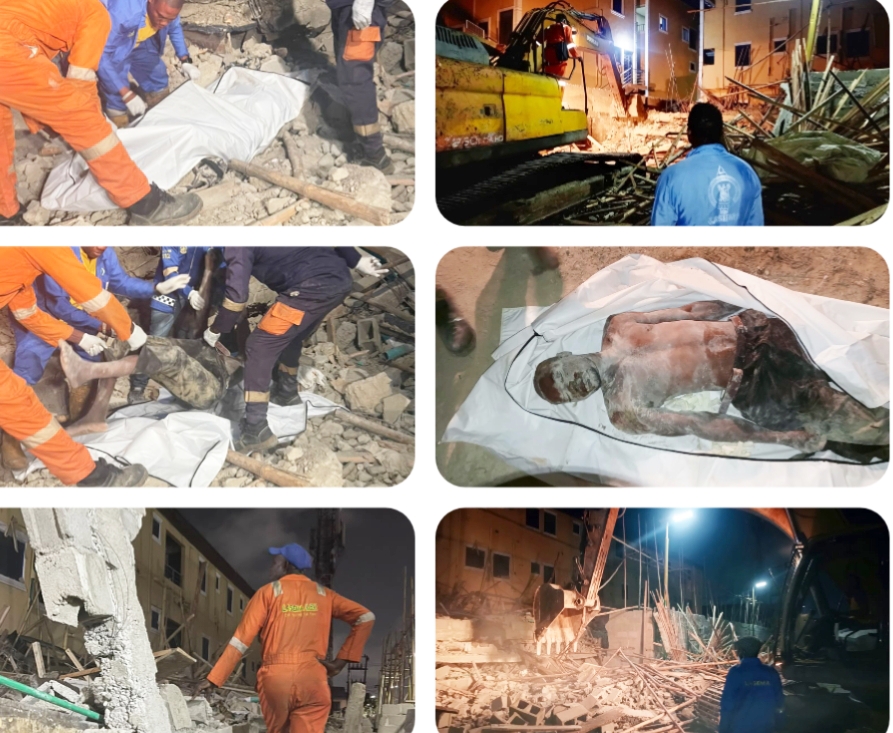
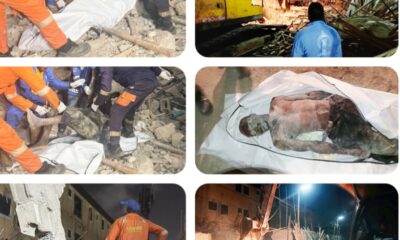
A two-storey building has collapsed in the Fadeyi area of Lagos, resulting in one fatality and the rescue of three people, emergency officials confirmed on Friday morning.
The incident occurred in the early hours, sending residents and nearby traders into panic as the structure suddenly gave way. Rescue teams from the Lagos State Emergency Management Agency (LASEMA) and other first responders quickly arrived at the scene and began extracting victims from the rubble.
According to preliminary reports, one person was confirmed dead at the site, while three others were pulled out alive and rushed to a nearby hospital for treatment. Their conditions have not yet been disclosed.
Security personnel have cordoned off the area to allow rescue operations to continue and to prevent further access by onlookers. Officials are still assessing whether any other persons remain trapped under the debris.
The cause of the collapse has not been established. Authorities have not ruled out structural failure, but investigations are ongoing.
Further updates are expected as the rescue operation progresses and more details become available from emergency services.


Dangote Refinery’s IPO Ends Tomorrow

Ebola: Nigeria Sends Back Swiss Woman Via Medivac Plane

Brazil’s Lula Wins Fourth Term In Presidential Runoff

BREAKING: Lagos Govt Declares Today, Thursday Work-Free to Mark 2026 Ìṣẹ̀ṣe Day

Tech Expert, Zuckerberg trains with UFC champions, Adesanya, Alexander

Organ Trafficking: Ekweremadu bags 10 years in UK prison
-
 Business3 days ago
Obasanjo Accuses Tinubu : “You Made Every Nigerian Poor By 300% Naira Devaluation”
-
 News3 days ago
JUST IN: 1 Dead, 3 Rescued in Fadeyi Building Collapse, Lagos
-
 Business3 days ago
History of Naira Revaluation and Devaluation (1973–2026)
-

 Business3 days ago
CBN Licences Abbey Bank to Start Full Commercial Banking in November 2026
-
 Politics2 days ago
2027 presidential election: Tinubu’s Northern test begins today
-

 News2 hours ago
BREAKING: Former Arise News Anchor, Constance Ikokwu Appointed NDC National Campaign Council Spokesperson
-
 Health2 days ago
Ebola patient in Abuja showing signs of recovery – FG
-
 Business2 hours ago
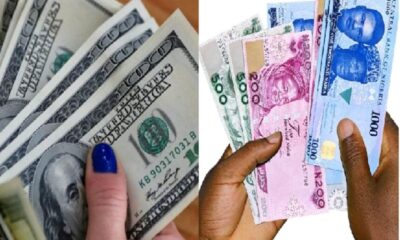
Naira To Dollar, Pound, Euro…Rate Monday, October 26