
Sports
Who made the FIFA World Cup trophy?
On Sunday, either Spain or Argentina will feel a little of all three as the winner lifts the trophy after the 2026 World Cup final.

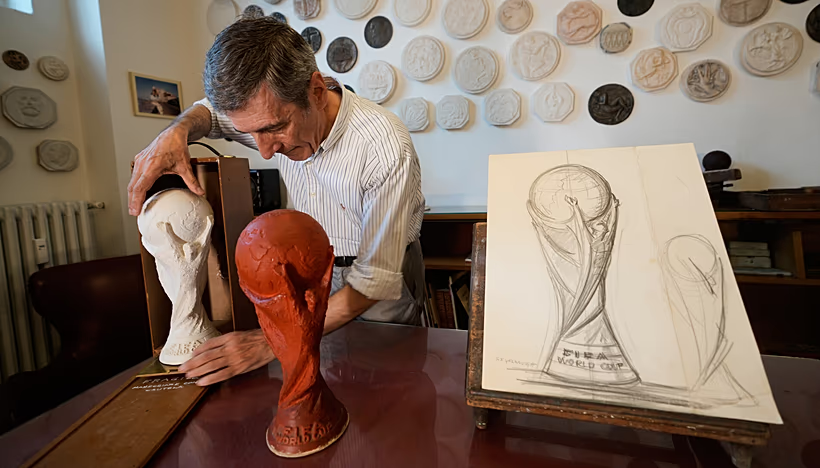
•Silvio Gazzaniga designed his winning entry in his studio in Milan’s Brera.
Here’s how Italian sculptor Silvio Gazzaniga created the FIFA World Cup trophy’s iconic design – and why champions never get to keep it.
The Italian sculptor who designed the FIFA World Cup trophy wanted to capture three sporting emotions in a single spiralling form: the athlete’s struggle, the fan’s jubilation and the moment of victory.
On Sunday, either Spain or Argentina will feel a little of all three as the winner lifts the trophy after the 2026 World Cup final.
Ahead of an action-packed World Cup weekend, here’s what to know about football’s most coveted prize.
The World Cup trophy was designed in Milan
When Brazil took permanent possession of the original trophy by winning its third World Cup in 1970, FIFA launched an open competition for a new design. The winner would be a 50-year-old sculptor from Milan.
Silvio Gazzaniga designed his winning entry in his studio in Milan’s Brera neighbourhood.
His design, now familiar to generations of World Cup fans, features two figures swirling up toward an orb representing the Earth.“
When he started to design the cup, he was sketching a huge number of drawings and finally started to develop the idea to have the world and this symbol that it is like a two DNA spirals, that are moving up,” said the designer’s son, Giorgio Gazzaniga, who was a teenager at the time.
The elder Gazzaniga, who died in 2016 aged 95, trained at Milan’s Brera Academy of Fine Arts before joining trophy maker G.D.E. Bertoni.
He later designed some of football’s best-known trophies, including the UEFA Cup, UEFA Super Cup and Intercontinental Cup.
Gazzaniga’s design topped more than 50 other entries submitted by artists from 25 countries.
Before Gazzaniga came Jules Rimet
The first World Cup trophy, introduced for the inaugural tournament in 1930, depicted Nike – the Greek goddess of victory – and became known as the Jules Rimet Trophy after the FIFA president who founded the competition.
Designed by French sculptor Abel Lafleur, it was made of gold-plated sterling silver and stood on a lapis lazuli base.
Under the original rules, any nation that won the World Cup three times would keep the trophy permanently. Brazil did exactly that in 1970, prompting FIFA to commission Gazzaniga’s replacement.The Jules Rimet Trophy was stolen twice.
The first theft happened in 1966 while it was on public display in England. According to FIFA, a dog named Pickles discovered it beneath a hedge in south London.It was stolen again from the Brazilian Football Confederation headquarters in 1983.
It has never been recovered and is widely believed to have been melted down.
Gazzaniga’s design topped more than 50 other entries submitted by artists from 25 countries. Rather than submitting sketches, he also produced a full-size plaster prototype, allowing judges to assess the trophy as a finished object, according to his son.
“There is the world, which stands above all else, there is the athlete’s exertion, there is the athlete’s movement within the metal, and the athlete’s body is rough, rugged, for it has suffered, had to fight, and struggled for victory,” the younger Gazzaniga said.
That victory is expressed through arms that resemble the wings of Victory, capturing not only the athlete’s triumph but also the jubilation of the fan,” he added.Gazzaniga’s family has preserved his office at a new location in Pioltello, on the outskirts of Milan, including drawings, the original prototype submitted to FIFA and a wax cast.
Earlier this year, Milan officials unveiled a commemorative plaque outside Gazzaniga’s former studio on Via Alessandro Volta 7, where he designed the iconic trophy.
Why champions don’t keep the trophy
The World Cup trophy hoisted by the winning side at the end of the final is 36 centimetres tall and cast in 18-carat gold.
It sits on a base featuring two rings of green malachite, symbolising the playing fields.Unfortunately for the winners, it goes back to FIFA after the tournament.
The organisation keeps the original trophy at its Swiss headquarters between World Cups.
The winning team receives a gold-plated replica. And FIFA no longer lets three-time winners keep the original, either.
First lifted by West Germany captain Franz Beckenbauer after the 1974 World Cup final, Gazzaniga’s design has remained football’s ultimate prize ever since.
• Culled from FIFA
Sports
National Sports Commission Changes Secretaries
“Let me be clear that no secretary is being removed because he or she has been sacked. They are only being posted to another federation to carry out another assignment,” Olopade said.
The National Sports Commission (NSC) has reshuffled the General Secretaries of several national sports federations in a major administrative shake-up aimed at strengthening operations and improving the performance of the bodies.
The Director-General of the NSC, Bukola Olopade, announced the changes yesterday during a meeting with the General Secretaries of the federations in Abuja.
“Let me be clear that no secretary is being removed because he or she has been sacked. They are only being posted to another federation to carry out another assignment,” Olopade said.
Under the new arrangement, Bunmi Oluode has been appointed the new Secretary-General of the Athletics Federation, replacing Israel Inwang, who has been redeployed to the Padel Federation.
Rita Mosindi will serve as Acting Secretary-General of the Basketball Federation, with her predecessor, Amina Amanchi, moving to the Rowing Federation.
Other appointments saw Tosin Samuel take over as Secretary-General of the Shooting Federation, while Tinuoso Dolapo was appointed Secretary-General of the Karate Federation.
Javan Bennard will head the secretariat of the Fencing Federation, while Dorothy Okpo becomes the new Secretary-General of the Arm Wrestling Federation. Olopade said the reshuffling was not a punishment for any of the affected secretaries but a strategic deployment of their expertise to improve the administration of the federations.
Sports
FIFA to decide 2030 World Cup final venue in 2028 as Morocco, Spain wait
Morocco has made no secret of its ambition to bring the 2030 World Cup final to Benslimane, near Casablanca, where the Hassan II Stadium is under construction.
FIFA is expected to decide the venue for the 2030 World Cup final in 2028, a timeline that keeps Morocco’s push to host the showpiece at the Hassan II Stadium alive.
Spanish outlet Mundo Deportivo reported that sources familiar with the process said FIFA does not plan to announce the final venue before 2028.
The reported timeline mirrors the previous World Cup cycle. FIFA waited until February 2024 to confirm New Jersey’s MetLife Stadium as the venue for the 2026 final.
That means the contest between Morocco and Spain remains open, despite increasingly confident statements from both countries over their preferred venues.
Morocco has made no secret of its ambition to bring the 2030 World Cup final to Benslimane, near Casablanca, where the Hassan II Stadium is under construction.
The stadium is expected to have a capacity of about 115,000. When completed, it would be one of the largest football stadiums in the world.
The project has become the centrepiece of Morocco’s bid to host the tournament’s closing match.
Fouzi Lekjaa, president of the Royal Moroccan Football Federation, has repeatedly backed the ambition.
Sports
NBA closes basketball academy in Africa
The NBA said the decision reflected a shift in global basketball development strategy.
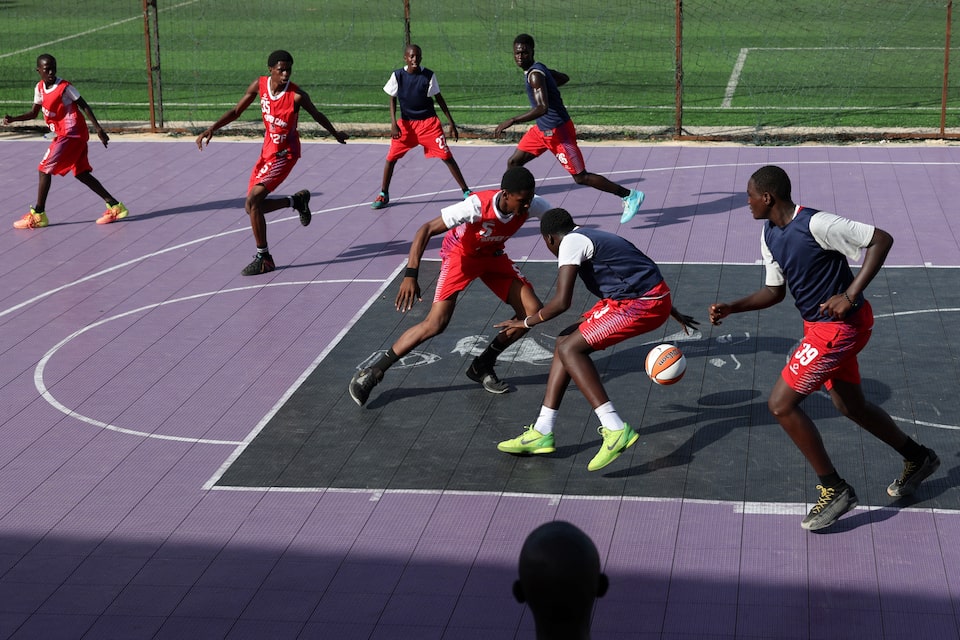
•Basketball players train during the Legacy Summer Camp, organised by SEED Project alumnus Pape Latyr Gnigu, in Dakar, Senegal, September 30, 2026. REUTERS/Misper Apawu.
The National Basketball Association (NBA) has closed its only elite training academy in Africa.
Reuters reported on Thursday that the academy , established less than a decade ago was launched in Senegal to prepare promising young African players for professional leagues in the US and elsewhere.
The decision to close NBA Academy Africa, the league’s first such facility in Africa, was a blow to students and young players across the continent, two former employees said.
Michel Chikwanine, who had been the academy’s performance and lifestyle adviser, said the news discouraged African players just beginning to build confidence.
“From the moment we told them, their confidence waned, their confidence dropped,” he said.
Michael Abbott, former head of academic planning at the academy, said it showed a lack of commitment to the students.
“They weren’t invested in them as kids as much as they were invested in the business model,” he said.
In response to questions from Reuters, the NBA said the decision reflected a shift in global basketball development strategy.
It has previously closed academies in Mexico and Australia. All training will be run out of a new global academy to open soon in the United Arab Emirates’ Abu Dhabi, it said.
In its statement, the NBA added that it is continuing to invest in African talent through other programs and that closing the academy does not signal a diminished commitment to the continent.


Investors Rush For Airtel Money IPO on LSE

JUST IN: NNPC Clarifies Petrol Discount: Relief Initiative, Not Subsidy Restoration

JUST IN: A’Court Stalls SERAP, Oluwadare Defamation Appeals Over Late Briefs

Tech Expert, Zuckerberg trains with UFC champions, Adesanya, Alexander

Organ Trafficking: Ekweremadu bags 10 years in UK prison

SAINT OBI: Between his marriage and his death
-
 Business3 days ago
Naira Today Exchange Rates, Thursday October 8
-
 News2 days ago
Tears, Embraces as Rescued NYSC Members Reunite with Families in Ibadan
-

 Business2 days ago
Naira Exchange Rates Friday, October 9
-

 Business3 days ago
Obi advocates policy support for manufacturers
-

 Business2 days ago
Manufacturers sitting on N40trn untapped opportunities, says report
-
 News2 days ago
Ahmadu Bello University Hikes Fees Across Programme
-
 International3 days ago
Belgian Students Protest Over Rising Education Costs
-
 International3 days ago
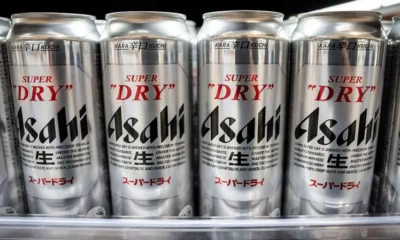
Japan beer giants raided over alleged price-fixing cartel